The world of Industrial IoT (IIoT) demands agility. Connecting sensors, controllers, machines, and gateways in dynamic industrial environments presents unique challenges: equipment moves, layouts change, and unexpected failures demand quick fixes. This is where modular industrial cable assemblies are proving to be game-changers. Here’s why they’re becoming essential:
Accelerated Deployment & Setup:
Problem: Traditional custom cables mean waiting weeks for manufacturing, delaying project timelines. On-site field-terminating cables is time-consuming, requires skilled labor, and risks errors or inconsistent quality.
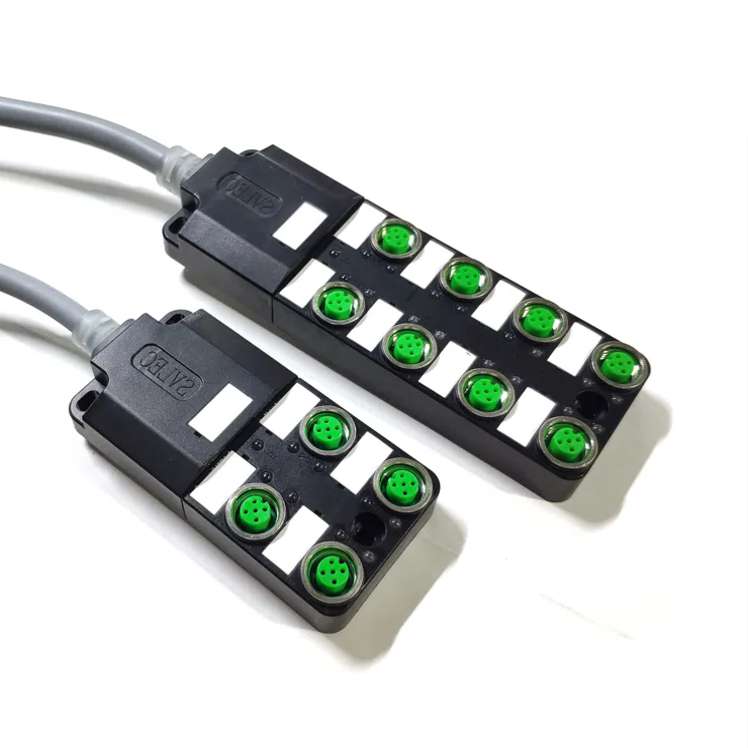
Solution: Modular assemblies use off-the-shelf connectors and pre-made cable segments. Technicians simply connect plug-and-play components (trunk cables, drop cables, connectors) like building blocks. This drastically cuts installation time – easily by 40-60% – getting your IoT network operational faster.
Effortless Scalability & Flexibility:
Problem: Adding a new sensor, moving a machine, or reconfiguring a production line with fixed cabling means costly, disruptive rewiring or entirely new custom cables. Rigid setups hinder operational agility.
Solution: Modular systems are inherently flexible. Need to add a device? Snap in a new drop cable. Reconfigure a zone? Unplug components and rearrange them quickly. System expansion or modification becomes a simple task, done in minutes or hours instead of days, adapting seamlessly to changing IoT needs.
Minimized Downtime & Simplified Maintenance:
Problem: Cable failures in traditional systems often require tracing faults and replacing entire long cable runs – a major source of costly production downtime. Troubleshooting can be complex and slow.
Solution: Modularity enables pinpoint isolation. If a cable segment or connector fails, you replace only that specific faulty component. No need to rip out long runs. Spare modules are easy to stock at lower cost than full assemblies, leading to repairs often completed in under 30 minutes. This dramatically reduces costly unplanned downtime by up to 50% or more.
Reduced Inventory Costs & Complexity:
Problem: Supporting custom cables for various lengths, connector types, and sensor combinations requires stocking numerous unique SKUs, tying up capital and warehouse space. Managing this inventory is complex.
Solution: With modular systems, you stock standard components (different length trunks/drops, common connector types). These versatile components combine to create virtually any configuration needed on-demand. This slashes required inventory SKUs by up to 80%, simplifies management, and reduces carrying costs significantly.
Enhanced Reliability & Standardization:
Problem: Field-terminated connections are susceptible to human error, inconsistency, and environmental damage if not perfectly sealed. Varying termination quality creates reliability weak points.
Solution: Factory-terminated modular connectors are built to precise industrial standards (IP67, IP69K) for robust water/dust resistance, mechanical strength (M12, M8), and electromagnetic compatibility. This ensures consistent, high-quality connections optimized for harsh factory conditions, leading to greater overall system reliability and longevity.
Choosing the Right Modular Assembly:
When selecting, prioritize:
IP Rating: Match the environment (IP67/IP68 for wet areas, IP69K for washdown).
Connector Type: M12 (common sensor/actuator) and M8 are standard; ensure correct pin count and coding.
Compliance: Meets relevant industrial standards for your region/industry.
Supplier Support: Reliable availability of spares and compatible components.
In Summary:
Modular industrial cable assemblies solve the core connectivity challenges of IIoT deployments: reducing installation time and cost, enabling effortless adaptation to change, slashing maintenance downtime, and improving overall system resilience. By moving away from rigid, custom cabling to flexible, component-based solutions, businesses can build IoT networks that are as agile, scalable, and reliable as the data-driven processes they support. For any dynamic industrial environment embracing IoT, modular cabling is rapidly becoming the strategic, cost-effective choice.
Imagine this: a high-pressure sprayer cleaning down equipment. Your standard cable assembly endures the blast… until water seeps into the connector. Moisture pools inside, unseen, becoming a breeding ground for bacteria. Later, a cleani...
In the complex landscape of industrial operations, where precision, uptime, and safety are paramount, reliable industrial cable assemblies serve as the unsung heroes. These assemblies are the critical link connecting machinery, sensors,...
Ensuring the quality of industrial cable assemblies is critical. Faulty cables can lead to equipment failure, production downtime, safety hazards, and costly repairs. Here’s a practical guide to verifying their quality effectively:
1...
Chemical processing plants operate in one of the most demanding industrial environments: corrosive gases (e.g., chlorine, ammonia), toxic liquids (e.g., solvents, acids), extreme temperatures (-40°C to 180°C in some processes), and cons...
Industrial cables are critical in sectors like manufacturing, energy, and transportation, where poor durability can cause equipment failures or safety hazards. Testing their durability requires a structured, standard-aligned process to ...
Industrial cable assemblies are the unsung heroes of modern manufacturing, automation, and infrastructure. These specialized bundles of wires, connectors, and protective components ensure seamless power transmission, data transfer, and ...
Low-smoke industrial cables are specialized electrical cables designed to minimize risks in critical environments where fire safety and operational continuity are paramount. Their key features address the unique challenges of industrial...
Industrial cables are critical assets in manufacturing, construction, and energy sectors—their performance directly impacts operational safety and efficiency. Improper long-term storage can lead to insulation degradation, conductor corr...
In the fields of electricity transmission and equipment connection, industrial cables and power cords are two common products, but their functional positioning, application scenarios, and performance requirements differ significantly. F...
In industrial settings, the flexibility of cables directly impacts installation efficiency, operational reliability, and service life—especially in applications like robotics, automated production lines, and movable machinery. However, ...
In the construction industry, industrial cables are vital for transmitting electricity, ensuring the smooth operation of various equipment and systems. However, their improper use can lead to serious safety hazards such as electrical fi...
IntroductionProper grounding is critical for the safety and performance of cable assemblies in electrical and communication systems. However, grounding errors are surprisingly common and can lead to equipment damage, data loss, or even ...
Industrial cables are the lifelines of manufacturing plants, power stations, and heavy machinery, transmitting electricity and data to keep operations running smoothly. However, constant exposure to harsh environments—such as extreme te...
Industrial cables are the lifelines of manufacturing plants, power grids, and heavy machinery. Their conductivity directly impacts energy efficiency, operational safety, and equipment performance. A cable with poor conductivity can lead...
The maximum current rating of an industrial cable, also known as ampacity, refers to the maximum amount of electric current that a cable can safely carry continuously under specific operating conditions without causing excessive heating...
In industries where equipment faces frequent exposure to water, chemicals, or rigorous cleaning processes, washdown-ready cable assemblies are critical for ensuring reliability, safety, and compliance. These specialized cables are desi...
An oil-resistant industrial cable assembly is a complete, factory-terminated cable solution. It’s engineered to reliably transmit power, data, or signals in environments contaminated with oils, lubricants, coolants, or fuels. Unli...
When it comes to electrical systems, many people use the terms “industrial cable” and “electrical wires” interchangeably, but they are distinct components designed for different purposes. Understanding their diff...
Industrial cables are the “blood vessels” of industrial systems, transmitting power and signals to ensure the stable operation of equipment. Their grades are strictly classified based on application environments, safety requ...
Finding reliable sources for high-quality industrial cable assemblies is crucial. These components power critical machinery, automation systems, and infrastructure, where failure is simply not an option. Here’s where to look for d...
In high-throughput industrial automation, even a few minutes of unplanned downtime can cost thousands of dollars. For robotics cells, the weakest link is often not the robot itself, but the industrial automation cable assembliesthat pow...
In today’s automated factory, the industrial Ethernet cable assembly is the nervous system that connects PLCs, robots, HMIs, and motion controllers. Yet, many engineers and procurement teams still treat these cables as generic com...
Introduction
The shipping industry faces growing pressure to reduce waste, and cable shipments are no exception. Traditional packaging methods often rely on plastic wraps, foam fillers, and non-recyclable materials that harm the envi...
In the complex landscape of industrial manufacturing and automation, flexible industrial wire assemblies stand as a critical connectivity backbone, enabling seamless power transmission, signal communication, and data exchange across a w...
The Invisible Network Keeping Cities Moving
Modern urban traffic management relies on an underground nervous system of IoT (Internet of Things) cables and sensors. These interconnected systems collect real-time data from traffic ligh...
In demanding industrial settings, the reliability of flexible industrial cable assembliesis paramount. These cables face constant bending, abrasion, and exposure to oils, chemicals, and extreme temperatures. A single point of failure ca...
1. The Rising Demand for Cost-Effective Medical Solutions
Hospitals worldwide face mounting pressure to reduce expenses without compromising quality. Medical cables—often overlooked—play a pivotal role in streamlining operations. Fro...
In modern manufacturing, vision systems have become indispensable for tasks like quality inspection, part positioning, and process monitoring. These systems rely on high-speed data transmission between cameras, light sources, controller...
The automotive manufacturing industry relies heavily on precision, reliability, and safety. At the heart of these requirements are cable assemblies, which serve as the nervous system of vehicles, connecting critical components like sen...
In modern buildings, electrical systems are the lifeblood, and coaxial cables play a crucial role in transmitting data and signals. However, in the event of a fire, standard coaxial cables can become a significant hazard, spreading flam...
In the rapidly advancing global robotics industry—covering industrial automation lines, collaborative robots, precision medical robotics, AGV/AMR logistics equipment, and high-precision servo systems—robotics cable assemblies are far mo...
The shift to new energy vehicle (NEV) industrial cable assembliesis being defined by one critical factor: the rise of liquid-cooled technologyfor fast charging. As the industry moves toward 800V architectures and megawatt-level charging...
In food processing plants, maintaining stringent hygiene standards is non-negotiable. Equipment must withstand rigorous sanitation protocols, including high-pressure washdowns, extreme temperatures, and exposure to corrosive chemicals. ...
The global shift toward renewable energy isn’t just transforming how we power our homes and industries—it’s also fueling unprecedented demand for heavy-duty cables. As solar farms, wind turbines, and grid modernization projects multiply...
IntroductionIndustrial cable assemblies are critical components in power distribution, manufacturing, and infrastructure projects. Ensuring their safety, reliability, and longevity requires adherence to globally recognized standards lik...
Industrial cables are the lifeline of electrical systems in various industrial sectors, ranging from manufacturing plants and power generation facilities to oil refineries and transportation networks. Their role in transmitting electric...
In applications where failure is not an option, such as military operations, aerospace systems, and certain industrial scenarios, military-grade coaxial cables are the go-to solution. These cables are engineered to meet the most demandi...
Industrial cable assemblies are the backbone of modern manufacturing, automation, and connectivity. As industries evolve, so do the demands for smarter, more durable, and adaptable solutions. To stay ahead, businesses must understand th...
In today’s fast-paced manufacturing world, precision is non-negotiable—especially in industries like aerospace, automotive, and electronics, where a single faulty cable can lead to system failures or safety risks. Traditional cable asse...
If you’re sourcing, manufacturing, or using cable assemblies in China, understanding the country’s regulatory and quality standards is crucial. This guide breaks down the key requirements for domestic cable assemblies in China, helping...
When it comes to electrical systems operating under extreme mechanical and electrical stress, high-load cable terminations are critical components that ensure seamless power transmission, safety, and system longevity. Engineered to .
In today’s technology-driven world, maintaining uninterrupted signal integrity is critical for industrial, commercial, and residential applications. The Shielded Cable Core is engineered to deliver superior electromagnetic interference .
Contact Us
Feel free to reach out to us for any inquiries or orders.