Industrial Cable Assemblies factory

Application Prospects - Industrial Cable Assemblies factory

Industrial Cable Assemblies-Industrial Cable Assemblies factory-FRS

Tag: Application Prospects

Nanomaterials in Cable Assemblies: Application Prospects and Future Trends

IntroductionThe rapid evolution of nanotechnology has opened groundbreaking opportunities across industries, and the cable assembly sector is no exception. As demand grows for faster, safer, and more durable electrical systems, nanomaterials are emerging as a game-changer. This article explores the transformative potential of nanomaterials in cable assemblies, their current applications, benefits, challenges, and future trends—providing […]

In today’s fast-paced technological landscape, industries demand cables that are not only high-performing but also adaptable to evolving needs. Enter ​modular design—a game-changing approach revolutionizing cable production. This article explores how modular design addresses critical challenges in manufacturing, enhances flexibility, and delivers solutions that users actually want. ​Why Modular Design Matters in Cable Production Modular design breaks down complex systems into interchangeable, standardized components. For cable manufacturing, this means creating customizable, scalable product.

Read more →

The aerospace industry stands as a pinnacle of technological precision, where every component plays a critical role in ensuring safety, reliability, and performance. Among these components, industrial cables are the unsung heroes that facilitate the seamless transmission of power, data, and signals across aircraft, spacecraft, and related systems. Unlike standard industrial cables, those designed for aerospace applications must meet extraordinarily stringent requirements to withstand the harshest operating environments and adhere to rigorous industry standards. Key Requirements for Aerospace-Grade .

Read more →

High temperature industrial cable assemblies are no longer a niche product; they are a critical enabler of smarter, more automated, and more reliable manufacturing. As factories push for higher throughput, tighter quality control, and greater energy efficiency, the ability to move power and data reliably in hot, harsh, and high-flex environments is becoming a strategic advantage. This article explores the 2026 trends shaping this market and how these advanced cable assemblies are driving the next wave of industrial automation. Market Momentum: Why HT Cables Are in Focus The high-temperat.

Read more →

Electrical Performance: Powering Precision‌‌1.1 Voltage and Current Ratings‌Industrial cable assemblies are categorized by voltage classes: ‌Low Voltage (LV):‌ Up to 1,000V AC / 1,500V DC for robotics, PLCs, and conveyor systems.‌Medium Voltage (MV):‌ 1 kV–35 kV for mining equipment, wind turbines, and substations.‌High Voltage (HV):‌ 35 kV–230 kV for grid infrastructure and heavy machinery.‌Key Standards:‌ ‌IEC 60502-2:‌ Defines MV cable testing for 6–30 kV systems.‌UL 44:‌ Rubber-insulated wires for 600V–2,000V applications.‌1.2 EMI/RFI Shielding‌Electromagnetic interference (EMI) and radio-.

Read more →

1.Core Design Specifications‌‌A. Conductor Requirements‌‌Material‌:Copper (bare, tinned, or silver-plated) for high conductivity.Aluminum for lightweight, high-voltage power transmission.Fiber optic strands for data-centric applications.‌Gauge/Size‌:Defined by AWG (American Wire Gauge) standards (e.g., 24 AWG for signal cables, 4/0 AWG for power lines).‌Stranding‌:Stranded conductors for flexibility (e.g., 19/34 stranding for robotics).Solid conductors for fixed installations.‌B. Insulation Specifications‌‌Material‌:Material Temp Range Dielectric Strength Key ApplicationsPVC -40°C–105°C 10–20 kV/mm Co.

Read more →

The Hidden Hero of Solar Energy While solar panels get all the attention, the real game-changer in modern solar farms might be running underground. New-generation cables are helping solar installations achieve what was previously thought impossible – doubling energy output without expanding the physical footprint. How Cables Make the Difference Reduced Energy Loss: Traditional cables lose up to 3% of generated power through heat dissipation. Advanced cables with: 99.9% pure copper conductors XLPE (cross-linked polyethylene) insulation Optimized diameter-to-length ratios can cut .

Read more →

Can't find what you're looking for?

Our customer support team is ready to assist you with any questions or concerns.

Search FAQs

Popular Tags

More Products

Our factory offers high-quality products at competitive prices
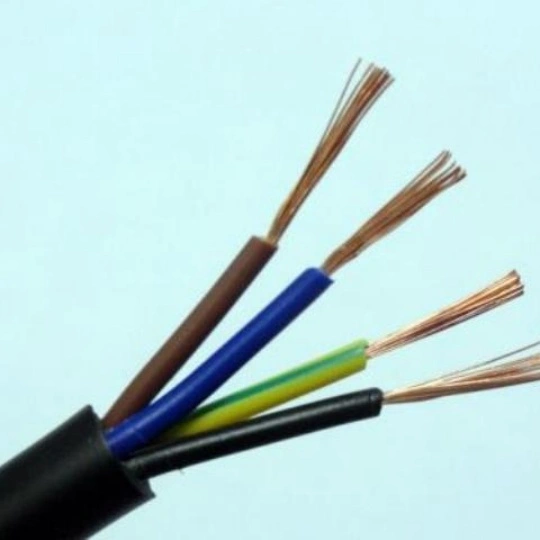
INDUSTRIAL CABLE ASSEMBLIES PRODUCTS ONE

INDUSTRIAL CABLE ASSEMBLIES PRODUCTS ONE

Industrial Cable Assembly Product Summary‌ ‌Material & Safety‌ Utilizes premium raw materials and globally recognized components (e.g., ABB, TE Connectivity)‌ ensuring high reliability and safety to prevent risks like fire and e.

Industrial control cable module components

Industrial control cable module components

Meta Description: Discover high-performance industrial control cable module components designed for seamless automation, harsh environments, and superior connectivity. Explore specs, certifications, and applications. H2: Industrial Con.

Contact Us

Feel free to reach out to us for any inquiries or orders.

Call Us

Have a question? Give us a call!

                   +8618818785005

Email Us

Send us an email and we'll get back to you soon.

sales@custom-cable-assemblies.com
       
Home Products Contact