In harsh industrial environments, standard cables often fail due to exposure to oils, coolants, acids, and cleaning agents. Chemical resistant industrial cable assembliesare engineered to maintain performance and lifespan where ordinary cables fail. This guide provides B2B buyers with a practical framework for specifying the right assemblies.
1. What Are Chemical Resistant Industrial Cable Assemblies?
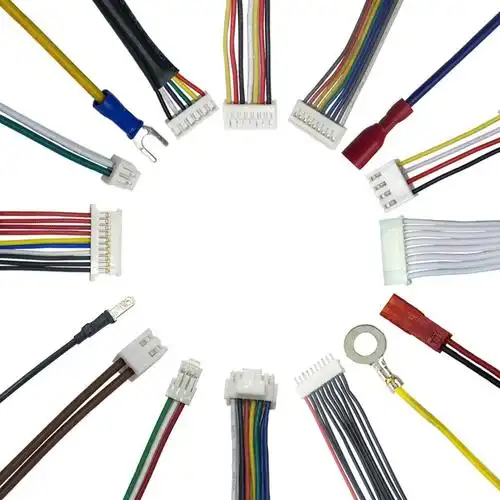
These are complete cable solutions, including conductors, insulation, shielding, and connectors, designed for environments with chemical exposure. They are built to resist swelling, cracking, and corrosion, ensuring signal and power integrity.
Integrated System:Combines cable and connector into one tested assembly, reducing field failures.
Engineered Materials:Uses jackets and insulations selected for compatibility with specific chemicals, temperatures, and mechanical stresses.
Diverse Applications:Used in automation, oil & gas, and marine settings where cables face oils, acids, alkalis, and solvents.
2. Key Application Scenarios
Understanding your operating environment is the first step in selecting the right assembly.
Factory Automation & Robotics
Chemicals:Cutting fluids, hydraulic oils, lubricants, and cleaning agents.
Requirements:PURor TPUjackets for oil and chemical resistance, plus high flex life for continuous motion in energy chains.
Oil & Gas, Petrochemical, Refining
Chemicals:Crude oil, diesel, hydraulic fluids, acids, and alkalis.
Requirements:Fluoropolymer (FEP, PTFE) or specialized oil-resistant jackets rated for high temperatures and immersion.
Chemical Processing Plants
Chemicals:Strong acids, alkalis, and aggressive solvents.
Requirements:Top-tier chemical resistance (PTFE, FEP, FKM/Viton), often with 316L stainless steel or special alloys for fittings.
Food & Beverage / Pharma
Chemicals:Frequent high-pressure cleaning with acidic/alkaline detergents (CIP/SIP).
Requirements:Chemical-resistant, smooth, easy-to-clean jackets (e.g., special PUR, TPE) that meet FDA/USP and washdown standards.
Marine, Offshore & Saltwater Environments
Chemicals:Saltwater spray, humidity, and fuel.
Requirements:Salt spray and UV resistance, plus oil/chemical resistance. Materials like TPU, polyurethane, neoprene, and Halar/HMWPEare common.
Underground / Corrosion-Prone Installations
Chemicals:Soil moisture, sewage, and groundwater with varying pH.
Requirements:Dual-layer constructions with Halar, Kynar, or HMWPEfor excellent chemical and moisture resistance.
3. Critical Chemical Resistance Factors
Don’t rely on vague terms like “chemical resistant.” Evaluate these key factors:
Chemical Type & Concentration:Identify the specific chemical, its concentration, and whether it’s a static splash or full immersion. Solvent mixtures, like ketones, are particularly aggressive.
Temperature:Higher temperatures accelerate chemical attack. Ensure the cable’s rating covers both the ambient and any hot surfaces it contacts.
Exposure Time:Determine if the exposure is continuous, intermittent, or occasional splash. Long-term immersion demands more robust materials.
Mechanical Stress:Consider if the cable is stationary, flexing in a drag chain, or subject to vibration. TPUand PURoffer a good balance for dynamic applications, while FEPand PTFEexcel in static, harsh chemical environments.
4. Common Jacket & Insulation Materials
Match the material to your application’s demands. Here’s a comparison of common options:
Material
Key Properties
Typical Temp. Range
Best For
Key Limitations
PVC
Low cost, general purpose
-10 ~ 70°C
Light industrial, dry areas
Poor in ketones, aromatics, and at low temps
TPU
Oil, abrasion, flex resistant
-40 ~ 105°C
Robotics, machinery, mobile equip.
Not for strong acids/bases
PUR
Oil, hydrolysis, UV resistant
-40 ~ 90°C
Outdoor automation, UV exposure
Can be attacked by strong acids/bases
FEP
Excellent chemical & heat resistance
-60 ~ 200°C
High-temp, strong chemical environments
Higher cost, less flexible
PTFE
Top-tier chemical resistance
Up to 260°C
Extreme chemical/heat, labs
High cost, specialized handling
XLPE
Good heat & chemical resistance
Up to 90°C+
Power cables in plants
Not for strong solvents
Rubber (CR, EPR, NBR)
Flexible, oil/ozone resistant
Varies
Marine, oils, some acids/bases
Check compatibility individually
FKM/Viton®
Superior fuel & chemical resistance
-20 ~ 200°C
Fuel systems, aggressive chemicals
High cost
5. Key Electrical & Mechanical Parameters
Voltage & Current:Ensure the cable’s voltage rating (e.g., 300/500V, 600/1000V) exceeds your system’s requirements. Use ampacity derating tables for high ambient temperatures or tight bundling.
Conductor Size:Select based on current load and acceptable voltage drop, considering the operating temperature.
Shielding:Use braided shields for EMI protection in data/signal cables. For high-flex applications, pair braid with foil for durability.
Flex Life & Bend Radius:For moving cables, specify the minimum bend radius (e.g., 7.5x cable OD) and cycle life (e.g., millions of cycles for drag chains).
Ingress Protection (IP Rating):Choose an IP rating (e.g., IP65, IP67, IP68) based on exposure to dust and water. Chemical resistance and IP rating are separate; a chemical-resistant jacket is still needed.
6. Connector & Overmolding Considerations
The weakest point is often the connector-seal interface.
Material Compatibility:Match connector materials (e.g., 316L stainless steel, brass with nickel plating) to the chemical environment.
Sealing:Use gaskets and O-rings made of materials compatible with your chemicals. Adhesive-lined heat shrink is a common failure pointas it can wick chemicals inside.
Overmolding:Provides a robust, sealed transition that protects against moisture, chemicals, and mechanical stress. It also offers strain relief at the bend point, a common failure location in dynamic applications.
7. Actionable Specification Checklist
Use this 7-step checklist to brief your supplier:
Environment:Describe the installation (indoor/outdoor, submerged, etc.) and temperature range.
Chemicals:Provide a full list of chemicals, concentrations, and exposure methods (splash, immersion, vapor).
Mechanical Stress:Specify motion type (flexing, torsion), bend radius, and cable length in the moving section.
Electrical Specs:Detail voltage, current, signal type, and required shielding.
Performance:State required ingress protection (IP rating) and flex life/cycle count.
Testing:Request chemical compatibility data or testing in your specific media. For critical projects, a small test order is recommended.
8. Common Pitfalls to Avoid
Vague Specifications:“Chemical resistant” is not enough. Always name the chemical and its concentration.
Ignoring Temperature:A material resistant at 20°C may fail rapidly at 80°C. Check the temperature rating.
Overlooking Mechanical Stress:A chemically resistant but stiff cable can fail due to vibration at the connector.
Neglecting Connector Seals:The connector is the most vulnerable point. Ensure seals and overmolding are specified for the environment.
Skipping Real-World Testing:Lab data is a guide. Whenever possible, test the assembly in your actual chemical environment.
9. Quick Material Selection Guide
Choose a starting point based on your primary challenge:
Oils, Grease, Coolants, General Factory Chemicals:
Dynamic Use:PURor TPUjacket.
Static Use:PVC or oil-resistant rubber.
Strong Acids, Bases, Solvents, High Temperatures:
Top Choice:FEPor PTFE(FKM/Viton for fuel/strong organics).
Note:These are typically for static or slow-moving applications.
Saltwater, Marine, Outdoor UV:
Jacket:TPU, PUR, neoprene, or Halar/HMWPE.
Fittings:316L stainless steel or better.
High Flex + Chemicals:
Cable:High-flex PURor TPE-based designs.
Connector:Overmolded with compatible materials.
Professional Summary
Selecting the right chemical resistant industrial cable assemblyis a strategic decision that impacts equipment reliability, safety, and total cost of ownership. The most common cause of failure is the use of general-purpose cables in harsh chemical environments, leading to insulation breakdown, connector corrosion, and unplanned downtime.
For B2B buyers, success lies in a systems-level specificationthat integrates chemical compatibility, mechanical demands, electrical performance, and ingress protection from the outset. Partnering with an experienced manufacturer for application-specific testing and validation is the most reliable way to ensure a long service life and a strong return on investment.
In industrial operations, the performance of cables directly affects the stability, safety, and efficiency of the entire production system. Choosing the right industrial cable brand requires more than just looking at prices; it demands ...
Robotics are transforming industries, from intricate assembly lines to demanding logistics centers. But what keeps these agile machines running smoothly? Often overlooked yet critical, high-flex industrial cable assemblies are the...
Ensuring your fiber optic patch panels meet TIA (Telecommunications Industry Association) standards for insertion loss is crucial for maintaining network performance, reliability, and future-proofing. Non-compliant panels can lead to si...
Ensuring the quality of industrial cable assemblies is critical. Faulty cables can lead to equipment failure, production downtime, safety hazards, and costly repairs. Here’s a practical guide to verifying their quality effectively:
1...
In the intricate web of modern industrial operations, the role of cables in ensuring seamless power transmission and data communication cannot be overstated. Among the various types of cables available, armored industrial cables have em...
Industrial cable assemblies are critical components in manufacturing, automation, and energy sectors, where safety and reliability are non-negotiable. Underwriters Laboratories (UL) certifications ensure these products meet rigorous saf...
Electromagnetic interference (EMI) is a common challenge in electrical and electronic systems, often leading to degraded signal quality, data corruption, and equipment malfunction. Proper cable routing is critical to minimize EMI and en...
Industrial cables are the backbone of Europe’s manufacturing, energy, infrastructure, and automotive sectors, with reliability, compliance to EU standards (such as CE, REACH, and IEC), and technical adaptability being core requirements ...
Industrial cable assemblies are the unsung heroes of modern manufacturing, automation, and infrastructure. These specialized bundles of wires, connectors, and protective components ensure seamless power transmission, data transfer, and ...
Industrial cables are the backbone of modern manufacturing, energy distribution, and infrastructure operations. They transmit power, data, and control signals across factories, warehouses, power plants, and outdoor facilities—making the...
In the field of industrial automation, reliable data transmission and stable equipment connection are core guarantees for production efficiency. As a key supporting component of the CC-Link (Control & Communication Link) series—an i...
Industrial cables are the “nervous system” of automated systems—powering motors, transmitting sensor data, and enabling communication between controllers. Poor cable selection can lead to system malfunctions, unplanned downt...
Construction sites are dynamic, high-stakes environments where every component plays a critical role in ensuring projects run smoothly, safely, and on schedule. Among the countless materials and equipment used, industrial cables stand o...
Connector compatibility is a critical factor in ensuring seamless integration, reliable performance, and long-term durability of cable assemblies. Mismatched connectors can lead to system failures, signal degradation, and costly redesig...
Strong electromagnetic interference (EMI) in industrial settings like factories, power plants, and processing facilities can wreak havoc on sensitive equipment and signal integrity. Proper cable grounding is your critical defense agains...
In industries where equipment faces frequent exposure to water, chemicals, or rigorous cleaning processes, washdown-ready cable assemblies are critical for ensuring reliability, safety, and compliance. These specialized cables are desi...
Industrial cables are the lifelines of modern industrial systems, playing a crucial role in transmitting electricity, signals, and data across various sectors such as manufacturing, energy, transportation, and construction. The reliabil...
In the complex ecosystem of industrial operations—from automated manufacturing lines to heavy-duty mining equipment, and from industrial robotics to critical power transmission systems—industrial cable connectors serve as the unsung her...
In the dynamic landscape of industrial infrastructure, the reliability and performance of industrial cables are of paramount importance. As we step into 2025, several brands have emerged as frontrunners, setting the benchmark for qualit...
Customized wire harnesses are essential components in countless industries, but their complex nature can introduce manufacturing challenges. Applying Design for Manufacturing (DFM) principles early in the design phase is crucial for ens...
The Backbone of Reliability
In an era where downtime costs enterprises an average of $5,600 per minute (Gartner 2024), [Company Name]’s data center has achieved an industry-leading 99.9% uptime through revolutionary cable infra...
In today’s renewable energy sector, project timelines are tighter, budgets are under pressure, and reliability is non-negotiable. Whether you’re connecting solar arrays, wind turbines, or battery energy storage systems (BESS...
The rise of AI and high-performance computing (HPC) is pushing data center interconnects beyond 400G. In 2026, 800G OSFP industrial cable assembliesare becoming the new baseline for AI data centers, providing the high density, low laten...
Electrical cable assemblies are integral components in nearly every industry that relies on electrical power or signal transmission. Unlike individual cables, these assemblies consist of multiple cables, wires, or conductors organized i...
1. The Rising Demand for Cost-Effective Medical Solutions
Hospitals worldwide face mounting pressure to reduce expenses without compromising quality. Medical cables—often overlooked—play a pivotal role in streamlining operations. Fro...
In the automotive and industrial sectors, cable assemblies are the lifelines of electrical systems, transmitting power and signals critical to vehicle and machinery operation. However, harsh environments—extreme temperatures, vibrations...
The shift to new energy vehicle (NEV) industrial cable assembliesis being defined by one critical factor: the rise of liquid-cooled technologyfor fast charging. As the industry moves toward 800V architectures and megawatt-level charging...
Industrial cable assemblies are critical components in manufacturing, automation, and heavy machinery. Choosing the right ones—especially those certified by Underwriters Laboratories (UL)—ensures safety, reliability, and compliance. Thi...
In modern industrial environments, cables are constantly exposed to lubricants, cutting fluids, fuels, and cleaning agents. Oil resistant industrial cable assembliesare no longer optional in these settings; they are critical for ensurin...
The New Generation of Connected Cables
Major manufacturers (Prysmian, Nexans) and startups (BondWire, NanoCable Tech) are embedding sensors directly into cable structures. These IoT-enabled cables continuously monitor:
Real-time ...
Industrial cables are the lifelines of manufacturing plants, refineries, and chemical processing facilities, transmitting power and data to keep operations running smoothly. However, chemical spills pose a severe threat to these cables—...
Railway systems operate in some of the most demanding environments, where vibrations, shocks, and constant mechanical stress are unavoidable. Ensuring reliable performance under these conditions requires cable assemblies specifically de...
For industrial engineers, procurement managers, and OEM buyers, ISO 9001 industrial cable assemblies are more than just wiring solutions—they’re a guarantee of consistent quality, regulatory compliance, and reliable performance in harsh...
Cable assemblies are critical components in electrical and mechanical systems, ensuring reliable power and signal transmission. However, improper installation can lead to performance issues, safety hazards, or even system failure. This ...
The automotive manufacturing industry relies heavily on precision, reliability, and safety. At the heart of these requirements are cable assemblies, which serve as the nervous system of vehicles, connecting critical components like sen...
The Critical Need for Safety in Mining Operations
The mining industry faces unique electrical hazards due to flammable gases, combustible dust, and volatile atmospheres. Traditional cabling systems pose ignition risks, accounting for...
In industries ranging from automotive manufacturing to marine engineering, and even in everyday outdoor electrical setups, waterproof cable connectors play a pivotal role in ensuring reliable electrical connections while safeguarding ag...
The AI Revolution in Cable Production“Our defect rate dropped 40% in 6 months,” reveals John Carter, CEO of VoltCable Inc., in an exclusive interview about AI implementation. Traditional cable factories face three key challe...
High-voltage cable assemblies are critical components in industries like energy transmission, renewable energy, manufacturing, and infrastructure. Ensuring these cables meet stringent technical requirements is essential for safety, effi...
Industrial Cable Assembly Product Summary
Material & Safety
Utilizes premium raw materials and globally recognized components (e.g., ABB, TE Connectivity) ensuring high reliability and safety to prevent risks like fire and e.
Meta Description: Discover the ultimate Protective Cable Kit designed to safeguard your cables from wear, tangles, and damage. Perfect for home, office, and industrial use. Shop now for long-lasting cable management!
Protecti.
Contact Us
Feel free to reach out to us for any inquiries or orders.