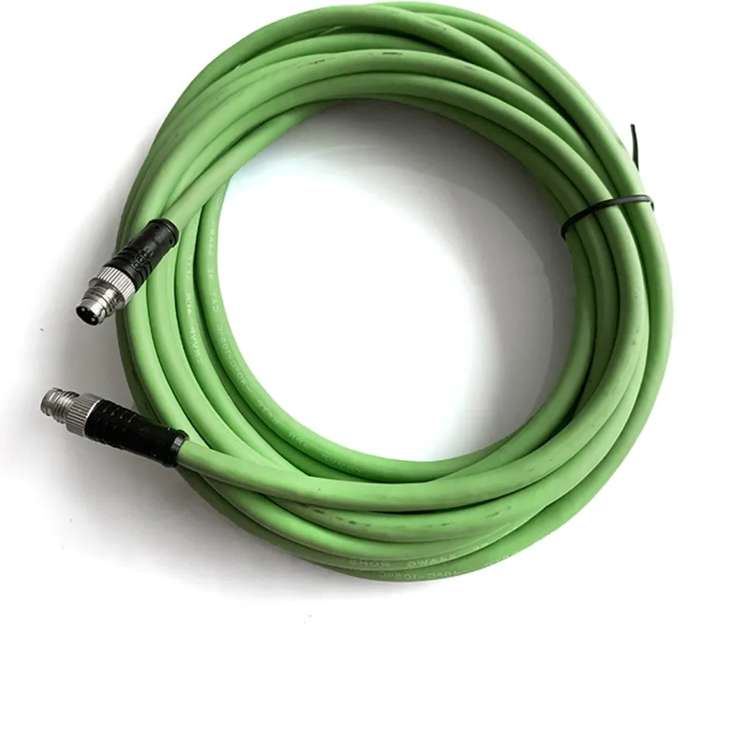
Keeping your CNC machines running reliably demands components that can withstand their harsh, high-vibration environment. Cable assemblies are often a critical failure point when vibrations cause internal wire breakage, connector fatigue, and jacketing damage, leading to costly downtime and electrical faults. Selecting the right cable assemblies is essential. Here’s a focused guide on what to prioritize:
Key Selection Criteria:
Continuous Flex Rating: This is non-negotiable. Avoid standard power or control cables.
Look For: Cables specifically designed and tested for “continuous flex” or “torsion-flex” applications.
Why: These cables feature conductors stranded with finer wires (often ultra-fine strands) and specialized insulation/construction that withstand millions of repeated bending cycles without internal damage, even under constant vibration.
Strain Relief (Crucial at Connectors): Vibration wreaks havoc on connection points.
Look For: Robust strain relief systems integrated into the connector. This should physically clamp onto the cable jacket securely and relieve stress directly at the cable entry point into the connector housing. Overmolded designs often provide excellent strain relief. Avoid relying solely on cable ties.
Why: Prevents internal conductor breakage at the termination point and ensures connectors stay securely mated.
Jacket Material & Abrasion Resistance: Cables rub against machine guards, other cables, and structures.
Look For: Highly durable, abrasion-resistant jackets like Polyurethane (PUR) or specialized PVC compounds. Thermoplastic Elastomers (TPE) can also be a good choice. Verify material compatibility with cutting fluids and coolants used.
Why: Resists wear and tear from constant micro-movements and contact points, preventing jacket damage that exposes conductors.
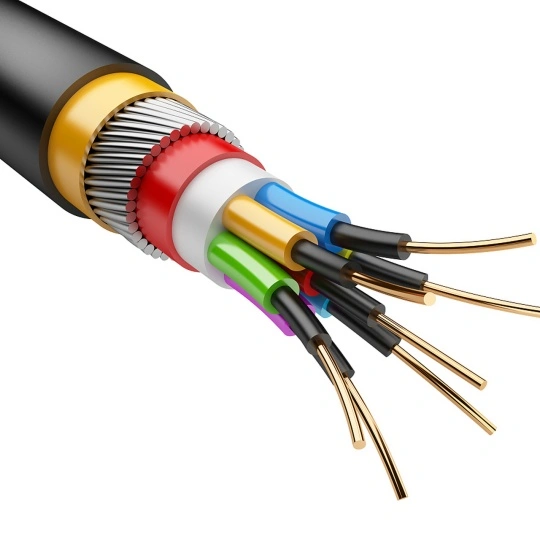
Look For: Cables with effective overall shielding (e.g., braided shield + foil shield, high-coverage braid) suitable for the signal type (power, encoder feedback, communication).
Why: Maintains signal integrity for sensitive data (like encoder feedback), prevents electrical noise from causing erratic machine behavior or data corruption.
Conductor Gauge & Insulation: Ensures electrical performance and conductor protection.
Look For: Select the correct conductor gauge (size) for the required current carrying capacity. Insulation materials like TPE, PUR, or high-flex PVC should be optimized for flexibility without compromising dielectric strength.
Why: Prevents overheating and voltage drop (power), protects signal integrity (data), and maintains wire separation during flexing.
Secure Mounting & Routing: The installation is as critical as the cable itself.
Look For: Plan cable paths carefully. Use dedicated guides, carriers (cable tracks/chains), and clamps designed for high-flex, high-vibration applications. Ensure cables are slightly loose within carriers to allow free movement without binding.
Why: Prevents kinking, sharp bends, crushing, excessive stretching, or dangling that dramatically shortens cable life. Dedicated carriers provide predictable bend paths and support.
Application-Specific Considerations:
Motor Feed Cables: Require robust shields, correct gauge sizing for power transmission, excellent continuous flex rating, and fluid resistance. Heavy-duty strain relief is mandatory.
Encoder/Feedback Cables: Demand exceptional shielding to protect low-voltage, high-precision signals. Twisted pair construction is common. Abrasion resistance and continuous flex are vital. Match impedance requirements if specified.
Control/Sensor/I/O Cables: Need reliable shielding to avoid signal interference and good flex characteristics for movement within the cabinet or to peripherals.
Requirement: Prevent connection failures? Solution: Robust, Integral Strain Relief
Requirement: Exposed to abrasion/fluids? Solution: Abrasion/Flame/Fluid-Resistant Jacket (e.g., PUR)
Requirement: Protect signals/power from noise? Solution: Effective Shielding
Requirement: Safe, reliable operation? Solution: Proper Routing in Carriers/Guides with Appropriate Clamping
Final Tip: Partner with experienced cable assembly manufacturers. Most high-vibration CNC applications require custom assemblies precisely designed for the specific machine layout, movement patterns, and environmental challenges. Communicate your machine model, movement axes involved (linear/torsional), travel distance, and specific fluid exposure details for optimal results.
Choosing cables explicitly engineered to endure the dynamic stresses inside CNC machinery minimizes unplanned downtime, reduces maintenance costs, and ensures your critical fabrication processes run smoothly and precisely. Invest upfront in the right cable solution to maximize productivity.
IntroductionProper grounding is critical for the safety and performance of cable assemblies in electrical and communication systems. However, grounding errors are surprisingly common and can lead to equipment damage, data loss, or even ...
Introduction
Industrial robot cable assemblies serve as the lifelines of automation systems, requiring specialized materials to withstand dynamic movements, electromagnetic interference, and harsh industrial environments. This guide ...
In the complex ecosystem of industrial equipment, an industrial wiring harness serves as the “nervous system” that connects and transmits electrical signals, power, and data between various components. Simply put, it is a bu...
Purchasing used industrial cable assemblies can be a cost-effective strategy for businesses with tight budgets. However, secondhand components carry significant risks, including safety hazards, compliance violations, and hidden costs fr...
In the intricate web of modern industrial operations, cables serve as the lifelines that power machinery, transmit critical data, and enable seamless communication across production lines, warehouses, and facilities. From manufacturing ...
In the complex and interconnected world of modern industry, industrial cables serve as the lifelines that transmit power, data, and signals across various sectors—from energy generation and manufacturing to transportation and telecommun...
In the fast-paced world of industrial automation, every component plays a pivotal role in ensuring operational efficiency, reliability, and scalability. Among these components, cable assemblies stand out as the “nervous system” that con...
Walk into any industrial facility, and you’ll notice a rainbow of cables snaking through machinery, walls, and ceilings. At first glance, these varied jacket colors might seem like a random design choice—but in reality, they serve criti...
Industrial cables are the lifelines of manufacturing plants, power grids, and heavy machinery. Their conductivity directly impacts energy efficiency, operational safety, and equipment performance. A cable with poor conductivity can lead...
In the oil industry, where operations involve high pressure, extreme temperatures, flammable substances, and complex mechanical stresses, industrial cables serve as the critical “nervous system”—connecting equipment, transmi...
Discovering corroded cable assembly connectors can signal impending system failures. Performing a systematic Root Cause Analysis (RCA) is essential to fix the immediate problem and prevent recurrence. Here’s a practical guide:
...
In the intricate web of modern industrial operations, the role of cables in ensuring seamless power transmission and data communication cannot be overstated. Among the various types of cables available, armored industrial cables have em...
In the dynamic landscape of industrial infrastructure, the reliability and performance of industrial cables are of paramount importance. As we step into 2025, several brands have emerged as frontrunners, setting the benchmark for qualit...
Chemical processing plants operate in one of the most demanding industrial environments: corrosive gases (e.g., chlorine, ammonia), toxic liquids (e.g., solvents, acids), extreme temperatures (-40°C to 180°C in some processes), and cons...
Finding a reliable industrial cable assemblies supplier is crucial. Their ISO 9001 certification should indicate a commitment to quality management. But how do you know it’s genuine? Don’t take claims at face value. Verifying ...
The lifespan of industrial cables in corrosive environments is not a fixed value but varies significantly depending on multiple factors. In general, standard industrial cables may last only 2-5 years in severe corrosive conditions, whil...
The entertainment industry is a symphony of technology and creativity, where every dazzling light, crisp sound, and seamless mechanical movement relies on an unsung hero: industrial cable. Unlike standard cables designed for residential...
In the complex ecosystem of industrial machinery and equipment, heavy duty industrial wire harnesses stand as the unsung heroes that ensure seamless communication, power transmission, and operational reliability. Unlike standard wire ha...
In industrial settings where high humidity, water exposure, or corrosive conditions are prevalent, selecting the right cable is critical to ensure reliable performance and longevity. Moisture can degrade insulation, corrode conductors, ...
Industrial cable assemblies are the critical nervous system of machinery and control systems. Detecting failure signs early prevents costly downtime, equipment damage, and safety hazards. Here’s what to watch for:
1. Visible P...
Industry 5.0: The Demand for Smarter ConnectivityIndustry 5.0 prioritizes human-centric automation, requiring cable assemblies to:
Enable Real-Time AI Interaction: Support <1ms latency for AI decision-making.Withstand Dyna...
If you’re sourcing, manufacturing, or using cable assemblies in China, understanding the country’s regulatory and quality standards is crucial. This guide breaks down the key requirements for domestic cable assemblies in China, helping...
Electrical Performance: Powering Precision1.1 Voltage and Current RatingsIndustrial cable assemblies are categorized by voltage classes:
Low Voltage (LV): Up to 1,000V AC / 1,500V DC for robotics, PLCs, and conveyor systems.M...
In today’s fast-paced industrial environments—from automotive assembly lines and warehouse logistics to pharmaceutical packaging—barcode scanners are indispensable tools for tracking assets, streamlining workflows, and ensuring data acc...
In the era of Industry 4.0, industrial Ethernet cables serve as the lifeline of automated production lines, smart factories, and critical infrastructure. Unlike commercial Ethernet cables designed for office environments, industrial-gra...
In today’s fast-paced industrial landscape, reliability and efficiency are non-negotiable. At the heart of this demand lies industrial cable assemblies—critical components that power machinery, enable communication between systems, an...
In the complex landscape of industrial manufacturing and automation, flexible industrial wire assemblies stand as a critical connectivity backbone, enabling seamless power transmission, signal communication, and data exchange across a w...
Industrial cables are the “nerve system” of modern manufacturing, energy, and infrastructure—powering motors, transmitting control signals, and connecting critical equipment. Their performance directly impacts operational ef...
Conductors: The Core of Power and Signal TransmissionThe conductor is the central element responsible for transmitting electrical power or signals. Common materials include:
Copper: The most widely used conductor due to its exce...
Industrial cable assemblies are the backbone of modern infrastructure, powering everything from manufacturing plants to renewable energy systems. However, as industries face increasing pressure to reduce their environmental footprint, t...
In today’s fast-paced manufacturing world, precision is non-negotiable—especially in industries like aerospace, automotive, and electronics, where a single faulty cable can lead to system failures or safety risks. Traditional cable asse...
The New Generation of Connected Cables
Major manufacturers (Prysmian, Nexans) and startups (BondWire, NanoCable Tech) are embedding sensors directly into cable structures. These IoT-enabled cables continuously monitor:
Real-time ...
IntroductionIndustrial robots are the backbone of modern manufacturing, performing tasks with precision and speed. However, their efficiency heavily relies on the durability of cable assemblies, which transmit power, signals, and data. ...
Industrial cable assemblies are the backbone of modern manufacturing, automation, and connectivity. As industries evolve, so do the demands for smarter, more durable, and adaptable solutions. To stay ahead, businesses must understand th...
The global shift toward renewable energy isn’t just transforming how we power our homes and industries—it’s also fueling unprecedented demand for heavy-duty cables. As solar farms, wind turbines, and grid modernization projects multiply...
As 5G-enabled industrial automation pushes factories toward higher speeds, more sensors, and harsher operating conditions, the reliability of every physical connection is under unprecedented pressure. Chemical resistant industrial cable...
In industries where extreme heat is a constant challenge—from manufacturing plants to renewable energy systems—cable failures can lead to catastrophic consequences. A groundbreaking advancement in high-temperature (high-temp) cable tech...
Industrial cable assemblies are critical components in manufacturing, automation, and heavy machinery. Choosing the right ones—especially those certified by Underwriters Laboratories (UL)—ensures safety, reliability, and compliance. Thi...
Industrial cable assemblies with overmolding integrate cables, connectors, and (in some cases) wire harnesses into a single, seamless unit using thermoplastic or elastomeric materials. This overmolding process goes beyond basic cable as...
When it comes to electrical systems operating under extreme mechanical and electrical stress, high-load cable terminations are critical components that ensure seamless power transmission, safety, and system longevity. Engineered to .
In today’s technology-driven world, maintaining uninterrupted signal integrity is critical for industrial, commercial, and residential applications. The Shielded Cable Core is engineered to deliver superior electromagnetic interference .
Contact Us
Feel free to reach out to us for any inquiries or orders.