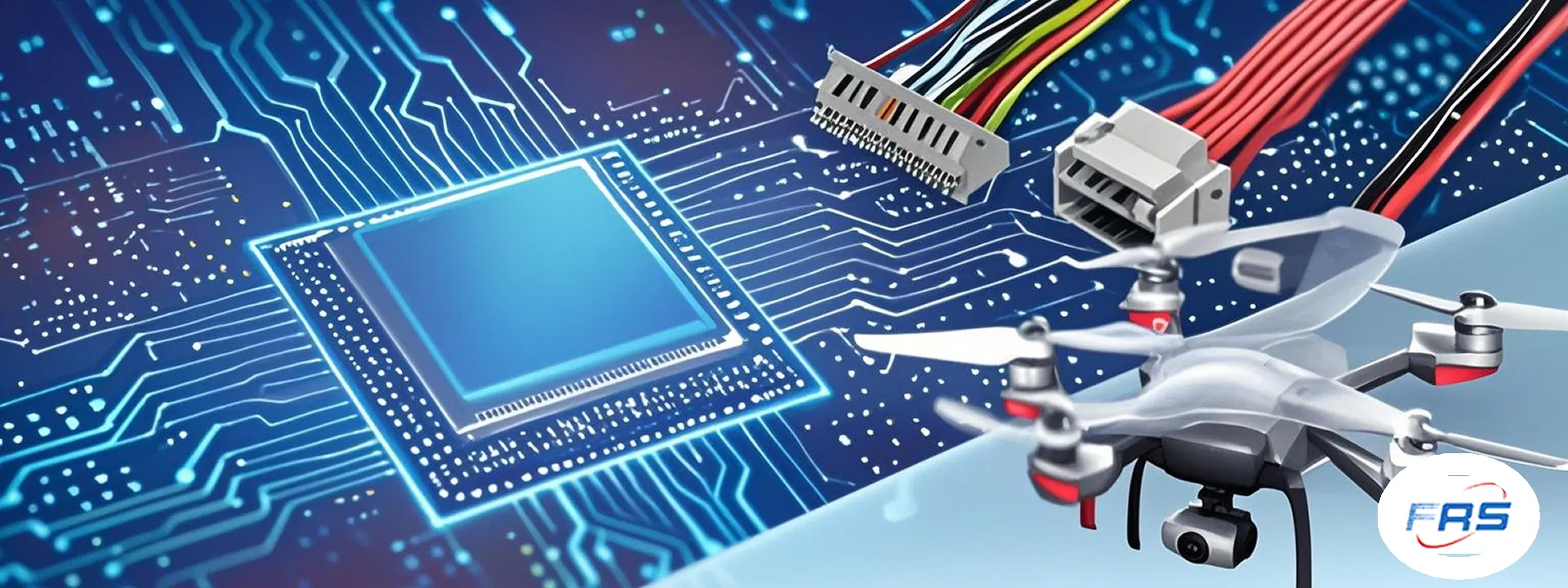
Industrial cable components are the backbone of reliable and efficient connectivity in industrial automation, robotics, and machinery. Engineered to withstand harsh environments while ensuring seamless data transmission and power delivery, these components are critical for optimizing operational efficiency across diverse industries. Below is a comprehensive overview of their features, applications, and value propositions.
Product Overview
Industrial cable components encompass a range of high-performance connectors, cables, and accessories designed for demanding industrial applications. Key product categories include:
Robotic and Motion Control Cables
Application: Ideal for robotic arms, CNC machines, and automated guided vehicles (AGVs).
Features:
High Flexibility: Ultra-flexible materials enable over 1 million bending cycles without performance degradation.
Durability: Resistant to mechanical stress (stretching, torsion) and harsh conditions (oil, grease, welding sparks).
Temperature Resistance: Operates reliably in extreme temperatures (-40°C to +125°C).
Use Case: Ensures uninterrupted power and signal transmission in automotive welding lines and food processing robots.
Industrial Communication Cables
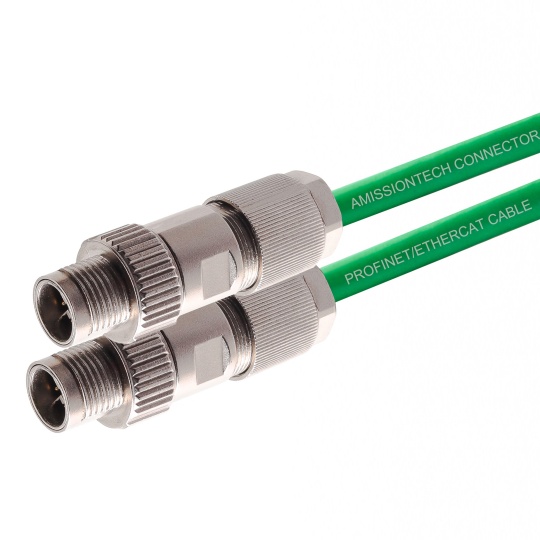
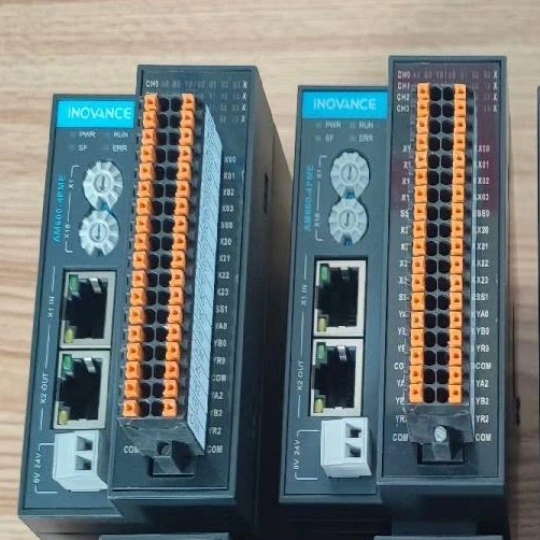
Application: Supports smart factories with real-time data exchange via IO-Link (IEC 61131-9) and fieldbus protocols (PROFINET, EtherCAT).
Features:
Shielding Technology: Triple-layer shielding minimizes EMI/RFI interference for stable data integrity.
Plug-and-Play Design: Simplifies integration with sensors, actuators, and PLCs.
Use Case: Enables predictive maintenance and IoT-enabled monitoring in pharmaceutical and chemical plants.
Heavy-Duty Power Cables
Application: Powers heavy machinery, mining equipment, and renewable energy systems.
Features:
High Current Capacity: Engineered for voltages up to 1 kV and currents exceeding 500A.
Environmental Protection: IP67/IP69K-rated connectors resist water, dust, and high-pressure washdowns.
Technical Specifications and Innovations
Material Science:
Conductors: Oxygen-free copper (OFC) for low resistance and high conductivity.
Insulation: Thermoplastic elastomers (TPE) and PUR jackets for abrasion resistance and flame retardancy (UL/CE certified).
Signal Integrity:
Cross-talk reduction through twisted-pair designs and foil-and-braid shielding.
Supports high-speed data rates up to 10 Gbps for Industry 4.0 applications.
Certifications:
Compliant with UL, CE, RoHS, and REACH standards.
Supply Chain and Service Excellence
Customization: Over 183 standard models (e.g., 960927 series) and bespoke solutions tailored to length, color-coding, and connector types.
Global Availability: Sourced via B2B platforms (e.g., Alibaba, industry-specific distributors) with access to 187+ product categories.
Fast Turnaround: Batch production with lead times as short as 48 hours for urgent requirements.
Technical Support: Dedicated engineering teams assist with product selection, installation, and troubleshooting.
Why Choose Our Industrial Cable Components?
Reliability: Tested under MIL-STD and ISO 3408 standards for longevity in extreme conditions.
Cost Efficiency: Reduced downtime and maintenance costs through ruggedized designs.
Sustainability: Recyclable materials and energy-efficient manufacturing processes.
Water and humidity damage cables in multiple ways:
Conductor Corrosion: Moisture oxidizes copper, increasing resistance and causing overheating.Insulation Breakdown: Water treeing in polymers (e.g., XLPE) creates conductive paths...
The oil and gas industry operates in some of the harshest and most demanding environments on the planet, from deep-sea drilling rigs to high-temperature refineries and remote desert pipelines. In such settings, industrial cables play a ...
Industrial environments demand reliable connectivity, but high humidity poses a unique and persistent threat to cable assemblies. Understanding why these failures occur is crucial for selecting the right components and ensuring uptime, ...
Renewable energy systems—such as solar photovoltaic (PV), wind, and energy storage—operate in harsh environments, from sun-scorched deserts to offshore wind farms and temperature-fluctuating storage facilities. The “best” in...
Industrial environments often expose cables to harsh conditions. Understanding these 5 key types helps select the right corrosion-resistant solution:
Stainless Steel Braided Cables
Ideal for: Chemical plants, marine applications
...
Ensuring the traceability of industrial cable assemblies is not just a best practice; it’s a critical necessity. From manufacturing and assembly through installation, maintenance, and eventual decommissioning, clear and reliable l...
Industrial cable assemblies are critical components in demanding applications, from aerospace and automotive systems to oil and gas exploration and outdoor telecommunications. Exposure to extreme high or low temperatures can severely im...
Hydrogen fuel cell systems represent a significant leap forward in clean energy technology. However, their unique operating environment places critical demands on every component, especially the cable assemblies interconnecting sensors,...
Selecting the right industrial cable gauge is critical to avoiding equipment failure, safety hazards (such as overheating or short circuits), and inefficient energy transmission. Unlike residential cables, industrial applications involv...
The rise of 5G-enabled smart factories promises unprecedented levels of automation, real-time control, and IoT connectivity. However, the critical infrastructure enabling this revolution – industrial cable assemblies – faces unique desi...
In the intricate network of industrial operations, industrial cables stand as the unsung heroes, facilitating the seamless transmission of power, data, and signals across machinery, equipment, and entire production facilities. These cab...
In the complex ecosystem of industrial operations, where machinery, automation systems, and data transmission networks work in tandem, the connection between industrial cables and connectors is far more than a simple physical link. It i...
Industrial cables are the lifelines of modern manufacturing, energy transmission, and infrastructure projects. Among their critical components, insulation plays a pivotal role in ensuring electrical safety, preventing current leakage, a...
In modern automotive manufacturing, Automotive Manufacturing Industrial Cable Assembly Models and Typesare not just components; they are the central nervous system of the entire production ecosystem. They connect robots on the line, tra...
Subsea fiber optic cable connectors play a crucial role in the reliable transmission of data and signals in underwater environments. However, the significant pressure differences between the deep – sea and the surface pose a major...
Replacing industrial cables is not a one-time expense but a combination of direct and indirect costs, which vary significantly based on factory size, cable type, installation complexity, and replacement timing. Below is a detailed break...
Ensuring the quality of industrial cable assemblies is critical. Faulty cables can lead to equipment failure, production downtime, safety hazards, and costly repairs. Here’s a practical guide to verifying their quality effectively:
1...
IntroductionChoosing the right flexible cable isn’t just about the core specs; bend radius is critical. Get it wrong, and you risk premature cable failure, costly downtime, and safety hazards. For drag chain applications experienc...
In the modern industrial landscape, cables are the lifelines of operations—powering machinery, transmitting data, and enabling communication across factories, power plants, and infrastructure projects. However, the rapid growth of indus...
Key Selection Criteria
Material Compliance
Prioritize cables with aerospace-grade materials (e.g., PTFE insulation) that resist extreme temperatures (-65°C to 200°C), chemicals, and abrasion.
Verify compliance with standards lik...
In industries where extreme heat is a constant challenge—from manufacturing plants to renewable energy systems—cable failures can lead to catastrophic consequences. A groundbreaking advancement in high-temperature (high-temp) cable tech...
Industrial cables are the “nerve system” of modern manufacturing, energy, and infrastructure—powering motors, transmitting control signals, and connecting critical equipment. Their performance directly impacts operational ef...
Industrial cable connectors are essential components in various industrial systems, enabling the reliable transmission of power, signals, and data. There are several common types, each designed to meet specific application requirements....
In today’s industrial and automotive environments, reliable interconnections are not optional—they are mission-critical. This is where industrial cable assemblies manufacturecomes in. These assemblies, built from cables, wires, connecto...
Industrial cables are the lifelines of manufacturing plants, refineries, and chemical processing facilities, transmitting power and data to keep operations running smoothly. However, chemical spills pose a severe threat to these cables—...
The aerospace industry stands as a pinnacle of technological precision, where every component plays a critical role in ensuring safety, reliability, and performance. Among these components, industrial cables are the unsung heroes that f...
In the automotive and industrial sectors, cable assemblies are the lifelines of electrical systems, transmitting power and signals critical to vehicle and machinery operation. However, harsh environments—extreme temperatures, vibrations...
In industries ranging from automotive manufacturing to marine engineering, and even in everyday outdoor electrical setups, waterproof cable connectors play a pivotal role in ensuring reliable electrical connections while safeguarding ag...
In modern industrial automation, POWERLINK has emerged as a leading real-time Ethernet protocol, delivering high-speed, deterministic data transmission critical for applications like robotic control, assembly line synchronization, and m...
If you’re sourcing, manufacturing, or using cable assemblies in China, understanding the country’s regulatory and quality standards is crucial. This guide breaks down the key requirements for domestic cable assemblies in China, helping...
Recent advancements in high-voltage cable testing reveal a global regulatory shift towards stricter standards. With major economies implementing upgraded testing protocols, the power infrastructure sector faces both challenges and oppor...
In the world of industrial automation, downtime is the enemy. Whether you are running a high-speed pick-and-place system, a 6-axis robotic arm, or a complex CNC machine, a single cable failure can halt production, costing thousands of d...
In high-pressure industrial environments like automotive parts washers and automated car washes, a failed Industrial Cable Assemblycan shut down an entire line. This article explains how to select robust, shielded, and certified cable a...
The rollout of 5G technology isn’t just about faster smartphones or smoother video streaming—it’s revolutionizing the backbone of connectivity itself. One of the most exciting outcomes of this transformation is the rise of smart cables...
The global market for robotics industrial cable assembliesis entering a high-growth phase. Industry forecasts project a compound annual growth rate (CAGR) of approximately 14.6%through 2026, driven by the rapid expansion of industrial a...
The global cable market is set to experience robust expansion, with projections indicating a 12% compound annual growth rate (CAGR) through 2026. This surge is driven by rising infrastructure investments, advancements in telecommu...
In the complex landscape of industrial manufacturing and automation, flexible industrial wire assemblies stand as a critical connectivity backbone, enabling seamless power transmission, signal communication, and data exchange across a w...
The integration of wireless charging technology into industrial cables is transforming how industries manage power delivery in demanding settings. From manufacturing plants to logistics warehouses, this innovation addresses long-s...
Understanding Industrial Cable Model Naming ConventionsIndustrial cable models follow standardized codes indicating their construction, materials, and capabilities. Key elements include:
Conductor type: CU (copper), AL (aluminum...
Industrial cable components are the backbone of reliable and efficient connectivity in industrial automation, robotics, and machinery. Engineered to withstand harsh environments while ensuring seamless data transmission and power delivery.
Meta Description: Discover high-performance industrial control cable module components designed for seamless automation, harsh environments, and superior connectivity. Explore specs, certifications, and applications.
H2: Industrial Con.
Contact Us
Feel free to reach out to us for any inquiries or orders.