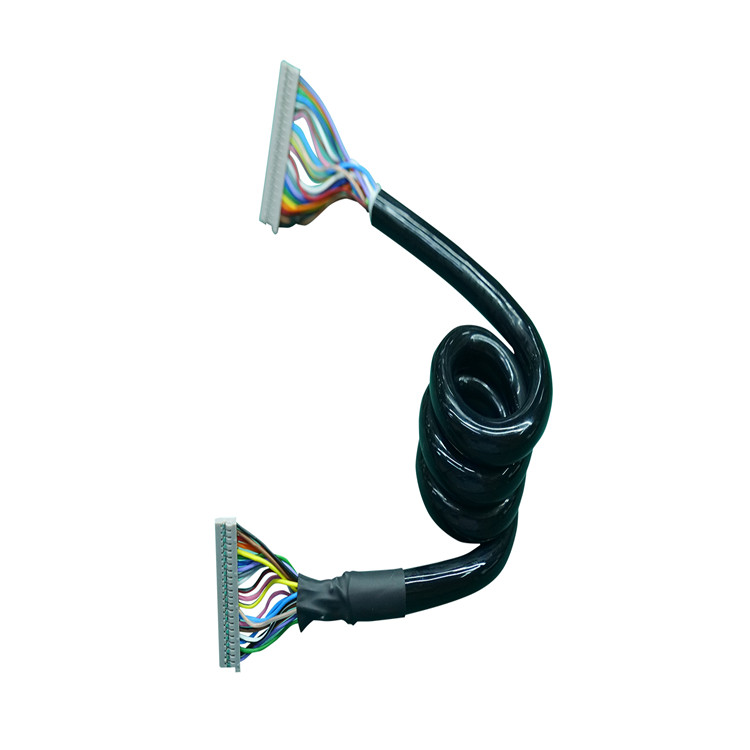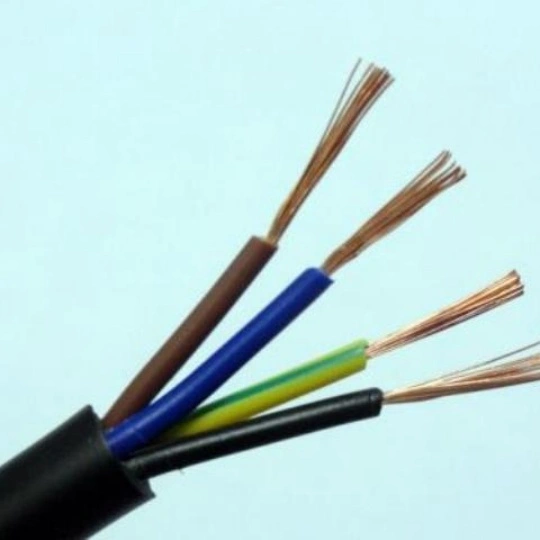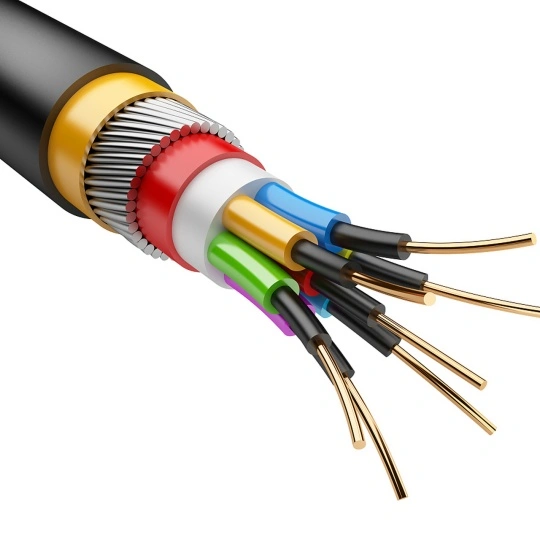
Industrial cables are the backbone of modern infrastructure, powering everything from factories and data centers to renewable energy systems. Choosing the right cable ensures safety, efficiency, and compliance with industry standards. In this guide, we’ll break down the essentials of industrial cables, their applications, and how to select the best option for your needs.
What Are Industrial Cables?
Industrial cables are heavy-duty electrical wires designed to withstand harsh environments, including extreme temperatures, moisture, chemicals, and mechanical stress. Unlike standard cables, they are engineered for durability, longevity, and high performance in industrial settings.
Top 6 Types of Industrial Cables & Their Uses
Power Cables
Purpose: Transmit electricity in high-voltage systems.
Applications: Motors, transformers, and power grids.
Key Features: Flame-resistant, UV-resistant, and armored shielding.
Control Cables
Purpose: Transmit signals to automate machinery.
Applications: PLCs, sensors, and robotics.
Key Features: EMI shielding, multi-core design.
Instrumentation Cables
Purpose: Transmit low-voltage signals for precision measurement.
In harsh industrial environments, standard cables often fail due to exposure to oils, coolants, acids, and cleaning agents. Chemical resistant industrial cable assembliesare engineered to maintain performance and lifespan where ordinary...
The maximum bending angle of an industrial cable is not a fixed value; it is determined by multiple factors such as cable structure, material properties, application scenarios, and industry standards. Understanding these factors is cruc...
Over-bending cable trays during installation is a common pitfall in industrial settings. Sharp bends compromise the tray’s structural integrity, damage cable insulation during pulling, and create pinch points leading to future fai...
Choosing the right cable assembly for your industrial application – whether grabbing one off-the-shelf or designing a bespoke solution – is crucial for performance, reliability, and cost-efficiency. Both pre-made and custom assemblies h...
Lead time for custom industrial cable assemblies is a critical factor influencing project schedules and operational continuity. Unlike off-the-shelf solutions, these complex components are built to precise specifications, requiring coor...
In the realm of industrial infrastructure, every component plays a critical role in ensuring seamless operations—but few are as overlooked yet impactful as the weight of industrial cables. From manufacturing plants and power distributio...
Industrial cable assemblies are the vital veins and arteries of your machinery and electrical systems. Keeping them functioning safely and reliably requires proactive maintenance, including regular inspections. But how often is “r...
In the complex ecosystem of industrial machinery and equipment, heavy duty industrial wire harnesses stand as the unsung heroes that ensure seamless communication, power transmission, and operational reliability. Unlike standard wire ha...
In industrial environments such as oil refineries, chemical plants, coal mines, and pharmaceutical workshops, where flammable gases, vapors, dust, or fibers may exist, explosion-proof industrial cables are critical components that ensur...
In today’s industrial landscape, reliable industrial cable assembliesare the backbone of safe and efficient operations. For global buyers, OEMs, and engineering teams, choosing the right FRS factoryfor fire-resistant, low-smoke, halogen...
High-frequency motors are widely used in modern industrial fields such as aerospace, automotive manufacturing, precision electronics, and medical equipment due to their high efficiency, fast response speed, and compact structure. Howeve...
In the fast-paced world of industrial automation, connectivity is the nervous system of your operation. Yet, many engineers and procurement managers struggle with unreliable connections, messy wiring, and lengthy lead times.
If you a...
Industrial cables are the “nervous system” of modern manufacturing, energy, and infrastructure—powering machinery, transmitting data, and connecting critical systems. Yet, one question often arises for engineers, procurement...
When it comes to industrial operations, the performance and safety of every component matter—and industrial cables are no exception. One critical specification that directly impacts a cable’s reliability, lifespan, and ability to functi...
Industrial cables are the lifelines of modern manufacturing, energy transmission, and infrastructure projects. Among their critical components, insulation plays a pivotal role in ensuring electrical safety, preventing current leakage, a...
Selecting the right industrial cable assembly supplier is a critical decision that impacts not only your supply chain’s reliability and product quality but also your corporate reputation. In today’s globally conscious market...
Selecting the right industrial cable for high-temperature furnaces is a critical decision that directly impacts operational safety, equipment reliability, and long-term cost-effectiveness. High-temperature furnaces, widely used in metal...
The oil and gas industry operates in some of the harshest and most demanding environments on the planet, from deep-sea drilling rigs to high-temperature refineries and remote desert pipelines. In such settings, industrial cables play a ...
In modern industrial settings—from automated assembly lines to robotic arms and conveyor systems—cables are not just passive transmitters of power or signals. They operate in constant motion, bending, twisting, and flexing hundreds or t...
Electrical Performance: Powering Precision1.1 Voltage and Current RatingsIndustrial cable assemblies are categorized by voltage classes:
Low Voltage (LV): Up to 1,000V AC / 1,500V DC for robotics, PLCs, and conveyor systems.M...
Industrial cables are the backbone of modern industrial operations, responsible for transmitting power, data, and signals across a wide range of machinery, equipment, and systems. Their reliable performance is crucial for ensuring the s...
Routing industrial cables in a factory is a critical task that directly impacts operational efficiency, safety, and maintenance. A well-planned cable routing system ensures reliable power distribution, seamless data transmission, and mi...
Industrial settings like oil refineries, chemical plants, grain silos, and paint spray booths contain areas where flammable gases, vapors, dusts, or fibers can be present. Using standard electrical equipment here can trigger explosions....
Electromagnetic compatibility (EMC) shielding is critical for ensuring reliable performance of industrial cables in environments plagued by electromagnetic interference (EMI). Whether in manufacturing plants, power grids, or automation ...
The Invisible Network Keeping Cities Moving
Modern urban traffic management relies on an underground nervous system of IoT (Internet of Things) cables and sensors. These interconnected systems collect real-time data from traffic ligh...
IntroductionIn a landmark move to enhance fire safety across industries, international regulatory bodies have introduced updated Global Fire-Resistant Cable Standards. These standards aim to minimize fire risks, improve electrical safe...
In the aerospace industry, where every ounce matters, lightweight cables have emerged as a game-changer. These cables not only reduce the overall weight of aircraft and spacecraft but also enhance performance, efficiency, and safety. Le...
High-voltage cable assemblies are critical components in industries like energy transmission, renewable energy, manufacturing, and infrastructure. Ensuring these cables meet stringent technical requirements is essential for safety, effi...
New energy cables (e.g., electric vehicle charging cables, in-vehicle high-voltage cables, and renewable energy system cables) must meet the following specialized technical requirements:
1. Electrical PerformanceHigh Voltage Capac...
Introduction: Why Robots Break Cables First
In high-speed industrial robotics, the weakest link is often not the motor or gearbox, but the cable system. Robotic arms operating 24/7 in pick-and-place, welding, and assembly lines are ...
The automotive industry is undergoing a profound transformation. Driven by trends like electrification, intelligence, and flexible production, the traditional “thousands of cars on one line” model is giving way to smart factories capabl...
In modern buildings, electrical systems are the lifeblood, and coaxial cables play a crucial role in transmitting data and signals. However, in the event of a fire, standard coaxial cables can become a significant hazard, spreading flam...
As the global shift toward renewable energy accelerates, the demand for reliable, durable, and high-performance industrial cables has never been greater. Renewable energy systems—from solar farms and wind turbines to hydroelectric plant...
Cable assemblies are the lifelines of the energy sector, enabling the generation, transmission, and distribution of power across diverse environments—from offshore wind farms to underground oil rigs. As the global demand for energy grow...
Selecting the correct insulation for high-temperature industrial cable assemblies is critical for safety, reliability, and longevity. A wrong choice can lead to premature failure, downtime, and even hazardous situations. This guide prov...
Industrial cable connectors are essential components in various industrial systems, enabling the reliable transmission of power, signals, and data. There are several common types, each designed to meet specific application requirements....
In today’s fast-paced industrial environments—from automotive assembly lines and warehouse logistics to pharmaceutical packaging—barcode scanners are indispensable tools for tracking assets, streamlining workflows, and ensuring data acc...
IntroductionIndustrial robots are the backbone of modern manufacturing, performing tasks with precision and speed. However, their efficiency heavily relies on the durability of cable assemblies, which transmit power, signals, and data. ...
As cyberattacks grow more sophisticated, organizations are rethinking physical infrastructure security. Shielded cables, once a niche solution for industrial settings, are now surging in demand as businesses prioritize holistic cybersec...
Heavy machinery cable assemblies are robust, high-performance connectivity solutions engineered to meet the demanding requirements of industrial and heavy-duty applications. Designed for durability, reliability, and optimal performance in.
Industrial cable components are the backbone of reliable and efficient connectivity in industrial automation, robotics, and machinery. Engineered to withstand harsh environments while ensuring seamless data transmission and power delivery.
Contact Us
Feel free to reach out to us for any inquiries or orders.