
Industrial Cable Assemblies-Industrial Cable Assemblies factory
In industrial settings—from manufacturing plants to power distribution systems—cables are the backbone of operations. While factors like material quality and insulation type matter, cable thickness (measured by cross-sectional area, often in AWG or mm²) is a non-negotiable factor that directly dictates performance, reliability, and safety. Below is a breakdown of its critical roles, supported by real-world industrial needs:
The primary function of many industrial cables is to transmit electrical current to power machinery, motors, or control systems. Thickness directly impacts a cable’s ability to handle current without overheating, a principle rooted in Joule’s Law (heat generated = I²Rt, where R = resistance).
For data-transmitting cables (e.g., Ethernet cables for factory automation, sensor cables for IoT devices), thickness directly affects signal quality—especially in high-frequency or long-distance applications.
Industrial cables face extreme mechanical stress: constant bending (in robotic arms), abrasion (against conveyor belts), and impact (from heavy tools). Thickness—especially in the cable’s insulation and jacket—determines how well it resists damage.
Industrial environments expose cables to chemicals, moisture, extreme temperatures, and UV radiation. Thickness plays a key role in enhancing environmental resilience.
Every industry has strict safety standards (e.g., IEC 60228 for conductor size, NEC Article 310 for current ratings) that mandate minimum cable thickness. Non-compliant (too-thin) cables pose severe risks:
Industrial cable thickness is not a “one-size-fits-all” specification—it is a performance-critical choice tailored to application needs. Whether you’re transmitting high current, precise data, or protecting against harsh conditions, undersized cables lead to downtime, safety hazards, and higher costs. Investing in cables with the right thickness ensures long-term reliability and efficiency.
At FRS, we recognize that industrial cable thickness is the foundation of consistent performance. Our factory designs and manufactures cables engineered for your specific needs: from thick-gauge cables for heavy machinery (ensuring maximum current-carrying capacity) to precision-thin cables for automation (guaranteeing signal integrity). Every FRS cable adheres to global standards (IEC, NEC) and uses high-grade materials—ensuring optimal thickness, durability, and safety. Trust FRS to keep your industrial operations running smoothly, with cables that minimize downtime and stand the test of harsh environments.
Our factory offers high-quality products at competitive prices
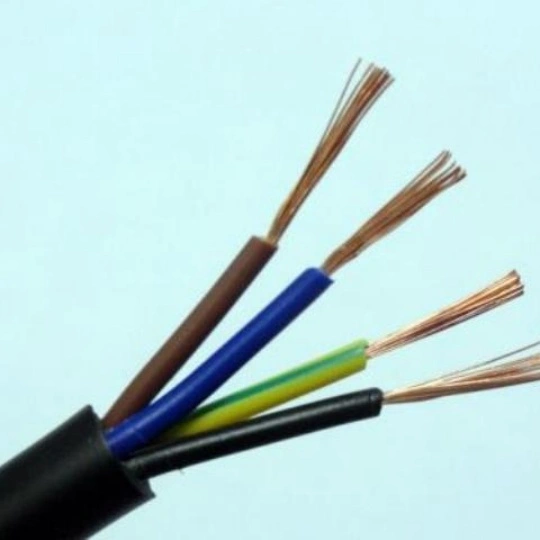
Meta Description: Discover the ultimate Protective Cable Kit designed to safeguard your cables from wear, tangles, and damage. Perfect for home, office, and industrial use. Shop now for long-lasting cable management! Protecti.
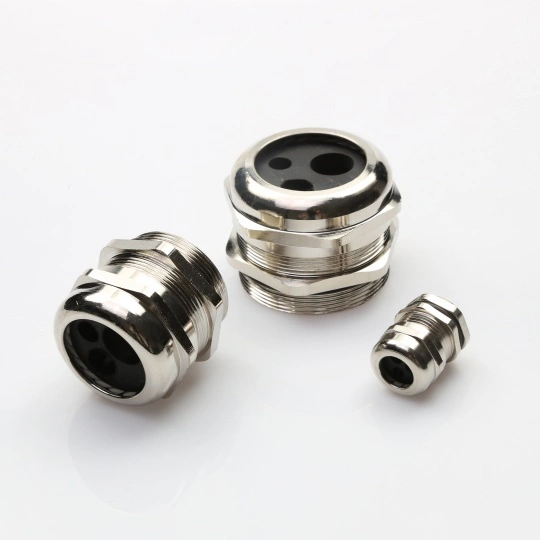
Corrosion-Resistant Cable Connectors: Reliable Connectivity for Harsh Environments Ensure uninterrupted performance in the toughest conditions with our corrosion-resistant cable connectors. Designed for durability and longevity, these.
Feel free to reach out to us for any inquiries or orders.