Industrial Cable Assemblies-Industrial Cable Assemblies factory
The oil and gas industry operates in some of the most unforgiving environments on the planet—from deep downhole drilling sites where temperatures soar and pressure reaches extreme levels to offshore platforms exposed to saltwater corrosion and relentless weather, and downstream refineries filled with aggressive chemicals. In these high-stakes settings, oil and gas industrial cable assemblies are not mere components; they are the lifeline of critical operations, enabling reliable power transmission, real-time data communication, and precise control of equipment. A single cable failure can lead to costly downtime, compromised safety, and even environmental hazards. To withstand these harsh conditions, oil and gas industrial cable assemblies must possess a unique set of key characteristics that go far beyond the requirements of standard industrial cables. This article delves into the essential traits that define high-performance cable assemblies for the oil and gas sector, exploring how each characteristic addresses specific environmental challenges and ensures operational integrity.
Temperature extremes are one of the most pervasive challenges in oil and gas operations, and temperature resistance stands as the foundational characteristic of reliable cable assemblies. Upstream drilling operations, particularly deep downhole applications, can expose cables to continuous temperatures ranging from -200°C to 300°C (-328°F to 572°F) or higher . Downstream refineries, too, feature high-heat zones such as flare stacks and processing units where temperatures can exceed 400°C (752°F) . Standard cables would quickly degrade, melt, or lose electrical performance under such stress, making specialized temperature-resistant materials and designs non-negotiable.
High-performance oil and gas cable assemblies achieve temperature resistance through the use of advanced insulating and sheathing materials. Fluoropolymers, such as PTFE (polytetrafluoroethylene) and specially engineered variants from manufacturers like GORE®, are widely used for their ability to withstand continuous high temperatures while maintaining structural integrity . These materials also resist thermal aging, ensuring long-term performance even after prolonged exposure to extreme heat. For even more demanding high-temperature scenarios, manufacturers may incorporate high-temperature fibers (up to 1200°C/2192°F) or mica tape (up to 900°C/1652°F) into the cable construction . Additionally, the thermal class rating of these cables is carefully tested and certified, with top-tier products achieving ratings of 300°C (572°F) or higher, as demonstrated by GORE® insulated wires which maintain performance at this temperature range .
Temperature resistance is not limited to high heat, however. In offshore arctic environments or cold storage areas of downstream facilities, cables must also withstand freezing temperatures without becoming brittle or losing flexibility. This requires materials that remain ductile at low temperatures, such as certain silicone rubbers or modified thermoplastics, ensuring that cables can be installed and operated reliably even in sub-zero conditions .
Deep downhole drilling operations subject cable assemblies to extreme hydrostatic pressure—often exceeding 10,000 psi (68.9 MPa) at depths of 20,000 feet or more. This pressure can compress cable insulation, damage conductors, and disrupt signal or power transmission if the cable assembly is not specifically designed to withstand it. Pressure resistance is therefore a critical characteristic for downhole and subsea oil and gas applications, where cable failure could lead to lost drilling time or expensive equipment retrieval.
To address this challenge, oil and gas cable assemblies feature robust construction techniques such as triple-extruded insulation and reinforced sheathing . The insulation layers are engineered to be dense and uniform, preventing compression under high pressure and maintaining dielectric strength. Additionally, manufacturers may use armoring materials or non-metallic mechanical protection to further enhance pressure resistance, ensuring that the cable’s internal structure remains intact even in the most extreme downhole conditions . For subsea applications, cables are also designed to withstand the pressure of seawater, with waterproof sheathing and pressure-sealed connectors that prevent water ingress, which can cause short circuits or corrosion .
The oil and gas industry is rife with aggressive chemicals that would rapidly degrade standard cables. These include hydrocarbons (oil, gas, methane), corrosive substances (acids, bases, hydrogen sulfide), solvents, and saltwater . In upstream operations, downhole cables may be exposed to sour gas (high in hydrogen sulfide), which is not only corrosive but also hazardous . Downstream refineries process crude oil into various products, exposing cables to a range of chemicals including solvents, acids, and petrochemical byproducts . Offshore and coastal installations face constant exposure to saltwater, which causes corrosion of metallic components and degradation of organic materials.
To combat these threats, oil and gas industrial cable assemblies are constructed with chemically resistant materials. Fluoropolymers, again, play a key role here, as they exhibit excellent resistance to a wide range of chemicals, including acids, bases, solvents, and hydrocarbons . Other materials such as EPR (ethylene propylene rubber) and XLPE (cross-linked polyethylene) are used for their resistance to oils and moisture, making them suitable for downstream and offshore applications . Manufacturers like Prysmian have developed specialized cable ranges, such as Airguard™, which offer enhanced resistance to aggressive chemical attack while maintaining a lightweight design . Additionally, the sheathing and insulation materials are tested to ensure they do not degrade or leach harmful substances when exposed to these chemicals, ensuring both cable performance and environmental safety.
Oil and gas operations subject cable assemblies to intense mechanical stress, including vibration, abrasion, crushing, bending, and tension. Drilling rigs, for example, generate continuous vibration during operation, which can wear down cable insulation and loosen connections over time . Downhole cables may come into contact with rough rock formations or drilling equipment, leading to abrasion . During installation, cables may be bent around tight corners, pulled under tension, or subjected to crushing forces from heavy equipment . To survive these conditions, cable assemblies must possess exceptional mechanical durability.
Mechanical durability is achieved through a combination of robust materials and engineered designs. Reinforced insulation and sheathing materials, such as GORE®’s fluoropolymers, offer superior tensile strength—up to 39,530 psi (272 MPa) in some cases—making them resistant to breaking during installation and operation . Abrasion resistance is enhanced through the use of tough outer sheaths or armoring, such as steel or non-metallic braids, which protect the inner conductors and insulation from wear . GORE® insulated wires have been shown to outperform conventional PTFE wires in scrape abrasion tests, maintaining their integrity even after repeated contact with rough surfaces .
Flexibility is another key aspect of mechanical durability, particularly for applications where cables must be routed through tight spaces or move with equipment. High-performance oil and gas cables are designed to have a small bending radius, allowing them to be installed in cramped downhole tools or complex machinery without damaging the insulation or conductors . Additionally, the use of flexible conductors, such as stranded copper, ensures that the cable can withstand repeated bending without breaking . For applications requiring high tension, such as wireline operations, cable assemblies are engineered to handle extreme tensile forces while maintaining conductivity and signal integrity .
In oil and gas operations, reliable electrical performance is non-negotiable. Cable assemblies must deliver consistent power to equipment and transmit accurate, real-time data—such as temperature, pressure, and flow rates—from downhole sensors to surface control systems . Poor electrical performance, such as voltage drops or signal interference, can lead to equipment malfunctions, incorrect data readings, and operational inefficiencies. For high-speed data transmission, such as in digital drilling control systems, signal integrity is particularly critical.
To ensure reliable electrical performance, oil and gas cable assemblies feature high-quality conductors, typically made of copper or fiber optic materials. Copper conductors offer excellent electrical conductivity, making them suitable for power and control applications, while fiber optic cables are used for high-speed data transmission over long distances, as they are immune to electromagnetic interference (EMI) . The insulation materials are selected for their high dielectric strength, which prevents electrical leakage and ensures safe operation at high voltages . GORE® insulated wires, for example, maintain outstanding dielectric breakdown voltage even after 1500 hours of exposure to hydrolysis at 98°C (208°F) .
Signal integrity is enhanced through shielding and grounding techniques, which protect against EMI and radio frequency interference (RFI)—common in oil and gas facilities with numerous electrical equipment and power lines . Shielded cables prevent external interference from distorting signals, ensuring that data from sensors and control systems is accurate and reliable. For downhole applications, where signal transmission over long distances is required, cable assemblies are designed to eliminate the need for additional signal amplification, reducing complexity and potential points of failure .
The oil and gas industry is heavily regulated, with strict safety and performance standards that cable assemblies must meet to ensure operational safety and environmental protection. Compliance with these standards is not just a legal requirement but also a key indicator of quality and reliability. Different regions and applications have specific standards, making global compliance a critical characteristic for cable assemblies used in international oil and gas operations.
Key international standards for oil and gas cable assemblies include IEC (International Electrotechnical Commission) standards such as IEC 60092 and IEC 60502, British Standards (BS) such as BS 6883 and BS 7917, and American standards such as IEEE . Additionally, industry-specific guidelines, such as those from UKOOA (UK Offshore Operators Association) and NEK TS 606, apply to offshore and North Sea applications . Cable assemblies may also require certifications from classification societies such as Lloyd’s Register, which ensures they meet rigorous safety and performance criteria for use in marine and offshore environments .
Safety certifications often include fire resistance, as oil and gas facilities are at risk of fires. Fire-resistant cables are designed to maintain power and signal transmission during a fire, allowing for safe evacuation and emergency response . Manufacturers like Tratos and Prysmian offer fire-resistant cable ranges that meet strict fire safety standards, preventing the spread of fire and minimizing damage . Additionally, cables used in hazardous locations (classified as Zone 0, 1, or 2 for gas hazards) must be certified as explosion-proof or intrinsically safe, ensuring they do not ignite flammable vapors or gases.
Oil and gas industrial cable assemblies for harsh environments are engineered to overcome the most extreme challenges—extreme temperatures, high pressure, aggressive chemicals, mechanical stress, and electromagnetic interference. Their key characteristics—extreme temperature resistance, superior pressure resistance, exceptional chemical resistance, robust mechanical durability, reliable electrical performance, and compliance with industry standards—are not standalone features but interconnected elements that work together to ensure operational integrity, safety, and efficiency. As the oil and gas industry continues to push into deeper wells, harsher offshore environments, and more complex refining processes, the demand for high-performance cable assemblies with these critical characteristics will only grow. By understanding and prioritizing these traits, oil and gas operators can select cable solutions that minimize downtime, reduce maintenance costs, and ensure the safety of personnel and the environment. Whether for upstream drilling, downstream refining, or offshore operations, the right cable assembly is a vital investment in the success and sustainability of oil and gas operations.
Our factory offers high-quality products at competitive prices
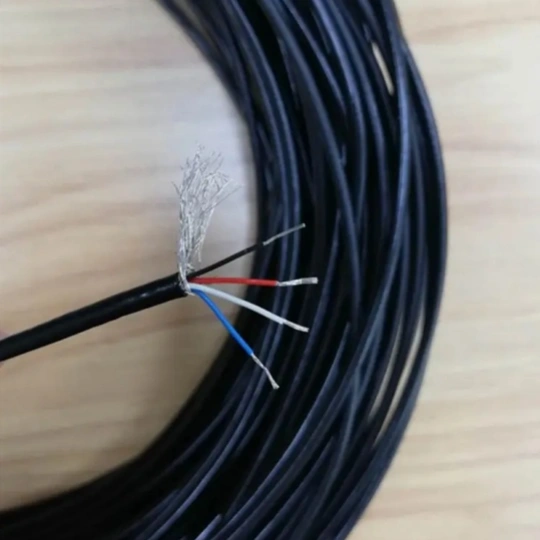
Ensure reliable power transmission and long-lasting performance in the harshest conditions with our High-Temperature Resistant Cable Accessories. Engineered to withstand extreme heat, these premium-grade accessories are designed to prote.
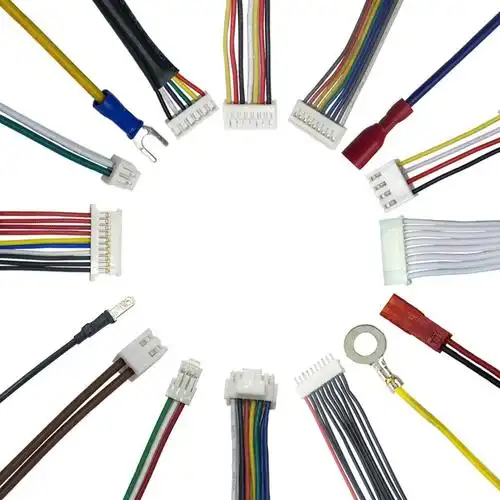
Industrial Cable Assembly Product Summary Material & Safety Utilizes premium raw materials and globally recognized components (e.g., ABB, TE Connectivity) ensuring high reliability and safety to prevent risks like fire and e.
Feel free to reach out to us for any inquiries or orders.