
Industrial Cable Assemblies-Industrial Cable Assemblies factory
High-speed interconnects inside modern laptops, docks, and expansion devices increasingly rely on micro coaxial cable assemblies to carry USB4’s multi‑protocol, high‑bandwidth signals with stability and repeatability. This article explains what makes a micro coaxial cable truly “USB4‑ready” at 32Gbpsper differential pair, how it compares with passive USB4 Gen2/Gen3 cables, and how to select, validate, and integrate it for reliable next‑gen designs.
Understanding USB4, 32Gbps, and Why Micro Coax Matters
USB4 defines link rates of 20/40/80 Gbpsover USB‑C, with support for tunneling USB3.x, DisplayPort, and PCIe, while remaining backward compatible with USB 3.x/2.0. USB4 v2.0 adds PAM3signaling for up to 80 Gbpssymmetric or 120/40 Gbpsasymmetric rates, and upgrades DP tunneling to DP 2.1. For many system topologies—especially USB4 hubs, docks, and repeaters—the effective non‑display bandwidth often bottoms out at USB 3.2 20 Gbpsunless both sides support higher USB4 link rates. This is why multi‑lane designs and high‑quality differential pairs, often implemented with micro coax, are critical
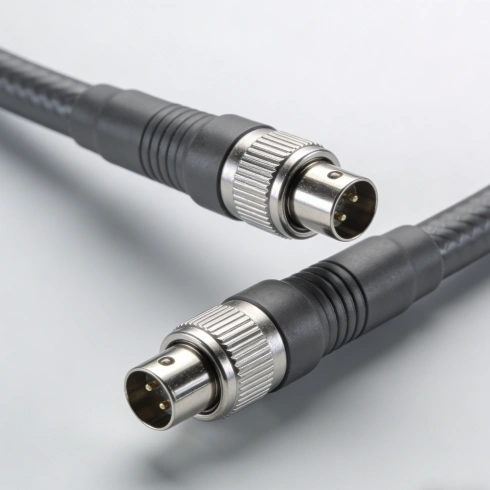
A “32Gbps micro coaxial cable” in this context refers to a twin‑axial (micro coax) pair rated for 32 Gbit/s per differential pair, typically used as one or more lanes in a USB4 link. This is distinct from a “40Gbps passive USB4 cable,” which uses two lanes at 20 Gbit/seach to achieve the full USB4 Gen3 rate. Micro coax is favored for its tightly controlled impedance, excellent EMI shielding, and mechanical flexibility, enabling dense routing and consistent performance across bends and length transitions
How 32Gbps Micro Coax Enables USB4 Performance
Micro coaxial cables are constructed with a central conductor, precision dielectric, metallic shield, and outer jacket. This structure maintains constant impedanceand minimizes insertion loss, return loss, and crosstalkat multi‑gigabit frequencies. In USB4 implementations, multiple micro coax pairs are bundled to form the high‑speed lanes; the tighter the dimensional control and the better the shielding, the higher the usable bandwidth before equalization is required. For long or complex interconnects, active or redriver‑equipped assemblies can further extend reach while preserving eye‑mask margins
From a system perspective, USB4’s tunneling of PCIe(and USB3.x/DP) means the physical layer must preserve signal integrity across connectors, vias, and flexes. Micro coax’s superior shielding and impedance stability make it well‑suited for these hostile interconnect paths, especially in notebook hinges, docking stations, and internal device boardswhere space is constrained and EMI is abundant
32Gbps Micro Coax vs. Passive USB4 Cables
| Aspect | 32Gbps Micro Coax (per differential pair) | Passive USB4 Gen2/Gen3 Cable |
|---|---|---|
| Signaling | Typically one lane at 32 Gbit/s(USB4 Gen2‑like) | Two lanes at 20 Gbit/seach = 40 Gbit/s(Gen3) |
| Typical Use | Internal links, repeaters, hubs, docks | External C‑to‑C cables up to 0.8 m (Gen3) |
| Construction | Twin‑axial pairs with precise impedance and shielding | Multiple twin‑axial pairs in a round jacket |
| Reach | Depends on EQ/redriver; suitable for multi‑board paths | ≤ 0.8 mrecommended for passive Gen3 |
| Compliance | Must be integrated into a USB4‑compliant system | Certified to USB4/USB‑IF (e.g., 40 Gbps, 100W, 8K) |
Passive USB4 Gen3 external cables are widely available with 40 Gbpsdata, 100W PD, and 8K videosupport, with lengths commonly up to 0.8 mfor Gen3 passive designs. Internally, achieving 32Gbps per micro coax pair is a building block toward full USB4 Gen2/Gen3 system performance
Designing with 32Gbps Micro Coax for USB4
Validation and Testing Essentials
Real‑World Examples and Ecosystem Signals
When to Use 32Gbps Micro Coax in Your USB4 System
Conclusion
A 32Gbps micro coaxial cableis a foundational element for achieving stable, high‑bandwidth USB4 links, especially inside devices where space, EMI, and mechanical constraints dominate. By understanding USB4’s multi‑protocol tunneling, the electrical demands of 32Gbps differential pairs, and the system‑level trade‑offs between passive and active designs, engineers can build interconnects that not only meet today’s 20/40 Gbpsrequirements but are also ready for the 80 Gbpsand DP 2.1capabilities of USB4 v2.0
Glossary
Our factory offers high-quality products at competitive prices
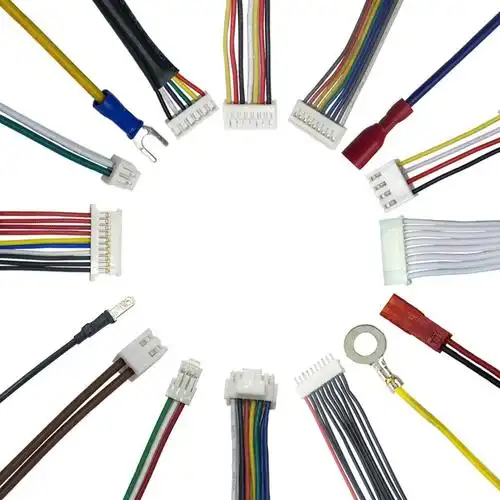
Industrial Cable Assembly Product Summary Material & Safety Utilizes premium raw materials and globally recognized components (e.g., ABB, TE Connectivity) ensuring high reliability and safety to prevent risks like fire and e.
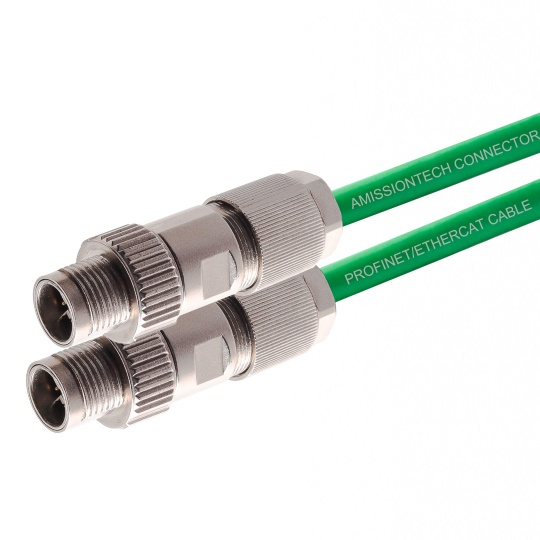
Industrial cable components are the backbone of reliable and efficient connectivity in industrial automation, robotics, and machinery. Engineered to withstand harsh environments while ensuring seamless data transmission and power delivery.
Feel free to reach out to us for any inquiries or orders.