Industrial Cable Assemblies-Industrial Cable Assemblies factory
Copper: The gold standard for conductivity (100% IACS*), flexibility, and corrosion resistance. Used in power cables, robotics, and data transmission.
Variants: Tinned copper (for moisture resistance) and oxygen-free copper (for high-frequency signals).
Aluminum: Lightweight and cost-effective for high-voltage power lines, but 61% less conductive than copper. Prone to oxidation.
Fiber Optics: Glass or plastic fibers for ultra-high-speed data transfer in EMI-heavy environments (e.g., industrial IoT networks).
*IACS: International Annealed Copper Standard
2. Insulation: Preventing Electrical Leakage
Insulation materials wrap around conductors to prevent short circuits and energy loss. Key types:
Material Temperature Range Key Features Applications
PVC -40°C to 105°C Affordable, flexible, moderate durability General-purpose wiring
XLPE -40°C to 150°C Superior heat resistance, high-voltage support Power grids, solar farms
Silicone -60°C to 200°C Extreme temperature tolerance, flexible Steel mills, aerospace
PTFE (Teflon) -200°C to 260°C Chemically inert, low friction Chemical plants, food processing
3. Jacketing/Sheathing: Defense Against External Damage
The outer jacket protects cables from environmental and mechanical hazards. Popular materials:
Polyurethane (PUR): Resistant to oils, solvents, and abrasion. Ideal for robotic arms and automated machinery.
Thermoplastic Elastomer (TPE): Combines flexibility with UV and weather resistance. Used in outdoor solar installations.
LSZH (Low Smoke Zero Halogen): Emits minimal toxic smoke when burned. Mandatory in tunnels, subways, and ships.
Neoprene: Fire-resistant and durable for mining and oil rigs.
4. Shielding: Blocking Electromagnetic Interference (EMI)
Shielding is critical for data cables in high-noise environments. Two primary types:
Foil Shielding: Aluminum-polyester foil for lightweight, cost-effective EMI protection (e.g., Ethernet cables).
Braided Shielding: Woven copper or tin-plated copper strands for robust EMI defense and flexibility (e.g., motor control cables).
Hybrid shields (foil + braid) are used in military and aerospace applications.
5. Connectors and Terminals: Ensuring Secure Connections
Connector materials must balance conductivity and durability:
Contacts: Brass (nickel-plated for corrosion resistance) or phosphor bronze.
Housings:
Thermoplastics: Nylon or ABS for cost-effective, lightweight solutions.
Metal Alloys: Stainless steel or aluminum for waterproof, high-vibration environments (IP67/IP69K ratings).
High-Performance Polymers: PEEK (Polyether Ether Ketone) for extreme heat and chemical exposure.
6. Fillers and Reinforcements: Enhancing Structural Integrity
Aramid Fibers (Kevlar®): Added to cables subjected to pulling forces (e.g., elevators, cranes).
Polyester Yarn: Fills gaps between components to prevent tangling and improve flexibility.
Steel Wire: Armored cables for underground installations or rodent-prone areas.
7. Specialized Coatings for Extreme Environments
Anti-Corrosive Coatings: Zinc or nickel plating for marine and offshore applications.
Flame-Retardant Additives: Meet UL 94 V-0 or IEC 60332-1 standards for fire safety.
UV Stabilizers: Protect outdoor cables from solar degradation.
How Material Choice Impacts Performance
Temperature Resistance: Silicone and PTFE insulation enable use in foundries or cryogenic storage.
Chemical Resistance: PUR and TPE jackets withstand exposure to fuels, acids, and coolants.
Flexibility: Stranded copper conductors and TPE jackets are essential for robotic cables with 10+ million bend cycles.
Industry-Specific Material Recommendations
Oil & Gas: Use XLPE insulation with steel wire armor and neoprene jackets.
Automotive Manufacturing: Shielded cables with PUR jackets resist coolants and EMI.
Renewable Energy: UV-resistant LSZH jackets for solar farms; subsea cables with HDPE sheathing.
Key Standards Governing Cable Materials
UL (Underwriters Laboratories): Certifies fire safety and electrical performance.
IEC (International Electrotechnical Commission): Sets global benchmarks for insulation and shielding.
MIL-SPEC: Defines ruggedized materials for defense and aerospace.
Our factory offers high-quality products at competitive prices
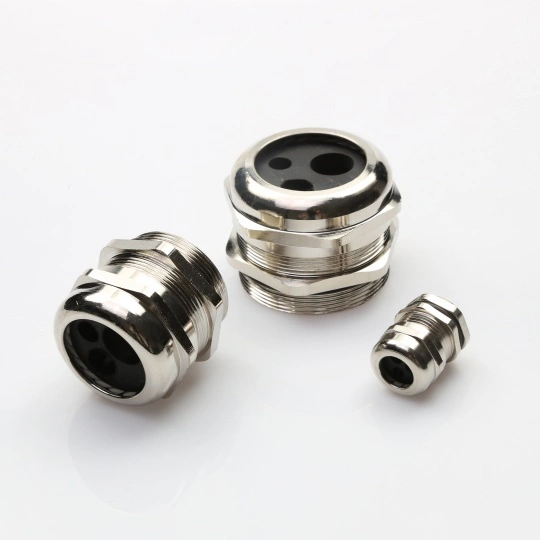
Corrosion-Resistant Cable Connectors: Reliable Connectivity for Harsh Environments Ensure uninterrupted performance in the toughest conditions with our corrosion-resistant cable connectors. Designed for durability and longevity, these.
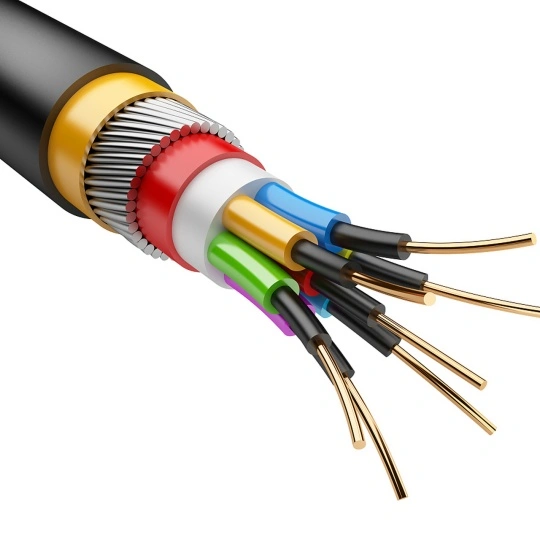
In today’s technology-driven world, maintaining uninterrupted signal integrity is critical for industrial, commercial, and residential applications. The Shielded Cable Core is engineered to deliver superior electromagnetic interference .
Feel free to reach out to us for any inquiries or orders.