Industrial Cable Assemblies-Industrial Cable Assemblies factory
With the global deployment of 5G technology, industrial scenarios such as smart manufacturing, outdoor communication base stations, marine operations, and underground mining are increasingly relying on stable and reliable 5G communication links. In these harsh environments, moisture, dust, corrosion, and extreme temperatures have become major threats to the normal operation of 5G communication equipment. Among them, 5G communication industrial cable assemblies with IP68 waterproof performance play a pivotal role as the “blood vessels” of signal transmission—they not only need to ensure the high-speed and low-latency transmission of 5G signals but also withstand the erosion of harsh environmental factors. However, selecting the right IP68 waterproof 5G communication industrial cable assembly is not a simple task, as it involves multiple factors such as waterproof standards, signal transmission performance, material quality, and application scenarios. This article will provide a detailed, practical guide to help you make an informed selection.
Before starting the selection process, it is essential to have a clear understanding of the IP68 waterproof standard, as this is the core indicator for evaluating the waterproof and dustproof performance of cable assemblies. The IP (Ingress Protection) rating is composed of two digits: the first digit represents the dustproof level, and the second digit represents the waterproof level.
For IP68-rated products, the first digit “6” means complete dust tightness—no dust can enter the interior of the cable assembly, which is crucial for preventing dust accumulation from causing signal interference or component damage. The second digit “8” is the highest level of waterproof protection, indicating that the cable assembly can be continuously submerged in water at a specified pressure and depth for a long time without water ingress. It should be noted that the specific submergence depth and time of IP68 are not uniformly specified by international standards; they are determined by the manufacturer’s testing conditions. Therefore, when selecting, you must confirm the manufacturer’s official parameters, such as whether it can withstand submersion in 10 meters of water for 24 hours or 50 meters for 1 hour, to ensure it meets the actual application environment requirements.
In addition, it is necessary to distinguish between IP68 and other similar waterproof ratings (such as IP67). IP67 products can only withstand short-term submersion in shallow water, while IP68 is suitable for long-term underwater or high-pressure water environments. For 5G industrial scenarios that require long-term operation in humid or underwater environments (such as offshore wind farms, underwater monitoring equipment), IP68 is the necessary minimum standard.
The primary function of 5G communication industrial cable assemblies is to transmit 5G signals, so their signal transmission performance cannot be ignored while ensuring IP68 waterproof performance. 5G signals have the characteristics of high frequency, wide bandwidth, and low latency, which place higher requirements on the impedance matching, insertion loss, and crosstalk of cable assemblies.
First, impedance matching. The standard impedance of most 5G communication systems is 50 ohms or 75 ohms. If the impedance of the cable assembly does not match the system, it will cause signal reflection, resulting in signal loss and interference, which seriously affects the transmission quality of 5G high-speed signals. When selecting, you must confirm that the impedance of the cable assembly is consistent with the equipment it is connected to.
Second, insertion loss. Insertion loss refers to the attenuation of the signal when passing through the cable assembly. For 5G high-frequency signals (especially millimeter-wave bands), the insertion loss of the cable assembly should be as small as possible. Generally, the insertion loss is related to the cable material, conductor diameter, and connector quality. For example, silver-plated copper conductors have lower resistance than ordinary copper conductors, which can reduce insertion loss. At the same time, high-quality connectors (such as SMA, N-type, or QMA connectors suitable for 5G) with precise machining can also minimize signal attenuation. When selecting, you should compare the insertion loss parameters of different products under the same frequency band (such as 28GHz, 39GHz) and choose products with lower insertion loss.
Third, crosstalk. In industrial scenarios, multiple cable assemblies are often used in parallel. If the crosstalk performance is poor, the signal of one cable will interfere with another, affecting the stability of 5G signal transmission. Therefore, it is necessary to select cable assemblies with good shielding performance. Common shielding structures include braided shielding, foil shielding, and double shielding (braided + foil). Double shielding has better anti-interference performance and is more suitable for complex industrial environments with strong electromagnetic interference (EMI), such as near industrial motors, inverters, or high-voltage equipment.
The material quality of 5G communication industrial cable assemblies directly determines their durability, waterproof performance, and resistance to harsh environments. For IP68 waterproof products, the selection of cable jacket, insulation layer, conductor, and connector materials is particularly critical.
Cable jacket material: The jacket is the first line of defense against water and environmental erosion. Common jacket materials for IP68 cable assemblies include PVC, PE, PUR (polyurethane), and TPE. PVC is low-cost but has poor resistance to oil and high temperature, making it suitable for general indoor industrial environments. PE has good chemical resistance and low-temperature flexibility, suitable for outdoor or cold area applications. PUR is the preferred material for harsh industrial environments—it has excellent wear resistance, oil resistance, chemical resistance, and UV resistance, and can withstand extreme temperatures (-40°C to 125°C). For 5G industrial scenarios that require long-term outdoor use, underwater operation, or frequent movement (such as robotic arms, mobile communication vehicles), PUR jacket cable assemblies are more reliable.
Insulation layer material: The insulation layer is responsible for isolating the conductor and ensuring signal transmission quality. Common insulation materials include PTFE (Teflon), FEP, and HDPE. PTFE has excellent high-temperature resistance, low dielectric loss, and good insulation performance, suitable for 5G high-frequency signal transmission (such as millimeter-wave bands). FEP has similar performance to PTFE but is easier to process and has a lower cost. HDPE is suitable for low-frequency to medium-frequency 5G signal transmission and has the advantage of low cost. When selecting, you should choose the appropriate insulation material according to the 5G frequency band used in the application scenario.
Conductor material: The conductor is the core component of signal transmission. Common conductor materials include copper-clad steel, copper-clad aluminum, and oxygen-free copper. Oxygen-free copper has the highest conductivity, the lowest signal loss, and is suitable for high-speed 5G signal transmission. Copper-clad steel has high strength but lower conductivity than oxygen-free copper, suitable for scenarios that require high mechanical strength (such as aerial cable laying). Copper-clad aluminum is lightweight and low-cost but has poor conductivity, suitable for short-distance, low-demand 5G signal transmission. For most 5G industrial communication scenarios that require high signal quality, oxygen-free copper conductors are recommended.
Connector material: The connector is a weak link in the waterproof performance of cable assemblies. The shell material of the connector should have good corrosion resistance and mechanical strength, such as stainless steel, brass (with nickel plating or gold plating), and aluminum alloy. Stainless steel has the best corrosion resistance, suitable for marine, coastal, or chemical industry environments. Brass with nickel plating has good conductivity and corrosion resistance, and is widely used in general industrial scenarios. The contact pins of the connector should be made of high-conductivity materials (such as beryllium copper) with gold plating or silver plating to ensure good contact performance and prevent oxidation. In addition, the connector must be equipped with a professional waterproof seal (such as O-rings made of silicone or nitrile rubber) to ensure that no water enters the connector interface.
Different 5G industrial application scenarios have different requirements for IP68 waterproof 5G communication industrial cable assemblies. Only by matching the product characteristics with the application scenario can the best performance be achieved. Here are some common application scenarios and corresponding selection suggestions:
Outdoor 5G base stations: Outdoor base stations are often exposed to wind, rain, snow, and extreme temperatures. The cable assemblies need to have good UV resistance, low-temperature flexibility, and long-term waterproof performance. It is recommended to select PUR jacket cable assemblies with double shielding, equipped with stainless steel or nickel-plated brass connectors. At the same time, considering the high-frequency signal transmission of 5G base stations (such as 2.6GHz, 3.5GHz), PTFE or FEP insulated oxygen-free copper conductor cable assemblies should be selected to ensure low insertion loss.
Marine and offshore operations (such as offshore wind farms, underwater monitoring): These scenarios have high requirements for corrosion resistance (seawater corrosion) and long-term underwater waterproof performance. It is recommended to select cable assemblies with stainless steel connectors, PUR or PE jackets, and PTFE insulation. The IP68 parameters should be confirmed to withstand long-term submersion in seawater (such as 20 meters depth for 72 hours). In addition, the cable assemblies should have good tensile strength to withstand the impact of ocean waves and currents.
Smart manufacturing and robotic arms: In smart factories, cable assemblies are often used in robotic arms that require frequent movement, so they need to have excellent wear resistance and bending resistance. It is recommended to select PUR jacket cable assemblies with high flexibility (minimum bending radius ≤ 5 times the cable diameter) and oxygen-free copper conductors. At the same time, considering the complex electromagnetic environment in the factory, double-shielded cable assemblies should be selected to reduce EMI interference.
Underground mining: Underground mining environments are humid, dusty, and have potential chemical corrosion. Cable assemblies need to have complete dust tightness (IP6X) and long-term waterproof performance. It is recommended to select PUR jacket cable assemblies with flame-retardant properties (complying with UL94 V-0 standard), stainless steel connectors, and double shielding. In addition, the cable assemblies should have good mechanical strength to withstand the impact of falling rocks and other objects.
The quality of 5G communication industrial cable assemblies with IP68 waterproof performance is closely related to the manufacturer’s production technology and quality control level. Therefore, when selecting, it is necessary to carefully verify the manufacturer’s qualifications and after-sales service capabilities.
First, check the manufacturer’s certification documents. Qualified manufacturers should have relevant international certifications, such as ISO9001 quality management system certification, CE certification (for European markets), FCC certification (for U.S. markets), and IP68 waterproof certification issued by authoritative third-party testing institutions (such as SGS, TÜV). These certifications can prove that the manufacturer’s products meet international quality and safety standards.
Second, understand the manufacturer’s production capacity and quality control process. It is recommended to choose manufacturers with mature production lines and strict quality control systems—for example, manufacturers that conduct 100% waterproof testing (such as air pressure testing, water immersion testing) on each batch of products. In addition, manufacturers with independent R&D capabilities can better meet the customized needs of different application scenarios (such as customized cable length, connector type, and jacket material).
Third, pay attention to after-sales service. IP68 waterproof cable assemblies are used in harsh environments, and there may be potential problems such as damage during use. A good after-sales service can ensure timely maintenance and replacement. When selecting, you should understand the manufacturer’s after-sales policy, such as warranty period (general industrial-grade products have a warranty period of 1-3 years), maintenance response time, and whether there are professional technical support teams to provide solutions for application problems.
In the process of selecting IP68 waterproof 5G communication industrial cable assemblies, many users will make some common mistakes, which may lead to poor product performance or even equipment failure. Here are some mistakes to avoid:
Mistake 1: Blindly pursuing IP68 rating and ignoring signal transmission performance. Some users only focus on the IP68 waterproof rating and ignore the impedance matching, insertion loss, and other signal transmission parameters of the cable assembly. As a result, the cable assembly cannot meet the 5G high-speed and low-latency transmission requirements, affecting the normal operation of the system.
Mistake 2: Confusing IP68 with other waterproof ratings. As mentioned earlier, IP68 is not a uniform standard for submersion depth and time. Some users mistakenly believe that all IP68 products can withstand any underwater environment, resulting in product damage due to inconsistent actual application conditions.
Mistake 3: Choosing low-cost materials to save costs. Some manufacturers use low-quality jacket materials (such as recycled PVC) or inferior connectors to reduce costs, which leads to poor waterproof performance and short service life of the cable assembly. In the long run, this will increase maintenance costs and even cause production downtime losses.
Mistake 4: Ignoring the compatibility of connectors. The connector of the cable assembly must be compatible with the interface of the connected equipment. Some users ignore the connector type (such as SMA vs. N-type) or interface size, resulting in inability to connect or poor contact, affecting signal transmission and waterproof performance.
Selecting 5G communication industrial cable assemblies with IP68 waterproof performance requires a comprehensive consideration of multiple factors, including understanding the IP68 waterproof standard, focusing on 5G signal transmission performance, evaluating material quality, matching application scenarios, verifying manufacturer qualifications, and avoiding common mistakes. Only by combining the actual needs of the application scenario with the product characteristics can we select a cable assembly that is both waterproof and reliable in signal transmission, ensuring the stable operation of 5G communication systems in harsh industrial environments. In the process of selection, it is also recommended to conduct sample testing (such as waterproof testing, signal transmission testing) on potential products to further verify their performance and ensure that they meet the expected requirements.
Our factory offers high-quality products at competitive prices
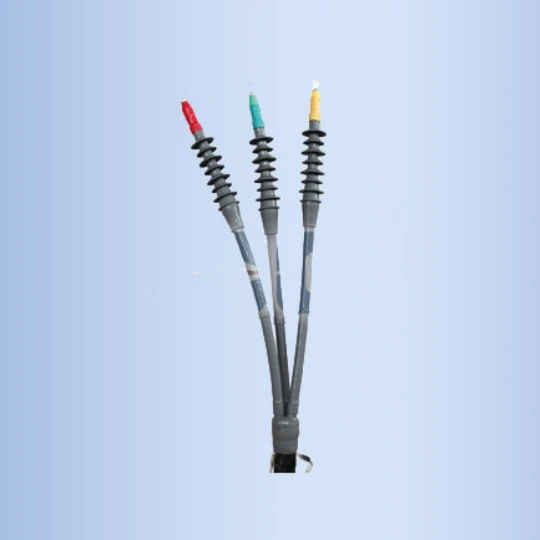
When it comes to electrical systems operating under extreme mechanical and electrical stress, high-load cable terminations are critical components that ensure seamless power transmission, safety, and system longevity. Engineered to .
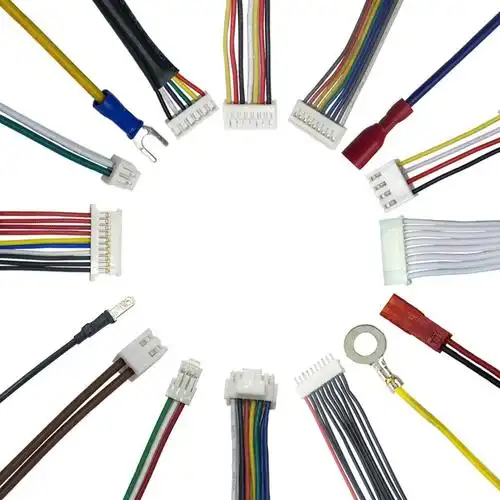
Industrial Cable Assembly Product Summary Material & Safety Utilizes premium raw materials and globally recognized components (e.g., ABB, TE Connectivity) ensuring high reliability and safety to prevent risks like fire and e.
Feel free to reach out to us for any inquiries or orders.