When selecting electrical cables for a project, understanding the differences between industrial cables and household cables is critical. These two cable types are designed for distinct environments, safety requirements, and performance standards. This guide breaks down their differences in materials, construction, applications, and safety features to help users make informed decisions.
1. Purpose and Application Environment
Industrial Cables:
Designed for harsh environments like factories, mining sites, oil refineries, and power plants.
Handle extreme temperatures (-50°C to 200°C), moisture, chemicals, and mechanical stress (abrasion, crushing).
Used in high-voltage systems (up to 35 kV or more) for machinery, motors, and heavy equipment.
Household Cables:
Built for residential settings with stable, low-risk conditions (indoors or protected outdoor areas).
Operate in moderate temperatures (typically -20°C to 60°C).
Power everyday appliances, lighting, and low-voltage systems (up to 600 V).
2. Material and Construction
Industrial Cables:
Conductors: Use high-purity copper or aluminum for superior conductivity and heat resistance.
Insulation: Robust materials like cross-linked polyethylene (XLPE) or thermoplastic elastomers (TPE) to resist heat, oils, and UV radiation.
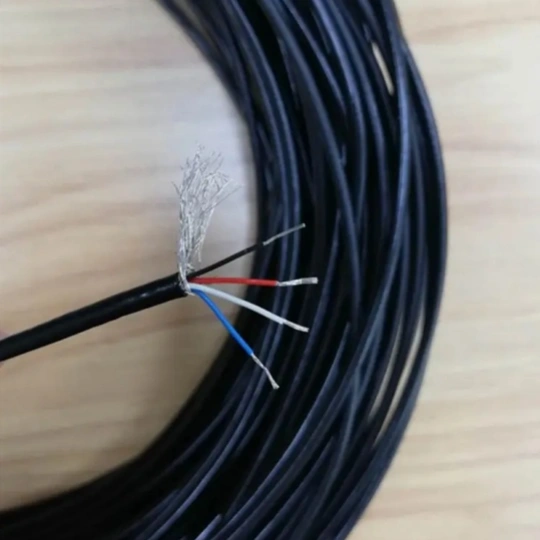
Shielding: Often include metal braids or foil to block electromagnetic interference (EMI) in industrial settings.
Armoring: Steel or aluminum armor protects against physical damage.
Household Cables:
Conductors: Standard copper or aluminum (less stringent purity requirements).
Insulation: PVC (polyvinyl chloride) is common for its flexibility and cost-effectiveness.
Shielding: Rarely shielded unless for specific applications (e.g., Ethernet cables).
Jacketing: PVC or thermoplastic covers for basic protection.
3. Voltage and Current Capacity
Industrial Cables:
Rated for higher voltage levels (1 kV to 35 kV) to support heavy machinery and three-phase power systems.
Handle continuous high current loads without overheating.
Household Cables:
Designed for low-voltage applications (120 V to 600 V) typical in homes.
Current capacity aligns with residential needs (e.g., 15–20 amps for outlets).
4. Safety and Compliance Standards
Industrial Cables:
Must meet rigorous certifications like UL 1277, IEC 60502, or NEC Article 310 for hazardous locations.
Flame-retardant and fire-resistant materials (e.g., LSZH – Low Smoke Zero Halogen) to prevent toxic fumes in fires.
Household Cables:
Complies with residential safety standards like UL 83 (for building wires) and NEC Article 334.
Focus on preventing short circuits and electric shocks rather than extreme conditions.
5. Durability and Lifespan
Industrial Cables:
Built to last 20–30 years under constant stress.
Resistant to degradation from chemicals, oils, and repetitive flexing.
Household Cables:
Average lifespan of 10–20 years in stable environments.
Less durable under mechanical strain or exposure to harsh elements.
6. Cost Considerations
Industrial Cables:
Higher upfront cost due to advanced materials, shielding, and certifications.
Long-term savings from reduced downtime and maintenance.
Household Cables:
Affordable and widely available, optimized for budget-friendly residential use.
7. Common Types of Cables
Industrial Cable Examples:
Instrumentation cables (for signal transmission).
Power control cables (for motors and transformers).
Armored cables (e.g., SWA – Steel Wire Armored).
Household Cable Examples:
NM-B cables (Romex®) for indoor wiring.
Coaxial cables (TV/internet).
Speaker wires and low-voltage lighting cables.
Why You Should Never Interchange Them
Using household cables in industrial settings risks overheating, fires, or equipment failure. Conversely, industrial cables in homes are unnecessarily expensive and harder to install due to stiffness.
Choosing the Right Cable: A Checklist
Environment: Will the cable face moisture, heat, or chemicals?
Voltage: Match the cable’s rating to your system’s needs.
Certifications: Ensure compliance with local safety standards.
Flexibility: Industrial settings may require frequent bending.
An oil-resistant industrial cable assembly is a complete, factory-terminated cable solution. It’s engineered to reliably transmit power, data, or signals in environments contaminated with oils, lubricants, coolants, or fuels. Unli...
Selecting the right cable assembly supplier is critical for industries ranging from aerospace and automotive to telecommunications and medical devices. The technical capabilities of a supplier directly impact product quality, reliabilit...
In the complex ecosystem of industrial operations, electrical systems serve as the backbone that powers machinery, transmits critical data, and ensures seamless coordination between components. Among the countless elements that constitu...
Selecting the optimal connector for high-voltage industrial cable assemblies is a critical decision impacting safety, reliability, system uptime, and operational costs. Industrial environments (mining, power generation, renewable energy...
Industrial cables serve as the lifeline of modern manufacturing, power transmission, and critical infrastructure. They facilitate the transfer of electricity, data, and control signals across factories, refineries, power plants, and oth...
Intermittent signal loss is one of the most frustrating issues plaguing industrial CAN bus systems. Unlike permanent faults, these elusive glitches disappear during testing, only to reappear under specific conditions, halting production...
Industrial control systems (ICS) are the “nervous system” of modern factories, governing the operation of machinery, production lines, and automated processes. The reliability of these systems hinges on industrial control ca...
In the intricate web of modern industrial operations, cables serve as the lifelines that power machinery, transmit critical data, and enable seamless communication across production lines, warehouses, and facilities. From manufacturing ...
In the complex ecosystem of industrial operations—from automated manufacturing lines to heavy-duty mining equipment, and from industrial robotics to critical power transmission systems—industrial cable connectors serve as the unsung her...
Wind energy is a cornerstone of the global transition to renewable power, and wind farms—both onshore and offshore—are critical to meeting clean energy targets. However, the harsh environments in which wind turbines operate, particularl...
In any industrial project, whether it’s a manufacturing plant expansion, a new energy facility construction, or a machinery installation, calculating the required length of industrial cable accurately is a critical step that directly im...
Electrical cable overload is a silent threat that can lead to catastrophic consequences, including fires, equipment damage, and costly downtime. Thermal imaging cameras have emerged as a game-changing tool for identifying overheating in...
Military and aerospace applications demand unparalleled reliability, durability, and performance from every component, especially cable assemblies. Operating in harsh environments – think extreme temperatures, shock, vibration, sand, du...
Industrial cable assemblies are critical components in manufacturing, automation, energy, and other heavy-duty sectors. They transmit power, signals, and data, ensuring seamless operations. However, harsh environments, mechanical stress...
Industrial cables are the lifeline of manufacturing plants, construction sites, and infrastructure projects—powering machinery, transmitting signals, and ensuring seamless operations. However, one of the most common and frustrating chal...
Copper is a fundamental material in the cable manufacturing industry, renowned for its excellent electrical conductivity, malleability, and corrosion resistance. As such, a shortage of copper can have far – reaching implications f...
In the complex and demanding landscape of industrial operations, the seamless and reliable transfer of power and data is the backbone of productivity. Among the critical components that ensure this seamless flow, industrial cable assemb...
Renewable energy systems—such as solar photovoltaic (PV), wind, and energy storage—operate in harsh environments, from sun-scorched deserts to offshore wind farms and temperature-fluctuating storage facilities. The “best” in...
When it comes to purchasing an industrial cable, making the right choice is crucial for ensuring safety, efficiency, and longevity in your operations. Industrial cables are designed to withstand harsh environments, handle heavy electric...
High-humidity warehouses—such as those for food processing, pharmaceutical storage, or coastal logistics—pose unique risks to industrial cables, including insulation degradation, conductor corrosion, and short circuits. Selecting the ri...
In industries where extreme heat is a constant challenge—from manufacturing plants to renewable energy systems—cable failures can lead to catastrophic consequences. A groundbreaking advancement in high-temperature (high-temp) cable tech...
As climate change accelerates, outdoor cables face unprecedented challenges from extreme weather conditions. From scorching heatwaves to bone-chilling freezes, these environmental stressors can significantly impact cable performance and...
In 2026, industrial systems are more complex and densely packed with electronics than ever. As a result, shielded industrial cable assembliesare no longer just passive links; they are critical system components that determine equipment ...
Meta Description: Discover the best materials for cable assemblies in high-temperature environments. Learn about heat-resistant polymers, insulation options, and practical tips for durability and safety.
High-temperature env...
1.Core Design SpecificationsA. Conductor RequirementsMaterial:Copper (bare, tinned, or silver-plated) for high conductivity.Aluminum for lightweight, high-voltage power transmission.Fiber optic strands for data-centric applications...
Industrial cable assemblies are critical components in sectors like manufacturing, aerospace, energy, and automation. Selecting the right materials for these assemblies ensures reliability, safety, and longevity in harsh environments. H...
The global shift toward renewable energy isn’t just transforming how we power our homes and industries—it’s also fueling unprecedented demand for heavy-duty cables. As solar farms, wind turbines, and grid modernization projects multiply...
In the era of Industry 4.0, industrial Ethernet cables serve as the lifeline of automated production lines, smart factories, and critical infrastructure. Unlike commercial Ethernet cables designed for office environments, industrial-gra...
In the high-stakes world of industrial automation and machine manufacturing, the difference between seamless production and costly downtime often comes down to the integrity of the cable infrastructure. Industrial cable assemblies are n...
When it comes to electrical cables, understanding the differences between industrial and marine cables is crucial for selecting the right option for specific applications. While both serve the purpose of transmitting electricity, their ...
Cable assemblies are critical components in countless applications, from industrial machinery to consumer electronics. Proper maintenance ensures their reliability, safety, and longevity. Neglecting them can lead to costly downtime...
Industrial cable connectors are essential components in various industrial systems, enabling the reliable transmission of power, signals, and data. There are several common types, each designed to meet specific application requirements....
In industries ranging from automotive manufacturing to marine engineering, and even in everyday outdoor electrical setups, waterproof cable connectors play a pivotal role in ensuring reliable electrical connections while safeguarding ag...
Introduction
The shipping industry faces growing pressure to reduce waste, and cable shipments are no exception. Traditional packaging methods often rely on plastic wraps, foam fillers, and non-recyclable materials that harm the envi...
In high-pressure industrial environments like automotive parts washers and automated car washes, a failed Industrial Cable Assemblycan shut down an entire line. This article explains how to select robust, shielded, and certified cable a...
As robotics and high-flex automation evolve, the need for reliable, high-flex Mini-change industrial cable assemblies has never been greater. This 2026 guide explores the essential features, applications, and selection criteria for Mini...
IntroductionIndustrial cable assemblies are critical components in power distribution, manufacturing, and infrastructure projects. Ensuring their safety, reliability, and longevity requires adherence to globally recognized standards lik...
In today’s fast-paced industrial landscape, reliability and efficiency are non-negotiable. At the heart of this demand lies industrial cable assemblies—critical components that power machinery, enable communication between systems, an...
In demanding industrial settings, the reliability of flexible industrial cable assembliesis paramount. These cables face constant bending, abrasion, and exposure to oils, chemicals, and extreme temperatures. A single point of failure ca...
IntroductionIndustrial environments with extreme temperatures—such as steel mills, chemical plants, automotive manufacturing, or renewable energy facilities—demand specialized cable components to ensure safety, durability, and performan...
Ensure reliable power transmission and long-lasting performance in the harshest conditions with our High-Temperature Resistant Cable Accessories. Engineered to withstand extreme heat, these premium-grade accessories are designed to prote.
Industrial cable components are the backbone of reliable and efficient connectivity in industrial automation, robotics, and machinery. Engineered to withstand harsh environments while ensuring seamless data transmission and power delivery.
Contact Us
Feel free to reach out to us for any inquiries or orders.