Industrial Cable Assemblies-Industrial Cable Assemblies factory
High voltage industrial cable assemblies are the lifelines of modern industrial operations, responsible for transmitting electrical power and signals across a wide range of heavy-duty applications—from power generation plants and manufacturing facilities to renewable energy installations and infrastructure projects. For engineers, procurement managers, and industry professionals researching these critical components, understanding their typical voltage ranges is fundamental to ensuring safety, performance, and compliance with industry standards. While the term “high voltage” may seem straightforward, its definition varies across industries and standards bodies, and the voltage ranges of industrial cable assemblies are carefully calibrated to match the specific demands of their intended use cases. In this comprehensive guide, we will break down the typical voltage ranges for high voltage industrial cable assemblies, explore the factors that influence these ranges, and examine how different voltage classes map to real-world industrial applications.
First, it is essential to clarify the definition of “high voltage” in an industrial context, as this sets the baseline for understanding the voltage ranges of cable assemblies. Unlike consumer electronics, where voltages above 50V AC or 120V DC are often considered “high voltage” for safety purposes, industrial settings operate with far higher thresholds. According to international standards such as IEC 60038 (IEC Standard Voltages) and IEEE 1159 (Recommended Practice for Monitoring Electric Power Quality), high voltage (HV) in industrial applications typically starts at 1 kV (kilovolt) AC or DC. This distinction is critical because cable assemblies designed for voltages below 1 kV are classified as low voltage (LV) and adhere to different design, insulation, and safety requirements.
The typical voltage range for high voltage industrial cable assemblies spans from 1 kV up to 150 kV, though some specialized assemblies can handle even higher voltages (up to 800 kV or more) for ultra-high voltage (UHV) power transmission applications. To better understand how these ranges are applied, it is helpful to categorize them into three primary classes: Medium-High Voltage (1–35 kV), High Voltage (35–110 kV), and Ultra-High Voltage (110 kV and above). Each class is engineered to meet the unique challenges of specific industrial environments, from small-scale manufacturing to large-scale power grid operations.
Let’s start with the medium-high voltage range, which spans 1 kV to 35 kV. This is the most common range for high voltage industrial cable assemblies, as it covers a wide array of everyday industrial applications. Cable assemblies in this range are designed to balance power transmission capacity with flexibility and ease of installation, making them ideal for use in manufacturing plants, commercial buildings, small to medium power distribution systems, and light industrial machinery. For example, in an automotive manufacturing facility, 10 kV cable assemblies might be used to power large stamping presses and assembly line motors, while 20 kV assemblies could be employed in the facility’s internal power distribution network to supply electricity to multiple production zones. In commercial buildings such as skyscrapers or shopping malls, 15 kV cable assemblies are often used to connect the building’s main power supply to its internal distribution system, ensuring a reliable flow of electricity to lighting, HVAC, and other critical systems.
Another key application for medium-high voltage cable assemblies (1–35 kV) is in renewable energy installations, particularly solar and wind farms. Solar farms, for instance, use 5 kV to 15 kV cable assemblies to collect power from solar panels and transmit it to inverters, which convert DC power to AC power for distribution. Wind turbines, on the other hand, rely on 10 kV to 35 kV cable assemblies to transmit the power generated by the turbine’s generator to the farm’s central substation. The durability of these cable assemblies is paramount in these applications, as they must withstand harsh outdoor conditions—including extreme temperatures, moisture, and UV radiation—while maintaining consistent performance.
Moving up the voltage spectrum, the high voltage range (35 kV to 110 kV) is reserved for more demanding industrial and infrastructure applications that require the transmission of large amounts of power over longer distances. Cable assemblies in this range are characterized by thicker insulation, robust shielding, and specialized conductor materials to minimize power loss and ensure safety. Common applications include large power generation plants (such as coal-fired, natural gas, or nuclear power plants), where 66 kV to 110 kV cable assemblies are used to transmit power from the generator to the main step-up transformer. These transformers increase the voltage to even higher levels for long-distance transmission, but the cable assemblies within the plant must handle the high voltage output of the generator efficiently.
High voltage cable assemblies (35–110 kV) are also critical in regional power distribution networks, connecting substations to industrial complexes and large commercial areas. For example, a steel mill—one of the most energy-intensive industrial operations—might rely on 110 kV cable assemblies to receive power from the local utility’s substation, as the mill’s furnaces, rolling mills, and other equipment require massive amounts of electricity to operate. Similarly, data centers with high power demands (to support thousands of servers and cooling systems) may use 35 kV to 66 kV cable assemblies to ensure a stable and reliable power supply, reducing the risk of downtime that could result in significant financial losses.
The ultra-high voltage (UHV) range, which starts at 110 kV and goes up to 800 kV or more, is dedicated to large-scale power transmission and specialized industrial applications that require the highest levels of power delivery. Cable assemblies in this range are engineering marvels, designed with advanced insulation materials (such as cross-linked polyethylene, or XLPE) and sophisticated shielding technologies to handle the extreme electrical stresses associated with ultra-high voltages. The primary application of UHV cable assemblies is in long-distance power transmission networks, where they carry electricity from remote power generation facilities (such as hydroelectric dams, wind farms, or solar parks) to populated areas and industrial hubs.
For example, in countries with vast geographical areas (such as China, the United States, or Canada), UHV cable assemblies (up to 800 kV DC or 1000 kV AC) are used to transmit power over thousands of kilometers with minimal power loss. This is critical for integrating renewable energy sources into the grid, as many wind and solar farms are located in remote regions far from major load centers. UHV cable assemblies also play a role in specialized industrial applications, such as large-scale smelters (for aluminum or copper production) and research facilities (such as particle accelerators), where ultra-high voltages are required for industrial processes or scientific experiments.
While the typical voltage ranges for high voltage industrial cable assemblies are well-defined, it is important to note that several factors can influence the specific voltage rating of a cable assembly. One of the most significant factors is the insulation material. Different materials have varying dielectric strengths (the ability to resist electrical breakdown), which determines the maximum voltage a cable can handle. Common insulation materials for high voltage cable assemblies include XLPE (cross-linked polyethylene), EPR (ethylene propylene rubber), and paper insulation (used in oil-filled cables for ultra-high voltages). XLPE is the most widely used insulation material for modern high voltage cable assemblies due to its excellent dielectric strength, thermal stability, and resistance to moisture and chemicals.
Another factor that affects voltage range is the cable’s conductor size and material. Larger conductors can carry more current, but they also require thicker insulation to maintain the same voltage rating. Conductors are typically made of copper or aluminum—copper has better electrical conductivity, making it ideal for high voltage applications where power loss must be minimized, while aluminum is lighter and more cost-effective, making it suitable for applications where weight and cost are primary concerns. The shielding design of a cable assembly also plays a role in its voltage rating; effective shielding (such as copper tape or braid shielding) helps to contain electrical fields, prevent interference, and protect against electrical breakdown, allowing the cable to handle higher voltages safely.
Industry standards and regulations also play a critical role in defining the voltage ranges of high voltage industrial cable assemblies. Organizations such as the IEC (International Electrotechnical Commission), IEEE (Institute of Electrical and Electronics Engineers), and ANSI (American National Standards Institute) have established strict guidelines for the design, testing, and certification of high voltage cables. These standards ensure that cable assemblies meet minimum safety and performance requirements, and they often specify voltage ratings for different types of cables. For example, IEC 60502 specifies the requirements for power cables with rated voltages from 1 kV up to 30 kV, while IEC 62067 covers cables with rated voltages above 30 kV up to 150 kV. Compliance with these standards is essential for ensuring that cable assemblies are safe, reliable, and compatible with other industrial equipment.
When selecting a high voltage industrial cable assembly, it is crucial to match the cable’s voltage rating to the specific requirements of the application. Using a cable assembly with a voltage rating lower than the application’s required voltage can lead to electrical breakdown, insulation failure, and potentially catastrophic accidents (such as fires or explosions). Conversely, using a cable with a voltage rating higher than necessary can result in unnecessary costs, as higher voltage cables are more expensive and may be less flexible, making installation more difficult. To ensure the right selection, engineers and procurement managers should consider not only the nominal voltage of the application but also factors such as voltage fluctuations, ambient temperature, installation environment (indoor vs. outdoor, wet vs. dry), and the expected service life of the cable assembly.
Real-world examples help to illustrate the importance of matching cable assembly voltage ranges to application needs. In a wastewater treatment plant, for instance, 6 kV cable assemblies are used to power pumps and aeration systems, as these applications require a reliable power supply but do not need extremely high voltages. If a 35 kV cable assembly were used in this scenario, it would be overengineered, increasing the cost of the project without providing any additional benefit. On the other hand, in a large hydroelectric dam, 500 kV UHV cable assemblies are necessary to transmit the massive amount of power generated by the dam’s turbines to the grid. Using a lower voltage cable assembly in this case would result in excessive power loss and would not be able to handle the high current levels required, leading to inefficient operation and potential equipment failure.
In addition to voltage range, other key specifications to consider when selecting high voltage industrial cable assemblies include current-carrying capacity (ampacity), flexibility, durability, and resistance to environmental factors (such as chemicals, oil, moisture, and extreme temperatures). For example, in industrial settings where cables are exposed to oil or chemicals (such as in refineries or chemical plants), cable assemblies with oil-resistant insulation (such as EPR) are essential to prevent insulation degradation. In outdoor applications, cables with UV-resistant jackets are necessary to protect against sun damage, while in cold climates, flexible cables that can withstand low temperatures are required to avoid cracking or brittleness.
To summarize, high voltage industrial cable assemblies typically cover a voltage range from 1 kV to 150 kV, with specialized UHV assemblies capable of handling up to 800 kV or more. These ranges are categorized into three primary classes: medium-high voltage (1–35 kV) for common industrial and commercial applications, high voltage (35–110 kV) for large-scale power generation and distribution, and ultra-high voltage (110 kV+) for long-distance power transmission and specialized industrial uses. The specific voltage rating of a cable assembly is influenced by factors such as insulation material, conductor size and material, shielding design, and compliance with industry standards. Selecting the right voltage range is critical for ensuring safety, performance, and cost-effectiveness in any industrial application.
For industry professionals, understanding the typical voltage ranges of high voltage industrial cable assemblies is the first step in making informed decisions about component selection. By matching the cable’s voltage rating to the application’s requirements, considering environmental and operational factors, and ensuring compliance with relevant standards, engineers and procurement managers can ensure that their industrial systems operate reliably, safely, and efficiently for years to come. Whether you are designing a small manufacturing facility or a large-scale renewable energy project, the right high voltage cable assembly—with the correct voltage range—is essential to the success of your operation.
Our factory offers high-quality products at competitive prices
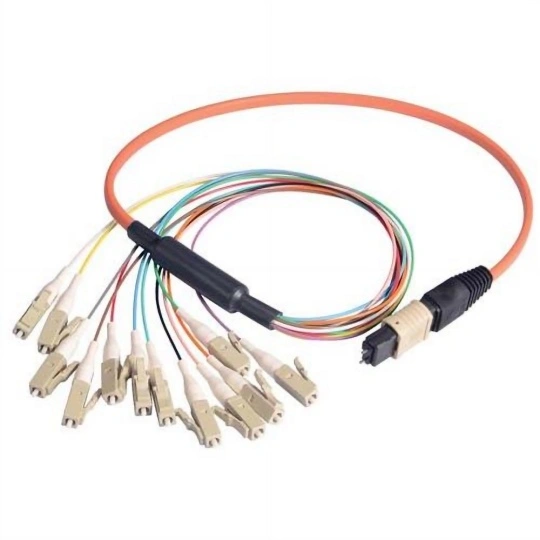
Heavy machinery cable assemblies are robust, high-performance connectivity solutions engineered to meet the demanding requirements of industrial and heavy-duty applications. Designed for durability, reliability, and optimal performance in.
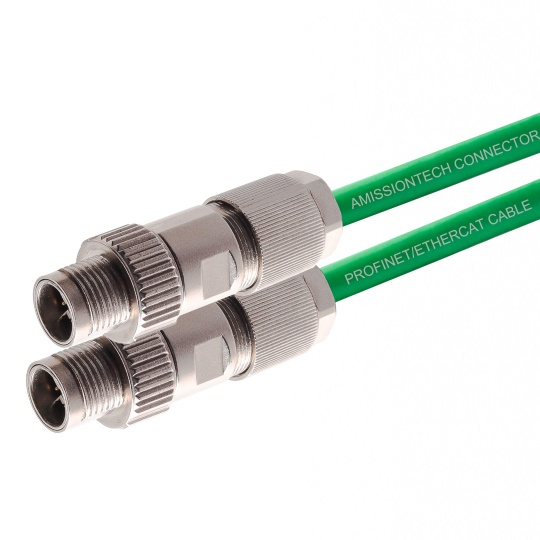
Industrial cable components are the backbone of reliable and efficient connectivity in industrial automation, robotics, and machinery. Engineered to withstand harsh environments while ensuring seamless data transmission and power delivery.
Feel free to reach out to us for any inquiries or orders.