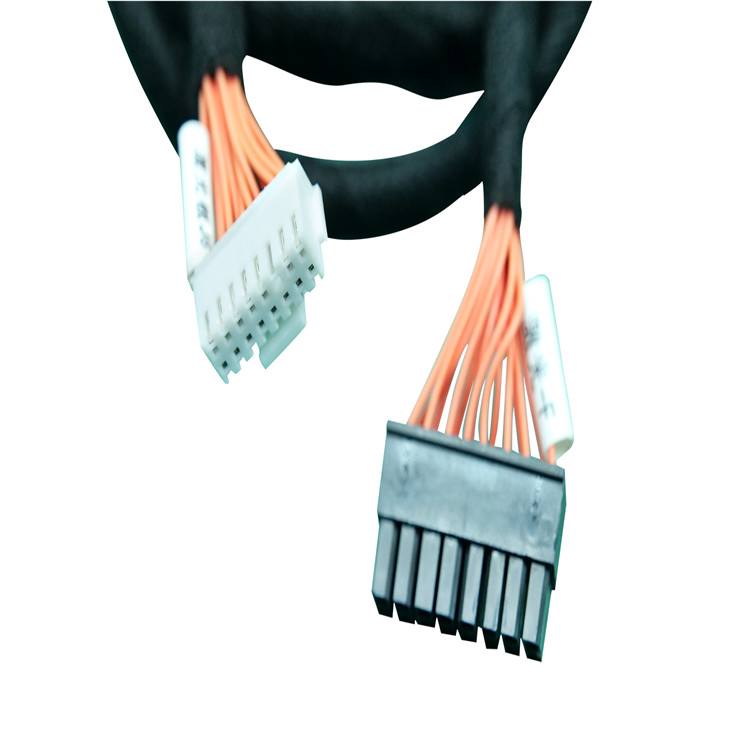
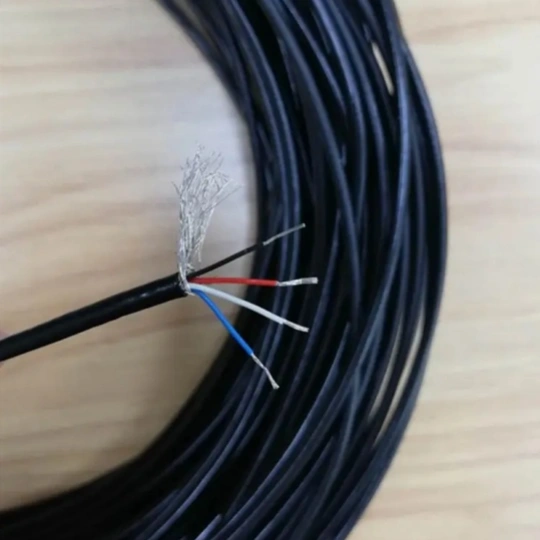
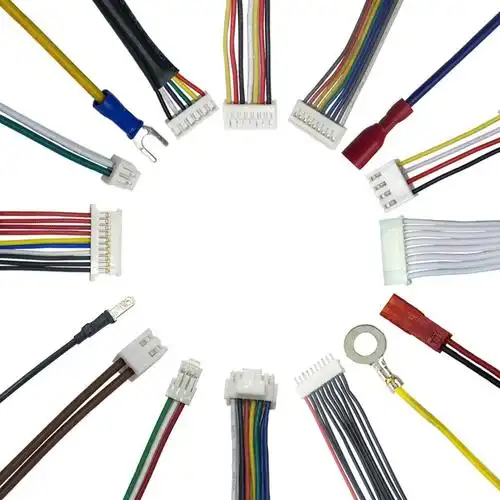
Introduction In industrial environments with high-vibration machinery—such as heavy-duty motors, pumps, turbines, or aerospace equipment—proper cable management is critical. Poorly secured cables can lead to wear, insulation damage, short circuits, or even catastrophic system failures. This article dives into proven cable-fixing techniques for high-vibration applications, emphasizing practicality, material selection, and installation best practices to ensure long-term reliability.
1. Understanding the Challenges of High-Vibration Environments Vibration accelerates cable fatigue, causing:
Fretting: Abrasion between cables or against surfaces.
Stress Concentrations: Bending or twisting at fixation points.
Connector Loosening: Terminal disconnections over time. To combat these issues, a combination of mechanical securing methods and vibration-dampening materials is essential.
2. Key Techniques for Securing Cables in High-Vibration Settings
2.1 Anti-Vibration Cable Clamps
Material Choice: Opt for clamps made of silicone, rubber, or thermoplastic polyurethane (TPU) to absorb shocks. Avoid rigid plastics or metals unless paired with vibration-isolating pads.
Design Features: Look for clamps with:
Conical Springs: Distribute stress evenly.
Toothed Inner Surfaces: Prevent slippage without over-tightening.
Installation Tip: Use staggered clamps along the cable route to minimize resonance.
2.2 Cable Ties with Vibration Resistance
Locking Mechanism: Choose nylon or stainless steel ties with ball-lock or double-lock heads to resist self-release.
Avoid Over-Tightening: Leave a slight gap to accommodate movement and prevent insulation compression.
Spacing: Install ties every 6–8 inches (15–20 cm) for heavy cables; reduce spacing in extreme vibration zones.
2.3 Braided Sleeving + Adhesive Shrink Tubing
Braided Sleeving: Polyester or fiberglass sleeves protect cables from abrasion and allow flexibility.
Heat-Shrink Tubing: Apply adhesive-lined tubing at termination points to seal and strain-relieve connections.
Combined Approach: Pair sleeving with spiral wrap for layered protection.
2.4 Strain Relief Devices
Spring-Based Strain Reliefs: Ideal for connectors, these absorb lateral and axial forces.
Cable Glands with Rubber Bushings: Use IP68/IP69K-rated glands to secure cables entering enclosures while dampening vibrations.
2.5 Dynamic Cable Routing
Service Loops: Add gentle loops (3–5x cable diameter) near connectors to relieve tension.
Avoid Sharp Bends: Maintain bend radii ≥10x the cable diameter to prevent internal conductor damage.
3. Material Selection for Vibration Resistance
Cable Jackets: Choose materials like PUR (polyurethane) or TPE (thermoplastic elastomer) for flexibility and abrasion resistance.
Damping Pads: Install rubber or Sorbothane pads between clamps and mounting surfaces to reduce transmitted vibrations.
Conductive Coatings: For EMI-prone environments, use cables with braided shields and secure shielding with grounding clamps.
4. Installation Best Practices
Pre-Installation Inspection: Check cables for existing damage; replace compromised sections.
Torque Control: Use a torque screwdriver for clamp fasteners to avoid under/over-tightening.
Post-Installation Testing: Perform vibration sweeps (5–2000 Hz) to identify resonant frequencies and adjust securing points.
5. Maintenance and Monitoring
Regular Inspections: Look for:
Frayed sleeves or exposed conductors.
Loose clamps or ties.
Discoloration (indicates overheating from friction).
Predictive Maintenance: Deploy vibration sensors near cable fixation points to detect abnormal oscillations early.
Industrial cables are the lifelines of manufacturing plants, power stations, and heavy machinery, transmitting electricity and data to keep operations running smoothly. However, constant exposure to harsh environments—such as extreme te...
Industrial cables play a vital role in the automotive industry, enabling the smooth operation of various systems. Here are their common applications along with practical solutions:
Power Transmission
Vehicles rely on industrial ca...
In the complex ecosystem of modern industry—from bustling automotive assembly lines and towering wind turbines to heavy-duty mining equipment and precision manufacturing hubs—vibration is an inescapable reality. Motors hum, conveyors ru...
In the complex landscape of industrial operations, where precision, uptime, and safety are paramount, reliable industrial cable assemblies serve as the unsung heroes. These assemblies are the critical link connecting machinery, sensors,...
Introduction
As global industries shift toward sustainability, eco-friendly industrial cable assemblieshave become a strategic priority for procurement managers and design engineers. These components are no longer niche products; the...
In any industrial project, whether it’s a manufacturing plant expansion, a new energy facility construction, or a machinery installation, calculating the required length of industrial cable accurately is a critical step that directly im...
Industrial facilities depend on a dense web of cables to power machinery, transmit data, and sustain critical operations. Yet unlabeled or poorly labeled cables are not just organizational headaches—they are violations of U.S. Occupatio...
The oil and gas industry operates in some of the most demanding environments on Earth—from offshore drilling rigs exposed to saltwater corrosion to onshore facilities battling extreme temperatures and explosive atmospheres. In such cond...
Absolutely. Yes, chemical resistant industrial cable assemblies can be extensively customizedto meet specific industrial needs.
Generic off-the-shelf cables often fail prematurely in aggressive environments because they are not engin...
In the era of Industry 4.0, factories are undergoing a profound transformation towards intelligence and automation. At the core of this transformation lies reliable and efficient data transmission, and industrial Ethernet cables have em...
Waterproof cables are essential for applications where exposure to water or moisture is a concern. They come in various types, each designed to meet specific requirements. Here are some of the common waterproof cable models:
1. JHS W...
Determining the maximum safe operating temperature for high-temperature silicone insulated cables is critical for ensuring electrical safety and long-term reliability in demanding applications. This involves rigorous standardized testin...
Robots are machines defined by movement. From the precise arcs of welding arms to the dynamic scurrying of mobile platforms and the delicate interactions of collaborative robots (cobots), their joints and axes undergo constant, repetiti...
Yes, industrial cable assemblies can be, and in most cases must be, customized to meet the demanding and diverse needs of new energy vehicle (NEV) manufacturing. This article provides a practical guide for B2B buyers and engineers on ho...
Electromagnetic Interference (EMI), including Radio Frequency Interference (RFI), poses significant challenges to signal integrity and equipment reliability within industrial environments. Understanding the specific factors that ca...
In the relentless pursuit of efficiency and cost-saving within automotive manufacturing, the temptation to use cheaper, non-compliant industrial cable assemblies can arise. This is a dangerous gamble with serious consequences. Understan...
Key Selection Criteria
Material Compliance
Prioritize cables with aerospace-grade materials (e.g., PTFE insulation) that resist extreme temperatures (-65°C to 200°C), chemicals, and abrasion.
Verify compliance with standards lik...
In industrial and electrical systems, cables are the backbone of power and data transmission—but not all cables are created equal. Industrial cables and battery cables, though both essential for electrical connectivity, are engineered f...
Industrial cables are the backbone of modern manufacturing, energy distribution, and infrastructure operations. They transmit power, data, and control signals across factories, warehouses, power plants, and outdoor facilities—making the...
In today’s automated factory, the industrial Ethernet cable assembly is the nervous system that connects PLCs, robots, HMIs, and motion controllers. Yet, many engineers and procurement teams still treat these cables as generic com...
The cable industry is experiencing a seismic shift as eco-conscious consumers increasingly prioritize sustainability. Brands that have adopted green certifications, such as Energy Star, RoHS, or TCO Certified, are reporting significant ...
Why Subsea Cables Matter for Data Centers
Over 95% of international data travels through subsea cables – hair-thin fiber optics spanning ocean floors. These cables directly power cloud services by connecting geographically dispersed ...
The cable industry, a backbone of modern technology, is poised for transformative changes by 2025. Engineers and industry experts are forecasting advancements driven by sustainability, digitalization, and evolving infrastructure demands...
The AI Revolution in Cable Production“Our defect rate dropped 40% in 6 months,” reveals John Carter, CEO of VoltCable Inc., in an exclusive interview about AI implementation. Traditional cable factories face three key challe...
In the complex and demanding landscape of industrial operations, every component plays a critical role in ensuring seamless functionality, safety, and efficiency. Among these essential components, industrial cable connectors stand out a...
When designing or upgrading electronic systems, industrial machinery, or communication networks, selecting the right cable assembly is critical. A poorly chosen cable assembly can lead to system failures, safety risks, and costly downti...
Introduction
The shipping industry faces growing pressure to reduce waste, and cable shipments are no exception. Traditional packaging methods often rely on plastic wraps, foam fillers, and non-recyclable materials that harm the envi...
In industries such as aerospace, automotive, oil and gas, and industrial manufacturing, cable assemblies face extreme conditions, with high temperatures posing a significant challenge. Selecting the right materials and adhering to indus...
As global temperatures rise and extreme weather events become more frequent, industries worldwide are rethinking infrastructure design to withstand environmental challenges. Among these innovations, climate-proof cables are emergi...
The relentless push towards smarter, faster, and more connected factories is fundamentally reshaping the requirements for electrical interconnects. At the heart of this evolution are multi-core industrial cable assemblies, which serve a...
IntroductionIndustrial robots are the backbone of modern manufacturing, performing tasks with precision and speed. However, their efficiency heavily relies on the durability of cable assemblies, which transmit power, signals, and data. ...
In the high-stakes environment of modern industrial automation, the difference between seamless production and catastrophic downtime often comes down to a single component: the connection. While controllers, sensors, and actuators get m...
For global buyers, the term “China industrial cable assemblies Manufacturer” often represents a critical decision point. The right partner can ensure product reliability, shorten time-to-market, and reduce long-term costs. This article ...
In a smart factory, the network of industrial Ethernet, fieldbus, sensors, actuators, robots, and servo systemsis only as reliable as the cables connecting them. Downtime in such environments doesn’t just stop a single machine—it ...
In today’s fast-paced industrial landscape, reliability and efficiency are non-negotiable. At the heart of this demand lies industrial cable assemblies—critical components that power machinery, enable communication between systems, an...
FRS specializes in providing industrial-grade Ethernet cable assemblies for PLCs, robots, HMIs, and Industry 4.0 equipment. Our robust components merge standard Ethernet principles with durable connectors, making them ideal for automate...
In industrial automation, Programmable Logic Controllers (PLCs) serve as the “brain” of control systems, orchestrating machinery, processes, and data flow across factories. Yet, even the most advanced PLCs depend entirely on...
The New Generation of Connected Cables
Major manufacturers (Prysmian, Nexans) and startups (BondWire, NanoCable Tech) are embedding sensors directly into cable structures. These IoT-enabled cables continuously monitor:
Real-time ...
Cable assemblies are the lifelines of the energy sector, enabling the generation, transmission, and distribution of power across diverse environments—from offshore wind farms to underground oil rigs. As the global demand for energy grow...
Ensure reliable power transmission and long-lasting performance in the harshest conditions with our High-Temperature Resistant Cable Accessories. Engineered to withstand extreme heat, these premium-grade accessories are designed to prote.
Industrial Cable Assembly Product Summary
Material & Safety
Utilizes premium raw materials and globally recognized components (e.g., ABB, TE Connectivity) ensuring high reliability and safety to prevent risks like fire and e.
Contact Us
Feel free to reach out to us for any inquiries or orders.