5G communication industrial cable assemblies are no longer just “wires with connectors.” They are precision-engineered links that determine the performance, reliability, and lifetime of 5G infrastructure and industrial systems.
This guide explains what makes these cable assemblies different, the key technical parameters, common architectures, and how to select the right solution for your 5G or industrial application.
Why 5G Communication Industrial Cable Assemblies Are Different
5G networks introduce new technical demands that directly impact cable and connector design.
- Higher Frequencies & Bandwidth
- FR1 (Sub-6 GHz):Up to 7.125 GHz.
- FR2 (mmWave):24.25 GHz to 52.6 GHz (with early R&D beyond 60 GHz).
- Impact:Higher frequencies cause greater signal attenuation, requiring low-loss dielectrics, precise impedance control, and high-quality shielding.
- Massive MIMO & Beamforming
- Impact:More RF ports per antenna and tighter spacing increase the need for low Passive Intermodulation (PIM), stable phase, and compact, weatherproof connectors.
- Distributed, Harsh Environments
- Impact:Cables must perform reliably in environments ranging from street cabinets and rooftops to industrial plants and tunnels, requiring wide temperature ranges, UV resistance, and mechanical durability.
- Industrial IoT & Private 5G
- Impact:Applications like smart factories and ports demand robust, shielded, and often custom-length cable assemblies for both control and data transmission.
Key Technical Parameters for 5G Cable Assemblies
When evaluating options, focus on these critical specifications.
1. Frequency Range & Operating Band
- Sub-6 GHz:Up to ~6–8 GHz for macro/small-cell RRUs and antennas.
- mmWave:24–40 GHz common for test gear and some fixed wireless; up to 67 GHz for specialized test assemblies.
- Guideline:Choose a cable rated slightly above your maximum operating frequency (e.g., 18 GHz cable for a 6 GHz system) for better headroom.
2. Insertion Loss & Attenuation
- Definition:Signal power lost per unit length, increasing with frequency.
- Low-Loss Options:LMR series, Heliax, and custom PTFE-dielectric cables offer significantly lower loss than RG-type cables.
- Rule of Thumb:For long runs (>10–20 m), prioritize low-loss cables and minimize unnecessary bends.
3. VSWR (Voltage Standing Wave Ratio)
- Definition:Measures impedance matching. A lower VSWR (e.g., 1.15–1.25) indicates better performance.
- Importance:High VSWR wastes power, creates hot spots, and degrades EVM in 5G systems.
4. Passive Intermodulation (PIM)
- Definition:Interference caused by non-linear junctions in connectors/cables, creating unwanted signals.
- Critical For:Dense antenna arrays and high-power base stations.
- Solution:Use low-PIM connectors (e.g., 4.3-10, 7/16 DIN, NEX10) and follow best practices for assembly and torque.
5. Shielding Effectiveness & Phase Stability
- Shielding:>90 dB shielding is common for outdoor-rated coax to block interference.
- Phase Stability:Vital for beamforming and MIMO systems where signal timing is critical. Specified over flex, temperature, and time.
6. Mechanical & Environmental Specs
- Bend Radius:Determines flexibility for tight spaces.
- Temperature Range:Industrial-grade cables often support –40 °C to +85 °C or wider.
- Ingress Protection (IP):IP65/IP67 for outdoor/industrial use; IP69K for washdown or vehicle environments.
- Jacket Materials:Polyurethane (PU), PE, or LSZH, chosen for flexibility, UV resistance, or flame retardancy.
7. Connector Types & Interfaces
- RF/Microwave:SMA, N-type, 7/16 DIN, 4.3-10, TNC, QMA, and precision types like 2.4 mm, 2.92 mm, 1.85 mm for mmWave.
- Multi-Port:MQ4/MQ5 “multi-coax” connectors reduce connection points for MIMO antennas.
- Hybrid/Power:Solutions combining power and data/optical channels in a single cable.
Common 5G Industrial Cable Assembly Types
1. RF Coaxial Jumper Assemblies
- Use:Connect antennas to RRUs/active antennas and within base station racks.
- Features:Low-loss coax, weatherproof boots, factory-measured data, IP67 seals.
2. Low-PIM Jumper Assemblies
- Use:Dense MIMO antenna arrays and high-power macro/small-cell sites.
- Features:Assembled in controlled environments, specified PIM levels (e.g., ≤ –150 dBc), torque-controlled connectors.
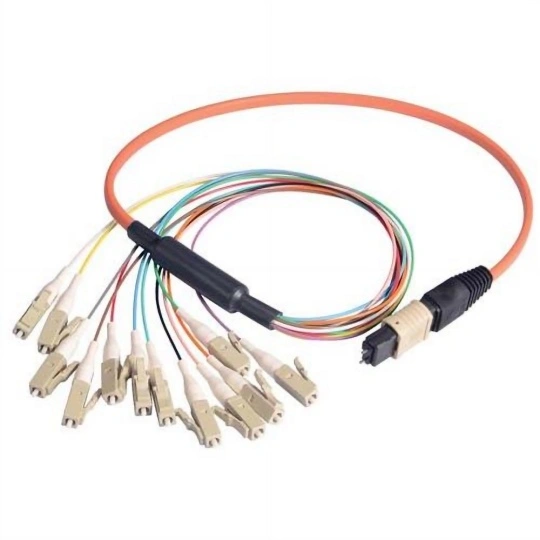
3. Multi-Port / Cluster / Harness Assemblies
- Use:Simplify cabling for multi-antenna panels and phased-array antennas.
- Features:Pre-bundled, color-coded connectors, IP67 sealing, reduced installation time.
4. Phase-Stable / Test & Measurement Cables
- Use:Lab/field testing, OTA chambers, and automated test equipment (ATE).
- Features:Excellent phase stability vs. flex and temperature, high frequency (18–110 GHz), ruggedized designs.
5. Outdoor-Rated Flexible Coax Assemblies
- Use:RRU-to-antenna jumpers on towers or building facades.
- Features:Flexible polyurethane jackets, IP67-rated, wide temp range (–40 °C to +85 °C), bend radius as low as 0.5”.
6. Hybrid Power + Data / Fiber-Optic Assemblies
- Use:Powering remote radios (RRHs) and transmitting data over fiber in a single cable run.
- Features:Combine copper power conductors with optical fibers, meeting telecom standards for flame retardancy and mechanical protection.
Typical 5G & Industrial Application Scenarios
- Macro / Small-Cell Base Stations:RF jumpers, low-PIM assemblies, and tower-top harnesses.
- Massive MIMO / Active Antenna Systems:Multi-port harnesses, low-PIM jumpers, and phase-matched sets.
- Private 5G / Industrial IoT:Ruggedized assemblies for DAS, industrial gateways, and smart factory equipment.
- Test & Measurement Labs:High-frequency, phase-stable test cables for VNAs and OTA systems.
- Transportation & Outdoor Industrial:UV-resistant, IP67-rated assemblies for rail, mining, and port environments.
How to Select the Right 5G Communication Industrial Cable Assembly
Step 1: Define Operating Conditions
- Frequency Range:Maximum operating frequency and any harmonics.
- Power Level:Average and peak power to assess heating and PIM.
- Environment:Indoor/outdoor, temperature, UV, moisture, chemicals, mechanical stress.
Step 2: Set Electrical Performance Targets
- Max Insertion Loss:Calculate allowable loss based on link budget.
- VSWR:Target ≤1.20–1.25 for critical paths; ≤1.30 is often acceptable.
- PIM:Specify ≤ –150 dBc for macro/small-cell; tighter for DAS.
- Phase Stability:Define requirements if used in beamforming or test systems.
Step 3: Choose the Right Cable Structure
- Short Jumper (<3–5 m):Semi-rigid or flexible coax (e.g., RG, LMR) is sufficient.
- Long Feeder (>10–20 m):Use low-loss coax (e.g., LMR-400, Heliax) to minimize loss.
- Tight Space:Choose highly flexible cables with a small bend radius.
Step 4: Select Connectors
- Outdoor Macro/Small-Cell:4.3-10, 7/16 DIN, NEX10, or N-type for low-PIM.
- Lab/Test:2.4 mm, 2.92 mm, 1.85 mm for mmWave; SMA, N-type for lower frequencies.
- Multi-Port:MQ4/MQ5 for MIMO antenna clusters.
Step 5: Evaluate Shielding & Environmental Protection
- Shielding:Look for >90 dB shielding effectiveness.
- IP Rating:IP65/67 for outdoor; IP69K for harsh industrial washdown.
- Jacket:PU for flexibility, PE for UV resistance, LSZH for flame retardancy.
Step 6: Verify with Data & Compliance
- Request Test Reports:For VSWR, insertion loss, PIM, and shielding at your frequency.
- Check Certifications:ISO 9001, RoHS/REACH compliance, and flammability ratings (UL, IEC).
Step 7: Plan for Manufacturing & Logistics
- Customization:Ensure the supplier can provide custom lengths, labeling, and labeling.
- Lead Time & Traceability:Ask about part numbering, lot traceability, and test data for each assembly.
Best Practices for Procurement & Engineering
- Involve Both Teams Early:Engineers define specs; procurement ensures quality and lead time.
- Standardize Where Possible:Use a limited set of cable/connector types to simplify inventory and spares.
- Prioritize Quality Over Price:In 5G, a failed cable can take down an entire sector or production line.
- Consider Total Cost of Ownership (TCO):Factor in reliability, maintenance, and downtime, not just unit price.
- Plan for Testing & Documentation:Ensure you have test reports and traceability for every batch.
Future Trends in 5G Industrial Cable Assemblies
- Higher Frequencies (FR3 & mmWave):Demand for assemblies up to 67 GHz and beyond.
- Integrated Sensing:Cables with embedded temperature or strain sensors for predictive maintenance.
- Smarter Manufacturing:Automated, data-driven production with full digital twins of each cable.
- Sustainability:Eco-friendly materials and manufacturing processes.
Conclusion
5G communication industrial cable assemblies are mission-critical components. By understanding the key parameters, architectures, and selection criteria outlined in this guide, you can ensure your 5G or industrial system achieves maximum performance, uptime, and return on investment.
Further Reading
- RF Cable Assemblies for 5G– Pasternack technical article.
- High-Frequency Cable Assemblies for Instrumentation, IoT and 5G Applications– Mouser/Molex.
- Telecommunications Cable Assemblies– Custom Wire Assembly overview.
- 5GFlex@28 Assemblies– Times Microwave product page.
- SMA Cable Assemblies– Baierde product introduction.