Yes, many M12 industrial cable assemblies are specifically designed for outdoor harsh environments, but not all are suitable. Success depends on matching the right coding, IP rating, cable jacket, and mechanical properties to your specific application.
This guide provides a practical framework to help B2B buyers and engineers select and use M12 cable assemblies correctly in demanding outdoor settings like solar farms, wind turbines, and mobile machinery.
Why M12 Assemblies Excel Outdoors
M12 connectors are a mature, standardized solution (per IEC 61076-2-101/104) widely used in industrial automation for sensors, actuators, and industrial Ethernet. Their key advantages in harsh outdoor environments include:
- Rugged Mechanical Design: The 12 mm, thread-locking circular design provides a secure connection that resists loosening from vibration, outperforming standard RJ45 connectors.
- High Ingress Protection (IP): Many M12 assemblies meet IP67(dust-tight, temporary immersion) or IP68/IP69K(deeper immersion, high-pressure washdown) standards, making them ideal for wet, dusty, or washdown areas.
- Harsh-Environment Materials: Cable jackets are available in materials like PUR, TPU, TPE, and FR-TPE, offering excellent resistance to UV, ozone, oil, and abrasion. Some are CMX-rated for outdoor use and can withstand temperatures from -40 °C to +105 °Cor higher.
- EMI/RFI Shielding: Shielded versions (braid + foil) are available for D-code and X-code Ethernet cables, ensuring reliable data transmission in electrically noisy environments.
Common Outdoor Harsh-Environment Applications
- Outdoor Industrial & Renewable Energy
- Use: Sensor/actuator cabling, junction box connections, and network links on solar inverters, combiner boxes, and wind turbine nacelles.
- Requirements: UV resistance, wide temperature range, IP65/IP67/IP68, and resistance to rain, salt mist, and humidity.
- Mobile Machinery & Transportation
- Use: On-vehicle networks (CAN, Profinet) and sensor connections for AGVs, forklifts, construction, and agricultural equipment.
- Requirements: Resistance to oils, fuels, vibration, and water spray/splashes (IP67/IP69K). M12 is often preferred over M8 for its robustness.
- Food, Beverage & Pharma (Washdown)
- Use: Connecting sensors and actuators on filling, packaging, and CIP/SIP skids.
- Requirements: IP67/IP69K for high-pressure, high-temperature cleaning. Smooth, chemical-resistant jackets (PUR/TPE) are essential.
- Industrial Ethernet to the Field
- Use: Connecting vision systems, robots, and remote I/O in outdoor or washdown areas using D-code (100 Mbps) or X-code (1/10 Gbps) M12 connectors.
- Requirements: Outdoor-rated, shielded, flexible, and UV-resistant cables with IP67 or higher protection.
Key Technical Parameters to Check
When reviewing a datasheet, ensure the following parameters meet your application’s demands:
- Connector Coding & Pin Count: Match the connector to the function.
- A-code: Sensors, actuators (power/signal).
- B-code: Fieldbus (Profibus, CAN).
- D-code: 100 Mbps Industrial Ethernet.
- X-code: 1/10 Gbps Industrial Ethernet.
- L/S/K-code: High-current power (up to 16–24 A).
- IP Rating & Sealing: For general outdoor use, IP67is a common baseline. For submerged or high-pressure washdown, choose IP68/IP69K. Ensure the rating is specified for the mated pairand that the coupling nut is tightened to the manufacturer’s torque specification.
- Cable Jacket Material: Select based on environmental stress.
- PUR: Excellent abrasion, oil, and tear resistance. Good for dynamic applications. Typical temp: -40 °C to +80 °C.
- TPU: High flexibility and chemical resistance. Temp: -40 °C to +105 °C.
- TPE/FR-TPE: Good outdoor and flame resistance. Often CMX-rated.
- PVC: Cost-effective, but less resistant to oil and UV than PUR/TPU. Temp: up to +105 °C.
- Operating Temperature: Verify the range covers your minimum and maximum ambient temperatures, including solar heating in enclosures (+70 °C to +80 °C is common).
- Shielding for Data Cables: For D-code/X-code Ethernet or bus systems, always use shielded cableswith 360° shielding continuity to the connector shell for reliable data transmission.
- Mechanical Properties: For moving applications (robots, AGVs), check the cable’s flex rating (e.g., 1 million+ cycles) and minimum bend radius (e.g., ≥8× cable OD statically).
- Voltage, Current & Wire Gauge: Ensure the cable’s conductor size and insulation can handle the required current at the maximum ambient temperature with an appropriate safety margin.
Common Pitfalls to Avoid
- Using Indoor-Rated Cables Outdoors: Standard PVC CM-rated CMX cables lack the necessary UV and weather resistance for direct sunlight exposure.
- Ignoring IP Rating Conditions: An IP67 rating is for temporary immersion. For continuous submersion or high-pressure spray, you need IP68/IP69K.
- Mixing Cable Types in One Harness: Combining PUR (flexible) and PVC (stiff) in a single assembly creates weak points. Use a single, application-appropriate jacket type.
- Poor Cable Management: Unsupported cables are prone to stress and failure. Use cable trays, conduits, or strain relief to manage weight and movement.
- Incorrect Installation Torque: Under-tightening can compromise the seal, while over-tightening can damage the connector. Always follow the manufacturer’s specified torque.
- Neglecting EMI Shielding: In environments with VFDs or motors, an unshielded data cable will suffer from signal loss and errors. Use shielded M12 D/X-code cables and ensure proper grounding.
- Over-Specifying: While robust, high-spec cables are more expensive. Right-sizing the cable to the application’s actual needs is a best practice for cost and weight efficiency.
Your 7-Step M12 Outdoor Selection Checklist
- Define the Environment: Document the temperature range, moisture, chemicals, UV exposure, vibration, and mechanical stress.
- Select the Right Coding: Match the connector to the application (A/B/D/X/L/S-code).
- Choose the Proper IP Rating: Use IP67 as a baseline. Upgrade to IP68/IP69K for submerged or high-pressure washdown applications.
- Pick the Best Jacket Material: Select PUR for abrasion and oil resistance, TPU for flexibility and chemicals, or TPE/FR-TPE for a balance of properties and cost.
- Verify Electrical Ratings: Ensure voltage, current, and wire gauge are sufficient for your load, considering temperature derating.
- Address Shielding & Data Needs: For data or bus systems, always choose a shielded M12 assembly and ensure the shield is properly terminated to the connector shell.
- Plan for Mechanics & Installation: For moving parts, use high-flex cables and proper strain relief. Follow the manufacturer’s torque specs for installation.
Practical Example: Solar Inverter Field Junction Box
Scenario: Outdoor junction box on a ground-mounted solar farm, 50 m from the inverter.
- Environment: -20 °C to +60 °C, rain, wind-blown dust, occasional high-pressure washdown.
- Signals: 24 VDC power to combiner box sensors and Modbus RTU (RS-485) to a gateway.
Recommended Solution:
- Coding: A-code, 4-pinfor power and A-code, 5-pinfor the bus.
- Cable: UV-resistant PUR jacketwith 22/24 AWG conductors for power and 0.34 mm² for the bus.
- IP Rating: IP67or IP68for the mated connectors.
- Shielding: Shielded cable for the Modbus RTU line, with the drain wire connected to the connector shell and the panel ground.
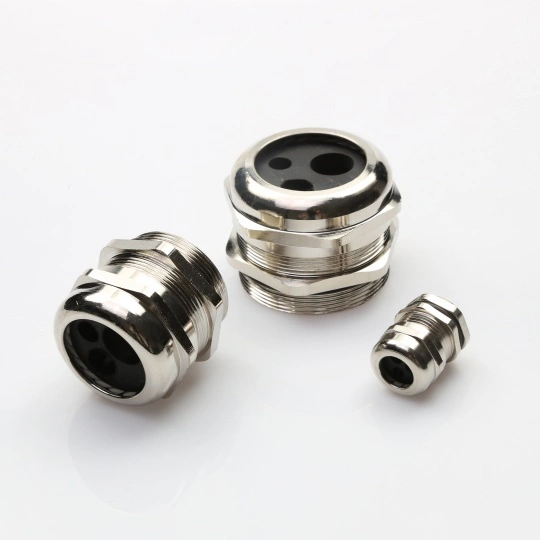
- Mechanics: Install the M12 connectors in a sealed junction box with cable glands. Use a short PUR patch cable inside the box to connect to the terminal blocks.
Conclusion
M12 industrial cable assemblies are a proven and reliable choice for outdoor harsh environments, but their success hinges on precision selection. By systematically evaluating environmental conditions and technical specifications—such as coding, IP rating, jacket material, shielding, and mechanical properties—you can avoid common failures and ensure a robust, long-lasting installation.
For demanding projects, always source from reputable manufacturers that provide detailed environmental and mechanical data. This approach not only ensures project success but also simplifies long-term maintenance and support for your global clients.