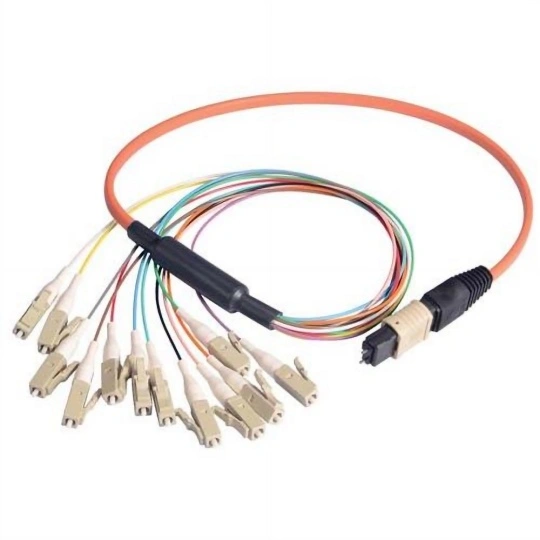
Industrial cable assembly testing service is a professional quality verification process designed to ensure the electrical, mechanical, and environmental reliability of cable assemblies used in demanding industrial applications. It involves a series of rigorous tests—from basic electrical checks to complex environmental simulations—to confirm that every cable assembly meets specified performance standards before it leaves the factory. For B2B industrial and foreign trade customers, this service is not just a quality checkpoint but a critical safeguard against costly downtime, safety hazards, and compliance risks in real-world operations.
Why Industrial Cable Assembly Testing Matters
In industrial settings such as automation, robotics, mining, and manufacturing, cable assemblies are subjected to constant movement, vibration, extreme temperatures, moisture, and electrical noise. A single faulty connection or degraded insulation can lead to intermittent failures, equipment malfunction, or even safety incidents. Industrial cable assembly testing helps:
- Prevent field failures: Identify defects like open circuits, shorts, poor crimps, or inadequate shielding before installation.
- Ensure compliance: Meet industry standards such as ISO 9001, IATF 16949, UL, IPC/WHMA-A-620, and RoHS.
- Reduce long-term costs: Avoid warranty claims, recalls, and unplanned downtime.
- Build customer trust: Provide documented proof of quality and reliability.
Core Testing Categories and Methods
A comprehensive industrial cable assembly testing service typically includes the following key areas:
1. Electrical Performance Testing
These tests verify the basic electrical integrity and safety of the assembly.
- Continuity Test: Checks for complete electrical paths and detects open circuits, shorts, or miswired connections.
- Insulation Resistance (IR) Test: Measures the resistance between conductors and ground to ensure proper isolation and prevent leakage.
- High-Potential (Hi-Pot) Test: Applies a high voltage (usually 2–3 times the rated voltage) for a set duration (e.g., 1 minute) to verify dielectric strength and insulation integrity.
- Milliohm/Resistance Test: Measures conductor resistance to confirm efficient current flow and detect excessive losses.
- Signal Integrity Analysis: For data or control cables, this evaluates impedance matching, crosstalk, and EMI/EMC compliance.
2. Mechanical and Durability Testing
These tests assess the physical robustness of the assembly under stress.
- Pull/Tensile Test: Applies controlled force to connectors and terminations to verify crimp quality and retention strength (e.g., industrial cables often require withstanding 50N or more).
- Bending/Flexing Test: Simulates repeated movement (e.g., in cable carriers or robotic arms) to evaluate fatigue life. The Rolling S-Bend Test is a common method for high-flex applications.
- Vibration and Shock Test: Exposes assemblies to vibration profiles and mechanical shocks to ensure stability in moving equipment.
- Connector Engagement/Disengagement Test: Checks insertion and withdrawal forces, and may include cyclic testing (e.g., 20,000+ cycles for automotive connectors).
3. Environmental Stress Testing
These tests validate performance under harsh or variable conditions.
- Thermal Cycling/Aging: Exposes cables to extreme temperature variations (e.g., -55°C to +200°C) to assess material stability.
- Humidity and Condensation Test: Evaluates resistance to moisture ingress and corrosion.
- Salt Spray Test: Simulates corrosive environments (e.g., marine or coastal areas) to test rust and degradation resistance.
- Dust and Water Ingress (IP Rating) Test: Confirms sealing effectiveness for outdoor or wash-down environments.
- Chemical Resistance Test: Checks compatibility with oils, solvents, or cleaning agents common in industrial settings.
4. Visual and Structural Inspection
- 100% Visual Inspection: Trained technicians examine workmanship, labeling, connector alignment, and physical damage.
- Dimensional Check: Verifies cable lengths, connector positions, and tolerances against specifications.
- X-ray or Microscopic Inspection: For high-reliability sectors, this may be used to inspect internal crimp quality, wire placement, or shield coverage.
Practical Application Scenarios
Different industries have specific testing priorities based on their operating environments:
- Industrial Automation & Robotics: Focus on flex life, vibration resistance, and signal integrity for continuous motion systems.
- Automotive & Transportation: Emphasize pull strength, thermal cycling, and compliance with standards like IATF 16949.
- Medical Devices: Require biocompatible materials, sterilizability, and high-precision electrical testing.
- Aerospace & Defense: Demand extreme environmental testing, lightweight designs, and rigorous documentation.
- Renewable Energy: Need UV resistance, wide temperature range tolerance, and long-term durability.
Key Parameters and Acceptance Criteria
When specifying testing requirements, consider these typical parameters:
- Voltage Rating: Determines Hi-Pot test voltage (e.g., 2.5 kV AC for 600V rated cables).
- Resistance Thresholds: Continuity pass/fail limits (e.g., < 2 Ω for power conductors).
- Insulation Resistance: Minimum values (e.g., > 100 MΩ at 500V DC).
- Pull Force: Minimum retention strength (e.g., 50N for industrial connectors).
- Flex Cycles: Number of bends before failure (e.g., 1 million cycles for high-flex robotic cables).
- Temperature Range: Operating and storage limits (e.g., -40°C to +105°C).
- IP Rating: Ingress protection level (e.g., IP67 for dust-tight and temporary immersion).
Precautions and Common Pitfalls to Avoid
- Overlooking intermittent failures: Basic continuity tests may miss issues that only appear under flex or vibration. Always request dynamic testing if the application involves movement.
- Inadequate shielding verification: For noise-sensitive cables, ensure shield continuity and proper grounding are tested—not just conductor continuity.
- Ignoring environmental factors: Don’t assume lab-grade performance in harsh field conditions. Specify relevant environmental tests upfront.
- Vague documentation: Ensure test reports include clear pass/fail criteria, measured values, and reference standards.
- Skipping sample validation: For new suppliers or designs, always request pre-production samples with full test reports before committing to volume orders.
Actionable Suggestions for B2B Buyers
- Define Testing Scope in RFQ: Clearly list required tests, parameters, and standards in your request for quotation. For example: “Supplier must provide 100% continuity, IR, and Hi-Pot test reports, plus pull-test certificates at 50N minimum.”
- Request Sample Test Reports: Ask potential suppliers for examples of their test documentation to assess thoroughness and clarity.
- Specify Third-Party or Witness Testing: For critical applications, consider requiring independent lab verification or allowing factory witness testing.
- Prioritize Certified Suppliers: Work with manufacturers holding relevant certifications (ISO 9001, IATF 16949, UL) and inquire about their internal QC processes.
- Plan for Traceability: Ensure each shipment includes batch or serial number tracking and links to test records for future audits.
Conclusion
Industrial cable assembly testing service is a vital investment in product reliability, safety, and compliance. By understanding the types of tests available, aligning them with your application needs, and working with qualified suppliers, you can significantly reduce operational risks and ensure long-term performance. Whether you are sourcing for automation systems, heavy machinery, or any industrial application, make testing an integral part of your procurement process—not an afterthought. A well-tested cable assembly is not just a component; it’s a foundation for your entire system’s success.