Industrial cable assemblies are the unsung heroes of modern manufacturing, automation, and infrastructure. They power machinery, transmit critical data, and ensure seamless connectivity in harsh environments. However, selecting the right cable assembly—custom or standard—can significantly impact operational efficiency, safety, and costs. This article explores the differences, advantages, and ideal use cases for custom and standard industrial cable assemblies, empowering businesses to make informed decisions.
Understanding Standard Industrial Cable Assemblies
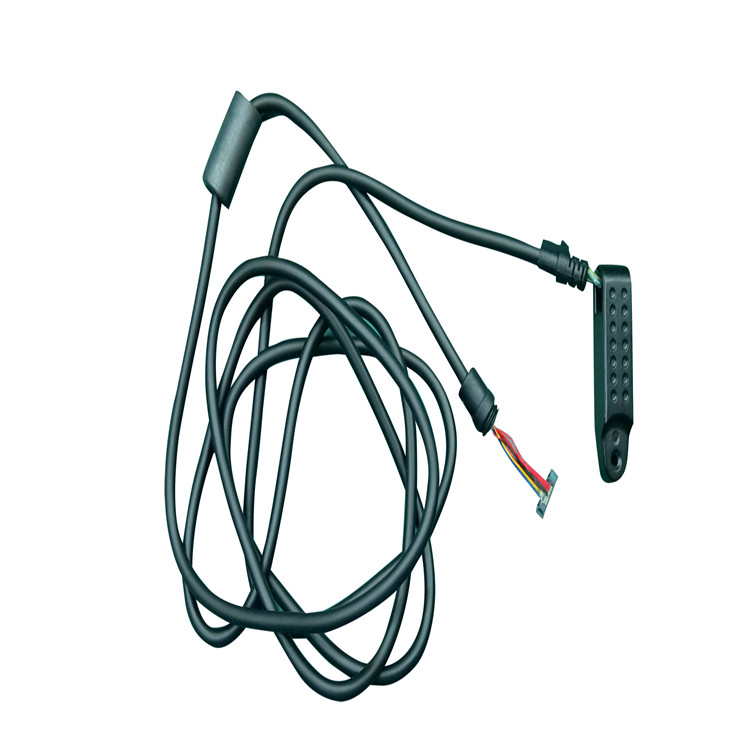
Standard cable assemblies are pre-designed, mass-produced solutions built to meet common industry requirements. These “off-the-shelf” products are widely available and adhere to established specifications for length, connectors, shielding, and materials.
Advantages of Standard Cable Assemblies
Cost-Effective: Mass production reduces per-unit costs, making standard assemblies budget-friendly for businesses with straightforward needs.
Quick Availability: Since they’re stocked by suppliers, standard cables can be shipped immediately, minimizing downtime.
Proven Reliability: These assemblies are tested across diverse applications, ensuring compliance with industry standards (e.g., UL, RoHS, or IEC).
Simplified Procurement: No need for lengthy design or testing phases—simply select from a catalog.
Limitations of Standard Assemblies
Limited Flexibility: They may not fit unique spatial constraints or specialized performance requirements.
Compromised Performance: In extreme conditions (e.g., high temperatures, corrosive environments), standard cables might underperform.
Excess Waste: Using longer cables than needed can lead to clutter, maintenance challenges, or signal interference.
Custom cable assemblies are engineered to meet precise specifications, tailored to unique operational needs. From aerospace to oil and gas, industries with demanding conditions often rely on bespoke solutions.
Projects requiring future-proofing or scalability.
Key Factors to Guide Your Decision
Application Requirements:
Will the cables face extreme temperatures, moisture, or vibrations? → Custom.
Are you replacing an existing, non-critical component? → Standard.
Budget Constraints:
Tight budget with immediate needs? → Standard.
Higher upfront costs justified by long-term ROI? → Custom.
Timeline:
Need a solution within days? → Standard.
Can accommodate a design phase? → Custom.
Scalability:
Planning to expand operations? Custom designs ensure consistency across future installations.
Regulatory Compliance:
Industries like automotive or aerospace often require certified custom solutions.
Real-World Examples
Data Centers: Hyperscale facilities often choose custom-length fiber optic cables to optimize airflow and cooling efficiency.
Automotive Manufacturing: A plant upgraded to custom shielded cables to eliminate EMI interference from robotic welders, reducing errors by 30%.
Renewable Energy: A solar farm used standard UV-resistant cables for routine connections but opted for custom waterproof assemblies in flood-prone areas.
How long does an industrial cable typically last in harsh environments? This is a critical question for industries ranging from manufacturing and mining to oil and gas, where cables are exposed to extreme conditions that can significant...
Choosing the right cable assembly brand is critical for industrial operations. Reliability, durability, and performance under harsh conditions directly impact uptime and safety. As of 2025, these five brands consistently lead the market...
Imagine this: a high-pressure sprayer cleaning down equipment. Your standard cable assembly endures the blast… until water seeps into the connector. Moisture pools inside, unseen, becoming a breeding ground for bacteria. Later, a cleani...
The maximum bending angle of an industrial cable is not a fixed value; it is determined by multiple factors such as cable structure, material properties, application scenarios, and industry standards. Understanding these factors is cruc...
Industrial cables are the “nervous system” of automated systems—powering motors, transmitting sensor data, and enabling communication between controllers. Poor cable selection can lead to system malfunctions, unplanned downt...
Industrial cable manufacturing is a critical sector that supports infrastructure, energy, transportation, and countless industrial applications. However, the production process involves various materials and activities that can pose env...
What Are Industrial Cable Assemblies?Industrial cable assemblies are custom-engineered bundles of cables, wires, connectors, and protective components designed to transmit power, signals, or data in demanding environments. Unlike stand...
The foundational cables powering our telecommunications and broadband networks – particularly legacy copper-based systems – are reaching or surpassing their intended design life across vast regions. This aging infrastructure presents si...
In laboratory environments, where precision, safety, and reliability are paramount, the role of industrial cables is often underappreciated—until something goes wrong. These cables serve as the lifeline of critical equipment, powering s...
Old cables, whether from electronics, appliances, or charging devices, often accumulate in homes and offices. The good news is that yes, most old cables can be recycled, reducing electronic waste (e-waste) and recovering valuable mater...
In the complex ecosystem of modern industry—from bustling automotive assembly lines and towering wind turbines to heavy-duty mining equipment and precision manufacturing hubs—vibration is an inescapable reality. Motors hum, conveyors ru...
In numerous industrial settings, from outdoor power transmission to manufacturing facilities with exposure to sunlight, industrial cables are constantly exposed to ultraviolet (UV) radiation. This raises a crucial question: Why is UV re...
Strong electromagnetic interference (EMI) in industrial settings like factories, power plants, and processing facilities can wreak havoc on sensitive equipment and signal integrity. Proper cable grounding is your critical defense agains...
When we think of cutting-edge medical technology, imaging systems like MRI and CT scanners, patient monitors, and robotic surgical arms often come to mind. However, the critical components that power and connect these sophisticated devi...
Industrial cable assemblies are critical components in machinery, automation systems, energy infrastructure, and other heavy-duty applications. Choosing the right cable assembly ensures reliability, safety, and longevity in demanding en...
Introduction to Sensor Cable Assemblies
Industrial sensor cable assemblies are purpose-built wiring systems that connect sensors to control units in harsh environments. These engineered solutions integrate:
Shielded cables (braid...
Water and humidity damage cables in multiple ways:
Conductor Corrosion: Moisture oxidizes copper, increasing resistance and causing overheating.Insulation Breakdown: Water treeing in polymers (e.g., XLPE) creates conductive paths...
In industrial applications, cable assemblies often encounter extreme temperature conditions. Testing their performance under such circumstances is crucial to ensure reliable operation. This article will guide you through the essential s...
Walk into any industrial facility, and you’ll notice a rainbow of cables snaking through machinery, walls, and ceilings. At first glance, these varied jacket colors might seem like a random design choice—but in reality, they serve criti...
Installing industrial cable assemblies correctly is critical for ensuring safety, reliability, and long-term performance in demanding environments. Mistakes can lead to downtime, equipment damage, or safety hazards. Follow this step-by-...
IntroductionIn industrial automation, cable assemblies serve as the lifelines of machinery, robotics, and control systems. Their performance directly impacts operational efficiency, safety, and uptime. However, selecting the right cabl...
Mining operations are among the most demanding industrial environments, characterized by extreme temperatures, high mechanical stress, chemical exposure, and the constant risk of abrasion or impact. Heavy-duty industrial wires serve as ...
Imagine a state-of-the-art automotive assembly line grinding to a halt. Not because a robot arm malfunctioned, but due to a single, seemingly insignificant cable failure transmitting sensor data. This scenario underscores a fundamental ...
In demanding industrial settings, the reliability of flexible industrial cable assembliesis paramount. These cables face constant bending, abrasion, and exposure to oils, chemicals, and extreme temperatures. A single point of failure ca...
Meta Description: Discover key drivers, investment hotspots, and risk strategies for cable infrastructure in emerging economies. Data-driven analysis of fiber optic expansion and 5G integration opportunities.
The Rush to Eme...
Cable assemblies are critical components in electrical and mechanical systems, ensuring reliable power and signal transmission. However, improper installation can lead to performance issues, safety hazards, or even system failure. This ...
For global buyers, the term “China industrial cable assemblies Manufacturer” often represents a critical decision point. The right partner can ensure product reliability, shorten time-to-market, and reduce long-term costs. This article ...
Industrial cable assemblies are critical components in sectors like manufacturing, aerospace, energy, and automation. Selecting the right materials for these assemblies ensures reliability, safety, and longevity in harsh environments. H...
The cable industry, a backbone of modern technology, is poised for transformative changes by 2025. Engineers and industry experts are forecasting advancements driven by sustainability, digitalization, and evolving infrastructure demands...
Signal crosstalk – unwanted signal coupling between adjacent wires – wreaks havoc in industrial automation, causing data errors, measurement inaccuracies, and erratic equipment behavior. Here’s how to prevent it in your multi-conductor ...
As the global shift toward renewable energy accelerates, the demand for reliable, durable, and high-performance industrial cables has never been greater. Renewable energy systems—from solar farms and wind turbines to hydroelectric plant...
As cyberattacks grow more sophisticated, organizations are rethinking physical infrastructure security. Shielded cables, once a niche solution for industrial settings, are now surging in demand as businesses prioritize holistic cybersec...
1. Introduction to Industrial Cable Insulation Materials
Industrial cable insulation materials play a pivotal role in ensuring the safe and efficient transmission of electrical power across various sectors. These materials act as a p...
As robotics and high-flex automation evolve, the need for reliable, high-flex Mini-change industrial cable assemblies has never been greater. This 2026 guide explores the essential features, applications, and selection criteria for Mini...
In high-throughput industrial automation, even a few minutes of unplanned downtime can cost thousands of dollars. For robotics cells, the weakest link is often not the robot itself, but the industrial automation cable assembliesthat pow...
The integration of wireless charging technology into industrial cables is transforming how industries manage power delivery in demanding settings. From manufacturing plants to logistics warehouses, this innovation addresses long-s...
Industrial cable connectors are essential components in various industrial systems, enabling the reliable transmission of power, signals, and data. There are several common types, each designed to meet specific application requirements....
Industrial cables serve as the “nerve and blood vessels” of modern manufacturing, power transmission, and automation systems, connecting critical equipment like motors, sensors, and control panels. In industrial environments...
Heavy machinery cable assemblies are robust, high-performance connectivity solutions engineered to meet the demanding requirements of industrial and heavy-duty applications. Designed for durability, reliability, and optimal performance in.
Product OverviewQuick-Install Cable Adapters are the game-changing connectivity solution designed for professionals and DIY enthusiasts alike. Engineered to eliminate installation hassles, these adapters provide instant, tool-free conne.
Contact Us
Feel free to reach out to us for any inquiries or orders.