In demanding industrial sectors like food processingand medical equipment manufacturing, cable reliability is not just a preference—it’s a critical safety and compliance requirement. This article explores whether PUR (Polyurethane) industrial cable assembliesmeet the rigorous standards of these industries.
What Are PUR Industrial Cable Assemblies?
PUR cable assemblies are constructed with a polyurethane outer sheath, prized for its exceptional mechanical and chemical resilience. Key characteristics include:
Superior Abrasion Resistance: Withstands constant friction from drag chains, robotic arms, and moving parts.
Excellent Chemical Resistance: Highly resistant to oils, greases, many solvents, and cleaning agents.
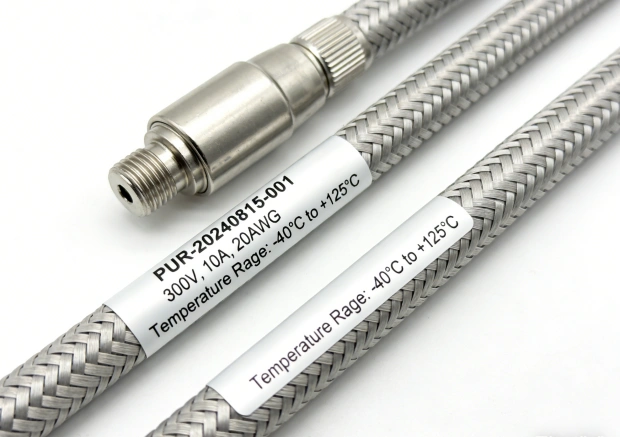
Wide Temperature Tolerance: Performs reliably in extreme temperatures, typically from -40°C to +90°C, with some special grades reaching +125°C.
High Flexibility & Torsion Resistance: Ideal for dynamic applications requiring millions of bending cycles.
Halogen-Free Options: Reduces toxic smoke emission during a fire, a key safety feature.
These properties make PUR a strong candidate for harsh industrial environments. But are they suitable for the uniquely strict worlds of food and medical applications?
Suitability for Food Processing Equipment
The food and beverage industry presents a “perfect storm” of challenges for cables: frequent high-pressure washdowns, corrosive cleaning chemicals, extreme temperatures, and the paramount need for hygiene to prevent contamination.
Here’s how PUR cable assembliesperform in this environment:
Key Advantages
Exceptional Resistance to Cleaning Agents: PUR’s chemical resistance is a major advantage, standing up to fats, oils, and the aggressive acids and alkalis used in daily sanitation without degrading.
Withstands Thermal Shock: The material handles the thermal shock of moving from cold storage or refrigerated environments directly into hot water or steam cleaning cycles.
Hygienic Surface: A smooth, non-porous PUR jacket prevents bacterial growth and makes cleaning more effective, a core requirement for food safety.
Mechanical Durability: In automated facilities with drag chains and robotic arms, PUR’s superior abrasion and flex life ensure long-term reliability, reducing downtime.
Critical Compliance Considerations
While mechanically and chemically suitable, using standard industrial PUR cables in food processing carries risks. Food-safe PUR cable assembliesare a specialized product and must meet specific regulatory requirements:
Material Compliance: The PUR formulation must be certified for food contact. This often means compliance with regulations like the EU’s Framework Regulation (EC) No 1935/2004and specific measures like Plastic Regulation EU 10/2011, which limit the migration of substances from the cable material into food.
Additives and Plasticizers: The cable must be free from substances like certain phthalates that are restricted for food-contact applications. All additives must be on the relevant approved lists.
Migration Testing: Compliant cables are tested to ensure that any substances that could migrate are below strict limits. This includes total migration and specific migration limits (SML) for substances like Bisphenol A.
Proper Labeling: Cables intended for food contact must be supplied with a Declaration of Compliance (DoC) and appropriate labeling (e.g., the “glass and fork” symbol in the EU).
Conclusion for Food Processing: Standard industrial PUR cables are mechanically excellent but not automatically suitable. You must source specifically designed and certified food-grade PUR cable assembliesfrom manufacturers who can provide full material traceability and compliance documentation.
Suitability for Medical Equipment
Medical devices have their own set of stringent requirements, focused on patient and operator safety, signal integrity, and biocompatibility. Key standards include IEC 60601(safety and essential performance) and ISO 10993(biological evaluation of medical devices).
Key Advantages
Reliable Signal Integrity: PUR’s excellent dielectric properties and compatibility with robust shielding (e.g., braided shields) make it ideal for critical applications like patient monitoring, imaging, and diagnostic equipment where signal clarity is vital.
Durability in Demanding Environments: In hospital settings, cables are subjected to repeated flexing, rolling over, and frequent cleaning with harsh disinfectants. PUR’s abrasion and chemical resistance ensure a longer service life.
Halogen-Free Formulations: Many medical-grade PUR cables are halogen-free, minimizing the emission of toxic and corrosive fumes in the unlikely event of a fire—a critical safety consideration.
Sterilization Resilience: Certain PUR formulations can withstand the rigors of various sterilization methods, including chemical disinfectants and even some forms of radiation, depending on the specific compound.
Critical Compliance Considerations
Just as with food processing, using a standard industrial PUR cable in a medical device is not acceptable. Medical-grade PUR cable assemblies must meet a higher bar:
Biocompatibility (ISO 10993): If the cable or its components could come into direct or indirect contact with a patient, the materials must be tested according to ISO 10993 standards. This includes evaluations for:
Cytotoxicity
Sensitization
Irritation or Intracutaneous Reactivity
Systemic Toxicity
Hemocompatibility (for blood-contacting devices)
Electrical Safety (IEC 60601-1): The cable assembly must be an integral part of the device’s overall safety system, ensuring proper creepage and clearance distances, insulation integrity, and safe leakage current levels.
EMC/EMI Shielding: To prevent the cable from interfering with other sensitive medical equipment (or vice versa), robust shielding is often a mandatory requirement under IEC 60601-1-2.
Material Purity: The PUR compound must be free from leachable substances and allergens, with full material declarations available from the supplier.
Conclusion for Medical Equipment: Standard industrial PUR cables are not suitable for medical applications. You need medical-grade PUR cable assembliesfrom a manufacturer experienced in the regulatory landscape and able to provide the necessary biocompatibility and electrical safety documentation.
PUR vs. Other Cable Jacket Materials (PVC & TPE)
To understand PUR’s position, it’s helpful to compare it to other common jacket materials like PVC and TPE.
Feature
PVC (Polyvinyl Chloride)
PUR (Polyurethane)
TPE (Thermoplastic Elastomer)
Flexibility
Moderate, stiffens in cold.
Excellent, even at low temps.
Very good, similar to PUR.
Abrasion Resistance
Moderate.
Excellent.
Good.
Oil & Chemical Resistance
Poor to moderate.
Excellent.
Good, but generally less than PUR.
Temperature Range
Narrow (e.g., -20°C to +70°C).
Wide (e.g., -40°C to +90°C).
Wide, similar to PUR.
Halogen Content
High.
Can be halogen-free.
Often halogen-free.
Lifespan in Harsh Conditions
Short.
Very long.
Long.
Cost
Low.
High.
Moderate to High.
Key Takeaway: For static, indoor, and non-critical applications, cost-effective PVC is often sufficient. However, for dynamic, harsh, or regulated environments like food processing and medical equipment, the superior performance of PUR (or sometimes TPE) is essential despite the higher initial cost.
Best Practices for Implementation
To ensure success, follow these guidelines when specifying PUR cable assemblies for food or medical applications:
Define the Environment: Clearly document all conditions: temperature range, exposure to chemicals, mechanical stress (flexing, torsion), and any direct or indirect contact with food or patients.
Specify Compliance Requirements: Don’t just ask for “food-safe” or “medical-grade.” State the exact regulations and standards required (e.g., EU 10/2011, FDA CFR 21, ISO 10993-x, IEC 60601-1).
Partner with Specialists: Choose suppliers with proven experience and a portfolio in your specific industry. They should be able to provide necessary certifications and test reports without hesitation.
Validate the Complete Assembly: Remember that the entire assembly—including connectors, potting materials, and strain reliefs—must also meet the relevant industry standards.
Plan for Installation and Maintenance: Use correct bend radii, secure strain relief properly, and train maintenance staff on inspection procedures to maximize the cable’s service life.
Final Verdict: Suitability of PUR Cable Assemblies
Yes, specialized, certified PUR industrial cable assemblies are exceptionally well-suited for both food processing and medical equipment applications.
Their superior mechanical and chemical properties provide an ideal foundation. However, the critical distinction lies in compliance. For these sensitive industries, you must move beyond “industrial grade” and source purpose-built, certified food-grade or medical-grade PUR cables. By partnering with knowledgeable suppliers and demanding full regulatory documentation, you can leverage the durability of PUR while ensuring the highest levels of safety and compliance.
Heavy machinery is the backbone of industries like construction, mining, port logistics, and manufacturing. From excavators and bulldozers to cranes and conveyor systems, these machines operate under extreme conditions—constant vibratio...
Outdoor environments demand robust connectivity solutions that withstand harsh conditions like dust, moisture, extreme temperatures, and mechanical stress. IP67/IP68-rated cable assemblies are engineered to meet these challenges, offeri...
Industrial cables are the lifelines of modern industrial systems, responsible for transmitting power, signals, and data in a wide range of harsh and demanding environments. From manufacturing plants and power stations to oil refineries ...
Insulation breakdown in industrial cable assemblies is a critical failure point. It leads to unexpected downtime, costly repairs, safety hazards, and equipment damage. Understanding the why is the first step to preventing it. ...
In the digital age, data centers serve as the backbone of global information storage, processing, and transmission. With the exponential growth of data volume—driven by trends like cloud computing, big data analytics, Internet of Things...
In the intricate web of modern industrial operations, cables serve as the lifelines that power machinery, transmit critical data, and enable seamless communication across production lines, warehouses, and facilities. From manufacturing ...
In industrial environments, stable cable signal transmission is critical for the normal operation of equipment such as CNC machines, sensors, and control systems. Signal interference, however, often leads to issues like data distortion,...
In any PLC-based control system, Industrial Cable Assembliesare the physical “nervous system” that connects the programmable logic controller to sensors, actuators, drives, HMIs, and other field devices. The right cable assembly ensures...
In the rapidly evolving landscape of industrial automation, the demand for reliable, efficient, and space-saving components has never been higher. Industrial cable assemblies serve as the “nervous system” of automated system...
In various industrial settings, the risk of fire is a constant concern. Flame-retardant industrial cables play a crucial role in minimizing this risk by preventing or slowing down the spread of fire, thus safeguarding lives, property, a...
Environmental regulations for industrial cable disposal are crucial to minimizing the environmental impact of such waste. Understanding these regulations is essential for industries to operate legally and responsibly.
Internationally...
Military and aerospace applications demand unparalleled reliability, durability, and performance from every component, especially cable assemblies. Operating in harsh environments – think extreme temperatures, shock, vibration, sand, du...
Industrial cables are the lifelines of modern manufacturing, energy transmission, and infrastructure projects. Among their critical components, insulation plays a pivotal role in ensuring electrical safety, preventing current leakage, a...
In the high-stakes world of industrial automation, your machinery is only as reliable as its nervous system. Industrial cable assembliesare the critical link transmitting power and data across your facility. Yet, they are often the most...
Smart factories rely on seamless, robust, and high-speed communication between diverse machines, sensors, controllers, and enterprise systems. Industrial cable assemblies form the vital physical backbone for this data flow. Supporting t...
In the realm of industrial operations, the choice between copper and aluminum cables is far from trivial. It directly impacts project efficiency, long – term costs, and overall operational reliability. Making an informed decision ...
The development and operation of a modern medical device involve a complex interplay of cutting-edge technology, stringent safety regulations, and demanding environmental conditions. Off-the-shelf cable assemblies simply cannot meet th...
Key Structural Elements Affecting Corrosion Resistance1. Conductor ProtectionMetallic Conductors:Bare Copper: Prone to oxidation and galvanic corrosion in humid or salty environments.Tinned/Coated Conductors:Tin Plating: Prev...
The maximum current rating of an industrial cable, also known as ampacity, refers to the maximum amount of electric current that a cable can safely carry continuously under specific operating conditions without causing excessive heating...
In today’s interconnected industrial landscape, electromagnetic interference (EMI) poses a significant threat to the reliability and performance of cable assemblies. From factory automation to power distribution systems, EMI can disrupt...
Meta Description: Discover key drivers, investment hotspots, and risk strategies for cable infrastructure in emerging economies. Data-driven analysis of fiber optic expansion and 5G integration opportunities.
The Rush to Eme...
Routing industrial cables in a factory is a critical task that directly impacts operational efficiency, safety, and maintenance. A well-planned cable routing system ensures reliable power distribution, seamless data transmission, and mi...
As robotics and high-flex automation evolve, the need for reliable, high-flex Mini-change industrial cable assemblies has never been greater. This 2026 guide explores the essential features, applications, and selection criteria for Mini...
When upgrading heavy machinery, the weakest link is often not the engine or hydraulics, but the cable assemblies connecting sensors, actuators, and control systems. Standard M12 industrial cable assemblies can fail prematurely in high-v...
In the complex ecosystem of industrial operations, wire connectors for industrial cables serve as the unsung heroes that ensure seamless and reliable electrical connectivity. These small yet critical components are responsible for joini...
IntroductionIndustrial environments with extreme temperatures—such as steel mills, chemical plants, automotive manufacturing, or renewable energy facilities—demand specialized cable components to ensure safety, durability, and performan...
The automotive industry is evolving at lightning speed, driven by innovations like electric vehicles (EVs), advanced driver-assistance systems (ADAS), and smart manufacturing. At the heart of this transformation lies a critical componen...
The automotive industry is undergoing a profound transformation. Driven by trends like electrification, intelligence, and flexible production, the traditional “thousands of cars on one line” model is giving way to smart factories capabl...
In today’s competitive business landscape, every investment counts. Whether you’re operating in the automotive, aerospace, medical, or telecommunications industry, the components you choose directly impact your bottom line, operational ...
Introduction
In heavy industries like steel manufacturing, unexpected downtime can cost thousands per minute. XYZ Steel Plant recently achieved a 37% reduction in production interruptions by implementing custom-engineered cables – a ...
In 2026, industrial systems are more complex and densely packed with electronics than ever. As a result, shielded industrial cable assembliesare no longer just passive links; they are critical system components that determine equipment ...
The global shift toward renewable energy isn’t just transforming how we power our homes and industries—it’s also fueling unprecedented demand for heavy-duty cables. As solar farms, wind turbines, and grid modernization projects multiply...
In industries ranging from automotive manufacturing to marine engineering, and even in everyday outdoor electrical setups, waterproof cable connectors play a pivotal role in ensuring reliable electrical connections while safeguarding ag...
Industry 5.0: The Demand for Smarter ConnectivityIndustry 5.0 prioritizes human-centric automation, requiring cable assemblies to:
Enable Real-Time AI Interaction: Support <1ms latency for AI decision-making.Withstand Dyna...
1. Introduction to Industrial Cable Insulation Materials
Industrial cable insulation materials play a pivotal role in ensuring the safe and efficient transmission of electrical power across various sectors. These materials act as a p...
The AI Revolution in Cable Production“Our defect rate dropped 40% in 6 months,” reveals John Carter, CEO of VoltCable Inc., in an exclusive interview about AI implementation. Traditional cable factories face three key challe...
In industries where extreme heat is a constant challenge—such as manufacturing, energy, aerospace, and automotive—reliable electrical connectivity is non-negotiable. High temperature cable connectors stand as critical components that en...
If you’re sourcing, manufacturing, or using cable assemblies in China, understanding the country’s regulatory and quality standards is crucial. This guide breaks down the key requirements for domestic cable assemblies in China, helping...
The worldwide transition to smarter, more resilient power networks is accelerating. Utilities are modernizing aging grids with digital monitoring, distributed energy resources (DERs), and advanced metering infrastructure (AMI). This shi...
In today’s technology-driven world, maintaining uninterrupted signal integrity is critical for industrial, commercial, and residential applications. The Shielded Cable Core is engineered to deliver superior electromagnetic interference .
When it comes to electrical systems operating under extreme mechanical and electrical stress, high-load cable terminations are critical components that ensure seamless power transmission, safety, and system longevity. Engineered to .
Contact Us
Feel free to reach out to us for any inquiries or orders.