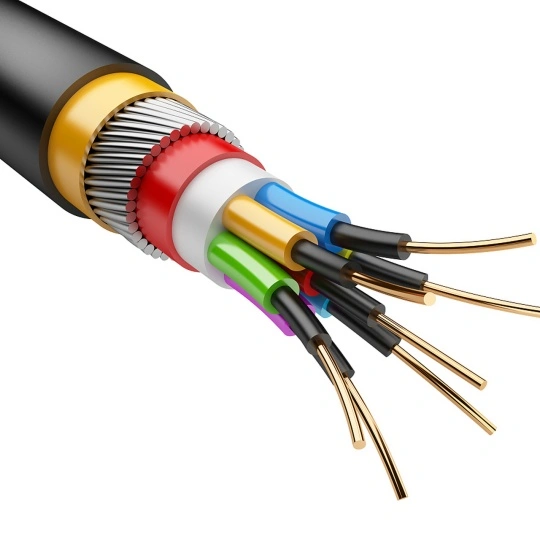
Introduction Industrial cable assemblies are critical components in power distribution, manufacturing, and infrastructure projects. Ensuring their safety, reliability, and longevity requires adherence to globally recognized standards like IEC 60502. This international standard specifies requirements for power cables with extruded insulation and their accessories, rated for voltages from 1 kV (Um = 1.2 kV) up to 30 kV (Um = 36 kV). In this article, we break down the compliance requirements of IEC 60502, explain their importance, and provide actionable insights for manufacturers, engineers, and procurement professionals.
1. What is IEC 60502?
IEC 60502 is a series of standards published by the International Electrotechnical Commission (IEC) that governs the design, testing, and installation of medium-voltage power cables and accessories. The standard is divided into two parts:
IEC 60502-1: Covers cables for rated voltages of 1 kV to 30 kV.
IEC 60502-2: Focuses on accessories like joints, terminations, and connectors.
Compliance with IEC 60502 ensures cables can withstand electrical, mechanical, and environmental stresses in industrial settings.
2. Key Compliance Requirements of IEC 60502
2.1 Conductor Materials and Construction
Conductors: Must be made of copper or aluminum, with strict tolerances for cross-sectional area and resistance.
Insulation: Extruded insulation (e.g., XLPE or EPR) must meet thickness and dielectric strength requirements.
Shielding: Cables above 3.6 kV require metallic shielding (copper tape or wire) to control electric fields and prevent insulation degradation.
2.2 Electrical Performance Testing
Cables must pass rigorous tests to ensure operational safety:
Partial Discharge Test: Verifies insulation integrity under high voltage.
Voltage Test: Conducted at 2.5–4 times the rated voltage to check for breakdowns.
Dielectric Loss Measurement: Ensures minimal energy loss in insulation.
2.3 Mechanical and Environmental Durability
Bending Radius: Cables must maintain performance when bent to specified radii.
Crush Resistance: Withstand mechanical pressure without insulation damage.
Temperature Ratings: Operate reliably in temperatures ranging from -40°C to +90°C, depending on insulation type.
2.4 Fire Safety and Chemical Resistance
Flame Retardancy: Compliance with IEC 60332-1 for flame propagation resistance.
Low Smoke and Halogen-Free (LSHF): Optional for cables used in confined spaces (e.g., tunnels or submarines).
3. Why Compliance Matters
Safety: Prevents electrical failures, fires, and accidents in high-risk environments like oil refineries or mining sites.
Reliability: Reduces downtime by ensuring cables perform under extreme conditions.
Regulatory Approval: Mandatory for projects in regions like the EU (CE marking) or North America (UL certification).
Market Access: Non-compliant cables face rejection in global markets, leading to financial losses.
4. Steps to Ensure IEC 60502 Compliance
Material Selection: Use IEC-approved materials (e.g., XLPE insulation, copper shielding).
Third-Party Testing: Work with accredited labs to validate electrical and mechanical performance.
Documentation: Maintain certificates of conformity, test reports, and material traceability records.
Regular Audits: Conduct factory audits to ensure ongoing compliance during production.
5. Common Pitfalls to Avoid
Ignoring Local Variations: While IEC 60502 is global, regions may have additional requirements (e.g., NEC in the U.S.).
Overlooking Accessories: Joints and terminations (IEC 60502-2) must match cable specifications.
Improper Installation: Even compliant cables can fail if installed incorrectly (e.g., exceeding bend radius).
6. Future Trends and Updates
The latest revision (IEC 60502-1:2021) emphasizes sustainability, with guidelines for recyclable materials and energy-efficient manufacturing. Smart cables with embedded sensors for real-time monitoring are also gaining traction.
In the intricate network of industrial operations, industrial cables stand as the unsung heroes, facilitating the seamless transmission of power, data, and signals across machinery, equipment, and entire production facilities. These cab...
In industrial settings—from manufacturing assembly lines and mining conveyor systems to railway traction networks—industrial cables serve as the lifeline of power transmission. However, power loss in these cables is inevitable, and its ...
In our daily life and industrial production, cables are essential for transmitting electricity, signals, or data. But not all cables are the same. Two common types are industrial cables and regular cables, each designed for specific pur...
Industrial cables are the “nervous system” of modern manufacturing, energy, and infrastructure—powering machinery, transmitting data, and connecting critical systems. Yet, one question often arises for engineers, procurement...
Industrial cable assemblies are critical components in manufacturing, automation, energy, and telecommunications. They ensure reliable power, signal, and data transmission in demanding environments. Below are the most widely used types ...
Working with industrial cable assemblies involves potential hazards like electrical shock, arc flash, cuts, burns, and chemical exposure. Ignoring safety can lead to severe injury, equipment damage, or costly downtime. Follow these esse...
Industrial cable installation is a critical link in industrial production, and its safety directly affects the stable operation of the entire production system and the personal safety of on-site personnel. To ensure the safety and relia...
Choosing where your industrial cable assemblies come from isn’t just about cost or lead time – it’s a significant environmental decision. Sourcing these critical components locally offers a powerful, practical way to shrink ...
Industrial cable assemblies and standard cables serve distinct purposes, with differences rooted in design, materials, performance, and application. Understanding these distinctions is critical for selecting the right solution for deman...
The entertainment industry is a symphony of technology and creativity, where every dazzling light, crisp sound, and seamless mechanical movement relies on an unsung hero: industrial cable. Unlike standard cables designed for residential...
Imagine this: a high-pressure sprayer cleaning down equipment. Your standard cable assembly endures the blast… until water seeps into the connector. Moisture pools inside, unseen, becoming a breeding ground for bacteria. Later, a cleani...
The oil and gas industry operates in some of the most demanding environments on Earth—from offshore drilling rigs exposed to saltwater corrosion to onshore facilities battling extreme temperatures and explosive atmospheres. In such cond...
In laboratory environments, where precision, safety, and reliability are paramount, the role of industrial cables is often underappreciated—until something goes wrong. These cables serve as the lifeline of critical equipment, powering s...
When selecting electrical cables for a project, understanding the differences between industrial cables and household cables is critical. These two cable types are designed for distinct environments, safety requirements,...
In industrial environments—from manufacturing plants to automation hubs—industrial monitors serve as critical interfaces for real-time data visualization, process control, and equipment monitoring. Yet, the reliability of these monitors...
Standardized cable assemblies are critical components in industries ranging from automotive manufacturing to consumer electronics. However, rising material costs, labor expenses, and supply chain complexities can erode profitability. To...
Meta Description: Discover how high-voltage cables power critical oil and gas projects worldwide. Learn about their applications in offshore drilling, subsea operations, LNG plants, and more.
URL Slug: oil-gas-projects-high...
In marine and offshore environments, cable assemblies face relentless challenges from saltwater, humidity, temperature fluctuations, and chemical exposure. Corrosion is one of the most pervasive threats, leading to equipment failures, s...
In the realm of industrial operations, the choice between copper and aluminum cables is far from trivial. It directly impacts project efficiency, long – term costs, and overall operational reliability. Making an informed decision ...
This question is critical for professionals in manufacturing, energy, and heavy industries, where cables operate in demanding environments. The answer depends on multiple factors, primarily the cable’s insulation material, design, and i...
The Hyperloop, a revolutionary transportation concept, promises to redefine speed and efficiency in mass transit. At its core, this technology relies on a complex network of industrial cables to ensure safety, performance, and reliabili...
The rapid growth of the electric vehicle (EV) industry is driving unprecedented advancements in cable technology. As automakers and charging infrastructure providers race to meet global demand, innovative cable designs and materials are...
In industries where reliability, safety, and performance are non-negotiable, cable assembly servicesare a critical link in the supply chain. From industrial automation and medical devices to aerospace and EV charging, the right cable as...
The automotive manufacturing industry relies heavily on precision, reliability, and safety. At the heart of these requirements are cable assemblies, which serve as the nervous system of vehicles, connecting critical components like sen...
In the complex network of modern power systems, cable assemblies serve as the vital arteries that facilitate the reliable transfer of electrical energy from generation sources to end-users. Unlike standard individual cables, cable assem...
The Invisible Network Keeping Cities Moving
Modern urban traffic management relies on an underground nervous system of IoT (Internet of Things) cables and sensors. These interconnected systems collect real-time data from traffic ligh...
IntroductionAs the global push for clean energy intensifies, hydrogen projects are emerging as a cornerstone of decarbonization strategies. However, these initiatives face a critical challenge: ensuring their infrastructure aligns with ...
In industries ranging from oil and gas to pharmaceuticals, chemical-resistant cable assemblies are critical components that ensure safety, reliability, and longevity in harsh environments. Exposure to aggressive chemicals, extreme tempe...
The Critical Need for Safety in Mining Operations
The mining industry faces unique electrical hazards due to flammable gases, combustible dust, and volatile atmospheres. Traditional cabling systems pose ignition risks, accounting for...
The Invisible Crisis
While most consumers worry about plastic bottles and food packaging, discarded cables quietly become one of fastest-growing waste streams. A 2025 Global E-Waste Monitor report reveals that cable waste increased b...
In offshore oil and gas production, oil and gas industrial cable assembliesare far more than passive wiring—they are critical lifelines. They transmit power and data to everything from topside drilling systems to subsea control umbilica...
The worldwide transition to smarter, more resilient power networks is accelerating. Utilities are modernizing aging grids with digital monitoring, distributed energy resources (DERs), and advanced metering infrastructure (AMI). This shi...
Industrial cable assemblies with overmolding integrate cables, connectors, and (in some cases) wire harnesses into a single, seamless unit using thermoplastic or elastomeric materials. This overmolding process goes beyond basic cable as...
The aerospace industry stands as a pinnacle of technological precision, where every component plays a critical role in ensuring safety, reliability, and performance. Among these components, industrial cables are the unsung heroes that f...
Electrical cable assemblies are integral components in nearly every industry that relies on electrical power or signal transmission. Unlike individual cables, these assemblies consist of multiple cables, wires, or conductors organized i...
The rollout of 5G technology isn’t just about faster smartphones or smoother video streaming—it’s revolutionizing the backbone of connectivity itself. One of the most exciting outcomes of this transformation is the rise of smart cables...
Understanding Industrial Cable Model Naming ConventionsIndustrial cable models follow standardized codes indicating their construction, materials, and capabilities. Key elements include:
Conductor type: CU (copper), AL (aluminum...
When it comes to electrical cables, understanding the differences between industrial and marine cables is crucial for selecting the right option for specific applications. While both serve the purpose of transmitting electricity, their ...
In today’s fast-paced industrial landscape, reliability and efficiency are non-negotiable. At the heart of this demand lies industrial cable assemblies—critical components that power machinery, enable communication between systems, an...
Industrial cables are the lifelines of manufacturing plants, refineries, and chemical processing facilities, transmitting power and data to keep operations running smoothly. However, chemical spills pose a severe threat to these cables—...
In today’s technology-driven world, maintaining uninterrupted signal integrity is critical for industrial, commercial, and residential applications. The Shielded Cable Core is engineered to deliver superior electromagnetic interference .
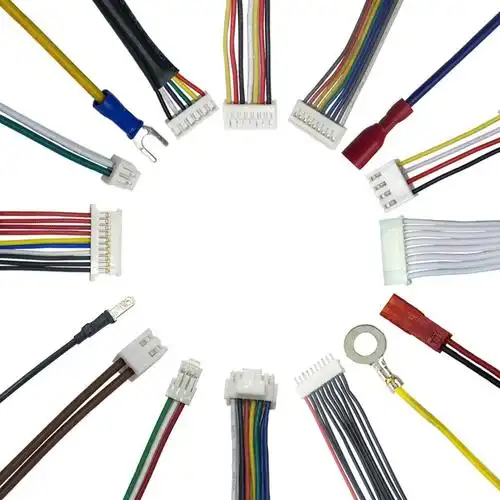
Industrial Cable Assembly Product Summary
Material & Safety
Utilizes premium raw materials and globally recognized components (e.g., ABB, TE Connectivity) ensuring high reliability and safety to prevent risks like fire and e.
Contact Us
Feel free to reach out to us for any inquiries or orders.