In today’s interconnected industrial landscape, electromagnetic interference (EMI) poses a significant threat to the reliability and performance of cable assemblies. From factory automation to power distribution systems, EMI can disrupt signal integrity, degrade data transmission, and even cause equipment failure. To combat these challenges, EMI shielding technologies have become indispensable for industrial cable assemblies. This article explores the latest shielding solutions, their applications, and best practices to help engineers and decision-makers optimize their systems.
Why EMI Shielding Matters for Industrial Cables
Electromagnetic interference occurs when external electromagnetic fields disrupt the operation of electronic devices or cables. Industrial environments are rife with EMI sources, including:
High-voltage motors
Variable frequency drives (VFDs)
Radiofrequency (RF) transmitters
Switching power supplies
Unshielded cables act as antennas, picking up unwanted noise and compromising sensitive equipment. Effective EMI shielding minimizes interference, ensuring:
Signal Integrity: Clean data transmission for control systems and sensors.
Safety: Prevention of false signals in critical applications (e.g., emergency shutdown systems).
Compliance: Adherence to standards like IEC 61000 (EMC) and MIL-STD-461.
Key EMI Shielding Technologies for Cable Assemblies
1. Braid Shielding
Braid shields consist of woven metallic strands (often copper or aluminum) that provide high flexibility and durability.
Pros:
Excellent high-frequency noise attenuation.
Mechanically robust for harsh environments.
Cons:
Higher cost and weight compared to foil shields.
Applications: Robotics, military equipment, and oil/gas installations.
2. Foil Shielding
Foil shields use a thin layer of aluminum or copper bonded to a polyester film.
Pros:
Lightweight and cost-effective.
Full coverage for low to mid-frequency EMI.
Cons:
Less durable under repeated bending.
Applications: Ethernet cables, HVAC systems, and medical devices.
3. Combination Shielding (Foil + Braid)
Hybrid shields combine foil and braid layers to maximize protection across a broad frequency range.
Pros:
Enhanced performance in complex EMI environments.
Balances flexibility and durability.
Cons:
Increased assembly complexity.
Applications: Aerospace, automotive CAN bus systems, and industrial IoT networks.
4. Conductive Polymer Shielding
Innovative conductive polymers infused with carbon or metal particles offer lightweight, corrosion-resistant shielding.
Pros:
Ideal for corrosive or humid environments.
Simplifies cable design.
Cons:
Limited to lower-frequency applications.
Applications: Chemical plants, marine equipment, and renewable energy systems.
5. Spiral (Serve) Shielding
Spiral shields use wrapped metal strands for moderate flexibility and EMI protection.
Pros:
Easy termination and maintenance.
Effective for audio and control cables.
Cons:
Reduced effectiveness at higher frequencies.
Applications: Audio systems, CNC machinery, and instrumentation.
Choosing the Right EMI Shielding Technology
Selecting the optimal shielding depends on several factors:
Frequency Range: Braid shields excel above 1 MHz, while foil shields are better for lower frequencies.
Environmental Conditions: Extreme temperatures, moisture, or chemicals may favor conductive polymers.
Flexibility Requirements: Robotics or moving machinery demand braided or spiral shields.
Cost Constraints: Foil shields offer budget-friendly solutions for less demanding applications.
Best Practices for Implementing EMI Shielding
Proper Grounding: Ensure shields are grounded at one end to avoid ground loops.
Cable Routing: Separate power and signal cables to minimize cross-talk.
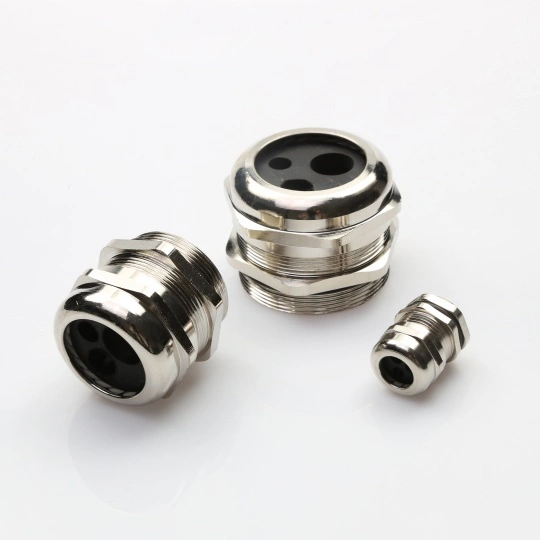
Shield Termination: Use EMI glands or conductive tape to maintain shield continuity.
Testing: Validate shielding effectiveness via standards like ISO 11452 (automotive) or TIA-568 (telecom).
Future Trends in EMI Shielding
Emerging technologies are reshaping the industry:
Nanocomposite Materials: Graphene-enhanced shields for ultra-high conductivity.
Active Shielding Systems: Real-time noise cancellation using embedded sensors.
3D-Printed Shields: Customizable geometries for complex cable assemblies.
Determining the maximum safe operating temperature for high-temperature silicone insulated cables is critical for ensuring electrical safety and long-term reliability in demanding applications. This involves rigorous standardized testin...
Railway signaling systems are the nervous system of safe and efficient rail operations. At the heart of these critical systems lie cable assemblies, transmitting vital power and data signals to control trackside equipment, signals, and ...
The oil and gas industry operates in some of the harshest and most demanding environments on the planet, from deep-sea drilling rigs to high-temperature refineries and remote desert pipelines. In such settings, industrial cables play a ...
In industrial settings—from power plants and chemical factories to metallurgical workshops and manufacturing facilities—cables serve as the “nervous system” that transmits electricity and data, ensuring the smooth operation ...
This question is critical for professionals in manufacturing, energy, and heavy industries, where cables operate in demanding environments. The answer depends on multiple factors, primarily the cable’s insulation material, design, and i...
Robots are machines defined by movement. From the precise arcs of welding arms to the dynamic scurrying of mobile platforms and the delicate interactions of collaborative robots (cobots), their joints and axes undergo constant, repetiti...
Industrial environments often expose cables to harsh conditions. Understanding these 5 key types helps select the right corrosion-resistant solution:
Stainless Steel Braided Cables
Ideal for: Chemical plants, marine applications
...
Introduction
As global industries shift toward sustainability, eco-friendly industrial cable assemblieshave become a strategic priority for procurement managers and design engineers. These components are no longer niche products; the...
Industrial cables are the lifelines of outdoor infrastructure, powering everything from manufacturing plants and construction sites to renewable energy systems and mining operations. Unlike indoor cables, those used outdoors face a rele...
In industrial environments—from manufacturing plants and power stations to data centers and chemical facilities—electrical cables form the backbone of operations. However, standard cables pose significant fire risks when exposed to high...
Introduction
Industrial cable assemblies are critical components in manufacturing plants, power generation facilities, and automation systems. Proper installation and maintenance directly impact operational efficiency, safety, and eq...
Smart factories are revolutionizing manufacturing by integrating advanced technologies like IoT, robotics, and AI. At the heart of these systems lies a critical component often overlooked: custom cables. Here’s why tailored cabling sol...
Selecting compliant cable assemblies is critical for ensuring safety, performance, and adherence to industry standards. Whether you’re working in electronics, automotive, aerospace, or industrial applications, follow these steps to choo...
In the oil industry, where operations involve high pressure, extreme temperatures, flammable substances, and complex mechanical stresses, industrial cables serve as the critical “nervous system”—connecting equipment, transmi...
Industrial cables are the lifelines of manufacturing plants, power stations, and heavy machinery, transmitting electricity and data to keep operations running smoothly. However, constant exposure to harsh environments—such as extreme te...
In the complex and demanding landscape of industrial operations, every component plays a critical role in ensuring seamless productivity, safety, and long-term efficiency. Among these components, industrial cables stand out as the invis...
Industrial cable assemblies are critical components in manufacturing, automation, energy, and other heavy-duty sectors. They transmit power, signals, and data, ensuring seamless operations. However, harsh environments, mechanical stress...
With the global acceleration of energy transition and the rapid development of smart grid technology, high-voltage transmission systems have become the core backbone of modern power grids, undertaking the crucial task of long-distance, ...
In the fields of electricity transmission and equipment connection, industrial cables and power cords are two common products, but their functional positioning, application scenarios, and performance requirements differ significantly. F...
Hydrogen fuel cell systems represent a significant leap forward in clean energy technology. However, their unique operating environment places critical demands on every component, especially the cable assemblies interconnecting sensors,...
In modern manufacturing, vision systems have become indispensable for tasks like quality inspection, part positioning, and process monitoring. These systems rely on high-speed data transmission between cameras, light sources, controller...
Industrial settings like oil refineries, chemical plants, grain silos, and paint spray booths contain areas where flammable gases, vapors, dusts, or fibers can be present. Using standard electrical equipment here can trigger explosions....
In today’s high‑speed industrial environments, reliable connectivity is non‑negotiable. Industrial cable assembliesserve as the nervous system of machinery, automation systems, and telecom infrastructure. At Top Electronics (FRS), we sp...
In industrial automation, mobile equipment is only as reliable as the cables that power and connect it. Downtime from a failed cable assembly can cost thousands of dollars per hour, making the right Industrial Cable Assemblies for Mobil...
As the global shift toward renewable energy accelerates, the demand for reliable, durable, and high-performance industrial cables has never been greater. Renewable energy systems—from solar farms and wind turbines to hydroelectric plant...
Automated Guided Vehicles (AGVs) represent a cornerstone of modern industrial automation, driving efficiency in logistics, manufacturing, and warehousing. While navigation systems, batteries, and control software often capture the spotl...
Meta Description: Discover the critical performance metrics for industrial cable harnesses—from voltage rating to flex life—and learn how to evaluate quality for reliability and safety.
Table of ContentsWhy Performance Metrics Ma...
Industrial cable assemblies are the backbone of modern infrastructure, powering everything from manufacturing plants to renewable energy systems. However, as industries face increasing pressure to reduce their environmental footprint, t...
In today’s industrial landscape, oil-resistant cable assemblies are no longer a niche product—they are a mission-critical component in ensuring uptime, safety, and long-term cost efficiency. This article explores how new material innova...
In industries such as aerospace, automotive, oil and gas, and industrial manufacturing, cable assemblies face extreme conditions, with high temperatures posing a significant challenge. Selecting the right materials and adhering to indus...
Industrial cable assemblies are critical components in manufacturing, automation, and heavy machinery. Choosing the right ones—especially those certified by Underwriters Laboratories (UL)—ensures safety, reliability, and compliance. Thi...
In the rapidly advancing global robotics industry—covering industrial automation lines, collaborative robots, precision medical robotics, AGV/AMR logistics equipment, and high-precision servo systems—robotics cable assemblies are far mo...
The aerospace industry is a high – precision and high – risk field, where the reliability and safety of every component are crucial. Industrial cables, as the “nervous system” that transmits power and signals in ...
The global transition to renewable energy is gaining momentum, yet experts warn that outdated infrastructure remains a critical bottleneck. Among the most pressing needs is the rapid adoption of green cables—environmentally friendly ele...
In modern industrial environments, cables are constantly exposed to lubricants, cutting fluids, fuels, and cleaning agents. Oil resistant industrial cable assembliesare no longer optional in these settings; they are critical for ensurin...
In the realm of heavy-duty industrial applications, the reliability and performance of cable assemblies are of utmost importance. These applications, which include manufacturing, construction, mining, and transportation, demand cable as...
The Hidden Hero of Solar Energy
While solar panels get all the attention, the real game-changer in modern solar farms might be running underground. New-generation cables are helping solar installations achieve what was previously tho...
Introduction
The world’s infrastructure is aging rapidly, and one of the most overlooked yet critical components is cable systems. From power grids to telecommunications networks, outdated cables pose significant risks, including ser...
In industries ranging from automotive manufacturing to marine engineering, and even in everyday outdoor electrical setups, waterproof cable connectors play a pivotal role in ensuring reliable electrical connections while safeguarding ag...
Meta Description: Discover high-performance industrial control cable module components designed for seamless automation, harsh environments, and superior connectivity. Explore specs, certifications, and applications.
H2: Industrial Con.
When it comes to electrical systems operating under extreme mechanical and electrical stress, high-load cable terminations are critical components that ensure seamless power transmission, safety, and system longevity. Engineered to .
Contact Us
Feel free to reach out to us for any inquiries or orders.