In the relentless rhythm of industrial operations, connectors are the vital, often overlooked, lifelines that power machinery, transmit critical data, and enable seamless control. But these unassuming components have a finite lifespan, measured primarily by one critical metric: mating cycles. Understanding the direct link between connector mating cycles and equipment maintenance planning is not just technical detail – it’s a fundamental strategy for maximizing uptime, preventing costly failures, and optimizing operational efficiency. Ignoring this relationship is a gamble few production managers can afford to take.
What Are Mating Cycles & Why Do They Matter?
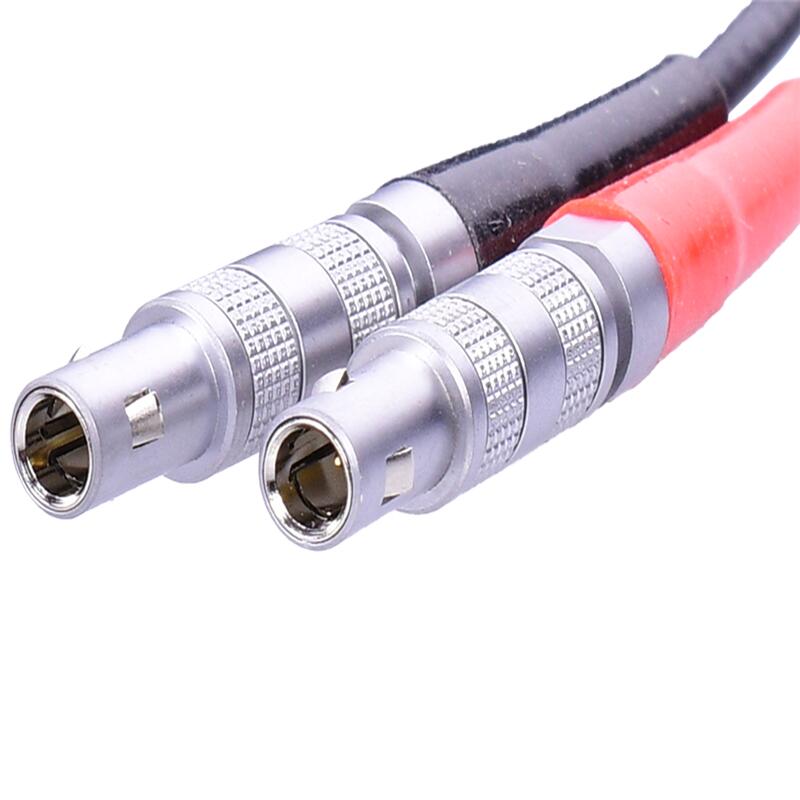
A mating cycle is defined as one complete act of connecting and disconnecting a connector pair (plug and receptacle). Think of it like bending a paperclip back and forth – eventually, it breaks. While industrial connectors are engineered for durability, every connection and disconnection subjects them to physical stress and wear:
Contact Wear: The mating pins (male contacts) and sockets (female contacts) physically rub against each other. Even with high-quality plating (like gold), this friction gradually wears down the surface, increasing electrical resistance, potentially causing signal degradation, voltage drop, or localized heating.
Spring Fatigue: Female contacts are typically spring-loaded to ensure sufficient normal force for a reliable electrical connection. Repeated deflection (each mating cycle) causes metal fatigue over time, eventually reducing contact force. Insufficient force leads to higher resistance, arcing, and intermittent connections.
Housing & Latching Wear: Plastics and polymers used in connector bodies and latching mechanisms can degrade, warp, or become brittle. The repeated physical strain of mating/unnating accelerates this, potentially compromising the connector’s mechanical integrity, environmental sealing, and overall lock security.
Contamination: Each un-mating exposes contacts to dust, moisture, or chemical contaminants in the environment, accelerating corrosion and wear when mated again.
Connector Life: These factors culminate in connector wear-out, manifested as unreliable connections, intermittent signals, increased resistance/heat generation, or complete failure. The rated mating cycle life provided by manufacturers is the expected number of cycles the connector should reliably endure under specific conditions.
Connector Mating Cycles: The Hidden Driver of Equipment Maintenance Strategies
The rated mating cycle count isn’t merely a theoretical number. It directly shapes how maintenance teams should approach equipment care:
Predictive Replacement Scheduling: This is the core application. Knowing the actual or expected usage frequency allows maintenance planners to:
Calculate Lifespan: If a connector is rated for 500 cycles and is disconnected daily for calibration (250 cycles/year), its theoretical lifespan is 2 years. Planning proactively avoids surprises.
Set Replacement Triggers: Track connector usage electronically (counters) or via maintenance logs. Replace connectors when they approach, say, 80-90% of their rated cycles before performance degrades. Don’t wait for failure!
Optimize Maintenance Bundling: When scheduling downtime for other planned maintenance on the machine, replace connectors nearing their cycle limit at the same time. This minimizes additional downtime disruptions.
Manage Connector Inventory: Forecast how many replacement connectors are needed and when, based on installed connector counts and cycle usage patterns.
Diagnosing Intermittent Failures: Random glitches, signal drops, or control errors are notoriously hard to troubleshoot. A connector near or beyond its rated mating cycle life becomes a prime suspect. Maintenance logs indicating high usage points help technicians prioritize checks and replacements effectively.
Improving Repair Quality & Planning:
Replacement Frequency: Tasks requiring frequent disconnects (e.g., calibration, sensor replacement) place exceptional wear on specific connectors. This knowledge justifies selecting higher cycle-life connectors for those locations or including connector replacement as a standard step in the procedure every X number of repeats.
Proactive vs. Reactive Costs: The cost and downtime for an emergency repair due to a connector failure during production vastly exceed the cost of a planned replacement. Mating cycle tracking enables proactive spending, saving significant money and lost output.
Enhancing Equipment & Process Design:
Connector Selection: Understanding the required mating frequency for specific points in a machine informs procurement choices. Use higher cycle-rated connectors where frequent disconnections are essential. Consider hardwiring or blind-mate solutions for points needing permanent connections.
Design for Reliability: Minimize the number of necessary disconnections during normal operation or routine maintenance. Position connectors for easier access to prevent excessive strain during handling. Ensure proper strain relief.
Beyond the Datasheet: Real-World Factors Impacting Mating Cycle Life
While the manufacturer’s rating is the starting point, several factors significantly influence real-world longevity:
Misalignment: Forcing connectors together misaligned causes immediate, severe damage to pins and housings, drastically reducing life.
Excessive Force: Using excessive force during mating or un-mating accelerates wear and breakage. Connectors should mate smoothly.
Contamination: Dust, dirt, oil, or liquids entering the connection zone act as abrasives and cause corrosion, accelerating wear.
Environmental Stress: Extreme temperatures, humidity, vibration, and chemicals can degrade connector materials faster.
Electrical Load: Connectors operating near their maximum current rating will generate more heat per cycle, accelerating wear compared to lightly loaded connections.
Human Error: Rough handling, improper technique, or using incorrect tools shorten life considerably.
Best Practices: Integrating Mating Cycles into Proactive Maintenance
Know Your Connectors: Document every critical connector on your equipment. Record its manufacturer, part number, rated mating cycles, installation date, and initial mating count (if possible).
Track Cycle Usage: Implement tracking:
Maintenance Logs: Require technicians to record every disconnect/reconnect event for critical points during any work order.
Automated Counters: Ideal for high-frequency points or critical connections (e.g., in test fixtures). Simple proximity sensors or connection status monitoring can increment a counter.
Component Tracking Software: Use CMMS (Computerized Maintenance Management Systems) or IIoT platforms to log connector replacements and estimate usage based on associated maintenance procedures.
Set Conservative Replacement Thresholds: DO NOT run connectors to their absolute maximum rated cycles. Establish proactive replacement triggers. A common industry guideline is replacing at 50-80% of the rated cycle life, depending on criticality and consequences of failure. More critical applications warrant a larger safety margin.
Inspect Regularly: Include visual inspections of critical connectors during routine maintenance checks. Look for bent pins, cracked housings, loose latches, and any signs of heat damage (discoloration). Low cycle life connectors with high usage frequency need more frequent inspections.
Train Personnel: Educate technicians on:
The critical importance of mating cycles and gentle handling.
Proper mating/un-mating techniques: Ensure alignment, apply steady force along the axis.
Importance of using the correct connector type/density for the task to prevent damage.
The necessity of accurate reporting in maintenance logs.
Choose Connectors Strategically: When selecting connectors, especially for high-frequency disconnect points:
Prioritize suppliers who provide certified mating cycle test data.
Specify higher cycle-life connectors for critical or frequently disconnected points.
Consider locking mechanisms designed for high-cycle applications.
In the complex ecosystem of industrial operations—from automated manufacturing lines to heavy-duty mining equipment, and from industrial robotics to critical power transmission systems—industrial cable connectors serve as the unsung her...
Industrial cables serve as the lifeline of modern manufacturing, power transmission, and critical infrastructure. They facilitate the transfer of electricity, data, and control signals across factories, refineries, power plants, and oth...
Industrial adapters serve as critical bridges in modern industrial systems, enabling seamless connectivity between different devices, voltage levels, and communication protocols. However, their performance is heavily reliant on a often-...
When we think of cutting-edge medical technology, imaging systems like MRI and CT scanners, patient monitors, and robotic surgical arms often come to mind. However, the critical components that power and connect these sophisticated devi...
Industrial cable assembly testing service is a professional quality verification process designed to ensure the electrical, mechanical, and environmental reliability of cable assemblies used in demanding industrial applications. It invo...
Railway signaling systems are the nervous system of safe and efficient rail operations. At the heart of these critical systems lie cable assemblies, transmitting vital power and data signals to control trackside equipment, signals, and ...
Industrial cables are the unsung backbone of modern manufacturing—they transmit power, carry critical data, and enable the seamless operation of machinery in factories, refineries, and automation systems. In environments prone to extrem...
In industrial operations, insulated cables are the lifelines that transmit power and signals across facilities—from manufacturing plants to construction sites. However, over time, these cables can become damaged due to mechanical wear, ...
Wind energy is a cornerstone of the global transition to renewable power, and wind farms—both onshore and offshore—are critical to meeting clean energy targets. However, the harsh environments in which wind turbines operate, particularl...
Industrial cable assemblies are vital components powering machinery, automating processes, and connecting critical systems in factories, plants, and demanding environments. Naturally, one of the first questions buyers ask is about cost....
In the complex and harsh environment of industrial operations, industrial cables serve as the “nervous system” and “blood vessels” of equipment, transmitting power, signals, and data. However, they are constantly...
Ensuring the traceability of industrial cable assemblies is not just a best practice; it’s a critical necessity. From manufacturing and assembly through installation, maintenance, and eventual decommissioning, clear and reliable l...
Food processing plants operate in uniquely challenging environments—where high moisture, extreme temperatures, frequent washdowns, and strict hygiene standards converge. In such settings, the industrial cables that power machinery, conv...
Industrial cables serve as the “nervous system” of modern manufacturing, energy, transportation, and telecommunications industries. In the context of globalization, where industrial products circulate across borders at an un...
Sunlight is a major enemy of outdoor industrial cable assemblies. Ultraviolet (UV) radiation can break down materials over time, causing jackets to crack, discour, become brittle, and fail prematurely. This leads to safety hazards...
Industrial cables are the “nervous system” of modern manufacturing, energy, and infrastructure—powering machinery, transmitting data, and connecting critical systems. Yet, one question often arises for engineers, procurement...
In the fast-paced and high-stakes world of industrial electrical work, industrial cable training is not just an option—it’s a necessity. Electricians tasked with installing, maintaining, and troubleshooting complex cable syste...
In the heavy machinery industry, industrial cables serve as the “nervous system” and “energy pipeline” of equipment, connecting power sources, control systems, and execution components. Whether it is construction...
Industrial cables serve as the “nerve system” for critical infrastructure—power transmission, manufacturing lines, renewable energy farms, and outdoor industrial zones all rely on their stable performance. However, when depl...
Industrial cables are the lifelines of manufacturing plants, power stations, and heavy machinery, transmitting electricity and data to keep operations running smoothly. However, constant exposure to harsh environments—such as extreme te...
As climate change accelerates, outdoor cables face unprecedented challenges from extreme weather conditions. From scorching heatwaves to bone-chilling freezes, these environmental stressors can significantly impact cable performance and...
1. Introduction to Industrial Cable Insulation Materials
Industrial cable insulation materials play a pivotal role in ensuring the safe and efficient transmission of electrical power across various sectors. These materials act as a p...
In the complex landscape of industrial manufacturing and automation, flexible industrial wire assemblies stand as a critical connectivity backbone, enabling seamless power transmission, signal communication, and data exchange across a w...
In demanding industrial environments, reliable interconnections are not optional—they are the backbone of your system’s performance and safety. Industrial Cable Assembliesencompass a wide range of engineered cable and wire harness solut...
Medical device cable assemblies are critical components in healthcare systems, connecting devices like patient monitors, imaging equipment, infusion pumps, and surgical tools. Ensuring their safety and compliance with industry standards...
Industry 5.0: The Demand for Smarter ConnectivityIndustry 5.0 prioritizes human-centric automation, requiring cable assemblies to:
Enable Real-Time AI Interaction: Support <1ms latency for AI decision-making.Withstand Dyna...
Industrial cable assemblies are the backbone of modern infrastructure, powering everything from manufacturing plants to renewable energy systems. However, as industries face increasing pressure to reduce their environmental footprint, t...
The global shift toward renewable energy isn’t just transforming how we power our homes and industries—it’s also fueling unprecedented demand for heavy-duty cables. As solar farms, wind turbines, and grid modernization projects multiply...
1.TelecommunicationsCable assemblies ensure high-speed data transfer and connectivity in:Fiber optic networks: LC/SC/ST connectors and splice closures for telecom towers and data centers13.5G infrastructure: RF coaxial cables and ...
In the high-stakes world of industrial automation and machine manufacturing, the difference between seamless production and costly downtime often comes down to the integrity of the cable infrastructure. Industrial cable assemblies are n...
Modern mining relies on a complex ecosystem of powerful, critical equipment operating in some of the planet’s most demanding environments. Safely delivering power, control, and data signals through this rugged landscape is paramou...
Industrial cable assemblies are critical components in manufacturing, automation, and heavy machinery. Choosing the right ones—especially those certified by Underwriters Laboratories (UL)—ensures safety, reliability, and compliance. Thi...
As the global shift toward renewable energy accelerates, the demand for reliable, durable, and high-performance industrial cables has never been greater. Renewable energy systems—from solar farms and wind turbines to hydroelectric plant...
When it comes to electrical cables, understanding the differences between industrial and marine cables is crucial for selecting the right option for specific applications. While both serve the purpose of transmitting electricity, their ...
Electromagnetic compatibility (EMC) shielding is critical for ensuring reliable performance of industrial cables in environments plagued by electromagnetic interference (EMI). Whether in manufacturing plants, power grids, or automation ...
The Invisible Crisis
While most consumers worry about plastic bottles and food packaging, discarded cables quietly become one of fastest-growing waste streams. A 2025 Global E-Waste Monitor report reveals that cable waste increased b...
In the rapidly advancing global robotics industry—covering industrial automation lines, collaborative robots, precision medical robotics, AGV/AMR logistics equipment, and high-precision servo systems—robotics cable assemblies are far mo...
1. The Rising Demand for Cost-Effective Medical Solutions
Hospitals worldwide face mounting pressure to reduce expenses without compromising quality. Medical cables—often overlooked—play a pivotal role in streamlining operations. Fro...
In modern smart factories, M12 industrial cable assembliesare the backbone of sensor networks, drives, and industrial Ethernet. However, the rise of predictive maintenanceand intelligent monitoringis transforming how these cables are sp...
Heavy machinery cable assemblies are robust, high-performance connectivity solutions engineered to meet the demanding requirements of industrial and heavy-duty applications. Designed for durability, reliability, and optimal performance in.
Meta Description: Discover high-performance industrial control cable module components designed for seamless automation, harsh environments, and superior connectivity. Explore specs, certifications, and applications.
H2: Industrial Con.
Contact Us
Feel free to reach out to us for any inquiries or orders.