
Industrial Cable Assemblies-Industrial Cable Assemblies factory
In any industrial project, whether it’s a manufacturing plant expansion, a new energy facility construction, or a machinery installation, calculating the required length of industrial cable accurately is a critical step that directly impacts project efficiency, cost control, and operational safety. Underestimating the cable length can lead to project delays as you wait for additional cables, while overestimating results in unnecessary material waste and increased costs. Moreover, improper cable length calculation may affect the performance of electrical systems, such as signal transmission stability or power supply efficiency. To avoid these issues, project managers, electrical engineers, and procurement teams need a systematic and precise method to determine the required length of industrial cable for their specific projects. This guide will walk you through the key steps, considerations, and best practices to ensure you get the right cable length every time.
The first and most foundational step in calculating the required length of industrial cable is to conduct a thorough on-site survey. This step cannot be skipped or rushed, as it provides the raw data needed for all subsequent calculations. During the survey, you need to gather specific information about the project layout, equipment positions, and environmental conditions.
Start by identifying all the electrical devices, machines, or components that the cable will connect. These may include motors, control panels, sensors, transformers, and distribution boxes. For each device, mark its exact location on a project blueprint or a digital map of the site. Use measuring tools such as a laser distance meter, measuring tape, or GPS locators to record the distances between these devices. It’s important to measure along the actual path where the cable will be敷设 (laid), not just the straight-line distance on paper. For example, if the cable needs to go around a concrete pillar, along a wall, or through a cable tray, you must account for these detours in your measurements.
Additionally, note the environmental conditions of the installation area. Factors such as temperature extremes, humidity, exposure to chemicals, and mechanical stress can influence the type of cable used, which in turn may affect installation requirements (e.g., additional protective sleeves that add to the effective length). While this doesn’t directly change the length calculation, it ensures that you select a cable that can withstand the environment and avoids rework due to cable failure.
Once you have the site survey data, the next step is to define the exact routing path for the industrial cable. The routing path should be chosen based on safety, accessibility, and compliance with industry standards (such as those set by the National Electrical Code (NEC) or International Electrotechnical Commission (IEC)).
Common cable routing paths in industrial settings include:
It’s advisable to mark the routing path clearly on the project blueprint and have multiple team members verify the measurements to reduce errors. This collaborative check ensures that no part of the path is overlooked.
After finalizing the routing path, calculate the total straight-line distance along the path. This is the base length of the cable required. However, you must add several allowances to this base length to account for various factors that can increase the actual cable needed.
Key allowances to include are:
Length = (π × Radius × Angle) / 360, where the angle is in degrees. For a 90-degree bend with a radius of 120mm, the added length is (3.14 × 120 × 90) / 360 = 94.2mm, or approximately 0.094 meters per bend.Let’s take an example to illustrate this calculation. Suppose a project has a base straight-line distance of 50 meters, with 2 control panel connections (0.75 meters each), 1 service loop (1.5 meters), 3 90-degree bends (0.1 meters each), and a 8% tolerance allowance.
Step 1: Base length = 50 meters
Step 2: Termination allowance = 2 × 0.75 = 1.5 meters
Step 3: Service loop allowance = 1.5 meters
Step 4: Bend allowance = 3 × 0.1 = 0.3 meters
Step 5: Subtotal before tolerance = 50 + 1.5 + 1.5 + 0.3 = 53.3 meters
Step 6: Tolerance allowance = 53.3 × 0.08 = 4.264 meters
Step 7: Total required cable length = 53.3 + 4.264 = 57.564 meters
In this case, you would round up to the nearest standard cable length (e.g., 58 meters) to ensure you have enough.
Some industrial projects have unique requirements that can affect cable length calculations. It’s important to identify these early and adjust your calculations accordingly.
Variable Frequency Drives (VFDs) or High-Voltage Systems: Cables used with VFDs or high-voltage equipment may require additional length to minimize voltage drop or electromagnetic interference (EMI). Voltage drop occurs when current flows through the cable, causing a reduction in voltage at the load end. To compensate, you may need to use a larger cable gauge or add a small length allowance (typically 2-3%) to ensure the voltage at the device meets the required specifications. Consult electrical engineering formulas (such as the NEC voltage drop formula) to calculate the exact allowance needed.
Dynamic Applications: If the cable is used in dynamic environments, such as robotic arms, conveyors, or moving machinery, you need to account for the cable’s movement. This may require adding a “flex allowance” to prevent the cable from stretching or breaking during operation. The flex allowance depends on the number of cycles, movement distance, and cable type; manufacturers of flexible industrial cables often provide guidelines for this.
Multi-Cable Runs: If multiple cables are run in parallel (e.g., for three-phase power systems), you need to calculate the length for each cable individually. Ensure that each cable has the same length to avoid imbalances in current distribution, which can cause overheating or equipment failure.
Once you’ve completed the initial calculation, it’s crucial to verify the results to avoid mistakes. This verification process should include:
Document all calculations, including the base length, allowances, special requirements, and verification steps. This documentation serves as a reference for future maintenance, project audits, or modifications. It also helps in troubleshooting if issues arise during installation or operation.
Accurately calculating the required length of industrial cable is only half the battle; you also need a reliable partner that can provide high-quality cables tailored to your project’s needs. This is where FRS Company stands out as a trusted industrial cable manufacturer.
At FRS, we understand that every industrial project has unique challenges, and precise cable length and performance are non-negotiable. Our team of experienced engineers works closely with clients to not only supply top-grade industrial cables but also provide technical support throughout the cable length calculation process. We offer detailed product specifications, including minimum bend radii, termination guidelines, and voltage drop data, to help you make accurate calculations. Whether your project involves complex conduit runs, overhead installations, or dynamic applications, our cables are designed to meet the highest industry standards for durability, safety, and performance.
FRS’s state-of-the-art manufacturing facilities ensure consistent quality across all our cable products, from power cables to control cables and instrumentation cables. We also offer flexible customization options, including custom lengths, insulation materials, and shielding, to match your project’s exact requirements. By choosing FRS as your industrial cable partner, you can eliminate the risk of material waste, project delays, and cable failures, knowing that you have the right length of high-quality cable for your project.
For your next industrial project, trust FRS to deliver the perfect combination of technical expertise, quality products, and reliable service. Let us help you calculate the required length of industrial cable accurately and provide the cables that keep your operations running smoothly.
Our factory offers high-quality products at competitive prices
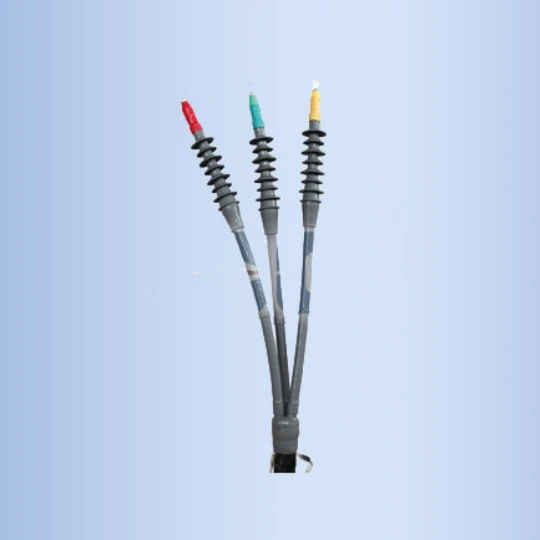
When it comes to electrical systems operating under extreme mechanical and electrical stress, high-load cable terminations are critical components that ensure seamless power transmission, safety, and system longevity. Engineered to .
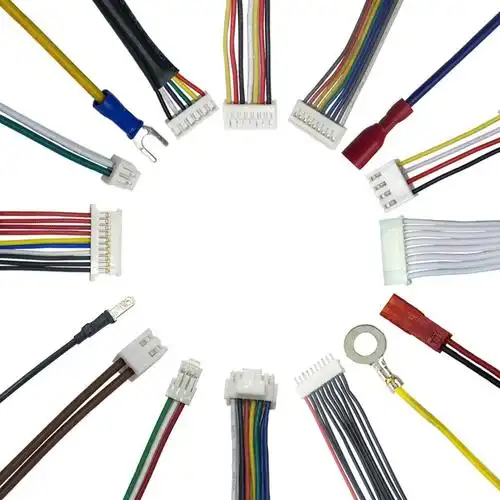
Industrial Cable Assembly Product Summary Material & Safety Utilizes premium raw materials and globally recognized components (e.g., ABB, TE Connectivity) ensuring high reliability and safety to prevent risks like fire and e.
Feel free to reach out to us for any inquiries or orders.