Industrial Cable Assemblies factory

Industrial Cable Assemblies factory

Industrial Cable Assemblies-Industrial Cable Assemblies factory

INFO

Industrial cable assemblies are critical components in sectors like manufacturing, aerospace, energy, and automation. Selecting the right materials for these assemblies ensures reliability, safety, and longevity in harsh environments. However, with countless material options available, making the right choice can be overwhelming. This guide breaks down the key factors to consider, helping you select materials that align with your application’s demands while optimizing cost and performance.


1. Understand Your Application’s Environmental Challenges

The operating environment is the starting point for material selection. Ask:

  • Temperature Extremes: Will the cable assembly face extreme heat or cold?
    • High-Temp Environments: Silicone or fluoropolymer (e.g., Teflon®) insulations withstand temperatures up to 200°C+ and resist thermal degradation.
    • Low-Temp Environments: Thermoplastic elastomers (TPE) remain flexible in sub-zero conditions.
  • Chemical Exposure: Are oils, solvents, or acids present?
    • Fluoropolymers (PTFE, FEP) and cross-linked polyethylene (XLPE) offer superior chemical resistance.
  • Moisture and Water: Will the assembly be submerged or exposed to humidity?
    • Water-blocking tapes, polyurethane (PUR) jackets, or thermoplastic polyurethane (TPU) provide waterproofing.
  • UV/Weather Resistance: For outdoor use, choose UV-stabilized materials like chlorinated polyethylene (CPE) or specific PVC blends.

2. Evaluate Electrical Requirements

The materials must meet electrical performance standards:

  • Voltage Rating: Higher voltage applications require thicker insulation or materials like EPDM rubber.
  • Signal Integrity: For data/communication cables, low dielectric constant materials (e.g., foamed polyethylene) reduce signal loss.
  • Shielding Needs: Braided copper shields excel in EMI/RFI protection, while foil shields are cost-effective for moderate interference.

3. Prioritize Mechanical Durability

Industrial environments often involve abrasion, tension, and repetitive motion.
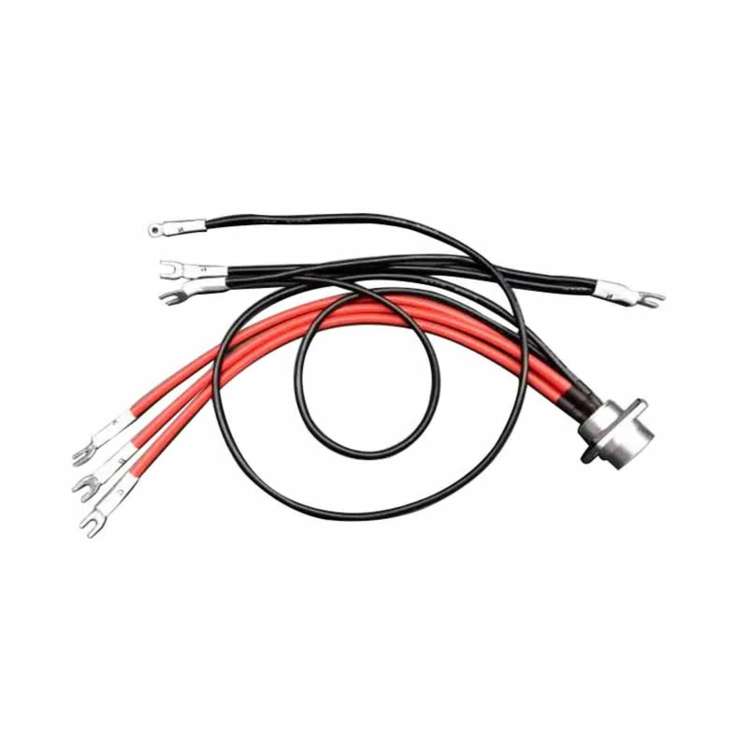
  • Abrasion Resistance: Polyurethane (PUR) or nylon jackets are ideal for high-wear scenarios.
  • Flexibility: Cables in robotics or machinery require highly flexible materials like TPE or silicone.
  • Crush Resistance: Steel wire armoring or reinforced PVC adds structural integrity.
industrial cable assemblies

4. Compliance with Industry Standards

Material selection must align with relevant certifications:

  • UL/CSA/IEC Standards: Ensure materials meet flame-retardant (e.g., UL 94 V-0) or low-smoke-zero-halogen (LSZH) requirements for fire safety.
  • Industry-Specific Certifications: For example, MIL-SPEC for aerospace or ATEX/IECEx for explosive atmospheres.

5. Cost vs. Performance Trade-offs

While premium materials like Teflon® excel in performance, they can be costly. Balance budget and needs:

  • PVC: Affordable and versatile but limited to moderate environments.
  • Hybrid Designs: Combine high-performance insulations (e.g., XLPE) with cost-effective jackets (e.g., PVC).

6. Partner with a Reputable Supplier

Work with suppliers who:

  • Provide material test reports (MTRs) and compliance documentation.
  • Offer customization for unique requirements (e.g., custom color coding or labeling).
  • Have expertise in your industry’s challenges.

7. Test and Validate

Before full-scale deployment, conduct tests such as:

Environmental Simulation: Expose samples to temperature cycling, vibration, or chemical baths.

Continuity Testing: Ensures no breaks in conductors.

High-Potential (HiPot) Testing: Verifies insulation integrity.

FAQ

NEWS

More Products

Our factory offers high-quality products at competitive prices
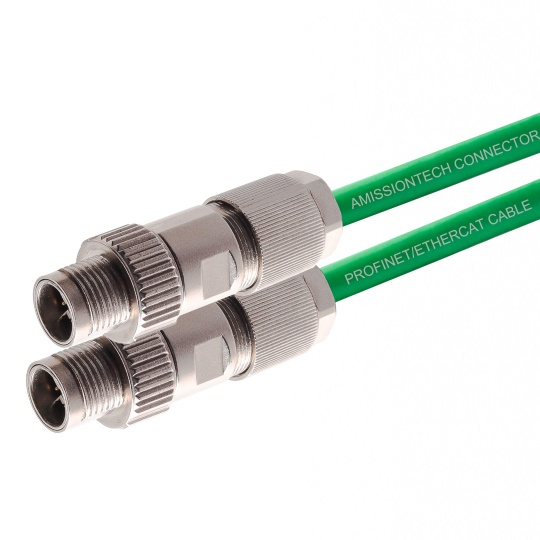
Industrial cable components

Industrial cable components

Industrial cable components are the backbone of reliable and efficient connectivity in industrial automation, robotics, and machinery. Engineered to withstand harsh environments while ensuring seamless data transmission and power delivery.
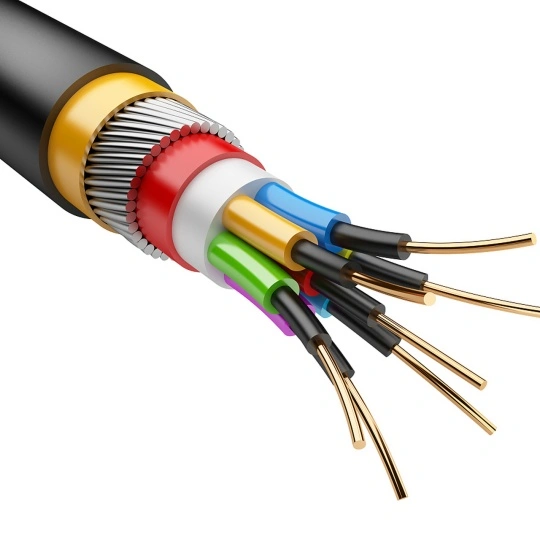
Shielded cable core

Shielded cable core

In today’s technology-driven world, maintaining uninterrupted signal integrity is critical for industrial, commercial, and residential applications. The ‌Shielded Cable Core‌ is engineered to deliver superior electromagnetic interference .

Contact Us

Feel free to reach out to us for any inquiries or orders.

Call Us

Have a question? Give us a call!

+861881875005

Email Us

Send us an email and we'll get back to you soon.

sales@custom-cable-assemblies.com
       
Home Products Contact