Industrial environments are demanding. Think extreme temperatures, constant vibration, exposure to chemicals, oils, abrasion, and electromagnetic interference. Standard cables simply won’t survive. That’s where industrial cable assemblies come in – engineered solutions designed for reliability and longevity in the toughest conditions. But what exactly makes them so robust? Understanding the key components is crucial for selecting the right assembly for your application and ensuring smooth, uninterrupted operations.
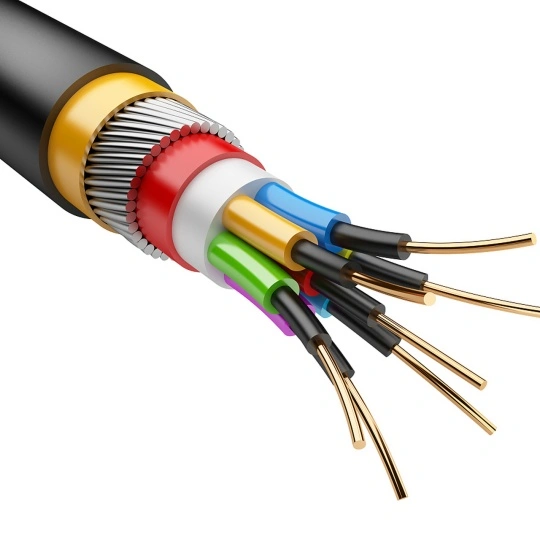
The Conductor: The Power or Signal Highway
Function: The core element responsible for carrying electrical current (power) or transmitting data signals.
Materials: Primarily copper due to its excellent conductivity. Tinned copper is common for enhanced corrosion resistance. Aluminum is used less frequently for power due to lower conductivity but can be found in some applications.
Construction: Can be solid (single strand, less flexible) or stranded (multiple thin strands twisted together). Stranded conductors are overwhelmingly preferred in industrial assemblies for superior flexibility, essential for movement in machinery, robotics, or repeated flexing. Finer stranding (higher strand count) offers greater flexibility.
Key Consideration: Gauge (AWG or mm²) determines current-carrying capacity. Stranding type impacts flexibility and bend radius.
Insulation: The Essential Barrier
Function: Electrically isolates individual conductors from each other within a multi-conductor cable, preventing short circuits. It also provides a base layer of protection.
Materials: Chosen based on environmental demands:
PVC (Polyvinyl Chloride): Economical, flexible, flame retardant, good general resistance. Common for less extreme environments.
PE (Polyethylene): Excellent moisture resistance, good electrical properties. Often used for data cables.
XLPE (Cross-Linked Polyethylene): Superior thermal rating (higher temp resistance), better abrasion and chemical resistance than standard PE. Excellent for power applications.
TPE/TPR (Thermoplastic Elastomer/Rubber): Excellent flexibility, wide temperature range, good oil/chemical resistance. Ideal for constant flexing (e.g., drag chains).
Silicone Rubber: Exceptional high and low-temperature flexibility, excellent flame resistance. Used in extreme heat or cold.
FEP/PTFE (Fluoropolymers): Outstanding chemical resistance, very high temperature rating, low friction. Used in highly corrosive or ultra-high-temp environments.
Key Consideration: Material choice is critical for temperature rating, chemical compatibility, flexibility needs, and dielectric strength.
Shielding: Defending Against Interference
Function: Protects the signal integrity of data or sensitive power lines by blocking Electromagnetic Interference (EMI) and Radio Frequency Interference (RFI) from external sources and preventing the cable itself from emitting interference.
Types:
Foil Shielding (Aluminum/Mylar): Thin layer offering 100% coverage, good for high-frequency noise. Less flexible and durable alone.
Braided Shielding (Tinned Copper): Woven mesh offering good flexibility, durability, and effective low to medium-frequency noise protection. Coverage is typically 70-95%.
Spiral (Serve) Shielding: Wrapped strands, highly flexible, ideal for constant flexing applications. Lower coverage than braid.
Combination (Foil + Braid): Offers the best of both worlds – near 100% coverage from foil and durability/flexibility from braid. Common in demanding industrial data cables (e.g., Cat6A, Profinet).
Key Consideration: Required for data cables and sensitive analog signals. Type chosen depends on the level of interference, flexibility needs, and frequency range.
Inner Jacket (Filler/Inner Sheath – Optional but Common):
Function: In multi-conductor cables, this component bundles the insulated (and often shielded) conductors together. It provides a round core for the outer jacket, adds strength, and can provide additional separation or protection. Fillers (like polypropylene yarn) may be used to fill gaps and maintain cable roundness.
Key Consideration: Improves overall cable structure and crush resistance.
Outer Jacket (Sheath): The First Line of Defense
Function: The outermost layer, providing primary mechanical protection against abrasion, cuts, impact, crushing, chemicals, oils, sunlight (UV), moisture, and sometimes fire. It defines the cable’s overall durability and environmental resistance.
Materials: Often similar to insulation materials but formulated for toughness:
PVC: Common, cost-effective, good general protection, flame retardant.
PUR (Polyurethane): Excellent abrasion, oil, chemical, and hydrolysis (water) resistance. Very flexible and durable, ideal for harsh environments and continuous flexing (e.g., robotics, drag chains).
TPE/TPR: Excellent flexibility, wide temp range, good oil/chemical resistance.
Neoprene (Chloroprene Rubber – CR): Excellent oil, chemical, and weather resistance, good flame retardancy. Historically common, still used.
XLPE: High temperature and abrasion resistance.
Key Consideration: This is the workhorse layer. Material choice is paramount based on the specific environmental hazards (abrasion, chemicals, oils, UV, temp extremes, flexing). Look for relevant ratings (e.g., UL Oil Res I/II, UL Sunlight Res).
Connectors: The Critical Interface
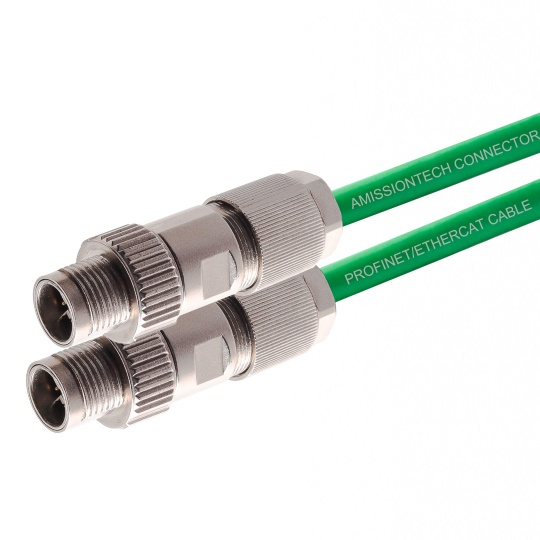
Function: Terminate the cable assembly, providing a secure, reliable, and often sealed connection to equipment (sensors, motors, controllers, PLCs, drives).
Types: Vastly diverse – circular connectors (M8, M12, 7/8″, etc.), rectangular connectors, heavy-duty plugs/sockets, specialized connectors for Fieldbus (Profibus, CAN), Ethernet (RJ45, M12 D-coded), power (IEC, NEMA), etc.
Key Features for Industry:
Robust Housing: Metal (brass, stainless steel) or high-grade engineering plastic (PBT).
IP Rating (Ingress Protection): Essential for dust and water resistance (e.g., IP65, IP67, IP69K).
Secure Locking Mechanisms: Screw threads, bayonet locks, push-pull to prevent accidental disconnection from vibration.
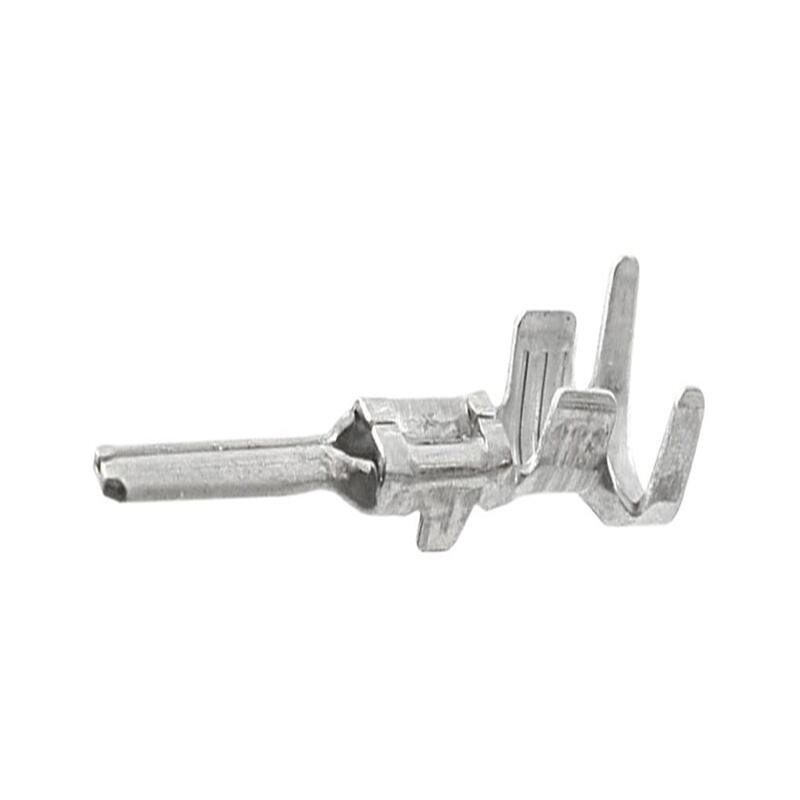
Properly Crimped/Potted Contacts: Ensures reliable electrical connection and strain relief.
Backshells/Strain Relief: Protects the cable entry point from bending and pulling forces.
Key Consideration: Connectors must match the equipment interface, provide the required environmental sealing (IP rating), and be rated for the voltage/current of the application. Quality of termination is critical.
Putting it All Together: Why Component Synergy Matters
An industrial cable assembly’s performance isn’t just the sum of its parts; it’s the synergy between them. The conductor size must match the current. The insulation must withstand the voltage and temperature. The shielding must be appropriate for the signal type and noise environment. The jacket must defend against the specific physical and chemical threats. The connectors must provide a secure, sealed interface.
Choosing an assembly with mismatched components – like a highly flexible PUR jacket but with foil shielding unsuitable for constant flexing – leads to premature failure. Understanding these key components empowers engineers, maintenance personnel, and purchasers to:
Specify accurately: Match the assembly precisely to the application’s electrical, mechanical, and environmental demands.
Improve reliability: Select assemblies built to withstand the specific challenges of the industrial setting, minimizing downtime.
Mining operations are known for their harsh and demanding environments, where equipment and components face extreme conditions. Among the crucial components, industrial cables play a vital role in ensuring the smooth and safe operation ...
High-humidity warehouses—such as those for food processing, pharmaceutical storage, or coastal logistics—pose unique risks to industrial cables, including insulation degradation, conductor corrosion, and short circuits. Selecting the ri...
Industrial cables are the backbone of Europe’s manufacturing, energy, infrastructure, and automotive sectors, with reliability, compliance to EU standards (such as CE, REACH, and IEC), and technical adaptability being core requirements ...
In the era of Industry 4.0, industrial Ethernet has become the backbone of data transmission in manufacturing plants, power stations, and other industrial environments. At the core of this robust network infrastructure lies industrial c...
Cleanroom environments are critical in industries such as pharmaceuticals, semiconductors, biotechnology, and aerospace, where even minute contaminants can compromise product quality, manufacturing processes, or regulatory compliance. I...
Voltage drop in industrial cables is a critical factor that directly impacts the performance, safety, and efficiency of electrical systems. Even small, unaccounted voltage drops can lead to equipment malfunctions, reduced motor lifespan...
Installing industrial cables in tight spaces—such as between machinery, within control cabinets, or under floorboards—poses unique challenges that demand precision, proper tooling, and safety awareness. Unlike open areas, confined space...
Selecting the right cable assembly supplier is critical for industries ranging from aerospace and automotive to telecommunications and medical devices. The technical capabilities of a supplier directly impact product quality, reliabilit...
In industrial environments, electrical surges pose a significant threat to industrial cables. These sudden, brief spikes in voltage can originate from various sources—such as lightning strikes, power grid fluctuations, or the startup an...
Industrial cables are the “nervous system” of modern manufacturing, energy, and infrastructure—powering machinery, transmitting data, and connecting critical systems. Yet, one question often arises for engineers, procurement...
Agriculture, the backbone of global food security, is rapidly embracing automation and smart technology—and industrial cables are the unsung enablers of this transformation. Unlike ordinary cables, industrial-grade cables are engineered...
Selecting the right industrial cable assembly supplier is a critical decision that impacts not only your supply chain’s reliability and product quality but also your corporate reputation. In today’s globally conscious market...
Industrial cables are the backbone of power transmission in manufacturing facilities, refineries, and large-scale infrastructure projects. The maximum current an industrial cable can safely carry—referred to as “ampacity”—is...
Choosing the right cable assembly is critical to ensuring system reliability, safety, and cost-efficiency across industries such as manufacturing, telecommunications, and energy. However, with countless options in materials, connectors,...
In the realm of industrial infrastructure, every component plays a critical role in ensuring seamless operations—but few are as overlooked yet impactful as the weight of industrial cables. From manufacturing plants and power distributio...
When it comes to industrial cables, the choice between copper and aluminum is a critical decision that impacts performance, cost, and durability. Understanding the key differences and knowing which material suits specific applications c...
In the complex and demanding landscape of industrial operations, the choice of cabling systems directly impacts safety, efficiency, and long-term operational costs. Low-voltage industrial cables, typically designed for voltages below 1k...
As robotics and high-flex automation evolve, the need for reliable, high-flex Mini-change industrial cable assemblies has never been greater. This 2026 guide explores the essential features, applications, and selection criteria for Mini...
Meta Description: Discover the critical performance metrics for industrial cable harnesses—from voltage rating to flex life—and learn how to evaluate quality for reliability and safety.
Table of ContentsWhy Performance Metrics Ma...
In high-throughput industrial automation, even a few minutes of unplanned downtime can cost thousands of dollars. For robotics cells, the weakest link is often not the robot itself, but the industrial automation cable assembliesthat pow...
Industrial robots are the powerful muscles and precise tools of modern automation. But like any complex machine, they rely on a hidden network of lifelines: industrial cable assemblies. These aren’t your average wires; theyR...
In industrial automation, Programmable Logic Controllers (PLCs) serve as the “brain” of control systems, orchestrating machinery, processes, and data flow across factories. Yet, even the most advanced PLCs depend entirely on...
In offshore oil and gas production, oil and gas industrial cable assembliesare far more than passive wiring—they are critical lifelines. They transmit power and data to everything from topside drilling systems to subsea control umbilica...
In the complex and interconnected world of industrial systems, the reliable transmission of signals is the lifeblood of operations. From manufacturing plants and power stations to telecommunications networks and transportation systems, ...
Industrial cable assemblies are critical components in manufacturing, automation, and heavy machinery. Choosing the right ones—especially those certified by Underwriters Laboratories (UL)—ensures safety, reliability, and compliance. Thi...
In modern smart factories, M12 industrial cable assembliesare the backbone of sensor networks, drives, and industrial Ethernet. However, the rise of predictive maintenanceand intelligent monitoringis transforming how these cables are sp...
When upgrading heavy machinery, the weakest link is often not the engine or hydraulics, but the cable assemblies connecting sensors, actuators, and control systems. Standard M12 industrial cable assemblies can fail prematurely in high-v...
Industrial cables serve as the “nerve and blood vessels” of modern manufacturing, power transmission, and automation systems, connecting critical equipment like motors, sensors, and control panels. In industrial environments...
The Hidden Hero of Solar Energy
While solar panels get all the attention, the real game-changer in modern solar farms might be running underground. New-generation cables are helping solar installations achieve what was previously tho...
In today’s renewable energy sector, project timelines are tighter, budgets are under pressure, and reliability is non-negotiable. Whether you’re connecting solar arrays, wind turbines, or battery energy storage systems (BESS...
In the complex ecosystem of industrial operations, wire connectors for industrial cables serve as the unsung heroes that ensure seamless and reliable electrical connectivity. These small yet critical components are responsible for joini...
The rollout of 5G technology isn’t just about faster smartphones or smoother video streaming—it’s revolutionizing the backbone of connectivity itself. One of the most exciting outcomes of this transformation is the rise of smart cables...
1.TelecommunicationsCable assemblies ensure high-speed data transfer and connectivity in:Fiber optic networks: LC/SC/ST connectors and splice closures for telecom towers and data centers13.5G infrastructure: RF coaxial cables and ...
In demanding industrial settings, the reliability of flexible industrial cable assembliesis paramount. These cables face constant bending, abrasion, and exposure to oils, chemicals, and extreme temperatures. A single point of failure ca...
Sensor cable assemblies are critical components that connect sensors to data acquisition systems, control units, or other electronic devices. Their performance directly impacts the accuracy, reliability, and longevity of the entire sens...
The AI Revolution in Cable Production“Our defect rate dropped 40% in 6 months,” reveals John Carter, CEO of VoltCable Inc., in an exclusive interview about AI implementation. Traditional cable factories face three key challe...
The New Generation of Connected Cables
Major manufacturers (Prysmian, Nexans) and startups (BondWire, NanoCable Tech) are embedding sensors directly into cable structures. These IoT-enabled cables continuously monitor:
Real-time ...
Industrial cable components are the backbone of reliable and efficient connectivity in industrial automation, robotics, and machinery. Engineered to withstand harsh environments while ensuring seamless data transmission and power delivery.
In today’s technology-driven world, maintaining uninterrupted signal integrity is critical for industrial, commercial, and residential applications. The Shielded Cable Core is engineered to deliver superior electromagnetic interference .
Contact Us
Feel free to reach out to us for any inquiries or orders.