In today’s fast-paced technological landscape, industries demand cables that are not only high-performing but also adaptable to evolving needs. Enter modular design—a game-changing approach revolutionizing cable production. This article explores how modular design addresses critical challenges in manufacturing, enhances flexibility, and delivers solutions that users actually want.
Why Modular Design Matters in Cable Production
Modular design breaks down complex systems into interchangeable, standardized components. For cable manufacturing, this means creating customizable, scalable products that can be easily reconfigured or upgraded. Here’s why this approach is gaining traction:
Faster Customization
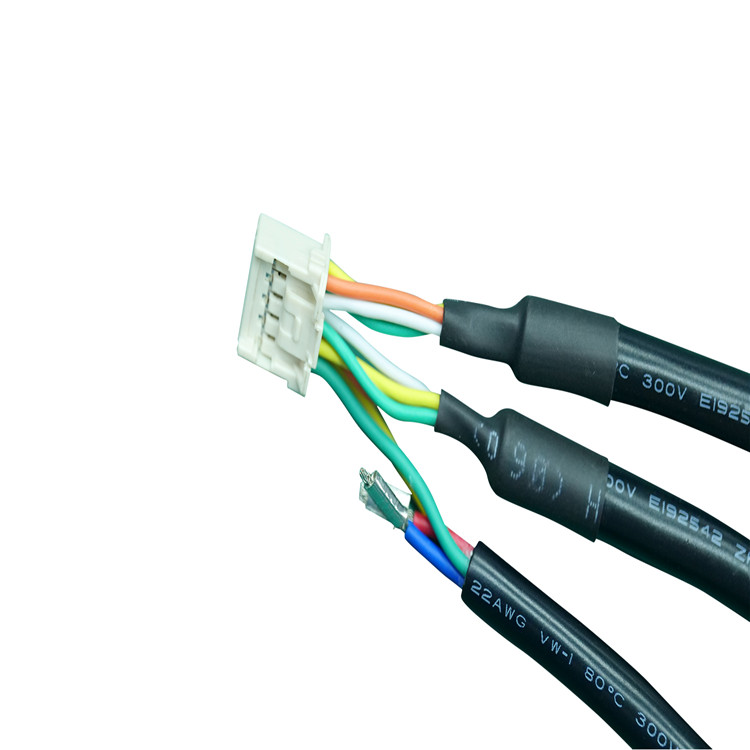
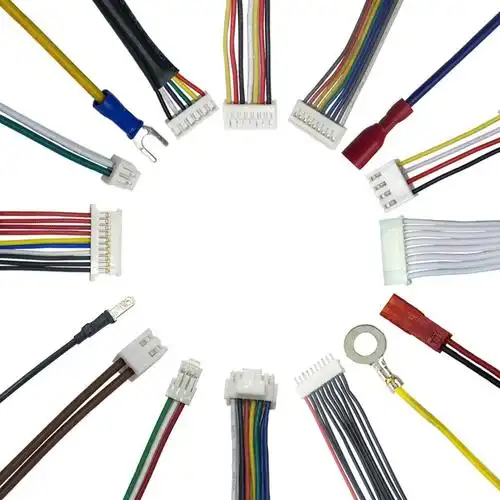
Traditional cables often require entirely new designs for specific applications, leading to delays and higher costs. Modular cables use pre-engineered components (connectors, sheaths, conductors) that can be mixed and matched.
Example: A robotics company can quickly assemble cables with varying lengths, shielding, or connector types to suit different machines.
Cost-Effective Scalability
Modular systems reduce waste by reusing components across product lines. Manufacturers streamline inventory and cut R&D expenses.
Benefit: Startups and SMEs can scale production without massive upfront investments.
Simplified Maintenance
Faulty sections of modular cables can be replaced without discarding the entire unit, lowering downtime and repair costs.
Key Applications Driving Demand
Modular cables are solving real-world problems across industries. Highlight these high-search-volume use cases:
1. Data Centers and Networking
User Need: Rapid deployment of high-speed, high-bandwidth connections.
Modular Solution: Plug-and-play fiber optic or Ethernet cables with interchangeable connectors (e.g., LC, SC, RJ45) simplify upgrades to 10G/40G/100G networks.
When it comes to electrical systems, many people use the terms “industrial cable” and “electrical wires” interchangeably, but they are distinct components designed for different purposes. Understanding their diff...
The maximum current rating of an industrial cable, also known as ampacity, refers to the maximum amount of electric current that a cable can safely carry continuously under specific operating conditions without causing excessive heating...
In the complex network of electrical systems that power modern industries, cities, and daily life, two types of cables play pivotal roles but are often confused: industrial cable and power transmission cables. While both are designed to...
In industrial environments where extreme heat is a constant challenge—from steel foundries and glass manufacturing plants to aerospace engine compartments and nuclear power facilities—high temperature industrial cable assemblies are the...
In the realm of industrial operations, the choice between copper and aluminum cables is far from trivial. It directly impacts project efficiency, long – term costs, and overall operational reliability. Making an informed decision ...
In the relentless pursuit of efficiency and cost-saving within automotive manufacturing, the temptation to use cheaper, non-compliant industrial cable assemblies can arise. This is a dangerous gamble with serious consequences. Understan...
The steel industry is a backbone of global manufacturing, relying on continuous, high-intensity operations across steelmaking, casting, rolling, and auxiliary processes. Industrial cables, as the “nerve and blood vessels” of...
High-power equipment—such as industrial motors, large compressors, furnaces, and heavy machinery—relies on a steady, safe flow of electricity to operate efficiently. But one critical factor often overlooked in their setup is the industr...
In the complex and harsh environment of industrial automation, M12 industrial cable assemblies have become the backbone of signal and power transmission, thanks to their compact structure, reliable connection performance and strong adap...
In the field of industrial automation, reliable data transmission and stable equipment connection are core guarantees for production efficiency. As a key supporting component of the CC-Link (Control & Communication Link) series—an i...
Old industrial cables, which have served their purpose in factories, power plants, and various industrial facilities, often end up as waste. However, their disposal is not a matter to be taken lightly. Improper handling can lead to seve...
The oil and gas industry operates in some of the harshest and most demanding environments on the planet, from deep-sea drilling rigs to high-temperature refineries and remote desert pipelines. In such settings, industrial cables play a ...
In industrial settings such as manufacturing plants, oil refineries, automotive production lines, and marine engineering, cable assemblies are often exposed to harsh conditions—constant oil immersion, high temperatures, mechanical abras...
From vast wind farms to sprawling solar arrays, renewable energy systems demand rugged, reliable connectivity. Industrial cable assemblies are the unsung heroes ensuring these critical facilities generate clean power efficiently and saf...
Industrial cables play a vital role in the automotive industry, enabling the smooth operation of various systems. Here are their common applications along with practical solutions:
Power Transmission
Vehicles rely on industrial ca...
Working in a foundry, furnace room, or next to high-power machinery? Standard cables will quickly become your weakest link. Choosing the right conductor material isn’t just about performance in high-temperature cable assemb...
Rodent damage to industrial cables is a persistent and costly problem for manufacturing plants, power facilities, and logistics hubs. Mice, rats, and squirrels have incisors that grow continuously—they gnaw on cable insulation and condu...
In the fast-paced world of industrial automation, where precision, reliability, and efficiency are non-negotiable, every component plays a critical role in keeping operations running smoothly. Among these unsung heroes are industrial au...
When selecting electrical cables for a project, understanding the differences between industrial cables and household cables is critical. These two cable types are designed for distinct environments, safety requirements,...
IntroductionIndustrial robots are the backbone of modern manufacturing, performing tasks with precision and speed. However, their efficiency heavily relies on the durability of cable assemblies, which transmit power, signals, and data. ...
Recent advancements in high-voltage cable testing reveal a global regulatory shift towards stricter standards. With major economies implementing upgraded testing protocols, the power infrastructure sector faces both challenges and oppor...
In the realm of heavy-duty industrial applications, the reliability and performance of cable assemblies are of utmost importance. These applications, which include manufacturing, construction, mining, and transportation, demand cable as...
1.TelecommunicationsCable assemblies ensure high-speed data transfer and connectivity in:Fiber optic networks: LC/SC/ST connectors and splice closures for telecom towers and data centers13.5G infrastructure: RF coaxial cables and ...
Introduction
In heavy industries like steel manufacturing, unexpected downtime can cost thousands per minute. XYZ Steel Plant recently achieved a 37% reduction in production interruptions by implementing custom-engineered cables – a ...
1.Core Design SpecificationsA. Conductor RequirementsMaterial:Copper (bare, tinned, or silver-plated) for high conductivity.Aluminum for lightweight, high-voltage power transmission.Fiber optic strands for data-centric applications...
Electrical cable assemblies are integral components in nearly every industry that relies on electrical power or signal transmission. Unlike individual cables, these assemblies consist of multiple cables, wires, or conductors organized i...
Cable assemblies are the lifelines of the energy sector, enabling the generation, transmission, and distribution of power across diverse environments—from offshore wind farms to underground oil rigs. As the global demand for energy grow...
The integration of wireless charging technology into industrial cables is transforming how industries manage power delivery in demanding settings. From manufacturing plants to logistics warehouses, this innovation addresses long-s...
Wind power systems operate in some of the planet’s most challenging environments—offshore platforms, deserts, mountainous regions, and icy tundras. These conditions demand robust infrastructure, and cable assemblies are no exception. As...
The global shift toward renewable energy isn’t just transforming how we power our homes and industries—it’s also fueling unprecedented demand for heavy-duty cables. As solar farms, wind turbines, and grid modernization projects multiply...
1. Introduction to Industrial Cable Insulation Materials
Industrial cable insulation materials play a pivotal role in ensuring the safe and efficient transmission of electrical power across various sectors. These materials act as a p...
In the automotive and industrial sectors, cable assemblies are the lifelines of electrical systems, transmitting power and signals critical to vehicle and machinery operation. However, harsh environments—extreme temperatures, vibrations...
Selecting the right RF (Radio Frequency) cable assembly is critical for ensuring optimal performance in wireless communication systems, aerospace applications, medical devices, and countless other industries. With so many options availa...
In industries such as aerospace, automotive, oil and gas, and industrial manufacturing, cable assemblies face extreme conditions, with high temperatures posing a significant challenge. Selecting the right materials and adhering to indus...
New energy cables (e.g., electric vehicle charging cables, in-vehicle high-voltage cables, and renewable energy system cables) must meet the following specialized technical requirements:
1. Electrical PerformanceHigh Voltage Capac...
IntroductionThe rapid evolution of nanotechnology has opened groundbreaking opportunities across industries, and the cable assembly sector is no exception. As demand grows for faster, safer, and more durable electrical systems, nanomate...
In modern industrial environments, cables are constantly exposed to lubricants, cutting fluids, fuels, and cleaning agents. Oil resistant industrial cable assembliesare no longer optional in these settings; they are critical for ensurin...
The Hidden Hero of Solar Energy
While solar panels get all the attention, the real game-changer in modern solar farms might be running underground. New-generation cables are helping solar installations achieve what was previously tho...
Industrial Cable Assembly Product Summary
Material & Safety
Utilizes premium raw materials and globally recognized components (e.g., ABB, TE Connectivity) ensuring high reliability and safety to prevent risks like fire and e.
Ensure reliable power transmission and long-lasting performance in the harshest conditions with our High-Temperature Resistant Cable Accessories. Engineered to withstand extreme heat, these premium-grade accessories are designed to prote.
Contact Us
Feel free to reach out to us for any inquiries or orders.