In the harsh world of mining, cables face relentless punishment. Sharp rocks, heavy equipment, constant movement, and abrasive dust create an environment where ordinary cables fail quickly. Mining cable assemblies, however, are engineered to withstand this abuse, primarily through specialized construction focused on abrasion resistance. Here’s what makes them tough:
Ultra-Durable Outer Jacket Material:
Thermoplastic Compounds: Materials like specially formulated Polyurethane (PUR) or Thermoplastic Polyurethane (TPU) are common favorites. They offer exceptional resistance to cuts, tears, scrapes, and abrasion while remaining flexible. They resist oils and chemicals often present in mines.
Thermoset Compounds: Chlorinated Polyethylene (CPE) or Chlorosulfonated Polyethylene (CSPE – Hypalon® is a well-known type) provide outstanding abrasion resistance, along with excellent resistance to ozone, UV light (for surface applications), chemicals, and high temperatures.
Key Property: These materials aren’t just hard; they are tough. They can absorb impact and resist gouging without cracking or splitting, which is crucial when rocks scrape or impact the cable.
Reinforced Jacket Construction:
Increased Thickness: Mining cable jackets are significantly thicker than standard industrial cables. This extra material provides a greater buffer before abrasion reaches the critical inner components.
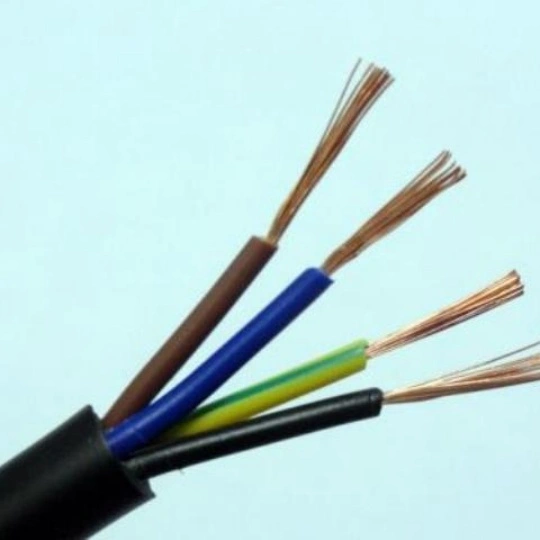
Filler Strips/Bedding: Some designs incorporate non-conductive, abrasion-resistant filler material extruded over the inner conductors or cable core before the outer jacket. This creates an additional sacrificial layer and helps maintain a round shape, reducing points where abrasion can focus.
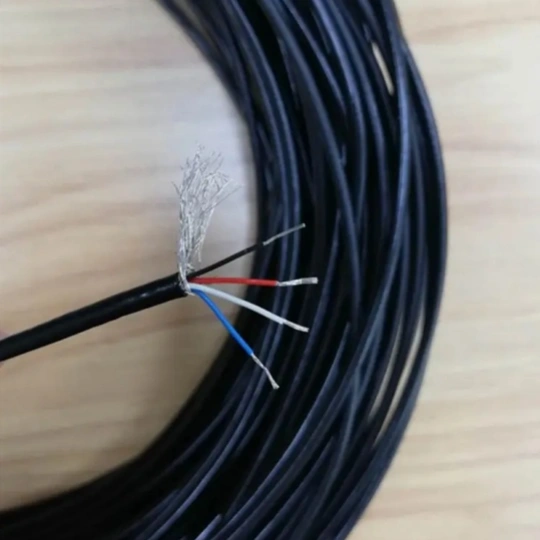
Braid or Tape Reinforcement: In extremely demanding applications, a layer of high-strength synthetic fiber braid (like Aramid – Kevlar®) or robust tape might be applied under the outer jacket. This acts like internal body armor, significantly boosting cut and tear resistance without sacrificing flexibility.
Protection at Critical Points:
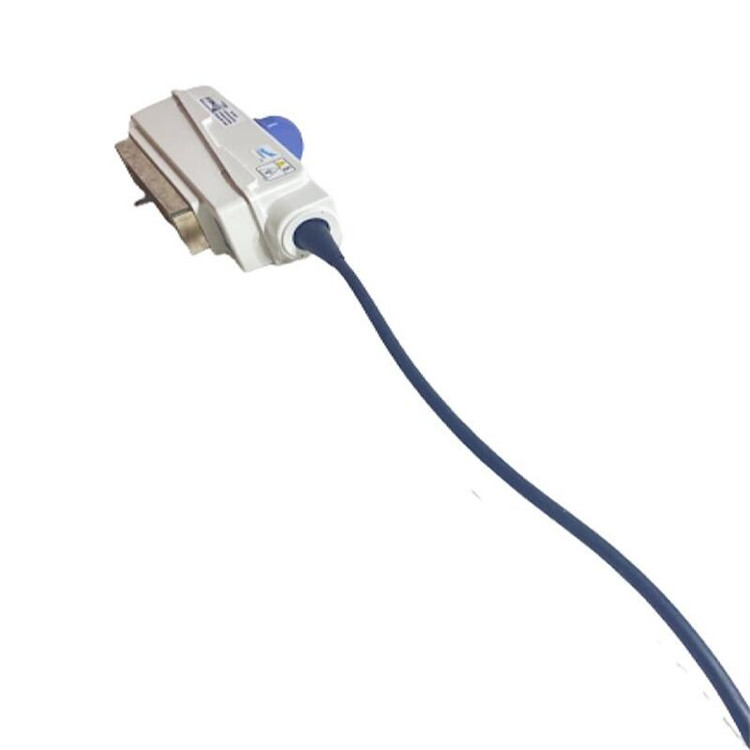
Connectors: Abrasion often starts where cables connect to equipment or where stress is concentrated. Mining-grade connectors feature robust, overmolded strain relief boots made from the same tough materials as the cable jacket. These boots seamlessly transition from the cable to the connector, eliminating pinch points and providing a smooth, abrasion-resistant surface at this vulnerable junction.
Rigorous Testing Standards:
Mining cables are built to meet stringent international and regional standards (like MSHA in the US, CAN/CSA in Canada, IEC, or specific mining operator specs). These standards mandate specific abrasion resistance tests (e.g., dragging cables over abrasive surfaces under load, impact tests) that the cables must pass to be certified for use underground or in surface mines.
In Summary:
Mining cable assemblies resist rock abrasion through a multi-layered defense:
Specialized Jacket Materials: Using ultra-tough thermoplastics (PUR, TPU) or thermosets (CPE, CSPE) that resist cuts, tears, and scraping.
Robust Construction: Featuring thicker jackets, internal filler/bedding layers, and sometimes embedded braids for reinforcement.
Integrated Strain Relief: Protecting vulnerable connection points with overmolded boots.
Proven Performance: Adherence to demanding industry abrasion resistance testing standards.
This combination ensures the cable can survive the punishing mining environment, minimizing downtime, safety hazards, and costly replacements caused by rock abrasion. When selecting mining cables, prioritize those explicitly designed and certified for abrasion resistance in mining applications.
This question is critical for professionals in manufacturing, energy, and heavy industries, where cables operate in demanding environments. The answer depends on multiple factors, primarily the cable’s insulation material, design, and i...
In laboratory environments, where precision, safety, and reliability are paramount, the role of industrial cables is often underappreciated—until something goes wrong. These cables serve as the lifeline of critical equipment, powering s...
Ensuring industrial cable assemblies meet standards requires systematic testing. Here are key methods:
Visual Inspection
Check for smooth surfaces without cracks, bubbles, or scratches
Verify clear markings including specificati...
Introduction
As global industries shift toward sustainability, eco-friendly industrial cable assemblieshave become a strategic priority for procurement managers and design engineers. These components are no longer niche products; the...
The lifespan of industrial cables in corrosive environments is not a fixed value but varies significantly depending on multiple factors. In general, standard industrial cables may last only 2-5 years in severe corrosive conditions, whil...
Industrial cables are widely used in dynamic environments—such as robotic joints, sliding conveyors, and portable industrial devices—where repeated bending, twisting, or flexing is unavoidable. Poor flexibility can lead to insulation cr...
High-humidity warehouses—such as those for food processing, pharmaceutical storage, or coastal logistics—pose unique risks to industrial cables, including insulation degradation, conductor corrosion, and short circuits. Selecting the ri...
Industrial cables are the backbone of modern manufacturing, energy distribution, and infrastructure operations. They transmit power, data, and control signals across factories, warehouses, power plants, and outdoor facilities—making the...
In the complex landscape of industrial operations, where precision, uptime, and safety are paramount, reliable industrial cable assemblies serve as the unsung heroes. These assemblies are the critical link connecting machinery, sensors,...
Installing industrial cable is a critical step in launching a new facility, as it powers machinery, transmits control signals, and ensures operational safety. However, the cost of this process varies widely—typically ranging from \(15,0...
Installing industrial cables in tight spaces—such as between machinery, within control cabinets, or under floorboards—poses unique challenges that demand precision, proper tooling, and safety awareness. Unlike open areas, confined space...
The steel industry is a backbone of global manufacturing, relying on continuous, high-intensity operations across steelmaking, casting, rolling, and auxiliary processes. Industrial cables, as the “nerve and blood vessels” of...
Modbus has long been a cornerstone of industrial automation, enabling seamless data exchange between controllers, sensors, and actuators in factories, power plants, and manufacturing facilities. While the protocol’s simplicity and compa...
Selecting the right industrial cable for high-voltage applications is a critical decision that directly impacts operational safety, efficiency, and reliability. High-voltage environments, typically defined as applications involving 1kV ...
Selecting the right industrial cable assembly supplier is a critical decision that impacts not only your supply chain’s reliability and product quality but also your corporate reputation. In today’s globally conscious market...
In the fast-paced world of industrial automation and smart manufacturing, DeviceNe has emerged as a critical component, enabling seamless data exchange, precise control, and efficient operation of industrial equipment. At the heart of D...
Outdoor environments demand robust connectivity solutions that withstand harsh conditions like dust, moisture, extreme temperatures, and mechanical stress. IP67/IP68-rated cable assemblies are engineered to meet these challenges, offeri...
In the complex world of industrial automation, machinery, and control systems, cable assemblies are the vital nervous system. Getting their lengths right isn’t just about neatness; it’s a critical engineering decision impact...
Semiconductor manufacturing represents the pinnacle of precision manufacturing. Within the ultra-controlled environments of Class 1 to Class 5 (ISO 3 to ISO 5) cleanrooms, even the smallest contaminant – a particle of dust, a molecule o...
Installing industrial cable is a critical step in launching a new facility, as it powers machinery, transmits control signals, and ensures operational safety. However, the cost of this process varies widely—typically ranging from \(15,0...
The relentless push towards smarter, faster, and more connected factories is fundamentally reshaping the requirements for electrical interconnects. At the heart of this evolution are multi-core industrial cable assemblies, which serve a...
In applications where failure is not an option, such as military operations, aerospace systems, and certain industrial scenarios, military-grade coaxial cables are the go-to solution. These cables are engineered to meet the most demandi...
Industrial Cable Assemblies & Wire Harnesses: The Backbone of Reliable Industrial Operations
In the fast-paced, high-stakes world of industrial manufacturing, automation, and heavy machinery, seamless connectivity is non-negotiab...
The worldwide transition to smarter, more resilient power networks is accelerating. Utilities are modernizing aging grids with digital monitoring, distributed energy resources (DERs), and advanced metering infrastructure (AMI). This shi...
Selecting the correct insulation for high-temperature industrial cable assemblies is critical for safety, reliability, and longevity. A wrong choice can lead to premature failure, downtime, and even hazardous situations. This guide prov...
Meta Description: Discover key drivers, investment hotspots, and risk strategies for cable infrastructure in emerging economies. Data-driven analysis of fiber optic expansion and 5G integration opportunities.
The Rush to Eme...
In industries such as aerospace, automotive, oil and gas, and industrial manufacturing, cable assemblies face extreme conditions, with high temperatures posing a significant challenge. Selecting the right materials and adhering to indus...
Industrial settings like oil refineries, chemical plants, grain silos, and paint spray booths contain areas where flammable gases, vapors, dusts, or fibers can be present. Using standard electrical equipment here can trigger explosions....
The advent of 5G has ushered in an era of ultra-reliable, low-latency communication, demanding a new class of industrial cable assemblies. These assemblies are no longer simple wires; they are complex systems where precision, consistenc...
Electrical Performance: Powering Precision1.1 Voltage and Current RatingsIndustrial cable assemblies are categorized by voltage classes:
Low Voltage (LV): Up to 1,000V AC / 1,500V DC for robotics, PLCs, and conveyor systems.M...
Meta Description: Discover how biodegradable cables are revolutionizing industries with eco-friendly solutions. Learn about their benefits, applications, and future potential for reducing e-waste.
IntroductionAs global deman...
The Hyperloop, a revolutionary transportation concept, promises to redefine speed and efficiency in mass transit. At its core, this technology relies on a complex network of industrial cables to ensure safety, performance, and reliabili...
In the automotive and industrial sectors, cable assemblies are the lifelines of electrical systems, transmitting power and signals critical to vehicle and machinery operation. However, harsh environments—extreme temperatures, vibrations...
Routing industrial cables in a factory is a critical task that directly impacts operational efficiency, safety, and maintenance. A well-planned cable routing system ensures reliable power distribution, seamless data transmission, and mi...
Selecting the right jacket material for industrial cable assemblies is critical. It directly impacts performance, longevity, and safety in demanding environments. PVC (Polyvinyl Chloride) and TPE (Thermoplastic Elastomer) are two leadin...
IntroductionIn industrial automation, cable assemblies serve as the lifelines of machinery, robotics, and control systems. Their performance directly impacts operational efficiency, safety, and uptime. However, selecting the right cabl...
For industrial engineers, procurement managers, and OEM buyers, ISO 9001 industrial cable assemblies are more than just wiring solutions—they’re a guarantee of consistent quality, regulatory compliance, and reliable performance in harsh...
Industrial cable assemblies are critical components in sectors like manufacturing, aerospace, energy, and automation. Selecting the right materials for these assemblies ensures reliability, safety, and longevity in harsh environments. H...
In industries ranging from oil and gas to pharmaceuticals, chemical-resistant cable assemblies are critical components that ensure safety, reliability, and longevity in harsh environments. Exposure to aggressive chemicals, extreme tempe...
Ensure reliable power transmission and long-lasting performance in the harshest conditions with our High-Temperature Resistant Cable Accessories. Engineered to withstand extreme heat, these premium-grade accessories are designed to prote.
Meta Description: Discover the ultimate Protective Cable Kit designed to safeguard your cables from wear, tangles, and damage. Perfect for home, office, and industrial use. Shop now for long-lasting cable management!
Protecti.
Contact Us
Feel free to reach out to us for any inquiries or orders.