The world of Industrial IoT (IIoT) demands agility. Connecting sensors, controllers, machines, and gateways in dynamic industrial environments presents unique challenges: equipment moves, layouts change, and unexpected failures demand quick fixes. This is where modular industrial cable assemblies are proving to be game-changers. Here’s why they’re becoming essential:
Accelerated Deployment & Setup:
Problem: Traditional custom cables mean waiting weeks for manufacturing, delaying project timelines. On-site field-terminating cables is time-consuming, requires skilled labor, and risks errors or inconsistent quality.
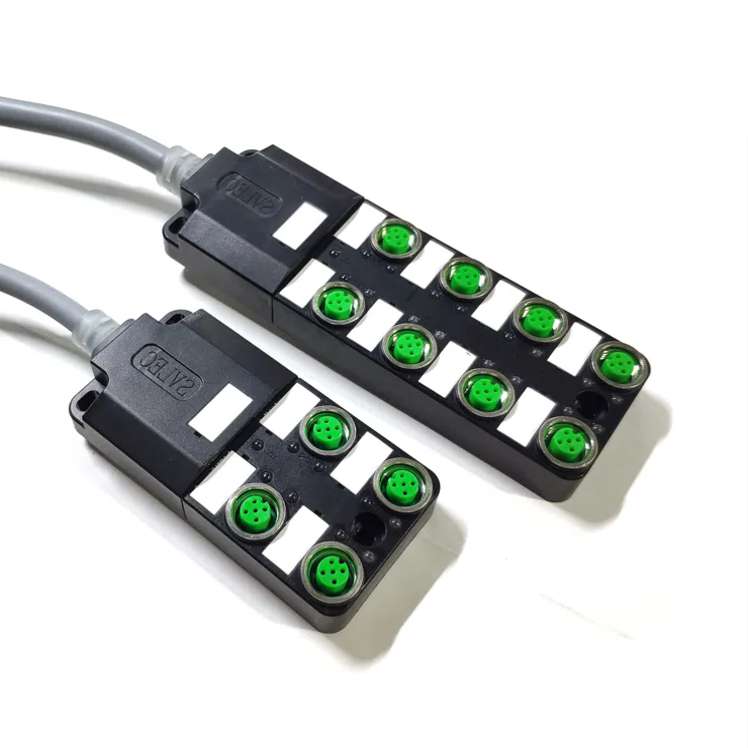
Solution: Modular assemblies use off-the-shelf connectors and pre-made cable segments. Technicians simply connect plug-and-play components (trunk cables, drop cables, connectors) like building blocks. This drastically cuts installation time – easily by 40-60% – getting your IoT network operational faster.
Effortless Scalability & Flexibility:
Problem: Adding a new sensor, moving a machine, or reconfiguring a production line with fixed cabling means costly, disruptive rewiring or entirely new custom cables. Rigid setups hinder operational agility.
Solution: Modular systems are inherently flexible. Need to add a device? Snap in a new drop cable. Reconfigure a zone? Unplug components and rearrange them quickly. System expansion or modification becomes a simple task, done in minutes or hours instead of days, adapting seamlessly to changing IoT needs.
Minimized Downtime & Simplified Maintenance:
Problem: Cable failures in traditional systems often require tracing faults and replacing entire long cable runs – a major source of costly production downtime. Troubleshooting can be complex and slow.
Solution: Modularity enables pinpoint isolation. If a cable segment or connector fails, you replace only that specific faulty component. No need to rip out long runs. Spare modules are easy to stock at lower cost than full assemblies, leading to repairs often completed in under 30 minutes. This dramatically reduces costly unplanned downtime by up to 50% or more.
Reduced Inventory Costs & Complexity:
Problem: Supporting custom cables for various lengths, connector types, and sensor combinations requires stocking numerous unique SKUs, tying up capital and warehouse space. Managing this inventory is complex.
Solution: With modular systems, you stock standard components (different length trunks/drops, common connector types). These versatile components combine to create virtually any configuration needed on-demand. This slashes required inventory SKUs by up to 80%, simplifies management, and reduces carrying costs significantly.
Enhanced Reliability & Standardization:
Problem: Field-terminated connections are susceptible to human error, inconsistency, and environmental damage if not perfectly sealed. Varying termination quality creates reliability weak points.
Solution: Factory-terminated modular connectors are built to precise industrial standards (IP67, IP69K) for robust water/dust resistance, mechanical strength (M12, M8), and electromagnetic compatibility. This ensures consistent, high-quality connections optimized for harsh factory conditions, leading to greater overall system reliability and longevity.
Choosing the Right Modular Assembly:
When selecting, prioritize:
IP Rating: Match the environment (IP67/IP68 for wet areas, IP69K for washdown).
Connector Type: M12 (common sensor/actuator) and M8 are standard; ensure correct pin count and coding.
Compliance: Meets relevant industrial standards for your region/industry.
Supplier Support: Reliable availability of spares and compatible components.
In Summary:
Modular industrial cable assemblies solve the core connectivity challenges of IIoT deployments: reducing installation time and cost, enabling effortless adaptation to change, slashing maintenance downtime, and improving overall system resilience. By moving away from rigid, custom cabling to flexible, component-based solutions, businesses can build IoT networks that are as agile, scalable, and reliable as the data-driven processes they support. For any dynamic industrial environment embracing IoT, modular cabling is rapidly becoming the strategic, cost-effective choice.
In industrial automation, manufacturing, and heavy machinery, industrial cables and wiring harnesses are both essential for electrical signal and power transmission—but they serve distinct roles. Confusing the two can lead to incorrect ...
In industrial applications, cable assemblies often encounter extreme temperature conditions. Testing their performance under such circumstances is crucial to ensure reliable operation. This article will guide you through the essential s...
High-frequency motors are widely used in modern industrial fields such as aerospace, automotive manufacturing, precision electronics, and medical equipment due to their high efficiency, fast response speed, and compact structure. Howeve...
Industrial cables are the lifelines of various industrial operations, ensuring the smooth transmission of electricity, signals, and data. The size of an industrial cable is a critical parameter that directly affects its performance, cur...
Industrial cables are the lifelines of modern industrial systems, responsible for transmitting power, signals, and data in a wide range of harsh and demanding environments. From manufacturing plants and power stations to oil refineries ...
In industrial automation, vision systems serve as the “eyes” of intelligent production, responsible for high-precision tasks such as defect detection, dimension measurement, and position positioning. Industrial cable assembl...
In the intricate web of modern industrial operations, the role of cables in ensuring seamless power transmission and data communication cannot be overstated. Among the various types of cables available, armored industrial cables have em...
In the intricate web of modern industrial facilities, where countless cables crisscross to power machinery, transmit data, and enable communication, industrial cable labeling emerges as a 不起眼 yet indispensable element. Beyond mere or...
In the complex and demanding landscape of industrial operations, the reliability and performance of electrical and data cables are paramount. Industrial environments are rife with potential disruptions, from electromagnetic interference...
Industrial cable assemblies are the lifelines of modern marine operations. In the unforgiving environment of the open sea, where saltwater corrosion, constant moisture, extreme temperatures, and mechanical stress are daily challenges, t...
In the dynamic landscape of industrial infrastructure, the reliability and performance of industrial cables are of paramount importance. As we step into 2025, several brands have emerged as frontrunners, setting the benchmark for qualit...
In the era of Industry 4.0, industrial sensors have become the “nervous system” of automated production lines, monitoring critical parameters such as temperature, pressure, displacement, and flow in real time. However, the a...
Installing industrial cable is a critical step in launching a new facility, as it powers machinery, transmits control signals, and ensures operational safety. However, the cost of this process varies widely—typically ranging from \(15,0...
The entertainment industry is a symphony of technology and creativity, where every dazzling light, crisp sound, and seamless mechanical movement relies on an unsung hero: industrial cable. Unlike standard cables designed for residential...
In industries ranging from automotive to telecommunications, standardized cable assemblies have become a cornerstone for balancing performance, scalability, and cost efficiency. By minimizing custom designs and consolidating specificati...
Discovering corroded cable assembly connectors can signal impending system failures. Performing a systematic Root Cause Analysis (RCA) is essential to fix the immediate problem and prevent recurrence. Here’s a practical guide:
...
Wind energy is a cornerstone of the global transition to renewable power, and wind farms—both onshore and offshore—are critical to meeting clean energy targets. However, the harsh environments in which wind turbines operate, particularl...
In the rapidly evolving field of robotics, industrial control cables serve as the “nervous system” that ensures seamless communication, precise signal transmission, and reliable power supply between robotic components. As ro...
Industrial cable connections are the lifeline of modern manufacturing, automation, and industrial operations. A single faulty connection can lead to costly downtime, equipment damage, or even safety hazards. When production lines grind ...
In the realm of heavy-duty industrial applications, the reliability and performance of cable assemblies are of utmost importance. These applications, which include manufacturing, construction, mining, and transportation, demand cable as...
When upgrading heavy machinery, the weakest link is often not the engine or hydraulics, but the cable assemblies connecting sensors, actuators, and control systems. Standard M12 industrial cable assemblies can fail prematurely in high-v...
The global cable market is set to experience robust expansion, with projections indicating a 12% compound annual growth rate (CAGR) through 2026. This surge is driven by rising infrastructure investments, advancements in telecommu...
For industrial engineers, procurement managers, and OEM buyers, ISO 9001 industrial cable assemblies are more than just wiring solutions—they’re a guarantee of consistent quality, regulatory compliance, and reliable performance in harsh...
1.TelecommunicationsCable assemblies ensure high-speed data transfer and connectivity in:Fiber optic networks: LC/SC/ST connectors and splice closures for telecom towers and data centers13.5G infrastructure: RF coaxial cables and ...
Meta Description: Discover the critical performance metrics for industrial cable harnesses—from voltage rating to flex life—and learn how to evaluate quality for reliability and safety.
Table of ContentsWhy Performance Metrics Ma...
Conductors: The Core of Power and Signal TransmissionThe conductor is the central element responsible for transmitting electrical power or signals. Common materials include:
Copper: The most widely used conductor due to its exce...
Industrial cables are the lifeline of electrical systems in various industrial sectors, ranging from manufacturing plants and power generation facilities to oil refineries and transportation networks. Their role in transmitting electric...
Industrial cables are the “nerve system” of modern manufacturing, energy, and infrastructure—powering motors, transmitting control signals, and connecting critical equipment. Their performance directly impacts operational ef...
The shift to new energy vehicle (NEV) industrial cable assembliesis being defined by one critical factor: the rise of liquid-cooled technologyfor fast charging. As the industry moves toward 800V architectures and megawatt-level charging...
The integration of wireless charging technology into industrial cables is transforming how industries manage power delivery in demanding settings. From manufacturing plants to logistics warehouses, this innovation addresses long-s...
The cable industry is experiencing a seismic shift as eco-conscious consumers increasingly prioritize sustainability. Brands that have adopted green certifications, such as Energy Star, RoHS, or TCO Certified, are reporting significant ...
IntroductionIndustrial environments with extreme temperatures—such as steel mills, chemical plants, automotive manufacturing, or renewable energy facilities—demand specialized cable components to ensure safety, durability, and performan...
The Hidden Hero of Solar Energy
While solar panels get all the attention, the real game-changer in modern solar farms might be running underground. New-generation cables are helping solar installations achieve what was previously tho...
In the complex landscape of industrial manufacturing and automation, flexible industrial wire assemblies stand as a critical connectivity backbone, enabling seamless power transmission, signal communication, and data exchange across a w...
In the complex infrastructure of industrial facilities, the role of industrial cable installation services cannot be overstated. These services form the backbone of reliable power distribution, data transmission, and communication withi...
Discover how industrial cable assemblies form the backbone of IIoT architecture. Explore their role in data reliability, real-time communication, and scalable industrial networks.
IntroductionThe Industrial Internet of Things (IIoT...
FRS specializes in providing industrial-grade Ethernet cable assemblies for PLCs, robots, HMIs, and Industry 4.0 equipment. Our robust components merge standard Ethernet principles with durable connectors, making them ideal for automate...
The AI Revolution in Cable Production“Our defect rate dropped 40% in 6 months,” reveals John Carter, CEO of VoltCable Inc., in an exclusive interview about AI implementation. Traditional cable factories face three key challe...
Meta Description: Discover high-performance industrial control cable module components designed for seamless automation, harsh environments, and superior connectivity. Explore specs, certifications, and applications.
H2: Industrial Con.
When it comes to electrical systems operating under extreme mechanical and electrical stress, high-load cable terminations are critical components that ensure seamless power transmission, safety, and system longevity. Engineered to .
Contact Us
Feel free to reach out to us for any inquiries or orders.