Industrial cable assemblies are vital components powering machinery, automating processes, and connecting critical systems in factories, plants, and demanding environments. Naturally, one of the first questions buyers ask is about cost. The answer isn’t simple, as prices vary widely, but understanding the key factors helps you budget effectively and find the best solution.
Why Prices Vary So Much:
There’s no single price tag because industrial assemblies are rarely “off-the-shelf” in the same way consumer products are. Cost depends heavily on:
Materials Used:
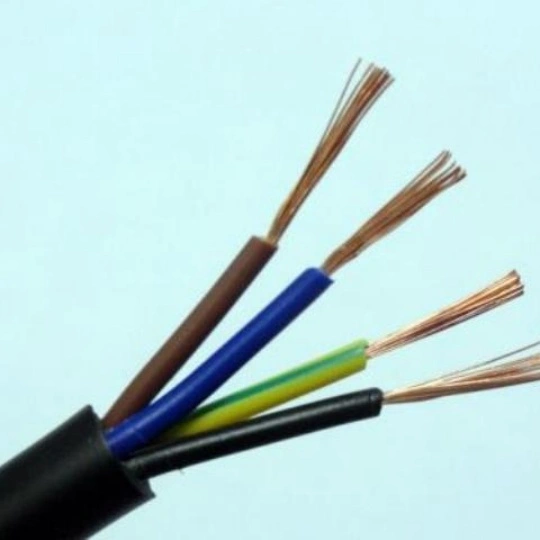
Conductor: Copper is standard and more conductive (and expensive) than alternatives like aluminum. Stranding (number/thickness of wires) affects flexibility and cost.
Insulation & Jacketing: Materials range from basic PVC to specialized thermoplastics (like PUR for oil resistance), Teflon® (for extreme heat), or silicone (flexibility/heat). Harsher environments demand pricier materials.
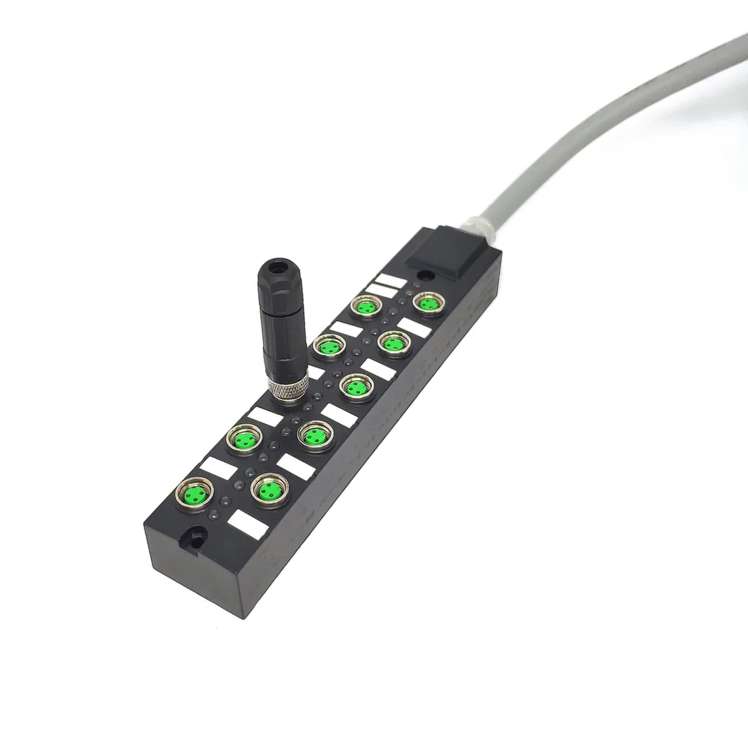
Connectors: Simple plastic connectors cost far less than ruggedized metal (e.g., stainless steel) connectors, circular connectors (M12, M8), multi-pin D-Subs, or specialized types like MIL-DTL-38999. Brands matter too.
Shielding: Foil shielding is cheaper; high-flex applications often need braided shielding, increasing cost. Multiple shielding layers add more.
Design Complexity:
Custom vs. Standard: Truly custom assemblies designed specifically for your machine and specs will cost significantly more than modifying a semi-standard assembly. Simple single-ended wires are cheapest.
Connector Complexity: Higher pin counts, mixed connector types, polarized housings, or intricate keying add complexity and cost.
Assembly Difficulty: Tight braiding/terminations, unique bending requirements, or small form factors require more labor and skill.
Certifications & Ratings:
Meeting specific industry safety standards (UL, CSA) or harsh environment ratings (IP67, IP69K for water/dust) requires specific materials and rigorous testing, increasing cost.
Certifications for aerospace (MIL-SPEC), medical (ISO 13485), or hazardous locations (ATEX, IECEx) involve significant compliance overhead.
Quantity & Lead Time:
High-volume orders almost always benefit from substantial per-unit cost reductions due to setup efficiencies.
Rush orders expediting material procurement and production scheduling will incur premium costs.
Estimated Price Ranges (Guide Only – Always Get Quotes!):
Simple Standard Assemblies: Basic wire harnesses or short cables with common connectors (e.g., PVC jacket, single-ended, low pin count). Might start around **10−50 per unit**, especially at volume.
Moderately Complex Assemblies: Involving more rugged connectors (e.g., M12), shielding, basic custom lengths or connector combinations, standard industrial materials. Typically ranges from **50−250 per unit**.
Highly Custom & Complex Assemblies: Featuring specialized connectors (multiple types, high pin counts), extreme environment materials (Teflon®, silicone), critical shielding, MIL-SPEC/ATEX certification, or complex multi-branch harnesses. Can easily range from **250−1,000+ per unit**, especially for lower volumes or unique requirements.
Practical Tips for Managing Costs:
Define Needs Precisely: Before contacting suppliers, document exactly:
Required specifications (voltage, current, signal type)
Any necessary certifications (UL, Mil-Spec, ATEX, IP rating)
Estimated annual volume
Target lead time
Explore Semi-Standard Options: Ask suppliers if they have existing designs close to your needs that can be modified. This is usually cheaper than starting from scratch.
Prioritize Requirements: Clearly identify which specs are mandatory (safety, core function) and which are “nice-to-have.” Flexibility on non-critical specs can lower costs.
Consider Total Cost of Ownership (TCO): While upfront cost is important, factor in longevity, reduced downtime, and maintenance costs. A slightly more expensive cable built with durable materials might save significant money over its lifespan compared to a cheaper option failing prematurely.
Leverage Volume: If possible, consolidate requirements and order larger quantities to unlock better pricing. Plan procurement strategically.
Get Multiple Quotes: Provide your detailed specs to several reputable industrial cable assembly manufacturers. Compare not just price, but also lead times, quality certifications, and customer service responsiveness.
In Summary:
The cost of an industrial cable assembly is determined by a blend of material choices, design complexity, required certifications, and order specifics. Prices typically range from tens to thousands of dollars per unit. By clearly defining your exact requirements, exploring semi-custom solutions, prioritizing needs, and getting quotes from experienced suppliers, you can find the most cost-effective and reliable solution for your industrial application. Always get specific quotes based on your detailed specifications.
Industrial cameras serve as the “visual core” of modern industrial automation, powering critical tasks like precision inspection, robotic guidance, and quality control. Yet their high-resolution imaging and real-time data tr...
In the relentless rhythm of industrial operations, connectors are the vital, often overlooked, lifelines that power machinery, transmit critical data, and enable seamless control. But these unassuming components have a finite lifespan, ...
Medical device cable assemblies are critical components in healthcare settings, connecting vital equipment such as patient monitors, imaging systems, ventilators, and surgical tools. These cables must maintain flawless performance to en...
In modern automotive manufacturing, Automotive Manufacturing Industrial Cable Assembly Models and Typesare not just components; they are the central nervous system of the entire production ecosystem. They connect robots on the line, tra...
In the complex web of industrial operations, industrial cables serve as the lifeline, ensuring the smooth transmission of power and signals. For enterprises, when selecting between standard and premium industrial cables, understanding t...
When it comes to industrial cables, the choice between copper and aluminum is a critical decision that impacts performance, cost, and durability. Understanding the key differences and knowing which material suits specific applications c...
High-speed interconnects inside modern laptops, docks, and expansion devices increasingly rely on micro coaxial cable assemblies to carry USB4’s multi‑protocol, high‑bandwidth signals with stability and repeatability. This article expla...
In various industrial settings, the risk of fire is a constant concern. Flame-retardant industrial cables play a crucial role in minimizing this risk by preventing or slowing down the spread of fire, thus safeguarding lives, property, a...
Standardized cable assemblies are a cornerstone of efficient manufacturing and product design, offering consistency, reduced lead times, and cost predictability. However, quantifying their return on investment (ROI) is critical for busi...
Industrial cable assemblies are the core connectivity component of all modern industrial automation, mechanical equipment, and industrial control systems, undertaking stable power supply and accurate data transmission for industrial ope...
With the global deployment of 5G technology, industrial scenarios such as smart manufacturing, outdoor communication base stations, marine operations, and underground mining are increasingly relying on stable and reliable 5G communicati...
Discovering corroded cable assembly connectors can signal impending system failures. Performing a systematic Root Cause Analysis (RCA) is essential to fix the immediate problem and prevent recurrence. Here’s a practical guide:
...
In the complex and demanding landscape of industrial operations, the choice of cabling systems directly impacts safety, efficiency, and long-term operational costs. Low-voltage industrial cables, typically designed for voltages below 1k...
Selecting the optimal connector for high-voltage industrial cable assemblies is a critical decision impacting safety, reliability, system uptime, and operational costs. Industrial environments (mining, power generation, renewable energy...
Industrial cable connections are the lifeline of modern manufacturing, automation, and industrial operations. A single faulty connection can lead to costly downtime, equipment damage, or even safety hazards. When production lines grind ...
With the global deployment of 5G technology, industrial sectors are undergoing a profound digital transformation. High-frequency transmission, as the cornerstone of 5G’s ultra-high speed, low latency, and massive connectivity, places un...
Pre-Installation ChecksInspect for DamageVisual Inspection: Examine cables for cuts, abrasions, or exposed conductors before installation. Even minor damage can compromise insulation or shielding.Certification Compliance: Verify...
In the fast-paced world of industrial automation, every component plays a pivotal role in ensuring operational efficiency, reliability, and scalability. Among these components, cable assemblies stand out as the “nervous system” that con...
Outdoor lighting systems play a critical role in enhancing safety, visibility, and aesthetics across various settings—from industrial campuses and manufacturing facilities to parking lots, highways, and public parks. However, the perfor...
In industrial automation, manufacturing, and process control, reliable connectivity is the backbone of operational efficiency. Industrial Cable Assemblies – FRS (Flame Retardant Shielded) are engineered to meet the rigorous demand...
In industries such as aerospace, automotive, oil and gas, and industrial manufacturing, cable assemblies face extreme conditions, with high temperatures posing a significant challenge. Selecting the right materials and adhering to indus...
The AI Revolution in Cable Production“Our defect rate dropped 40% in 6 months,” reveals John Carter, CEO of VoltCable Inc., in an exclusive interview about AI implementation. Traditional cable factories face three key challe...
Sensor cable assemblies are critical components that connect sensors to data acquisition systems, control units, or other electronic devices. Their performance directly impacts the accuracy, reliability, and longevity of the entire sens...
1. Cosmic Radiation: A Silent Threat
Space is filled with high-energy particles from solar flares and galactic cosmic rays. Standard cables degrade under prolonged exposure, leading to:
Signal interference – Disrupted data transm...
Introduction
The world’s infrastructure is aging rapidly, and one of the most overlooked yet critical components is cable systems. From power grids to telecommunications networks, outdated cables pose significant risks, including ser...
Signal crosstalk – unwanted signal coupling between adjacent wires – wreaks havoc in industrial automation, causing data errors, measurement inaccuracies, and erratic equipment behavior. Here’s how to prevent it in your multi-conductor ...
In the complex landscape of industrial manufacturing and automation, flexible industrial wire assemblies stand as a critical connectivity backbone, enabling seamless power transmission, signal communication, and data exchange across a w...
IntroductionIndustrial robots are the backbone of modern manufacturing, performing tasks with precision and speed. However, their efficiency heavily relies on the durability of cable assemblies, which transmit power, signals, and data. ...
In the automotive and industrial sectors, cable assemblies are the lifelines of electrical systems, transmitting power and signals critical to vehicle and machinery operation. However, harsh environments—extreme temperatures, vibrations...
Selecting the correct insulation for high-temperature industrial cable assemblies is critical for safety, reliability, and longevity. A wrong choice can lead to premature failure, downtime, and even hazardous situations. This guide prov...
In the ever-evolving landscape of modern technology, the demand for smaller, more efficient, and high-performance components has never been greater. This is particularly true in applications where space is at a premium, such as in aeros...
Industrial cable assemblies are the backbone of modern infrastructure, powering everything from manufacturing plants to renewable energy systems. However, as industries face increasing pressure to reduce their environmental footprint, t...
In industrial automation, Programmable Logic Controllers (PLCs) serve as the “brain” of control systems, orchestrating machinery, processes, and data flow across factories. Yet, even the most advanced PLCs depend entirely on...
Industry 5.0: The Demand for Smarter ConnectivityIndustry 5.0 prioritizes human-centric automation, requiring cable assemblies to:
Enable Real-Time AI Interaction: Support <1ms latency for AI decision-making.Withstand Dyna...
The Hidden Hero of Solar Energy
While solar panels get all the attention, the real game-changer in modern solar farms might be running underground. New-generation cables are helping solar installations achieve what was previously tho...
Industrial cable assemblies are the backbone of modern manufacturing, automation, and connectivity. As industries evolve, so do the demands for smarter, more durable, and adaptable solutions. To stay ahead, businesses must understand th...
In modern factory automation, reliable connectivity is non-negotiable. The new IP67 industrial cable assemblies with M12-RJ45 connectorsare engineered to provide robust, dust-tight, and waterproof connections for industrial Ethernet and...
Cable assemblies are critical components in electrical and mechanical systems, ensuring reliable power and signal transmission. However, improper installation can lead to performance issues, safety hazards, or even system failure. This ...
In a smart factory, the network of industrial Ethernet, fieldbus, sensors, actuators, robots, and servo systemsis only as reliable as the cables connecting them. Downtime in such environments doesn’t just stop a single machine—it ...
Product OverviewQuick-Install Cable Adapters are the game-changing connectivity solution designed for professionals and DIY enthusiasts alike. Engineered to eliminate installation hassles, these adapters provide instant, tool-free conne.
Meta Description: Discover the ultimate Protective Cable Kit designed to safeguard your cables from wear, tangles, and damage. Perfect for home, office, and industrial use. Shop now for long-lasting cable management!
Protecti.
Contact Us
Feel free to reach out to us for any inquiries or orders.