In the harsh world of mining, cables face relentless punishment. Sharp rocks, heavy equipment, constant movement, and abrasive dust create an environment where ordinary cables fail quickly. Mining cable assemblies, however, are engineered to withstand this abuse, primarily through specialized construction focused on abrasion resistance. Here’s what makes them tough:
Ultra-Durable Outer Jacket Material:
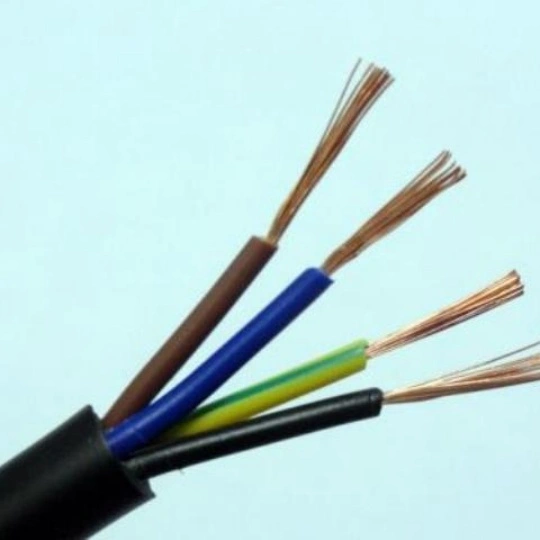
Thermoplastic Compounds: Materials like specially formulated Polyurethane (PUR) or Thermoplastic Polyurethane (TPU) are common favorites. They offer exceptional resistance to cuts, tears, scrapes, and abrasion while remaining flexible. They resist oils and chemicals often present in mines.
Thermoset Compounds: Chlorinated Polyethylene (CPE) or Chlorosulfonated Polyethylene (CSPE – Hypalon® is a well-known type) provide outstanding abrasion resistance, along with excellent resistance to ozone, UV light (for surface applications), chemicals, and high temperatures.
Key Property: These materials aren’t just hard; they are tough. They can absorb impact and resist gouging without cracking or splitting, which is crucial when rocks scrape or impact the cable.
Reinforced Jacket Construction:
Increased Thickness: Mining cable jackets are significantly thicker than standard industrial cables. This extra material provides a greater buffer before abrasion reaches the critical inner components.
Filler Strips/Bedding: Some designs incorporate non-conductive, abrasion-resistant filler material extruded over the inner conductors or cable core before the outer jacket. This creates an additional sacrificial layer and helps maintain a round shape, reducing points where abrasion can focus.
Braid or Tape Reinforcement: In extremely demanding applications, a layer of high-strength synthetic fiber braid (like Aramid – Kevlar®) or robust tape might be applied under the outer jacket. This acts like internal body armor, significantly boosting cut and tear resistance without sacrificing flexibility.
Protection at Critical Points:
Connectors: Abrasion often starts where cables connect to equipment or where stress is concentrated. Mining-grade connectors feature robust, overmolded strain relief boots made from the same tough materials as the cable jacket. These boots seamlessly transition from the cable to the connector, eliminating pinch points and providing a smooth, abrasion-resistant surface at this vulnerable junction.
Rigorous Testing Standards:
Mining cables are built to meet stringent international and regional standards (like MSHA in the US, CAN/CSA in Canada, IEC, or specific mining operator specs). These standards mandate specific abrasion resistance tests (e.g., dragging cables over abrasive surfaces under load, impact tests) that the cables must pass to be certified for use underground or in surface mines.
In Summary:
Mining cable assemblies resist rock abrasion through a multi-layered defense:
Specialized Jacket Materials: Using ultra-tough thermoplastics (PUR, TPU) or thermosets (CPE, CSPE) that resist cuts, tears, and scraping.
Robust Construction: Featuring thicker jackets, internal filler/bedding layers, and sometimes embedded braids for reinforcement.
Integrated Strain Relief: Protecting vulnerable connection points with overmolded boots.
Proven Performance: Adherence to demanding industry abrasion resistance testing standards.
This combination ensures the cable can survive the punishing mining environment, minimizing downtime, safety hazards, and costly replacements caused by rock abrasion. When selecting mining cables, prioritize those explicitly designed and certified for abrasion resistance in mining applications.
Heavy-duty cables are the lifelines of numerous industries, from power generation and transmission to manufacturing, construction, and transportation. These cables are designed to carry high currents, withstand extreme environmental con...
In industries ranging from automotive to telecommunications, standardized cable assemblies have become a cornerstone for balancing performance, scalability, and cost efficiency. By minimizing custom designs and consolidating specificati...
In the complex web of industrial operations, industrial cables serve as the lifeline, ensuring the smooth transmission of power and signals. For enterprises, when selecting between standard and premium industrial cables, understanding t...
IntroductionCable accessories are critical components in electrical and communication systems, ensuring safe, efficient, and reliable transmission of power or data. Whether you’re an engineer, contractor, or DIY enthusiast, underst...
IntroductionThe global shift toward renewable energy is accelerating, driven by climate goals, technological advancements, and government incentives. As solar, wind, and energy storage projects expand, the demand for specialized cable ...
In the backbone of modern industrial operations—from manufacturing plants and power stations to oil refineries and data centers—industrial cables serve as the invisible lifelines that transmit power, data, and control signals. Without p...
Faulty cable assemblies are the hidden gremlins of industrial operations. They bring production lines to a standstill, cause costly downtime, and create potentially hazardous situations. Effective troubleshooting is essential. This guid...
Industrial cables are vital for the operation of industrial equipment. However, in dusty environments, their performance and lifespan are severely threatened. Without proper maintenance, it may lead to equipment failure, production inte...
In recent decades, the global push toward carbon neutrality and sustainable development has propelled the rapid growth of renewable energy sources (RES), including wind, solar, hydropower, and biomass energy. As these sectors expand, th...
Heavy machinery is the backbone of industries like construction, mining, port logistics, and manufacturing. From excavators and bulldozers to cranes and conveyor systems, these machines operate under extreme conditions—constant vibratio...
In the intricate web of modern industrial operations, the role of cables in ensuring seamless power transmission and data communication cannot be overstated. Among the various types of cables available, armored industrial cables have em...
Selecting the right industrial cable gauge is critical to avoiding equipment failure, safety hazards (such as overheating or short circuits), and inefficient energy transmission. Unlike residential cables, industrial applications involv...
1. Clarify the Application & Environment First
Before discussing wire gauge or connector types, define the operating context. Many industrial cable assembly failures stem from vague requirements. A clear project scope prevents r...
High-speed bottling lines are engines of productivity, but their demanding environment – constant motion, vibration, moisture, and potential chemical exposure – poses significant challenges for critical cabling. Downtime caused by cable...
Wind energy is a cornerstone of the global transition to renewable power, and wind farms—both onshore and offshore—are critical to meeting clean energy targets. However, the harsh environments in which wind turbines operate, particularl...
In the complex landscape of industrial operations, industrial cables serve as the vital nervous system, connecting machinery, transmitting power, and enabling data flow across production lines, manufacturing facilities, and critical inf...
Industrial cable assemblies are critical components in demanding applications, from aerospace and automotive systems to oil and gas exploration and outdoor telecommunications. Exposure to extreme high or low temperatures can severely im...
Industrial cable assemblies are the vital arteries powering machinery, automation systems, and critical infrastructure. When damage occurs, facilities face a crucial decision: repair or replace? The answer isn’t always straightforward a...
Selecting compliant cable assemblies is critical for ensuring safety, performance, and adherence to industry standards. Whether you’re working in electronics, automotive, aerospace, or industrial applications, follow these steps to choo...
In industrial settings, environmental conditions are often far from ideal. Factories, mining sites, oil and gas fields, and outdoor infrastructure projects expose cabling systems to extreme temperatures, moisture, chemical corrosion, ph...
In today’s fast-paced technological landscape, industries demand cables that are not only high-performing but also adaptable to evolving needs. Enter modular design—a game-changing approach revolutionizing cable production. This articl...
In applications where failure is not an option, such as military operations, aerospace systems, and certain industrial scenarios, military-grade coaxial cables are the go-to solution. These cables are engineered to meet the most demandi...
Introduction
The world’s infrastructure is aging rapidly, and one of the most overlooked yet critical components is cable systems. From power grids to telecommunications networks, outdated cables pose significant risks, including ser...
FRS specializes in providing industrial-grade Ethernet cable assemblies for PLCs, robots, HMIs, and Industry 4.0 equipment. Our robust components merge standard Ethernet principles with durable connectors, making them ideal for automate...
In 2026, industrial systems are more complex and densely packed with electronics than ever. As a result, shielded industrial cable assembliesare no longer just passive links; they are critical system components that determine equipment ...
Industrial cable assemblies are critical components in manufacturing, automation, and heavy machinery. Choosing the right ones—especially those certified by Underwriters Laboratories (UL)—ensures safety, reliability, and compliance. Thi...
As 5G-enabled industrial automation pushes factories toward higher speeds, more sensors, and harsher operating conditions, the reliability of every physical connection is under unprecedented pressure. Chemical resistant industrial cable...
In high-precision machine vision applications, even a minor cable issue can lead to image artifacts, data loss, and costly downtime. As resolutions, frame rates, and system complexity increase, the Multi-layer shielding Camera Link cabl...
Recent advancements in high-voltage cable testing reveal a global regulatory shift towards stricter standards. With major economies implementing upgraded testing protocols, the power infrastructure sector faces both challenges and oppor...
In industries where extreme heat is a constant challenge—from manufacturing plants to renewable energy systems—cable failures can lead to catastrophic consequences. A groundbreaking advancement in high-temperature (high-temp) cable tech...
IntroductionIndustrial cable assemblies are critical components in power distribution, manufacturing, and infrastructure projects. Ensuring their safety, reliability, and longevity requires adherence to globally recognized standards lik...
In the complex and demanding landscape of industrial operations, every component plays a critical role in ensuring seamless functionality, safety, and efficiency. Among these essential components, industrial cable connectors stand out a...
Electromagnetic compatibility (EMC) shielding is critical for ensuring reliable performance of industrial cables in environments plagued by electromagnetic interference (EMI). Whether in manufacturing plants, power grids, or automation ...
When designing or upgrading electronic systems, industrial machinery, or communication networks, selecting the right cable assembly is critical. A poorly chosen cable assembly can lead to system failures, safety risks, and costly downti...
In a smart factory, the network of industrial Ethernet, fieldbus, sensors, actuators, robots, and servo systemsis only as reliable as the cables connecting them. Downtime in such environments doesn’t just stop a single machine—it ...
New energy cables (e.g., electric vehicle charging cables, in-vehicle high-voltage cables, and renewable energy system cables) must meet the following specialized technical requirements:
1. Electrical PerformanceHigh Voltage Capac...
In the high-stakes environment of modern industrial automation, the difference between seamless production and catastrophic downtime often comes down to a single component: the connection. While controllers, sensors, and actuators get m...
High-voltage cable assemblies are critical components in industries like energy transmission, renewable energy, manufacturing, and infrastructure. Ensuring these cables meet stringent technical requirements is essential for safety, effi...
In modern factory automation, reliable connectivity is non-negotiable. The new IP67 industrial cable assemblies with M12-RJ45 connectorsare engineered to provide robust, dust-tight, and waterproof connections for industrial Ethernet and...
In food processing plants, maintaining stringent hygiene standards is non-negotiable. Equipment must withstand rigorous sanitation protocols, including high-pressure washdowns, extreme temperatures, and exposure to corrosive chemicals. ...
Heavy machinery cable assemblies are robust, high-performance connectivity solutions engineered to meet the demanding requirements of industrial and heavy-duty applications. Designed for durability, reliability, and optimal performance in.
Meta Description: Discover the ultimate Protective Cable Kit designed to safeguard your cables from wear, tangles, and damage. Perfect for home, office, and industrial use. Shop now for long-lasting cable management!
Protecti.
Contact Us
Feel free to reach out to us for any inquiries or orders.