In today’s fast-paced technological landscape, industries demand cables that are not only high-performing but also adaptable to evolving needs. Enter modular design—a game-changing approach revolutionizing cable production. This article explores how modular design addresses critical challenges in manufacturing, enhances flexibility, and delivers solutions that users actually want.
Why Modular Design Matters in Cable Production
Modular design breaks down complex systems into interchangeable, standardized components. For cable manufacturing, this means creating customizable, scalable products that can be easily reconfigured or upgraded. Here’s why this approach is gaining traction:
Faster Customization
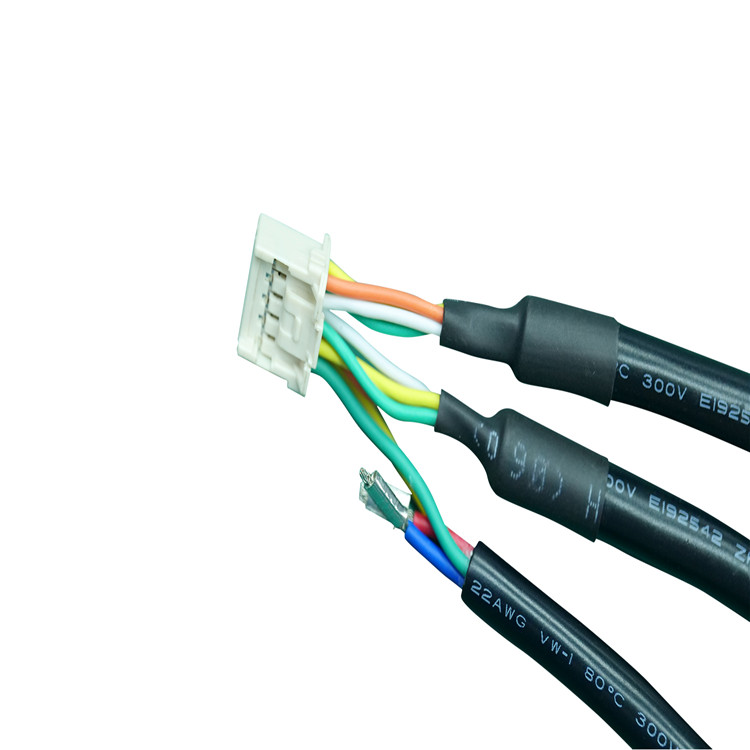
Traditional cables often require entirely new designs for specific applications, leading to delays and higher costs. Modular cables use pre-engineered components (connectors, sheaths, conductors) that can be mixed and matched.
Example: A robotics company can quickly assemble cables with varying lengths, shielding, or connector types to suit different machines.
Cost-Effective Scalability
Modular systems reduce waste by reusing components across product lines. Manufacturers streamline inventory and cut R&D expenses.
Benefit: Startups and SMEs can scale production without massive upfront investments.
Simplified Maintenance
Faulty sections of modular cables can be replaced without discarding the entire unit, lowering downtime and repair costs.
Key Applications Driving Demand
Modular cables are solving real-world problems across industries. Highlight these high-search-volume use cases:
1. Data Centers and Networking
User Need: Rapid deployment of high-speed, high-bandwidth connections.
Modular Solution: Plug-and-play fiber optic or Ethernet cables with interchangeable connectors (e.g., LC, SC, RJ45) simplify upgrades to 10G/40G/100G networks.
Sunlight is a major enemy of outdoor industrial cable assemblies. Ultraviolet (UV) radiation can break down materials over time, causing jackets to crack, discour, become brittle, and fail prematurely. This leads to safety hazards...
Mineral-Insulated (MI) cables are a specialized type of electrical cable renowned for their exceptional durability and safety features, making them indispensable in various high-demand industries. Unlike traditional cables that rely on ...
The development and operation of a modern medical device involve a complex interplay of cutting-edge technology, stringent safety regulations, and demanding environmental conditions. Off-the-shelf cable assemblies simply cannot meet th...
Absolutely. Yes, chemical resistant industrial cable assemblies can be extensively customizedto meet specific industrial needs.
Generic off-the-shelf cables often fail prematurely in aggressive environments because they are not engin...
In the complex ecosystem of industrial operations, electrical systems serve as the backbone that powers machinery, transmits critical data, and ensures seamless coordination between components. Among the countless elements that constitu...
In the complex and demanding landscape of industrial operations, every component plays a critical role in ensuring seamless productivity, safety, and longevity. Among these components, durable industrial cable stands out as an unsung he...
When selecting industrial cables, reliability isn’t just a preference—it’s a necessity. Industrial environments are harsh, with exposure to extreme temperatures, chemicals, mechanical stress, and electrical hazards. The right certificat...
In the ever – evolving world of high – definition video, the demand for flawless 4K and 8K video transmission has become a top priority for both consumers and professionals. Whether you’re setting up a home theater wit...
Mining operations are known for their harsh and demanding environments, where equipment and components face extreme conditions. Among the crucial components, industrial cables play a vital role in ensuring the smooth and safe operation ...
Choosing reliable industrial cable assemblies is critical for safety, performance, and compliance. Here’s a clear guide to essential certifications, ensuring your cables meet stringent industry standards:
UL / cUL (Underwriters Lab...
In industrial settings, environmental conditions are often far from ideal. Factories, mining sites, oil and gas fields, and outdoor infrastructure projects expose cabling systems to extreme temperatures, moisture, chemical corrosion, ph...
In the high-stakes world of industrial automation, your machinery is only as reliable as its nervous system. Industrial cable assembliesare the critical link transmitting power and data across your facility. Yet, they are often the most...
In the relentless pursuit of efficiency and cost-saving within automotive manufacturing, the temptation to use cheaper, non-compliant industrial cable assemblies can arise. This is a dangerous gamble with serious consequences. Understan...
From vast wind farms to sprawling solar arrays, renewable energy systems demand rugged, reliable connectivity. Industrial cable assemblies are the unsung heroes ensuring these critical facilities generate clean power efficiently and saf...
Industrial cables are the “nervous system” of modern manufacturing, energy, and infrastructure—powering machinery, transmitting data, and connecting critical systems. Yet, one question often arises for engineers, procurement...
In the fast-paced world of modern industry—where automated machinery runs 24/7, renewable energy systems feed power to grids, and logistics networks move millions of products daily—industrial cables are the unsung backbone of operations...
Industrial cables are the backbone of power transmission in manufacturing facilities, refineries, and large-scale infrastructure projects. The maximum current an industrial cable can safely carry—referred to as “ampacity”—is...
Industrial cables are widely used in dynamic environments—such as robotic joints, sliding conveyors, and portable industrial devices—where repeated bending, twisting, or flexing is unavoidable. Poor flexibility can lead to insulation cr...
In the global industrial supply chain, the European Union (EU) market stands out as a high-standard, high-value arena that demands strict compliance with safety, health, and environmental regulations. For manufacturers and suppliers of ...
The cable industry is experiencing a seismic shift as eco-conscious consumers increasingly prioritize sustainability. Brands that have adopted green certifications, such as Energy Star, RoHS, or TCO Certified, are reporting significant ...
The global transition to renewable energy is gaining momentum, yet experts warn that outdated infrastructure remains a critical bottleneck. Among the most pressing needs is the rapid adoption of green cables—environmentally friendly ele...
In industrial automation, Programmable Logic Controllers (PLCs) serve as the “brain” of control systems, orchestrating machinery, processes, and data flow across factories. Yet, even the most advanced PLCs depend entirely on...
Introduction
In an era where electromagnetic pulse (EMP) threats loom large—whether from natural solar flares or man-made weapons—the military’s increasing orders for EMP-shielded cables underscore their vital role in safeguarding cr...
The Critical Need for Safety in Mining Operations
The mining industry faces unique electrical hazards due to flammable gases, combustible dust, and volatile atmospheres. Traditional cabling systems pose ignition risks, accounting for...
The shift to new energy vehicle (NEV) industrial cable assembliesis being defined by one critical factor: the rise of liquid-cooled technologyfor fast charging. As the industry moves toward 800V architectures and megawatt-level charging...
In today’s interconnected industrial landscape, electromagnetic interference (EMI) poses a significant threat to the reliability and performance of cable assemblies. From factory automation to power distribution systems, EMI can disrupt...
In applications where failure is not an option, such as military operations, aerospace systems, and certain industrial scenarios, military-grade coaxial cables are the go-to solution. These cables are engineered to meet the most demandi...
In industries ranging from automotive manufacturing to marine engineering, and even in everyday outdoor electrical setups, waterproof cable connectors play a pivotal role in ensuring reliable electrical connections while safeguarding ag...
In industries ranging from oil and gas to pharmaceuticals, chemical-resistant cable assemblies are critical components that ensure safety, reliability, and longevity in harsh environments. Exposure to aggressive chemicals, extreme tempe...
In modern factory automation, reliable connectivity is non-negotiable. The new IP67 industrial cable assemblies with M12-RJ45 connectorsare engineered to provide robust, dust-tight, and waterproof connections for industrial Ethernet and...
1. Introduction to Industrial Cable Insulation Materials
Industrial cable insulation materials play a pivotal role in ensuring the safe and efficient transmission of electrical power across various sectors. These materials act as a p...
In 2026, industrial systems are more complex and densely packed with electronics than ever. As a result, shielded industrial cable assembliesare no longer just passive links; they are critical system components that determine equipment ...
Introduction
In heavy industries like steel manufacturing, unexpected downtime can cost thousands per minute. XYZ Steel Plant recently achieved a 37% reduction in production interruptions by implementing custom-engineered cables – a ...
When designing or upgrading systems that rely on cable assemblies, engineers and procurement teams often face a critical choice: customized or standardized solutions. Both options have distinct advantages, but understanding their diffe...
Automated Guided Vehicles (AGVs) represent a cornerstone of modern industrial automation, driving efficiency in logistics, manufacturing, and warehousing. While navigation systems, batteries, and control software often capture the spotl...
As robotics and high-flex automation evolve, the need for reliable, high-flex Mini-change industrial cable assemblies has never been greater. This 2026 guide explores the essential features, applications, and selection criteria for Mini...
The Hidden Hero of Solar Energy
While solar panels get all the attention, the real game-changer in modern solar farms might be running underground. New-generation cables are helping solar installations achieve what was previously tho...
Corrosion-Resistant Cable Connectors: Reliable Connectivity for Harsh Environments
Ensure uninterrupted performance in the toughest conditions with our corrosion-resistant cable connectors. Designed for durability and longevity, these.
Meta Description: Discover the ultimate Protective Cable Kit designed to safeguard your cables from wear, tangles, and damage. Perfect for home, office, and industrial use. Shop now for long-lasting cable management!
Protecti.
Contact Us
Feel free to reach out to us for any inquiries or orders.