In demanding industrial sectors like food processingand medical equipment manufacturing, cable reliability is not just a preference—it’s a critical safety and compliance requirement. This article explores whether PUR (Polyurethane) industrial cable assembliesmeet the rigorous standards of these industries.
What Are PUR Industrial Cable Assemblies?
PUR cable assemblies are constructed with a polyurethane outer sheath, prized for its exceptional mechanical and chemical resilience. Key characteristics include:
Superior Abrasion Resistance: Withstands constant friction from drag chains, robotic arms, and moving parts.
Excellent Chemical Resistance: Highly resistant to oils, greases, many solvents, and cleaning agents.
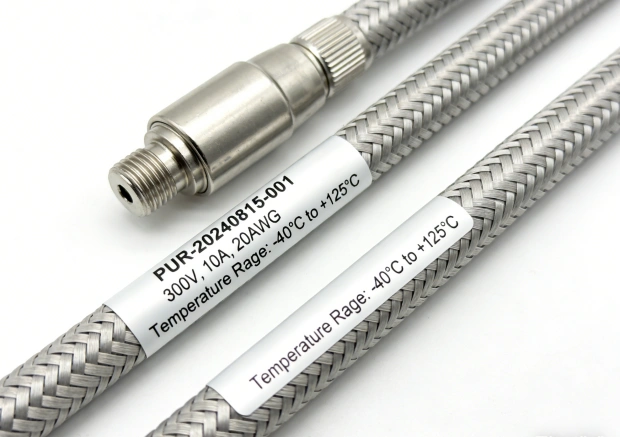
Wide Temperature Tolerance: Performs reliably in extreme temperatures, typically from -40°C to +90°C, with some special grades reaching +125°C.
High Flexibility & Torsion Resistance: Ideal for dynamic applications requiring millions of bending cycles.
Halogen-Free Options: Reduces toxic smoke emission during a fire, a key safety feature.
These properties make PUR a strong candidate for harsh industrial environments. But are they suitable for the uniquely strict worlds of food and medical applications?
Suitability for Food Processing Equipment
The food and beverage industry presents a “perfect storm” of challenges for cables: frequent high-pressure washdowns, corrosive cleaning chemicals, extreme temperatures, and the paramount need for hygiene to prevent contamination.
Here’s how PUR cable assembliesperform in this environment:
Key Advantages
Exceptional Resistance to Cleaning Agents: PUR’s chemical resistance is a major advantage, standing up to fats, oils, and the aggressive acids and alkalis used in daily sanitation without degrading.
Withstands Thermal Shock: The material handles the thermal shock of moving from cold storage or refrigerated environments directly into hot water or steam cleaning cycles.
Hygienic Surface: A smooth, non-porous PUR jacket prevents bacterial growth and makes cleaning more effective, a core requirement for food safety.
Mechanical Durability: In automated facilities with drag chains and robotic arms, PUR’s superior abrasion and flex life ensure long-term reliability, reducing downtime.
Critical Compliance Considerations
While mechanically and chemically suitable, using standard industrial PUR cables in food processing carries risks. Food-safe PUR cable assembliesare a specialized product and must meet specific regulatory requirements:
Material Compliance: The PUR formulation must be certified for food contact. This often means compliance with regulations like the EU’s Framework Regulation (EC) No 1935/2004and specific measures like Plastic Regulation EU 10/2011, which limit the migration of substances from the cable material into food.
Additives and Plasticizers: The cable must be free from substances like certain phthalates that are restricted for food-contact applications. All additives must be on the relevant approved lists.
Migration Testing: Compliant cables are tested to ensure that any substances that could migrate are below strict limits. This includes total migration and specific migration limits (SML) for substances like Bisphenol A.
Proper Labeling: Cables intended for food contact must be supplied with a Declaration of Compliance (DoC) and appropriate labeling (e.g., the “glass and fork” symbol in the EU).
Conclusion for Food Processing: Standard industrial PUR cables are mechanically excellent but not automatically suitable. You must source specifically designed and certified food-grade PUR cable assembliesfrom manufacturers who can provide full material traceability and compliance documentation.
Suitability for Medical Equipment
Medical devices have their own set of stringent requirements, focused on patient and operator safety, signal integrity, and biocompatibility. Key standards include IEC 60601(safety and essential performance) and ISO 10993(biological evaluation of medical devices).
Key Advantages
Reliable Signal Integrity: PUR’s excellent dielectric properties and compatibility with robust shielding (e.g., braided shields) make it ideal for critical applications like patient monitoring, imaging, and diagnostic equipment where signal clarity is vital.
Durability in Demanding Environments: In hospital settings, cables are subjected to repeated flexing, rolling over, and frequent cleaning with harsh disinfectants. PUR’s abrasion and chemical resistance ensure a longer service life.
Halogen-Free Formulations: Many medical-grade PUR cables are halogen-free, minimizing the emission of toxic and corrosive fumes in the unlikely event of a fire—a critical safety consideration.
Sterilization Resilience: Certain PUR formulations can withstand the rigors of various sterilization methods, including chemical disinfectants and even some forms of radiation, depending on the specific compound.
Critical Compliance Considerations
Just as with food processing, using a standard industrial PUR cable in a medical device is not acceptable. Medical-grade PUR cable assemblies must meet a higher bar:
Biocompatibility (ISO 10993): If the cable or its components could come into direct or indirect contact with a patient, the materials must be tested according to ISO 10993 standards. This includes evaluations for:
Cytotoxicity
Sensitization
Irritation or Intracutaneous Reactivity
Systemic Toxicity
Hemocompatibility (for blood-contacting devices)
Electrical Safety (IEC 60601-1): The cable assembly must be an integral part of the device’s overall safety system, ensuring proper creepage and clearance distances, insulation integrity, and safe leakage current levels.
EMC/EMI Shielding: To prevent the cable from interfering with other sensitive medical equipment (or vice versa), robust shielding is often a mandatory requirement under IEC 60601-1-2.
Material Purity: The PUR compound must be free from leachable substances and allergens, with full material declarations available from the supplier.
Conclusion for Medical Equipment: Standard industrial PUR cables are not suitable for medical applications. You need medical-grade PUR cable assembliesfrom a manufacturer experienced in the regulatory landscape and able to provide the necessary biocompatibility and electrical safety documentation.
PUR vs. Other Cable Jacket Materials (PVC & TPE)
To understand PUR’s position, it’s helpful to compare it to other common jacket materials like PVC and TPE.
Feature
PVC (Polyvinyl Chloride)
PUR (Polyurethane)
TPE (Thermoplastic Elastomer)
Flexibility
Moderate, stiffens in cold.
Excellent, even at low temps.
Very good, similar to PUR.
Abrasion Resistance
Moderate.
Excellent.
Good.
Oil & Chemical Resistance
Poor to moderate.
Excellent.
Good, but generally less than PUR.
Temperature Range
Narrow (e.g., -20°C to +70°C).
Wide (e.g., -40°C to +90°C).
Wide, similar to PUR.
Halogen Content
High.
Can be halogen-free.
Often halogen-free.
Lifespan in Harsh Conditions
Short.
Very long.
Long.
Cost
Low.
High.
Moderate to High.
Key Takeaway: For static, indoor, and non-critical applications, cost-effective PVC is often sufficient. However, for dynamic, harsh, or regulated environments like food processing and medical equipment, the superior performance of PUR (or sometimes TPE) is essential despite the higher initial cost.
Best Practices for Implementation
To ensure success, follow these guidelines when specifying PUR cable assemblies for food or medical applications:
Define the Environment: Clearly document all conditions: temperature range, exposure to chemicals, mechanical stress (flexing, torsion), and any direct or indirect contact with food or patients.
Specify Compliance Requirements: Don’t just ask for “food-safe” or “medical-grade.” State the exact regulations and standards required (e.g., EU 10/2011, FDA CFR 21, ISO 10993-x, IEC 60601-1).
Partner with Specialists: Choose suppliers with proven experience and a portfolio in your specific industry. They should be able to provide necessary certifications and test reports without hesitation.
Validate the Complete Assembly: Remember that the entire assembly—including connectors, potting materials, and strain reliefs—must also meet the relevant industry standards.
Plan for Installation and Maintenance: Use correct bend radii, secure strain relief properly, and train maintenance staff on inspection procedures to maximize the cable’s service life.
Final Verdict: Suitability of PUR Cable Assemblies
Yes, specialized, certified PUR industrial cable assemblies are exceptionally well-suited for both food processing and medical equipment applications.
Their superior mechanical and chemical properties provide an ideal foundation. However, the critical distinction lies in compliance. For these sensitive industries, you must move beyond “industrial grade” and source purpose-built, certified food-grade or medical-grade PUR cables. By partnering with knowledgeable suppliers and demanding full regulatory documentation, you can leverage the durability of PUR while ensuring the highest levels of safety and compliance.
In numerous industrial settings, from outdoor power transmission to manufacturing facilities with exposure to sunlight, industrial cables are constantly exposed to ultraviolet (UV) radiation. This raises a crucial question: Why is UV re...
Outdoor environments demand robust connectivity solutions that withstand harsh conditions like dust, moisture, extreme temperatures, and mechanical stress. IP67/IP68-rated cable assemblies are engineered to meet these challenges, offeri...
Industrial cables are the lifelines of modern industrial systems, responsible for transmitting power, signals, and data in a wide range of harsh and complex environments. One notable feature of these cables is the variety of jacket mate...
In the relentless pursuit of efficiency and cost-saving within automotive manufacturing, the temptation to use cheaper, non-compliant industrial cable assemblies can arise. This is a dangerous gamble with serious consequences. Understan...
In the ever – evolving world of high – definition video, the demand for flawless 4K and 8K video transmission has become a top priority for both consumers and professionals. Whether you’re setting up a home theater wit...
Industrial cables are the backbone of modern infrastructure, powering manufacturing plants, energy grids, telecommunications networks, and construction projects worldwide. Composed of high-value metals (primarily copper and aluminum) an...
In industrial operations, the performance of cables directly affects the stability, safety, and efficiency of the entire production system. Choosing the right industrial cable brand requires more than just looking at prices; it demands ...
Industrial printers, widely used in manufacturing, logistics, and packaging sectors, rely heavily on high-performance cable assemblies to ensure stable data transmission, reliable power supply, and consistent operational efficiency. The...
Industrial cables are widely used in dynamic environments—such as robotic joints, sliding conveyors, and portable industrial devices—where repeated bending, twisting, or flexing is unavoidable. Poor flexibility can lead to insulation cr...
Understanding IP Ratings: The Global Standard
Industrial cable assemblies rely on Ingress Protection (IP) ratings to define their environmental resistance. The IP code, established by international standard IEC 60529, consists of two...
In high-performance automation, CE certified industrial cable assembliesare not just a compliance checkbox. They are a foundational element for ensuring safety, uptime, and seamless market access for your robots and automated guided veh...
In harsh industrial environments, standard cables often fail due to exposure to oils, coolants, acids, and cleaning agents. Chemical resistant industrial cable assembliesare engineered to maintain performance and lifespan where ordinary...
In industrial operations, the selection of cables is of great significance as it directly affects the safety, efficiency and environmental performance of the entire system. Among various cable types, halogen-free industrial cables have ...
In the complex landscape of industrial operations, where precision, uptime, and safety are paramount, reliable industrial cable assemblies serve as the unsung heroes. These assemblies are the critical link connecting machinery, sensors,...
In laboratory environments, where precision, safety, and reliability are paramount, the role of industrial cables is often underappreciated—until something goes wrong. These cables serve as the lifeline of critical equipment, powering s...
In the era of Industry 4.0, high-speed and reliable data transmission has become the lifeblood of industrial operations. From smart factories and automated production lines to critical infrastructure monitoring, industrial Ethernet cabl...
Industrial cable assemblies are critical components in countless facilities, powering essential machinery and control systems. Their performance during a fire is paramount, not only for minimizing fire spread but crucially for maintaini...
In industrial applications, cable assemblies often encounter extreme temperature conditions. Testing their performance under such circumstances is crucial to ensure reliable operation. This article will guide you through the essential s...
Why is Industrial Cable Certification Necessary for Exports?
In the globalized landscape of industrial trade, industrial cable certification serves as the cornerstone of market compliance, safety assurance, and competitive advantage....
High-power equipment—such as industrial motors, large compressors, furnaces, and heavy machinery—relies on a steady, safe flow of electricity to operate efficiently. But one critical factor often overlooked in their setup is the industr...
In industries where failure is not an option, High Voltage Industrial Cable Assemblies with Wide Temperature Range for Extreme Scenariosare the critical links that keep power and signals flowing. These assemblies are purpose-built to op...
When upgrading heavy machinery, the weakest link is often not the engine or hydraulics, but the cable assemblies connecting sensors, actuators, and control systems. Standard M12 industrial cable assemblies can fail prematurely in high-v...
New energy cables (e.g., electric vehicle charging cables, in-vehicle high-voltage cables, and renewable energy system cables) must meet the following specialized technical requirements:
1. Electrical PerformanceHigh Voltage Capac...
In demanding industrial environments, reliable interconnections are not optional—they are the backbone of your system’s performance and safety. Industrial Cable Assembliesencompass a wide range of engineered cable and wire harness solut...
High-voltage cable assemblies are critical components in industries like energy transmission, renewable energy, manufacturing, and infrastructure. Ensuring these cables meet stringent technical requirements is essential for safety, effi...
Modern mining relies on a complex ecosystem of powerful, critical equipment operating in some of the planet’s most demanding environments. Safely delivering power, control, and data signals through this rugged landscape is paramou...
In today’s fast-paced industrial environments—from automotive assembly lines and warehouse logistics to pharmaceutical packaging—barcode scanners are indispensable tools for tracking assets, streamlining workflows, and ensuring data acc...
In today’s renewable energy sector, project timelines are tighter, budgets are under pressure, and reliability is non-negotiable. Whether you’re connecting solar arrays, wind turbines, or battery energy storage systems (BESS...
In industrial automation, Programmable Logic Controllers (PLCs) serve as the “brain” of control systems, orchestrating machinery, processes, and data flow across factories. Yet, even the most advanced PLCs depend entirely on...
In the complex and interconnected world of industrial systems, the reliable transmission of signals is the lifeblood of operations. From manufacturing plants and power stations to telecommunications networks and transportation systems, ...
In high-throughput industrial automation, even a few minutes of unplanned downtime can cost thousands of dollars. For robotics cells, the weakest link is often not the robot itself, but the industrial automation cable assembliesthat pow...
In industries such as aerospace, automotive, oil and gas, and industrial manufacturing, cable assemblies face extreme conditions, with high temperatures posing a significant challenge. Selecting the right materials and adhering to indus...
In modern factory automation, reliable connectivity is non-negotiable. The new IP67 industrial cable assemblies with M12-RJ45 connectorsare engineered to provide robust, dust-tight, and waterproof connections for industrial Ethernet and...
In the rapidly advancing global robotics industry—covering industrial automation lines, collaborative robots, precision medical robotics, AGV/AMR logistics equipment, and high-precision servo systems—robotics cable assemblies are far mo...
Understanding Industrial Cable Model Naming ConventionsIndustrial cable models follow standardized codes indicating their construction, materials, and capabilities. Key elements include:
Conductor type: CU (copper), AL (aluminum...
Industrial cables serve as the “nerve and blood vessels” of modern manufacturing, power transmission, and automation systems, connecting critical equipment like motors, sensors, and control panels. In industrial environments...
Meta Description: Discover the best materials for cable assemblies in high-temperature environments. Learn about heat-resistant polymers, insulation options, and practical tips for durability and safety.
High-temperature env...
Ensure reliable power transmission and long-lasting performance in the harshest conditions with our High-Temperature Resistant Cable Accessories. Engineered to withstand extreme heat, these premium-grade accessories are designed to prote.
When it comes to electrical systems operating under extreme mechanical and electrical stress, high-load cable terminations are critical components that ensure seamless power transmission, safety, and system longevity. Engineered to .
Contact Us
Feel free to reach out to us for any inquiries or orders.