Industrial Cable Assemblies-Industrial Cable Assemblies factory
In today’s automated factory, the industrial Ethernet cable assembly is the nervous system that connects PLCs, robots, HMIs, and motion controllers. Yet, many engineers and procurement teams still treat these cables as generic commodities—until a line goes down. The truth is that the wrong cable choice can be the single biggest source of unplanned downtime in a modern plant. This guide will walk you through the engineering, compatibility, and manufacturing realities of industrial Ethernet cable assemblies so you can make decisions that actually improve uptime and reduce total cost of ownership.
Standard commercial Ethernet cables (Cat5e/6 patch cords) are designed for office environments: stable temperature, minimal vibration, and low electromagnetic interference (EMI). Industrial environments are the opposite. You’re dealing with:
In this context, a standard RJ45 patch cord can become the weakest link in your automation architecture.
A 2cablethatfailsmayonlycost2 to replace, but the downtime, troubleshooting hours, and lost production can cost thousands. In high-speed networks like EtherCAT, PROFINET IRT, or Ethernet/IP, a single marginal cable can cause:
When you source from an industrial cable assemblies factory, you’re not just buying copper; you’re buying signal integrity engineered for survival.
To navigate the market, you need to understand the alphabet soup of standards that govern these products.
For any serious application, your supplier should build assemblies to IPC/WHMA-A-620requirements. This standard defines what constitutes an acceptable crimp, solder joint, and strain relief. Class 2 is typical for industrial use, while Class 3 is reserved for high-reliability applications (aerospace, medical). A factory that can consistently meet Class 3 is usually overqualified for general automation, which is a good thing.
In North America, UL 2238covers cable assemblies and fittings for industrial control and signal distribution. A cable marked with this shows it has been evaluated for flammability, dielectric strength, and mechanical durability. When a panel shop sees the UL mark, they know the component won’t burn the building down or fail under voltage stress.
The Telecommunications Industry Association (TIA) standard TIA-1005 specifically addresses cabling for industrial premises. It introduces environmental categories (EN1 to EN4) that define temperature range, chemical exposure, and water exposure. If your supplier references TIA-1005, they understand that industrial cabling isn’t just about bandwidth.
Connecting a PLC to a robot isn’t just about making sure the RJ45 clicks into place. It involves understanding the physics of high-speed signaling and the mechanical stresses of automation.
Industrial Ethernet runs at 100 MHz (Fast Ethernet) or 1 GHz (Gigabit). At these frequencies, the cable becomes a transmission line. The characteristic impedance must be consistent—typically 100 Ω. Any discontinuity (a poorly terminated pin, an air gap in the crimp, or a kink in the cable) acts like a speed bump, causing signal reflections. In protocols like EtherCAT or PROFINET IRT, these reflections translate directly into jitter and, eventually, a “Bus Fault”.
Factories are electrically noisy. A servo motor switching on can inject noise onto an unshielded cable, corrupting a data packet. This is why almost all industrial Ethernet cables use some form of shielding:
The shield must be terminated 360° around the connector, not just via a single drain wire. This “360° shield termination” is a hallmark of a quality industrial cable assemblies factory.
A cable in a control cabinet (fixed installation) experiences no movement. A cable in a robot’s wrist (continuous flex) experiences millions of bend cycles. These require different constructions:
Let’s dissect the components that separate a robust assembly from a fragile one.
Cheap cables often use copper-clad aluminum (CCA) to save money. While CCA might pass a continuity test, it has higher DC resistance, which attenuates the signal over distance. Furthermore, aluminum is more brittle and prone to work hardening and fracture under vibration. Industrial-grade cables use solid bare copperfor reliability and performance.
The jacket material dictates environmental survival:
More cables fail at the connector boot than anywhere else. A proper industrial assembly uses molded strain relief that transfers tension from the fragile conductors to the cable jacket. This is often done via overmolding, which encapsulates the connector crimp and boot in a single plastic mold, creating a waterproof and pull-proof joint.
Buying direct from a manufacturer, rather than a distributor, changes the economics and engineering flexibility of your project.
A true factory direct manufacturer controls the process from raw material to finished goods. They draw their own copper wire, extrude their own jackets, and terminate in-house. This vertical integration means they can guarantee consistency and quickly adapt to new requirements. For example, they can adjust extrusion temperatures for different materials (PVC vs. PUR) to prevent micro-cracks that cause premature failure.
Need a special length? A left-angle connector to fit in a tight panel? A hybrid cable combining power and data? Distributors can’t help you; they only sell what’s in the catalog. A factory can build exactly what you need. This often involves creating custom overmolds, which might have a one-time tooling cost but drastically reduce installation time and complexity on the floor.
When you buy factory direct, the cost structure is transparent: copper market price + materials + labor + overhead. This allows you to make intelligent trade-offs. For instance, you might discover that using a slightly more expensive PUR jacket cuts warranty returns by 50%, delivering a lower total cost of ownership (TCO) despite the higher initial unit price.
When specifying or sourcing your next batch of cable assemblies, use this checklist to separate the professionals from the pretenders.
Choosing an industrial Ethernet cable assembly is not a trivial task. It is a critical engineering decision that impacts the stability of your entire automation network. By moving beyond the catalog and understanding the standards, materials, and manufacturing processes involved, you can select a partner—a true industrial cable assemblies factory—that builds reliability into every millimeter of the cable.
When your PLCs and robots communicate flawlessly shift after shift, you’ll know the difference that quality makes. Don’t let a $5 cable be the reason your million-dollar production line stops. Specify smart, buy direct, and build for the long run.
Our factory offers high-quality products at competitive prices
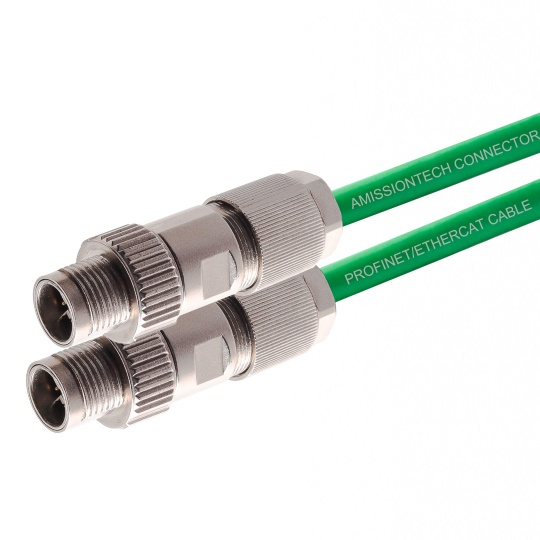
Industrial cable components are the backbone of reliable and efficient connectivity in industrial automation, robotics, and machinery. Engineered to withstand harsh environments while ensuring seamless data transmission and power delivery.
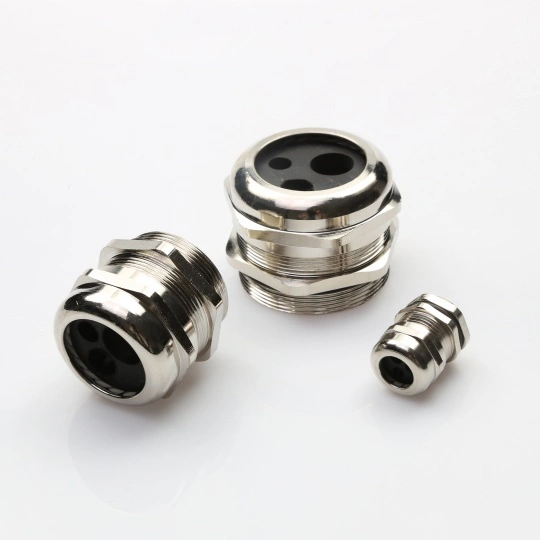
Corrosion-Resistant Cable Connectors: Reliable Connectivity for Harsh Environments Ensure uninterrupted performance in the toughest conditions with our corrosion-resistant cable connectors. Designed for durability and longevity, these.
Feel free to reach out to us for any inquiries or orders.