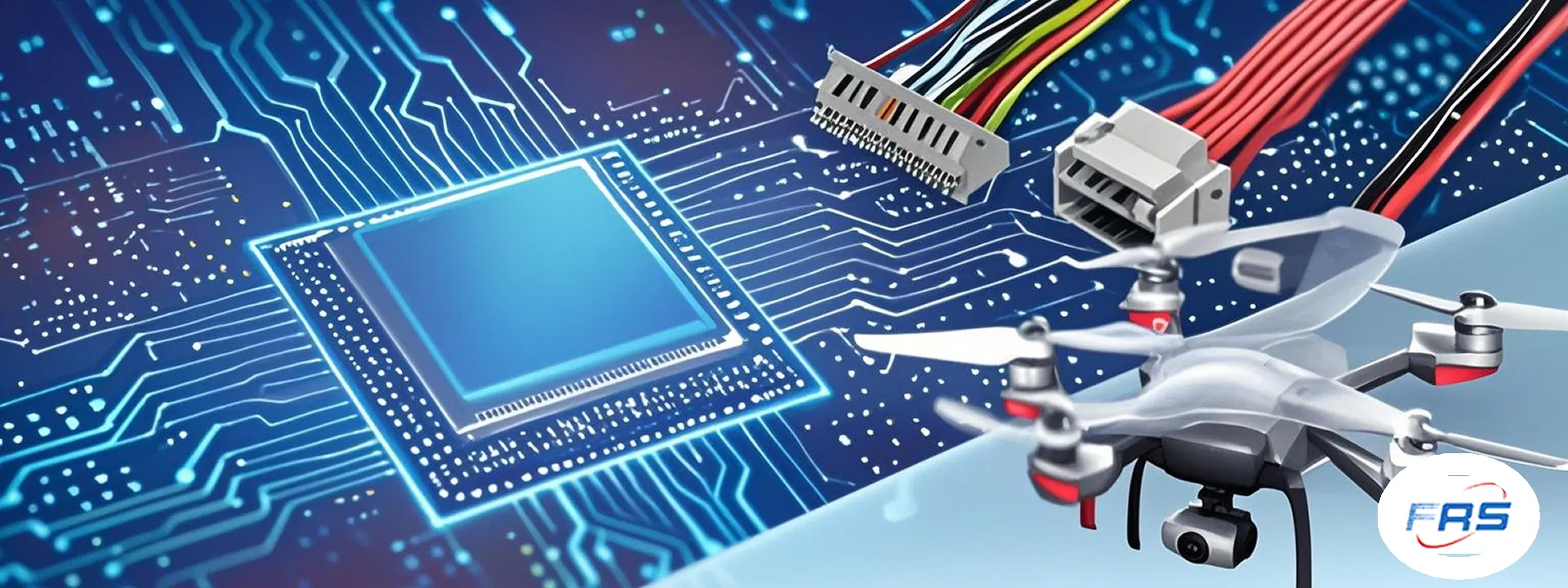
Robots are machines defined by movement. From the precise arcs of welding arms to the dynamic scurrying of mobile platforms and the delicate interactions of collaborative robots (cobots), their joints and axes undergo constant, repetitive motion. This inherent dynamism places extraordinary demands on every component, especially the cables that power, control, and communicate with the robot. Rigid or standard cables simply cannot withstand this environment, making high-flexibility industrial cable assemblies not just preferred, but absolutely essential for reliable robotic operation.
Here’s why high-flex cables are indispensable in robotics:
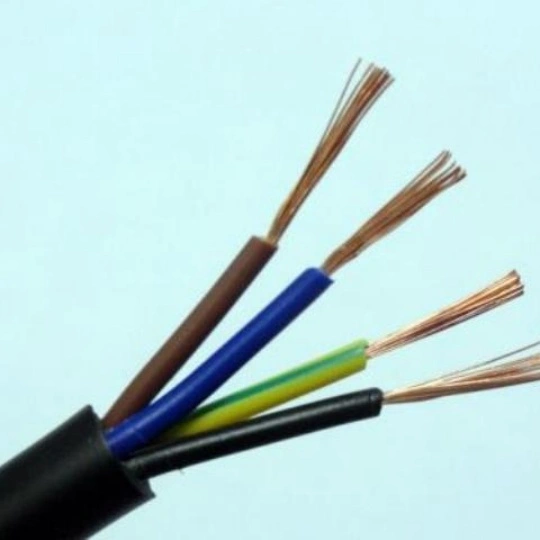
Surviving Millions of Flex Cycles: A single robot arm joint might bend a cable thousands, even millions, of times during its operational lifetime. Standard cables fatigue quickly under this constant flexing. The conductors break, insulation cracks, and failure is inevitable. High-flex cables utilize specially engineered conductors (often fine-stranded or featuring a reverse-bundling construction) and highly elastic insulation materials (like premium TPE or specially formulated PVC) designed to withstand these extreme cyclic bending stresses without cracking or degrading.
Torsion Stability for Rotating Joints: Many robotic joints involve twisting or torsion. Standard cables can easily kink, deform, or experience internal conductor migration under torsion, leading to signal interference or breakages. High-flex robotic cables are specifically designed with torsion-resistant constructions. This might include optimized lay lengths, specialized core bundling, and jackets formulated to resist “corkscrewing” or permanent deformation, ensuring consistent performance even during complex rotary movements.
Tackling Tight Spaces and Complex Paths: Robots operate within confined envelopes, requiring cables to bend tightly around joints, through cable carriers (e.g., drag chains, energy chains), or along intricate arm structures. High-flex cables boast an exceptionally low minimum bend radius compared to their standard counterparts. This allows them to navigate these tight spaces without imposing excessive mechanical stress on the cable or forcing the robot into unnatural positions that compromise its range of motion or accuracy.
Maintaining Electrical Integrity Under Stress: Constant movement isn’t just a physical challenge; it’s an electrical one. Vibration, flexing, and torsion can induce noise (EMI/RFI interference), cause changes in impedance, and lead to signal degradation or data errors in control and communication cables. High-flex assemblies incorporate robust, multi-layer shielding (braided or foil, often combined) that maintains continuous coverage even when the cable is bent or twisted. Coupled with high-quality conductors and stable dielectrics, this ensures critical power transmission and high-speed data signals remain clean and reliable.
Resisting Abrasion and Environmental Hazards: The robotic workspace is rarely pristine. Cables routed along arms or through carriers can rub against surfaces, machinery, or even other cables. They face exposure to coolants, oils, cleaning chemicals, UV light (in some applications), and varying temperatures. High-flex industrial cables feature abrasion-resistant, oil-resistant, and often flame-retardant outer jackets made from durable compounds. This robust physical protection shields the vital internal components from wear, tear, and environmental degradation, vastly extending cable life.
Preventing Failure Points and Downtime: Cable failure in a robot often means catastrophic system downtime – halting production lines, delaying orders, and incurring significant repair costs. Premature cable failure due to flex fatigue, torsion damage, abrasion, or signal loss is a major cause of unplanned downtime. High-flex assemblies directly combat this by being engineered for durability within the specific harsh motion environment of robotics. Their enhanced resilience translates directly into increased reliability, longer operational lifespans, and significantly reduced maintenance interventions and downtime.
Optimizing Performance for High-Speed Movements: Modern robots move faster and more precisely than ever before. Cables must keep pace. High-flex cables, by virtue of their optimized construction and lighter weight potential compared to stiff alternatives, minimize the inertia and drag within cable management systems. This reduces the load on the robot’s motors and allows for smoother, faster, and more precise movements without the cable assembly acting as a limiting factor or causing unwanted vibration.
In essence, the extreme mechanical demands of robotic motion necessitate cables specifically designed to endure. High-flexibility industrial cable assemblies, with their specialized conductors, advanced insulation, protective jackets, robust shielding, and engineered constructions for cyclic bending, torsion, and tight routing, provide the vital resilience needed. They are the lifelines that ensure power flows reliably, signals transmit accurately, and robots operate at peak performance, day in and day out, minimizing costly disruptions in increasingly automated environments. Without them, the reliability, speed, and longevity of robotic systems would be severely compromised.
In the complex and demanding landscape of industrial operations, cable assemblies serve as the “neural network” that ensures the seamless transmission of power and signals. Among the various materials used for cable sheathin...
Industrial cables are the lifelines of modern industrial systems, responsible for transmitting power, signals, and data in a wide range of harsh and complex environments. One notable feature of these cables is the variety of jacket mate...
In the modern industrial landscape, cables are the lifelines of operations—powering machinery, transmitting data, and enabling communication across factories, power plants, and infrastructure projects. However, the rapid growth of indus...
Industrial cables serve as the “nervous system” of manufacturing plants, power grids, mining operations, and logistics hubs—transmitting critical power, data, and control signals to keep equipment running. Unlike residential...
Selecting the right industrial cable gauge is critical to avoiding equipment failure, safety hazards (such as overheating or short circuits), and inefficient energy transmission. Unlike residential cables, industrial applications involv...
While both industrial cables and utility cables serve the fundamental purpose of transmitting electrical power or signals, their design, performance, and application scenarios differ significantly. These distinctions arise from the uniq...
In industrial settings, the flexibility of cables directly impacts installation efficiency, operational reliability, and service life—especially in applications like robotics, automated production lines, and movable machinery. However, ...
PUR industrial cable assemblies are the top choice for harsh, dynamic industrial environments, offering exceptional abrasion resistance, oil resistance, low-temperature flexibility, and long service life under continuous flexing. This g...
In industrial automation, RFID (Radio Frequency Identification) readers play a critical role in asset tracking, inventory management, and process control. However, the performance of RFID readers heavily relies on industrial cable assem...
When selecting industrial cable assemblies, focusing on these 7 core metrics ensures reliability and safety in harsh environments:
1. Current Rating
Determines maximum safe current capacity without overheating.
Example: 10AWG ...
In the complex and demanding landscape of industrial operations, every component plays a critical role in ensuring seamless productivity, safety, and long-term efficiency. Among these components, industrial cables stand out as the invis...
In the harsh world of mining, cables face relentless punishment. Sharp rocks, heavy equipment, constant movement, and abrasive dust create an environment where ordinary cables fail quickly. Mining cable assemblies, however, are engineer...
In recent decades, the global push toward carbon neutrality and sustainable development has propelled the rapid growth of renewable energy sources (RES), including wind, solar, hydropower, and biomass energy. As these sectors expand, th...
In industrial settings, the choice of electrical cables directly impacts operational efficiency, safety, and long-term costs. Among the most common options are copper and aluminum cables, each with distinct properties that make them sui...
In the fast-paced and highly precise world of industrial automation, every component plays a pivotal role in ensuring seamless operations, reliable data transmission, and long-term durability. Among the myriad of connectivity solutions,...
Old industrial cables, which have served their purpose in factories, power plants, and various industrial facilities, often end up as waste. However, their disposal is not a matter to be taken lightly. Improper handling can lead to seve...
Lead time for custom industrial cable assemblies is a critical factor influencing project schedules and operational continuity. Unlike off-the-shelf solutions, these complex components are built to precise specifications, requiring coor...
Industrial cables are the lifelines of manufacturing plants, power grids, oil refineries, and other heavy-duty operations. Their reliable performance is critical to avoiding costly downtime, safety hazards (such as electrical fires or e...
High-pressure environments—such as deep-sea oil drilling platforms, high-pressure chemical reactors, and subsea exploration systems—pose unique challenges to industrial cables. Unlike standard industrial settings, these environments exp...
From vast wind farms to sprawling solar arrays, renewable energy systems demand rugged, reliable connectivity. Industrial cable assemblies are the unsung heroes ensuring these critical facilities generate clean power efficiently and saf...
New energy cables (e.g., electric vehicle charging cables, in-vehicle high-voltage cables, and renewable energy system cables) must meet the following specialized technical requirements:
1. Electrical PerformanceHigh Voltage Capac...
In industrial automation, Programmable Logic Controllers (PLCs) serve as the “brain” of control systems, orchestrating machinery, processes, and data flow across factories. Yet, even the most advanced PLCs depend entirely on...
As cyberattacks grow more sophisticated, organizations are rethinking physical infrastructure security. Shielded cables, once a niche solution for industrial settings, are now surging in demand as businesses prioritize holistic cybersec...
Industrial cable assemblies are the backbone of modern manufacturing, automation, and connectivity. As industries evolve, so do the demands for smarter, more durable, and adaptable solutions. To stay ahead, businesses must understand th...
In modern manufacturing, vision systems have become indispensable for tasks like quality inspection, part positioning, and process monitoring. These systems rely on high-speed data transmission between cameras, light sources, controller...
The Backbone of Reliability
In an era where downtime costs enterprises an average of $5,600 per minute (Gartner 2024), [Company Name]’s data center has achieved an industry-leading 99.9% uptime through revolutionary cable infra...
Industrial cable connectors are essential components in various industrial systems, enabling the reliable transmission of power, signals, and data. There are several common types, each designed to meet specific application requirements....
The rapid growth of the electric vehicle (EV) industry is driving unprecedented advancements in cable technology. As automakers and charging infrastructure providers race to meet global demand, innovative cable designs and materials are...
The shift to new energy vehicle (NEV) industrial cable assembliesis being defined by one critical factor: the rise of liquid-cooled technologyfor fast charging. As the industry moves toward 800V architectures and megawatt-level charging...
In modern smart factories, M12 industrial cable assembliesare the backbone of sensor networks, drives, and industrial Ethernet. However, the rise of predictive maintenanceand intelligent monitoringis transforming how these cables are sp...
1. Cosmic Radiation: A Silent Threat
Space is filled with high-energy particles from solar flares and galactic cosmic rays. Standard cables degrade under prolonged exposure, leading to:
Signal interference – Disrupted data transm...
In today’s fast-paced technological landscape, industries demand cables that are not only high-performing but also adaptable to evolving needs. Enter modular design—a game-changing approach revolutionizing cable production. This articl...
As 5G-enabled industrial automation pushes factories toward higher speeds, more sensors, and harsher operating conditions, the reliability of every physical connection is under unprecedented pressure. Chemical resistant industrial cable...
Electromagnetic compatibility (EMC) shielding is critical for ensuring reliable performance of industrial cables in environments plagued by electromagnetic interference (EMI). Whether in manufacturing plants, power grids, or automation ...
In today’s competitive business landscape, every investment counts. Whether you’re operating in the automotive, aerospace, medical, or telecommunications industry, the components you choose directly impact your bottom line, operational ...
Why Subsea Cables Matter for Data Centers
Over 95% of international data travels through subsea cables – hair-thin fiber optics spanning ocean floors. These cables directly power cloud services by connecting geographically dispersed ...
In food processing plants, maintaining stringent hygiene standards is non-negotiable. Equipment must withstand rigorous sanitation protocols, including high-pressure washdowns, extreme temperatures, and exposure to corrosive chemicals. ...
Understanding Industrial Cable Model Naming ConventionsIndustrial cable models follow standardized codes indicating their construction, materials, and capabilities. Key elements include:
Conductor type: CU (copper), AL (aluminum...
The Hidden Hero of Solar Energy
While solar panels get all the attention, the real game-changer in modern solar farms might be running underground. New-generation cables are helping solar installations achieve what was previously tho...
As the global shift toward renewable energy accelerates, the demand for reliable, durable, and high-performance industrial cables has never been greater. Renewable energy systems—from solar farms and wind turbines to hydroelectric plant...
Meta Description: Discover high-performance industrial control cable module components designed for seamless automation, harsh environments, and superior connectivity. Explore specs, certifications, and applications.
H2: Industrial Con.
Meta Description: Discover the ultimate Protective Cable Kit designed to safeguard your cables from wear, tangles, and damage. Perfect for home, office, and industrial use. Shop now for long-lasting cable management!
Protecti.
Contact Us
Feel free to reach out to us for any inquiries or orders.