Industrial Cable Assemblies-Industrial Cable Assemblies factory
The advent of 5G has ushered in an era of ultra-reliable, low-latency communication, demanding a new class of industrial cable assemblies. These assemblies are no longer simple wires; they are complex systems where precision, consistency, and reliabilityare paramount. To meet these demands, manufacturers are turning to AI-powered manufacturing, transforming quality control, process optimization, and supply chain management.
This article explores how AI is revolutionizing the production of 5G communication industrial cable assemblies, ensuring they meet the stringent requirements of next-generation networks.
5G networks, with their massive MIMO antennas and high-frequency mmWave bands, have transformed base stations, data centers, and industrial automation systems. This has created a new set of performance requirements for the cable assemblies that connect them:
Traditional, experience-driven manufacturing methods are ill-suited for these challenges. This is where AI-powered manufacturing provides a crucial advantage.
Manual inspection is no longer viable for the high-throughput, micron-level precision required. AI-driven machine vision systems are now standard, using high-speed cameras and deep learning algorithms (like CNNs) to identify microscopic defects—scratches, dents, bubbles, or insulation flaws—in real-time at production-line speeds.
Maintaining precise dimensions (conductor diameter, insulation thickness, shield coverage) is critical for impedance and attenuation control. AI systems use machine vision and laser micrometers for 100% inline measurement, detecting deviations far below human capability.
New systems can monitor key electrical parameters in real-time using spectroscopy and inline testers. AI models analyze this high-frequency data to detect subtle performance drifts, triggering maintenance or recalibration before customer specifications are breached .
AI analyzes data from thousands of production runs to build models that predict how changes in temperature, pressure, and line speed affect final product quality. This allows for real-time, closed-loop control, ensuring consistent quality across long production runs and different product variants .
Unplanned downtime is a major cost in cable manufacturing. AI-powered predictive maintenance uses data from sensors (vibration, temperature, current) to create digital twins of equipment. This enables the prediction of failures hours or even days in advance, allowing for scheduled maintenance and preventing catastrophic breakdowns .
Digital twins create a virtual replica of the entire production line. Engineers can simulate new product introductions, process changes, or capacity expansions in this virtual environment, identifying and resolving potential issues before implementing them on the physical line. This significantly reduces commissioning time and risk .
The effectiveness of AI in manufacturing is amplified by the 5G Industrial Internet of Things (IIoT) and cloud computing. A 5G private network provides the high bandwidth, low latency, and massive connectivity needed for real-time data transmission from thousands of sensors and cameras on the factory floor .
This data is aggregated in a Manufacturing Execution System (MES) or cloud platform, where AI algorithms perform advanced analytics. This integrated architecture supports applications like automated scheduling, dynamic resource allocation, and end-to-end traceability .
AI-powered manufacturing is delivering tangible results for 5G cable producers:
For manufacturers, adopting AI is a strategic journey:
The future of 5G communication industrial cable assembly manufacturing points towards fully autonomous “self-optimizing factories.” In this vision, AI systems will continuously analyze data, run virtual experiments, and implement improvements with minimal human intervention.
For businesses that rely on these assemblies, the message is clear: precision is no longer optional, and AI is the key to achieving and sustaining it at scale.The competitive advantage will belong to those who master this new manufacturing paradigm.
Our factory offers high-quality products at competitive prices
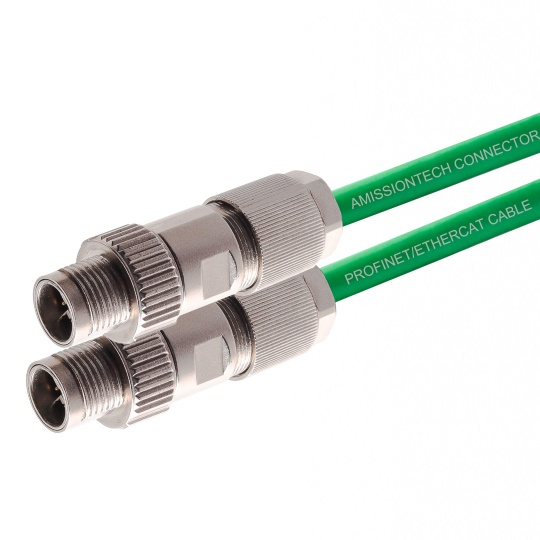
Industrial cable components are the backbone of reliable and efficient connectivity in industrial automation, robotics, and machinery. Engineered to withstand harsh environments while ensuring seamless data transmission and power delivery.
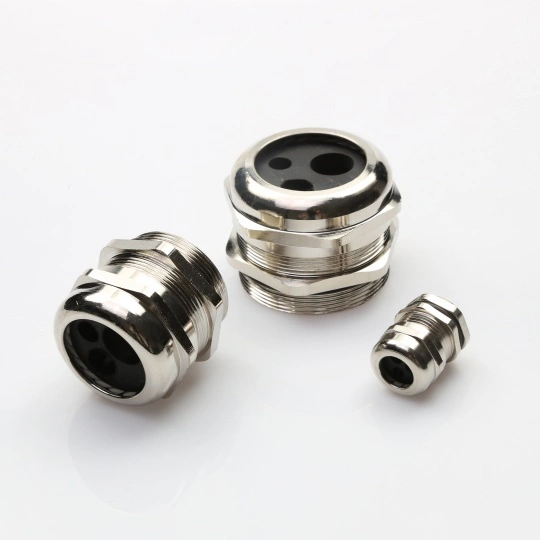
Corrosion-Resistant Cable Connectors: Reliable Connectivity for Harsh Environments Ensure uninterrupted performance in the toughest conditions with our corrosion-resistant cable connectors. Designed for durability and longevity, these.
Feel free to reach out to us for any inquiries or orders.