In the world of industrial automation, downtime is the enemy. Whether you are running a high-speed pick-and-place system, a 6-axis robotic arm, or a complex CNC machine, a single cable failure can halt production, costing thousands of dollars per hour.
When your machine goes down, you cannot afford to wait 6 to 8 weeks for a replacement cable assembly. You need a solution that combines rugged reliabilitywith rapid response.
This guide breaks down exactly what defines a true “High-Flex” cable assembly, the technical specifications you need to verify before buying, common pitfalls to avoid, and how a fast-delivery manufacturing model works without sacrificing quality.
1. What Defines a “High-Flex” Industrial Cable Assembly?
Not all cables labeled “flexible” are created equal. In industrial jargon, “High-Flex” refers to a specific construction designed to withstand millions of bending cycles without failure.
The Anatomy of High-Flex Construction
To achieve a lifespan of 5 to 10 million cycles, the internal structure must be engineered differently than standard stationary cables:
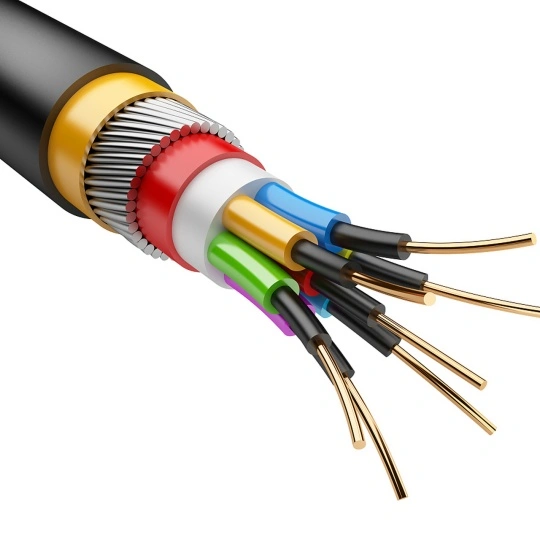
- •Super-Fine Stranding:Standard cables might use 7 to 19 strands of copper. High-flex cables utilize ultra-fine strands (often 40 AWG or smaller), sometimes numbering 60 to 100+ strands. This prevents the conductor from snapping due to metal fatigue.
- •Specialized Shielding:Standard foil shielding tears under constant motion. High-flex cables use spiral (serve) shielding or special braided shields designed to stretch and compress as the cable bends.
- •Center Core Support:Many high-flex assemblies include a tension member (like aramid fibers) in the center to absorb pulling forces, ensuring the copper conductors are not bearing the weight of the cable drag.
Key Applications
If your application involves any of the following, you absolutely require high-flex assemblies:
- •Robotics:Multi-axis movement where cables are twisted and bent simultaneously.
- •Cable Carriers (Energy Chains):Continuous back-and-forth motion inside track systems.
- •Automated Guided Vehicles (AGVs):Cables connecting the body to lifting mechanisms.
2. Critical Technical Parameters You Must Specify
When requesting a quote for custom industrial cable assemblies, vague descriptions lead to incompatible parts. Use this checklist to ensure your supplier delivers exactly what your machine needs.
A. Mechanical Parameters
- •Minimum Bend Radius:This is the absolute minimum curvature the cable can handle without damaging the internal conductors.
- •Static:Usually 4x to 6x the cable diameter (OD).
- •Dynamic (Moving):Requires 7.5x to 10x the cable diameter.
- •Warning:If your cable carrier forces a bend tighter than this radius, the cable will fail prematurely.
- •Flex Life Cycle Rating:Ask for the tested cycle count (e.g., 3 million vs. 10 million cycles). Ensure the test conditions (bending angle, radius, travel speed) match your real-world application.
B. Electrical & Environmental Ratings
- •Voltage & Current:Ensure the gauge (AWG) matches the current load. For high-power servo motors, 18 AWG to 10 AWG is common.
- •Shielding Effectiveness:For data lines (Ethernet, CAN bus), specify shielding type to prevent Electromagnetic Interference (EMI).
- •Foil Shielding:Good for static applications.
- •Braid Shielding (85%+ coverage):Essential for high-noise industrial environments and continuous flexing.
- •Jacket Material:
- •PVC:Cheap, but poor flex life and oil resistance.
- •PUR (Polyurethane):The industry standard for high-flex. It resists abrasion, oils, and coolants.
- •TPE/TPU:Excellent flexibility and temperature resistance.
3. Common Pitfalls & “Gotchas” to Avoid
Buying industrial cables is fraught with potential errors that can lead to catastrophic machine failure. Here are the top mistakes B2B buyers make and how to avoid them.
Mistake #1: The “Standard” Cable Trap
Many suppliers sell standard flexible cables as “high-flex.”
- •The Symptom:Your cable fails after 50,000 cycles, even though the spec sheet said “flexible.”
- •The Fix:Look for the strand count. If the spec doesn’t mention “fine stranding” or “high-flex rated,” it is likely a standard cable. Always ask for a cross-section photoof the conductor.
Mistake #2: Ignoring the Bend Radius
- •The Symptom:The cable looks fine on the outside, but internal conductors snap, causing intermittent signal loss.
- •The Fix:Measure the smallest radius in your cable carrier or robotic path. Select a cable with a rated bend radius smallerthan your application requires (safety margin).
Mistake #3: Mismatched Connectors
- •The Symptom:The cable fits, but the connection is loose, leading to signal drops or arcing.
- •The Fix:Be precise. Don’t just say “M12 connector.” Specify the Coding(A-coded for sensors, D-coded for Ethernet, X-coded for high-speed data) and the Pin Count(3, 4, 5, 8 pins). Mismatched coding is a common cause of incompatibility.
Mistake #4: The “Cheap” Import Failure
- •The Symptom:A cable costs 50% less but fails within weeks.
- •The Fix:Verify certifications. For North America, look for ULor ETLlistings (e.g., UL 2464). For Europe, ensure CEand RoHScompliance. Cheap cables often skip the expensive tinned copper plating, leading to rapid corrosion in humid factories.
4. The Fast Delivery (3-7 Days) Advantage
Traditionally, custom cable assemblies meant waiting 4-6 weeks for tooling, crimping setup, and testing. However, modern manufacturing facilities equipped for rapid response have changed the game.
How 3-7 Day Turnaround Works
Speed does not mean cutting corners; it means optimizing the workflow:
- 1.Digital-First Prototyping:Instead of waiting days for a physical sample, reputable suppliers use CAD simulations to validate the bend radius and connector fit virtually within 24 hours.
- 2.Modular Tooling:Factories maintain stocks of common connector backshells and molds. They modify existing tooling rather than machining new ones from scratch.
- 3.Parallel Processing:While the cable is being cut and stripped, the connectors are being prepared. Assembly and rigorous testing (Continuity, Hipot, and Pull-Force) happen in a streamlined cell.
- 4.Express Logistics:Combining factory-direct pricing with DHL/FedEx priority air freight ensures the product arrives at your dock in days, not weeks.
When to Use Fast Delivery
- •Emergency Breakdowns:Replacing a failed critical link to get production running.
- •Prototype Validation:Testing a new machine design before committing to a 10,000-unit bulk order.
- •Just-In-Time (JIT) Inventory:Reducing warehouse storage costs by ordering cables closer to the production date.
5. Quality Control: Non-Negotiable Checks
Even with fast delivery, the final product must be bulletproof. Insist that your supplier performs the following 100% tests on every single assembly:
- •Continuity Test:Ensures every pin is connected to the correct terminal and there are no open circuits.
- •Hi-Pot (Dielectric Withstand) Test:Applies high voltage (usually 1,000V + 2x operating voltage) to ensure insulation won’t break down under stress.
- •Crimp Cross-Section Analysis:A destructive test done on the first article to ensure the wire strands are properly compressed within the terminal (preventing overheating and voltage drop).
Summary: Choosing the Right Partner
Selecting a supplier for Custom Industrial Cable Assembliesrequires balancing speed, price, and technical precision.
Don’t settle for a generic “flexible” cable that will fail in a high-motion environment. Demand high-flex specifications (fine stranding, PUR jackets), verify the bend radius against your application, and ensure the supplier can deliver within your timeline without skipping essential electrical safety tests.
By focusing on these technical details, you ensure that your “fast delivery” cable is not just a temporary fix, but a long-term solution for your industrial automation needs.