Imagine a state-of-the-art automotive assembly line grinding to a halt. Not because a robot arm malfunctioned, but due to a single, seemingly insignificant cable failure transmitting sensor data. This scenario underscores a fundamental truth often overlooked: industrial cable assemblies are not mere accessories; they are the indispensable nervous and circulatory systems underpinning modern automation. In the relentless pursuit of efficiency, uptime, and quality, the critical roles played by these specialized components cannot be overstated.
1. The Lifeline of Data: Ensuring Signal Integrity for Precise Control & Monitoring
At the heart of every automation system lies a complex web of communication:
Sensor Signals: Thermocouples, proximity sensors, pressure transducers, and countless others feed critical real-time data back to controllers (PLCs, DCS, etc.). Industrial sensor cables, often shielded and twisted pair designs, protect these low-voltage signals from degradation caused by electromagnetic interference (EMI) and radio frequency interference (RFI).
Control Signals: Commands flowing from controllers to actuators (valves, motors, solenoids) dictate precise movements and operations. Robust motor cables and control cables ensure commands arrive reliably and without delay or corruption.
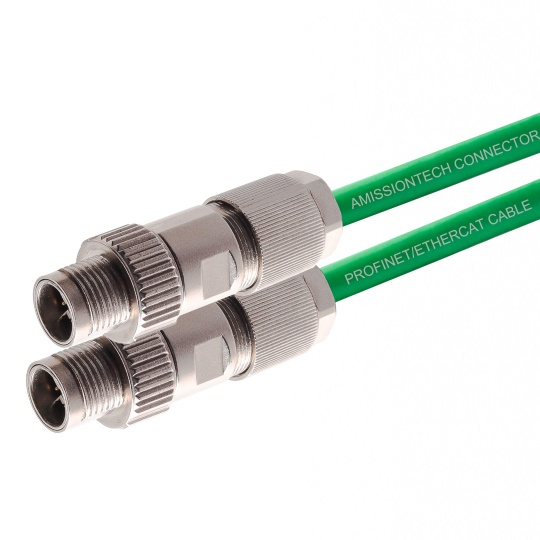
High-Speed Communication: Industrial Ethernet cables (Cat5e, Cat6, Cat6a, specialized M12/M8 cabling) form the backbone for systems like EtherNet/IP, PROFINET, and Modbus TCP/IP. These cables enable machine-to-machine (M2M) communication, data collection (IIoT), and integration with supervisory systems (SCADA, MES), demanding exceptional bandwidth and noise immunity. Signal integrity, maintained by the right cable design, shielding, and robust connectors, is paramount. Degraded signals lead to erratic machine behavior, false alarms, production defects, or even unsafe conditions. Properly specified LVDT cables or encoder cables are mission-critical for precision motion control applications.
2. Powering the Machine: Delivering Reliable & Efficient Energy
Automation systems are power-hungry beasts:
High Current Transmission: Drives, servo motors, heavy actuators require immense power delivered consistently and safely. Industrial power cables are engineered with specific conductor gauges, high-temperature insulation (like XLPE or silicone), and robust jacketing to handle the electrical load, minimize voltage drop, and dissipate heat effectively.
Mitigating Electrical Noise: Poorly designed power cables can generate significant electrical noise, contaminating nearby signal lines and causing malfunctions. Shielded power cables and appropriate grounding practices are essential to contain this noise. Reliable power delivery prevents motor stalling, overheating, and damage to sensitive electronics, directly impacting Overall Equipment Effectiveness (OEE).
3. Defying Hostile Environments: Built for Reliability Under Duress
Industrial settings are rarely kind. Cable assemblies must be engineered to endure:
Extreme Temperatures: Foundries, chillers, outdoor installations demand cables with insulation/jacketing materials (e.g., PTFE, silicone, high-grade PUR) that won’t crack, melt, or become brittle within specified temperature ranges.
Chemical & Solvent Exposure: Manufacturing often involves oils, greases, coolants, cleaning agents, and solvents. Resistant jacketing materials prevent degradation, swelling, or cracking. Chemical-resistant cables are essential for washdown areas (IP69K-rated cable assemblies).
Abrasion & Physical Stress: Constant motion on moving equipment (e.g., cables inside robotic arms or drag chains), foot traffic, or incidental contact with machinery requires tough jacketing (e.g., PVC, TPE, PUR) and internal fillers/sheaths protecting conductors.
UV Radiation & Moisture: Outdoor or UV-exposed applications need cables with UV-stabilized jackets. Moisture ingress is prevented by proper sealing of connectors and moisture-blocking cable designs. Environmental resilience directly translates to reduced unscheduled downtime and longer asset life. Components like flex cables designed for constant torsion in robotic wrists are vital.
4. Reducing Downtime & Enhancing System Flexibility
Predictable Lifespan & Reliability: High-quality, application-specific cables fail less often. Standardized assembly processes and rigorous testing (e.g., flexing, torsion, voltage withstand) ensure consistency and predictability.
Ease of Maintenance & Troubleshooting: Clearly labeled cables, connectors with secure locking mechanisms (M12, M8 connectors with IP ratings), and readily available assemblies simplify repair and replacement. Modular designs facilitate quick upgrades or reconfiguration.
Supporting System Flexibility: Modern automation demands agility. Pre-assembled cable harnesses with quick-disconnect capabilities allow for faster machine module swaps, line rebalancing, and system expansions without extensive rewiring downtime. Torsion cables rated for millions of cycles enable flexible robotic applications.
5. Safeguarding Assets & Personnel: An Often Unseen Contribution
Robust cables contribute significantly to safety:
Preventing Fire Hazards: Cables designed for the correct voltage rating, with flame-retardant (FR) or low-smoke zero-halogen (LSZH) materials, mitigate fire risks and toxic fume generation.
Ensuring Proper Grounding: Effective grounding via shield drain wires or dedicated ground conductors prevents potential shocks and protects sensitive equipment.
Resisting Damage: Tough cables are less likely to be accidentally cut or damaged during maintenance, preventing short circuits or exposed conductors. Safety-rated components like SIL-rated cables are crucial in critical safety applications.
The High Cost of Compromise
Neglecting cable assembly specifications leads to:
Increased unplanned downtime for troubleshooting and repairs
Conclusion: The Strategic Foundation for Automation Success
Industrial cable assemblies are far more than simple wires. They are sophisticated engineered components designed to overcome the harsh realities of the industrial environment. They are the silent guarantors of signal fidelity, power integrity, operational resilience, and ultimately, productivity. Specifying the right cable – considering signal type, voltage/current requirements, environmental extremes, flexibility needs, and necessary certifications – is not just a technical detail; it’s a strategic investment in the foundation of a reliable, efficient, and safe automation system. In the competitive landscape of modern manufacturing and process industries, overlooking the critical roles of industrial cable assemblies invites preventable risk. Partnering with a supplier who understands these critical roles and offers reliable, application-engineered solutions is paramount for maximizing automation ROI and securing a competitive edge.
Ready to ensure your automation systems operate at peak reliability? Discover how our precision-engineered industrial cable assemblies are designed to meet the toughest automation challenges head-on. [Explore Our Cable Assembly Solutions] or [Contact Our Experts Today] for a customized consultation.
In the heavy machinery industry, industrial cables serve as the “nervous system” and “energy pipeline” of equipment, connecting power sources, control systems, and execution components. Whether it is construction...
Industrial cable systems form the lifeline of modern manufacturing, energy, and infrastructure operations. These complex networks of power, control, and data cables ensure seamless transmission of electricity, signals, and information a...
The cost of a standard industrial cable per meter can vary widely, typically ranging from as low as \(0.10 per meter for very basic types to over \)100 per meter for specialized, high – end industrial cables. Here are the key fact...
Robotics are transforming industries, from intricate assembly lines to demanding logistics centers. But what keeps these agile machines running smoothly? Often overlooked yet critical, high-flex industrial cable assemblies are the...
The cost of industrial cable per foot is not a fixed figure, as it is influenced by a variety of factors that directly impact its performance, durability, and application scope. For businesses and professionals looking to purchase indus...
Choosing the right cable assembly for your industrial application – whether grabbing one off-the-shelf or designing a bespoke solution – is crucial for performance, reliability, and cost-efficiency. Both pre-made and custom assemblies h...
Cable safety standards are critical regulations ensuring the reliable and safe operation of electrical systems. These standards govern the design, manufacturing, installation, and maintenance of cables to prevent hazards like electrical...
In any PLC-based control system, Industrial Cable Assembliesare the physical “nervous system” that connects the programmable logic controller to sensors, actuators, drives, HMIs, and other field devices. The right cable assembly ensures...
In industrial environments such as oil refineries, chemical plants, coal mines, and pharmaceutical workshops, where flammable gases, vapors, dust, or fibers may exist, explosion-proof industrial cables are critical components that ensur...
Industrial cables are the lifelines of modern industrial systems, responsible for transmitting power, signals, and data in a wide range of harsh and complex environments. One notable feature of these cables is the variety of jacket mate...
When selecting industrial cables, reliability isn’t just a preference—it’s a necessity. Industrial environments are harsh, with exposure to extreme temperatures, chemicals, mechanical stress, and electrical hazards. The right certificat...
Autonomous Guided Vehicles (AGVs) are the workhorses of the modern warehouse, tirelessly moving goods, optimizing logistics, and driving operational efficiency. At the heart of every reliable AGV is a network of critical components, and...
In the field of electrical engineering, cables are the lifelines that ensure the stable transmission of electricity. However, not all cables are created equal. Industrial cables and power cables, though both designed for electrical tran...
Moisture inside outdoor cable terminations is a leading cause of failure in industrial settings. It leads to corrosion, short circuits, insulation breakdown, and costly downtime. Preventing water ingress is essential for reliability and...
Industrial environments are brutal on cables. Vibration, tension, bending, pulling, and accidental snags are constant threats. Without proper protection, wires fatigue, conductors break, and connections fail, leading to costly downtime....
Selecting the optimal connector for high-voltage industrial cable assemblies is a critical decision impacting safety, reliability, system uptime, and operational costs. Industrial environments (mining, power generation, renewable energy...
Industrial cable manufacturing is a critical sector that supports infrastructure, energy, transportation, and countless industrial applications. However, the production process involves various materials and activities that can pose env...
Old industrial cables, which have served their purpose in factories, power plants, and various industrial facilities, often end up as waste. However, their disposal is not a matter to be taken lightly. Improper handling can lead to seve...
Industrial facilities depend on a dense web of cables to power machinery, transmit data, and sustain critical operations. Yet unlabeled or poorly labeled cables are not just organizational headaches—they are violations of U.S. Occupatio...
In the complex network of electrical systems that power modern industries, cities, and daily life, two types of cables play pivotal roles but are often confused: industrial cable and power transmission cables. While both are designed to...
In today’s competitive business landscape, every investment counts. Whether you’re operating in the automotive, aerospace, medical, or telecommunications industry, the components you choose directly impact your bottom line, operational ...
Sensor cable assemblies are critical components that connect sensors to data acquisition systems, control units, or other electronic devices. Their performance directly impacts the accuracy, reliability, and longevity of the entire sens...
The shift to new energy vehicle (NEV) industrial cable assembliesis being defined by one critical factor: the rise of liquid-cooled technologyfor fast charging. As the industry moves toward 800V architectures and megawatt-level charging...
As cyberattacks grow more sophisticated, organizations are rethinking physical infrastructure security. Shielded cables, once a niche solution for industrial settings, are now surging in demand as businesses prioritize holistic cybersec...
If you’re sourcing, manufacturing, or using cable assemblies in China, understanding the country’s regulatory and quality standards is crucial. This guide breaks down the key requirements for domestic cable assemblies in China, helping...
Cable systems are the vital circulatory network delivering power and data that keeps our modern world running. Yet, they operate largely out of sight and, too often, out of mind – until disaster strikes. A single cable failure can cripp...
High-voltage cable assemblies are critical components in industries like energy transmission, renewable energy, manufacturing, and infrastructure. Ensuring these cables meet stringent technical requirements is essential for safety, effi...
Industrial cables are the “nerve system” of modern manufacturing, energy, and infrastructure—powering motors, transmitting control signals, and connecting critical equipment. Their performance directly impacts operational ef...
Cable assemblies are critical components in electrical and mechanical systems, ensuring reliable power and signal transmission. However, improper installation can lead to performance issues, safety hazards, or even system failure. This ...
The Internet of Things (IoT) is no longer a futuristic concept—it’s reshaping industries, homes, and cities. From smart thermostats to industrial sensors, billions of IoT devices are now online. But as the IoT ecosystem grows, so does t...
In industrial automation, mobile equipment is only as reliable as the cables that power and connect it. Downtime from a failed cable assembly can cost thousands of dollars per hour, making the right Industrial Cable Assemblies for Mobil...
When it comes to electrical systems, choosing the right cables is critical for safety, efficiency, and performance. High-voltage (HV) and low-voltage (LV) cables serve distinct purposes, and understanding their differences is essential...
Forget simply faster speeds; the advent of 6G promises a technological revolution – seamless integration of the physical and digital worlds, ubiquitous intelligent sensing, holographic communications, and pervasive advanced AI applicati...
Electrical Performance: Powering Precision1.1 Voltage and Current RatingsIndustrial cable assemblies are categorized by voltage classes:
Low Voltage (LV): Up to 1,000V AC / 1,500V DC for robotics, PLCs, and conveyor systems.M...
In the high-stakes world of industrial automation and machine manufacturing, the difference between seamless production and costly downtime often comes down to the integrity of the cable infrastructure. Industrial cable assemblies are n...
In today’s automated factory, the industrial Ethernet cable assembly is the nervous system that connects PLCs, robots, HMIs, and motion controllers. Yet, many engineers and procurement teams still treat these cables as generic com...
Industrial cables are the lifeline of electrical systems in various industrial sectors, ranging from manufacturing plants and power generation facilities to oil refineries and transportation networks. Their role in transmitting electric...
Industrial cables serve as the “nerve and blood vessels” of modern manufacturing, power transmission, and automation systems, connecting critical equipment like motors, sensors, and control panels. In industrial environments...
Discover how industrial cable assemblies form the backbone of IIoT architecture. Explore their role in data reliability, real-time communication, and scalable industrial networks.
IntroductionThe Industrial Internet of Things (IIoT...
Industrial cable components are the backbone of reliable and efficient connectivity in industrial automation, robotics, and machinery. Engineered to withstand harsh environments while ensuring seamless data transmission and power delivery.
Corrosion-Resistant Cable Connectors: Reliable Connectivity for Harsh Environments
Ensure uninterrupted performance in the toughest conditions with our corrosion-resistant cable connectors. Designed for durability and longevity, these.
Contact Us
Feel free to reach out to us for any inquiries or orders.