Industrial Cable Assemblies factory

Industrial Cable Assemblies factory

Industrial Cable Assemblies-Industrial Cable Assemblies factory

INFO

In today’s interconnected industrial landscape, electromagnetic interference (EMI) poses a significant threat to the reliability and performance of cable assemblies. From factory automation to power distribution systems, EMI can disrupt signal integrity, degrade data transmission, and even cause equipment failure. To combat these challenges, ​EMI shielding technologies have become indispensable for industrial cable assemblies. This article explores the latest shielding solutions, their applications, and best practices to help engineers and decision-makers optimize their systems.


Why EMI Shielding Matters for Industrial Cables

Electromagnetic interference occurs when external electromagnetic fields disrupt the operation of electronic devices or cables. Industrial environments are rife with EMI sources, including:

  • High-voltage motors
  • Variable frequency drives (VFDs)
  • Radiofrequency (RF) transmitters
  • Switching power supplies

Unshielded cables act as antennas, picking up unwanted noise and compromising sensitive equipment. Effective EMI shielding minimizes interference, ensuring:

  • Signal Integrity: Clean data transmission for control systems and sensors.
  • Safety: Prevention of false signals in critical applications (e.g., emergency shutdown systems).
  • Compliance: Adherence to standards like IEC 61000 (EMC) and MIL-STD-461.

Key EMI Shielding Technologies for Cable Assemblies

1. ​Braid Shielding

Braid shields consist of woven metallic strands (often copper or aluminum) that provide high flexibility and durability.

  • Pros:
    • Excellent high-frequency noise attenuation.
    • Mechanically robust for harsh environments.
  • Cons:
    • Higher cost and weight compared to foil shields.
  • Applications: Robotics, military equipment, and oil/gas installations.

2. ​Foil Shielding

Foil shields use a thin layer of aluminum or copper bonded to a polyester film.

  • Pros:
    • Lightweight and cost-effective.
    • Full coverage for low to mid-frequency EMI.
  • Cons:
    • Less durable under repeated bending.
  • Applications: Ethernet cables, HVAC systems, and medical devices.

3. ​Combination Shielding (Foil + Braid)

Hybrid shields combine foil and braid layers to maximize protection across a broad frequency range.

  • Pros:
    • Enhanced performance in complex EMI environments.
    • Balances flexibility and durability.
  • Cons:
    • Increased assembly complexity.
  • Applications: Aerospace, automotive CAN bus systems, and industrial IoT networks.

4. ​Conductive Polymer Shielding

Innovative conductive polymers infused with carbon or metal particles offer lightweight, corrosion-resistant shielding.

  • Pros:
    • Ideal for corrosive or humid environments.
    • Simplifies cable design.
  • Cons:
    • Limited to lower-frequency applications.
  • Applications: Chemical plants, marine equipment, and renewable energy systems.

5. ​Spiral (Serve) Shielding

Spiral shields use wrapped metal strands for moderate flexibility and EMI protection.

  • Pros:
    • Easy termination and maintenance.
    • Effective for audio and control cables.
  • Cons:
    • Reduced effectiveness at higher frequencies.
  • Applications: Audio systems, CNC machinery, and instrumentation.

Choosing the Right EMI Shielding Technology

Selecting the optimal shielding depends on several factors:

  1. Frequency Range: Braid shields excel above 1 MHz, while foil shields are better for lower frequencies.
  2. Environmental Conditions: Extreme temperatures, moisture, or chemicals may favor conductive polymers.
  3. Flexibility Requirements: Robotics or moving machinery demand braided or spiral shields.
  4. Cost Constraints: Foil shields offer budget-friendly solutions for less demanding applications.

Best Practices for Implementing EMI Shielding

  • Proper Grounding: Ensure shields are grounded at one end to avoid ground loops.
  • Cable Routing: Separate power and signal cables to minimize cross-talk.
  • Shield Termination: Use EMI glands or conductive tape to maintain shield continuity.
  • Testing: Validate shielding effectiveness via standards like ISO 11452 (automotive) or TIA-568 (telecom).

Future Trends in EMI Shielding

Emerging technologies are reshaping the industry:
  • Nanocomposite Materials: Graphene-enhanced shields for ultra-high conductivity.
  • Active Shielding Systems: Real-time noise cancellation using embedded sensors.
  • 3D-Printed Shields: Customizable geometries for complex cable assemblies.
industrial cable assemblies

FAQ

NEWS

More Products

Our factory offers high-quality products at competitive prices
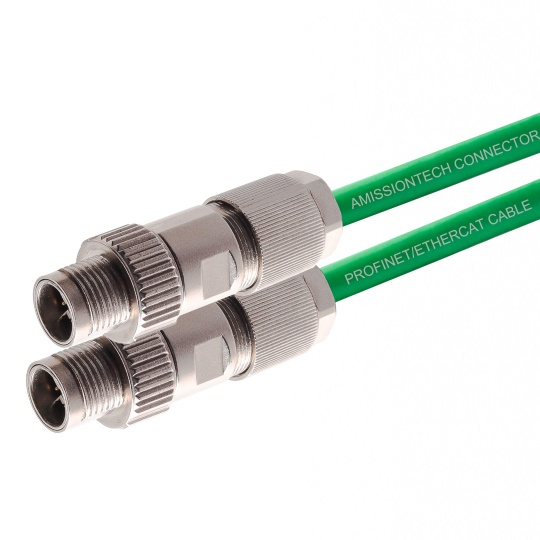
Industrial cable components

Industrial cable components

Industrial cable components are the backbone of reliable and efficient connectivity in industrial automation, robotics, and machinery. Engineered to withstand harsh environments while ensuring seamless data transmission and power delivery.
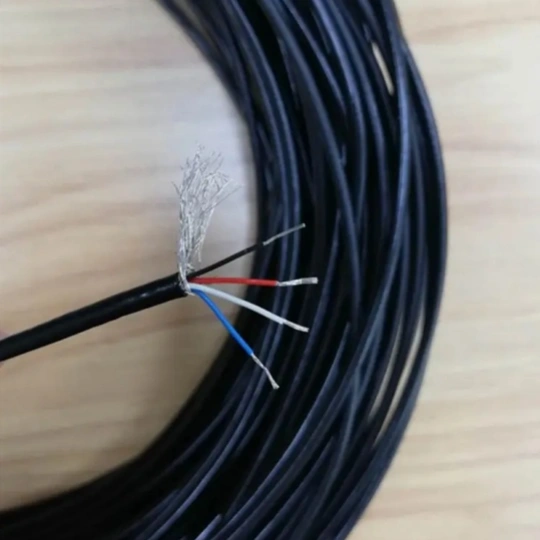
High-temperature resistant cable accessories

High-temperature resistant cable accessories

Ensure reliable power transmission and long-lasting performance in the harshest conditions with our ​High-Temperature Resistant Cable Accessories. Engineered to withstand extreme heat, these premium-grade accessories are designed to prote.

Contact Us

Feel free to reach out to us for any inquiries or orders.

Call Us

Have a question? Give us a call!

+861881875005

Email Us

Send us an email and we'll get back to you soon.

sales@custom-cable-assemblies.com
       
Home Products Contact