Robots are machines defined by movement. From the precise arcs of welding arms to the dynamic scurrying of mobile platforms and the delicate interactions of collaborative robots (cobots), their joints and axes undergo constant, repetitive motion. This inherent dynamism places extraordinary demands on every component, especially the cables that power, control, and communicate with the robot. Rigid or standard cables simply cannot withstand this environment, making high-flexibility industrial cable assemblies not just preferred, but absolutely essential for reliable robotic operation.
Here’s why high-flex cables are indispensable in robotics:
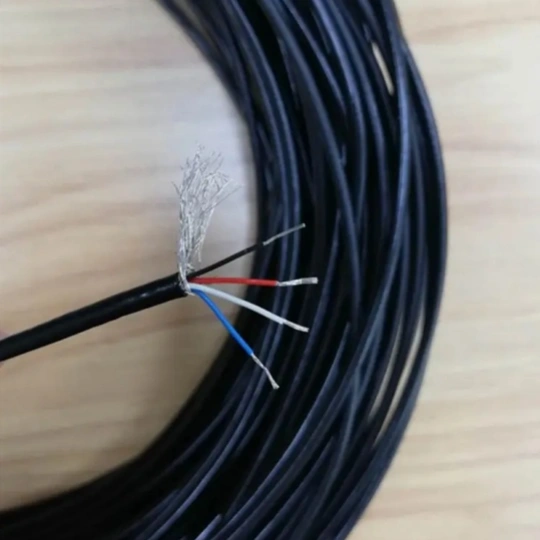
Surviving Millions of Flex Cycles: A single robot arm joint might bend a cable thousands, even millions, of times during its operational lifetime. Standard cables fatigue quickly under this constant flexing. The conductors break, insulation cracks, and failure is inevitable. High-flex cables utilize specially engineered conductors (often fine-stranded or featuring a reverse-bundling construction) and highly elastic insulation materials (like premium TPE or specially formulated PVC) designed to withstand these extreme cyclic bending stresses without cracking or degrading.
Torsion Stability for Rotating Joints: Many robotic joints involve twisting or torsion. Standard cables can easily kink, deform, or experience internal conductor migration under torsion, leading to signal interference or breakages. High-flex robotic cables are specifically designed with torsion-resistant constructions. This might include optimized lay lengths, specialized core bundling, and jackets formulated to resist “corkscrewing” or permanent deformation, ensuring consistent performance even during complex rotary movements.
Tackling Tight Spaces and Complex Paths: Robots operate within confined envelopes, requiring cables to bend tightly around joints, through cable carriers (e.g., drag chains, energy chains), or along intricate arm structures. High-flex cables boast an exceptionally low minimum bend radius compared to their standard counterparts. This allows them to navigate these tight spaces without imposing excessive mechanical stress on the cable or forcing the robot into unnatural positions that compromise its range of motion or accuracy.
Maintaining Electrical Integrity Under Stress: Constant movement isn’t just a physical challenge; it’s an electrical one. Vibration, flexing, and torsion can induce noise (EMI/RFI interference), cause changes in impedance, and lead to signal degradation or data errors in control and communication cables. High-flex assemblies incorporate robust, multi-layer shielding (braided or foil, often combined) that maintains continuous coverage even when the cable is bent or twisted. Coupled with high-quality conductors and stable dielectrics, this ensures critical power transmission and high-speed data signals remain clean and reliable.
Resisting Abrasion and Environmental Hazards: The robotic workspace is rarely pristine. Cables routed along arms or through carriers can rub against surfaces, machinery, or even other cables. They face exposure to coolants, oils, cleaning chemicals, UV light (in some applications), and varying temperatures. High-flex industrial cables feature abrasion-resistant, oil-resistant, and often flame-retardant outer jackets made from durable compounds. This robust physical protection shields the vital internal components from wear, tear, and environmental degradation, vastly extending cable life.
Preventing Failure Points and Downtime: Cable failure in a robot often means catastrophic system downtime – halting production lines, delaying orders, and incurring significant repair costs. Premature cable failure due to flex fatigue, torsion damage, abrasion, or signal loss is a major cause of unplanned downtime. High-flex assemblies directly combat this by being engineered for durability within the specific harsh motion environment of robotics. Their enhanced resilience translates directly into increased reliability, longer operational lifespans, and significantly reduced maintenance interventions and downtime.
Optimizing Performance for High-Speed Movements: Modern robots move faster and more precisely than ever before. Cables must keep pace. High-flex cables, by virtue of their optimized construction and lighter weight potential compared to stiff alternatives, minimize the inertia and drag within cable management systems. This reduces the load on the robot’s motors and allows for smoother, faster, and more precise movements without the cable assembly acting as a limiting factor or causing unwanted vibration.
In essence, the extreme mechanical demands of robotic motion necessitate cables specifically designed to endure. High-flexibility industrial cable assemblies, with their specialized conductors, advanced insulation, protective jackets, robust shielding, and engineered constructions for cyclic bending, torsion, and tight routing, provide the vital resilience needed. They are the lifelines that ensure power flows reliably, signals transmit accurately, and robots operate at peak performance, day in and day out, minimizing costly disruptions in increasingly automated environments. Without them, the reliability, speed, and longevity of robotic systems would be severely compromised.
In the relentless rhythm of industrial operations, connectors are the vital, often overlooked, lifelines that power machinery, transmit critical data, and enable seamless control. But these unassuming components have a finite lifespan, ...
Industrial cables serve as the “nervous system” of modern industrial infrastructure, transmitting power, signals, and data across critical sectors such as manufacturing, energy, water treatment, and healthcare. While durabil...
In industrial environments such as metallurgy, chemical processing, new energy power generation, and aerospace manufacturing, equipment often operates in high-temperature conditions—ranging from 150°C to over 600°C in some extreme cases...
Semiconductor manufacturing represents the pinnacle of precision manufacturing. Within the ultra-controlled environments of Class 1 to Class 5 (ISO 3 to ISO 5) cleanrooms, even the smallest contaminant – a particle of dust, a molecule o...
In industrial automation, vision systems serve as the “eyes” of intelligent production, responsible for high-precision tasks such as defect detection, dimension measurement, and position positioning. Industrial cable assembl...
The automotive manufacturing industry is undergoing a profound transformation driven by electrification, intelligence, and connectivity. From traditional internal combustion engine vehicles to electric vehicles (EVs), hybrid electric ve...
High-speed machinery, such as CNC machines, robotic arms, and automated assembly lines, relies heavily on industrial cables to transmit power, signals, and data accurately and reliably. The wrong cable choice can lead to frequent downti...
The steel industry is a backbone of global manufacturing, relying on continuous, high-intensity operations across steelmaking, casting, rolling, and auxiliary processes. Industrial cables, as the “nerve and blood vessels” of...
Choosing the right industrial Ethernet cable assembly is crucial for reliable, high-performance communication in harsh environments like factories, warehouses, and outdoor installations. While both Cat5e and Cat6 cables serve similar pu...
Key Considerations
Temperature Rating
Look for cables rated for at least 20°C above your maximum expected temperature
Common high-temp materials: PTFE (260°C), silicone (200°C), fiberglass (500°C)
Insulation Material
Silic...
In industrial settings, where machinery, electrical systems, and human operators interact closely, the voltage rating of industrial cables is far more than a technical specification—it is a fundamental safeguard against catastrophic acc...
In the complex and harsh environment of industrial operations, industrial cables serve as the “nervous system” and “blood vessels” of equipment, transmitting power, signals, and data. However, they are constantly...
Robotics are transforming industries, from intricate assembly lines to demanding logistics centers. But what keeps these agile machines running smoothly? Often overlooked yet critical, high-flex industrial cable assemblies are the...
In the era of Industry 4.0, automated systems have become the backbone of manufacturing, energy, logistics, and countless other industries. From robotic arms assembling cars on production lines to sensors monitoring oil pipelines and au...
Wind energy is a cornerstone of the global transition to renewable power, and wind farms—both onshore and offshore—are critical to meeting clean energy targets. However, the harsh environments in which wind turbines operate, particularl...
In the modern world of connectivity and infrastructure, cables are the unsung heroes that keep our industries, businesses, and daily lives running smoothly. However, not all cables are created equal. Two types that often cause confusion...
In industrial operations, insulated cables are the lifelines that transmit power and signals across facilities—from manufacturing plants to construction sites. However, over time, these cables can become damaged due to mechanical wear, ...
IntroductionChoosing the right flexible cable isn’t just about the core specs; bend radius is critical. Get it wrong, and you risk premature cable failure, costly downtime, and safety hazards. For drag chain applications experienc...
In the complex and demanding landscape of industrial operations, every component plays a critical role in ensuring seamless functionality, reliability, and efficiency. Among these components, industrial keyboards stand as essential huma...
High-voltage industrial cables are the lifelines of power plants, responsible for transmitting massive amounts of electricity safely and efficiently from generators to distribution systems and beyond. Their reliable operation directly i...
In today’s fast-paced industrial landscape, reliability and efficiency are non-negotiable. At the heart of this demand lies industrial cable assemblies—critical components that power machinery, enable communication between systems, an...
IntroductionThe rapid evolution of nanotechnology has opened groundbreaking opportunities across industries, and the cable assembly sector is no exception. As demand grows for faster, safer, and more durable electrical systems, nanomate...
The automotive manufacturing industry relies heavily on precision, reliability, and safety. At the heart of these requirements are cable assemblies, which serve as the nervous system of vehicles, connecting critical components like sen...
The Invisible Network Keeping Cities Moving
Modern urban traffic management relies on an underground nervous system of IoT (Internet of Things) cables and sensors. These interconnected systems collect real-time data from traffic ligh...
Industrial cable connectors are essential components in various industrial systems, enabling the reliable transmission of power, signals, and data. There are several common types, each designed to meet specific application requirements....
In large-scale infrastructure projects—particularly in transportation, tunnel systems, and railway applications—the integrity of electrical infrastructure is non-negotiable. Snake Trayspecializes in delivering robust industrial cable as...
In applications where failure is not an option, such as military operations, aerospace systems, and certain industrial scenarios, military-grade coaxial cables are the go-to solution. These cables are engineered to meet the most demandi...
When designing or upgrading systems that rely on cable assemblies, engineers and procurement teams often face a critical choice: customized or standardized solutions. Both options have distinct advantages, but understanding their diffe...
In industries where extreme heat is a constant challenge—such as manufacturing, energy, aerospace, and automotive—reliable electrical connectivity is non-negotiable. High temperature cable connectors stand as critical components that en...
Industrial cables are the lifelines of manufacturing plants, refineries, and chemical processing facilities, transmitting power and data to keep operations running smoothly. However, chemical spills pose a severe threat to these cables—...
1.TelecommunicationsCable assemblies ensure high-speed data transfer and connectivity in:Fiber optic networks: LC/SC/ST connectors and splice closures for telecom towers and data centers13.5G infrastructure: RF coaxial cables and ...
In industries where extreme heat is a constant challenge—from manufacturing plants to renewable energy systems—cable failures can lead to catastrophic consequences. A groundbreaking advancement in high-temperature (high-temp) cable tech...
New energy cables (e.g., electric vehicle charging cables, in-vehicle high-voltage cables, and renewable energy system cables) must meet the following specialized technical requirements:
1. Electrical PerformanceHigh Voltage Capac...
In the world of industrial automation, downtime is the enemy. Whether you are running a high-speed pick-and-place system, a 6-axis robotic arm, or a complex CNC machine, a single cable failure can halt production, costing thousands of d...
In modern buildings, electrical systems are the lifeblood, and coaxial cables play a crucial role in transmitting data and signals. However, in the event of a fire, standard coaxial cables can become a significant hazard, spreading flam...
In today’s fast-paced manufacturing world, precision is non-negotiable—especially in industries like aerospace, automotive, and electronics, where a single faulty cable can lead to system failures or safety risks. Traditional cable asse...
As robotics and high-flex automation evolve, the need for reliable, high-flex Mini-change industrial cable assemblies has never been greater. This 2026 guide explores the essential features, applications, and selection criteria for Mini...
The Hidden Hero of Solar Energy
While solar panels get all the attention, the real game-changer in modern solar farms might be running underground. New-generation cables are helping solar installations achieve what was previously tho...
The Critical Need for Safety in Mining Operations
The mining industry faces unique electrical hazards due to flammable gases, combustible dust, and volatile atmospheres. Traditional cabling systems pose ignition risks, accounting for...
Industrial cables are the backbone of modern industrial operations, responsible for transmitting power, data, and signals across a wide range of machinery, equipment, and systems. Their reliable performance is crucial for ensuring the s...
Ensure reliable power transmission and long-lasting performance in the harshest conditions with our High-Temperature Resistant Cable Accessories. Engineered to withstand extreme heat, these premium-grade accessories are designed to prote.
When it comes to electrical systems operating under extreme mechanical and electrical stress, high-load cable terminations are critical components that ensure seamless power transmission, safety, and system longevity. Engineered to .
Contact Us
Feel free to reach out to us for any inquiries or orders.