Industrial Cable Assemblies factory

Industrial Cable Assemblies factory

Industrial Cable Assemblies-Industrial Cable Assemblies factory

INFO

In any PLC-based control system, Industrial Cable Assembliesare the physical “nervous system” that connects the programmable logic controller to sensors, actuators, drives, HMIs, and other field devices. The right cable assembly ensures clean signal transmission, protects against electrical noise, and survives the mechanical and environmental stresses of a real-world factory floor. This guide covers the key specifications, performance characteristics, and common application scenarios for PLC cable assemblies, with practical examples to help you choose and use them effectively.


1. What Are Industrial Cable Assemblies for PLC?

Industrial cable assemblies for PLC are factory-terminated, tested cable harnessesthat link PLCs to their I/O modules, field devices, and communication networks. Unlike loose wires, these assemblies are built to a defined pinout, length, and shielding configuration, arriving ready for plug-and-play installation.

Common examples include:

  • PLC-to-I/O block cables(e.g., 24 VDC discrete I/O, analog input/output)
  • PLC-to-HMI/operator panel cables(serial, USB, or industrial Ethernet)
  • Drive and servo feedback cables(encoder, resolver, motor power)
  • Fieldbus and industrial Ethernet patch cables(PROFINET, EtherCAT, Modbus TCP)
  • Panel internal wiring harnessesthat distribute power and signals to PLC racks and modules

By using pre-made assemblies, you reduce field wiring errors, save installation time, and get consistent, repeatable connections across projects.


2. Key Specifications to Consider

When selecting an industrial cable assembly for PLC, focus on these core parameters:

Signal Type and Voltage Rating

  • Low-voltage control and communication:Most PLC I/O and communication run at 24 VDC or 24 VAC, with signal-level cables rated around 300–600 V.
  • Power and drive cables:Motor power and VFD output cables handle higher voltages and currents, often using 600V-rated conductors.

Wire Size (AWG) and Current Capacity

  • Signal cables:Typically 24–18 AWG for low-current control and communication.
  • Power cables:Use 16–12 AWG or larger, depending on load and required current.

Shielding and Noise Immunity

  • Shielded twisted pairs (STP):Essential for analog, high-speed digital, and communication signals to minimize electromagnetic interference (EMI).
  • Unshielded cables:May be acceptable for short, low-noise digital I/O runs, but are more prone to interference.

Connector Types

  • Circular M12, M8, and 7/8” connectors:Rugged, sealed options for sensors, actuators, and field devices.
  • D-sub connectors (DB9, DB25):Common for legacy serial PLC communication cables.
  • Terminal blocks and system connectors:Used inside control cabinets for fixed wiring to PLC modules.
  • Industrial Ethernet connectors (RJ45, M12 D-coded/X-coded):For PROFINET, EtherCAT, and EtherNet/IP networks.

Cable Construction and Jacket Material

  • Conductors:High-purity copper for low resistance and stable signal quality.
  • Insulation:PVC, polyurethane (PUR), or TPE, chosen for flexibility, temperature range, and chemical resistance.
  • Jacket:Oil-resistant, flame-retardant materials like PUR or PVC, often rated to UL94 V-0.

Mechanical and Environmental Ratings

  • Temperature range:Standard cables often operate between -20°C and +80°C. High-performance PUR or TPE jackets can extend this to -40°C to +90°C or beyond.
  • Flex life:For moving applications (robotics, cable tracks), high-flex cables are rated for millions of bending cycles.
  • Ingress protection (IP rating):IP65/IP67/IP68 ratings indicate resistance to dust and water ingress, crucial for washdown or outdoor environments.

Standards and Compliance

  • Safety and environmental:Look for UL, cUL, CE, and RoHS compliance.
  • Industry-specific:Cables for hazardous areas may need ATEX or IECEx certification.

3. Performance Characteristics in Real-World Use

Signal Integrity and EMI Protection

Shielded cables with twisted pairs maintain signal integrity by reducing crosstalk and EMI. This is vital for:

  • Analog signals (4–20 mA, 0–10 V)
  • High-speed communication (EtherCAT, PROFINET)
  • Long cable runs near VFDs or motors

Durability and Flex Life

In dynamic applications, high-flex cables with PUR jackets can endure millions of bending cycles, making them suitable for robotic arms and cable tracks. Fixed installations benefit from robust jackets that resist abrasion and oil.

Environmental Resistance

PLC cable assemblies are built to withstand:

  • Oil, coolant, and cleaning agents:PUR and oil-resistant PVC jackets provide protection.
  • Moisture and dust:IP65/IP67/IP68-rated connectors ensure reliable operation in harsh conditions.
  • Temperature extremes:Wide operating ranges, such as -40°C to +85°C, ensure functionality in diverse climates.

Installation Efficiency

Factory-terminated assemblies with clear labeling and standardized connectors simplify installation and maintenance, reducing downtime and errors.


4. Typical Application Scenarios

Control Panels and Internal Wiring

Multi-core control wire harnesses distribute 24 VDC power and I/O signals within PLC panels. Color-coding and labeling aid in troubleshooting and maintenance.

Factory Automation and Machine Control

  • Sensors and actuators:M12 cables connect proximity switches, push buttons, and solenoid valves to PLC I/O modules.
  • Motion control:Shielded cables link servo drives, encoders, and motors, ensuring precise and reliable operation.

Process Industries (Oil & Gas, Chemical, Power)

In these environments, reliability is paramount. Shielded, chemical-resistant cables with high ingress protection are used for critical control and safety systems, such as Honeywell PLC connection cables in DCS applications.

Robotics and Automated Guided Vehicles (AGVs)

High-flex cable assemblies with robust shielding are essential for the continuous motion and tight bend radii found in robotic arms and AGV cable tracks.

Building and Infrastructure Automation

In smart buildings and infrastructure, PLCs use industrial Ethernet and fieldbus cables to connect to HVAC systems, lighting controls, and access control systems, requiring reliable data transmission and environmental resilience.


5. Practical Selection and Use Tips

  1. Match the Cable to the Signal:Use shielded twisted pairs for analog and communication signals. Use appropriately sized power cables for motor and heater loads.
  2. Consider the Environment:Choose cables with the right IP rating, temperature range, and chemical resistance for the application.
  3. Plan for Motion:For moving parts, select high-flex cables designed for continuous bending and torsion.
  4. Ensure Proper Grounding and Shielding:Follow manufacturer guidelines for grounding shield connections to avoid EMI issues.
  5. Use Standardized Connectors:Stick to industry-standard connectors (M12, M8, D-sub, RJ45) for compatibility and easier maintenance.
  6. Document Your Wiring:Label both ends of the cable and maintain documentation for easy troubleshooting and future upgrades.

Conclusion

Industrial cable assemblies for PLC are not just simple wires; they are critical components that determine the reliability and performance of your automation system. By carefully considering specifications like signal type, shielding, environmental resistance, and connector compatibility, you can select the right assemblies for your application. Whether you’re wiring a control panel, connecting sensors on a factory floor, or integrating a robotic system, the right cable assembly ensures your PLC can communicate and control effectively, keeping your operations running smoothly and efficiently.

FAQ

NEWS

More Products

Our factory offers high-quality products at competitive prices
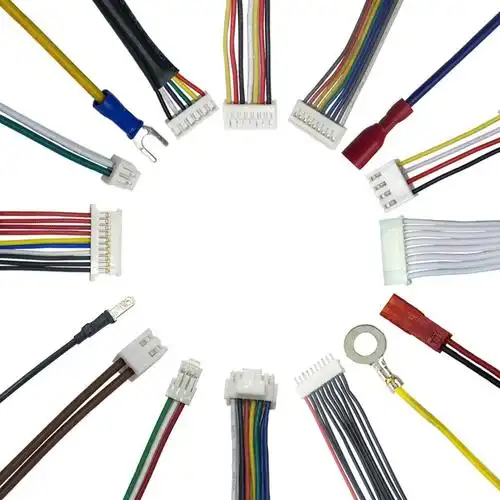
INDUSTRIAL CABLE ASSEMBLIES PRODUCTS ONE

INDUSTRIAL CABLE ASSEMBLIES PRODUCTS ONE

Industrial Cable Assembly Product Summary‌ ‌Material & Safety‌ Utilizes premium raw materials and globally recognized components (e.g., ABB, TE Connectivity)‌ ensuring high reliability and safety to prevent risks like fire and e.
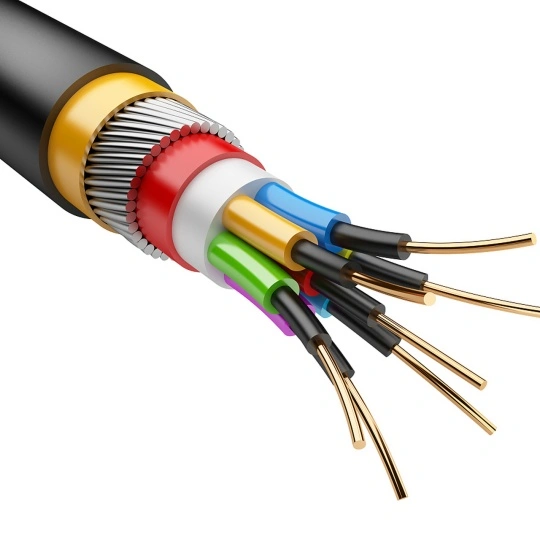
Shielded cable core

Shielded cable core

In today’s technology-driven world, maintaining uninterrupted signal integrity is critical for industrial, commercial, and residential applications. The ‌Shielded Cable Core‌ is engineered to deliver superior electromagnetic interference .

Contact Us

Feel free to reach out to us for any inquiries or orders.

Call Us

Have a question? Give us a call!

+861881875005

Email Us

Send us an email and we'll get back to you soon.

sales@custom-cable-assemblies.com
       
Home Products Contact