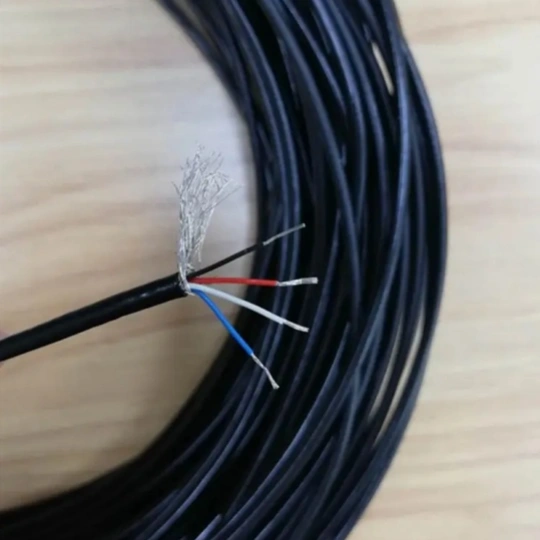
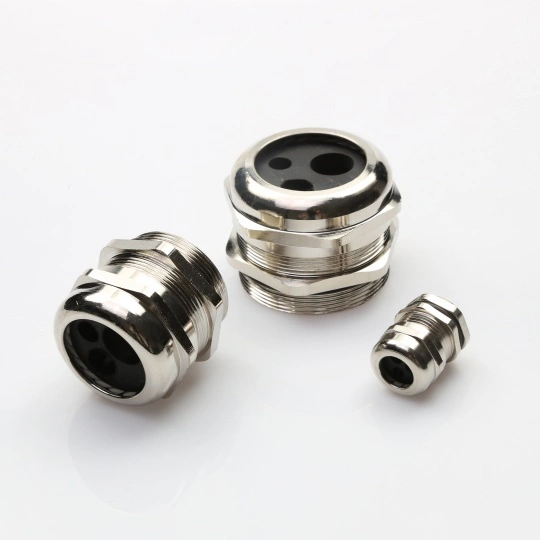
Semiconductor manufacturing represents the pinnacle of precision manufacturing. Within the ultra-controlled environments of Class 1 to Class 5 (ISO 3 to ISO 5) cleanrooms, even the smallest contaminant – a particle of dust, a molecule of outgassed vapor – can wreak havoc on nanoscale circuitry, leading to catastrophic yield loss. Industrial cable assemblies are the critical, yet often underestimated, lifelines powering and controlling the sophisticated equipment in these facilities. Selecting the right assemblies isn’t just about connectivity; it’s a fundamental requirement for maintaining contamination control, process integrity, and equipment uptime. Here are the key requirements defining industrial cable assemblies for semiconductor cleanrooms:
- Ultimate Cleanliness & Low Outgassing: This is paramount.
- Material Certification: Cables and connectors must be manufactured using materials certified for low particulation and ultra-low outgassing. Common standards include NASA ASTM E595 (measuring Total Mass Loss – TML – and Collected Volatile Condensable Materials – CVCM) and the VDA 278 thermal desorption test. TML should be very low (typically <0.1%), and CVCM must be negligible.
- Controlled Manufacturing: Production must occur in cleanroom environments or under strict contamination control protocols to minimize particle generation during assembly.
- Surface Smoothness: Cable jackets and connector housings should have smooth, non-porous, non-shedding surfaces that resist particle accumulation and are easy to clean.
- Lubricants & Sealants: Any lubricants used (e.g., in connectors) must be vacuum-compatible and certified low-outgassing. Sealants must be similarly qualified.
- Exceptional Chemical Resistance:
- Semiconductor processes involve aggressive chemicals like acids (HF, H2SO4, HCl, HNO3), bases (KOH, NH4OH), solvents, photoresists, strippers, and plasma etchants.
- Cable jackets and connector materials must demonstrate proven resistance to these specific chemicals without degrading, swelling, cracking, or leaching contaminants. Perfluoroalkoxy (PFA), Fluorinated Ethylene Propylene (FEP), Polytetrafluoroethylene (PTFE), and specific cross-linked polyethylene (XLPE) formulations are common choices.
- High Flexibility & Flex Life:
- Equipment in fabs often involves constant movement: robotic arms handling wafers, automated guided vehicles (AGVs), sliding chambers, and scanning mechanisms.
- Cable assemblies must withstand millions (often 10M+) of continuous flexing cycles without conductor breakage, shield degradation, or jacket cracking. This requires specialized conductor stranding (e.g., fine-stranded, highly flexible tinned copper), optimized filler materials, and jackets engineered for dynamic use.
- Robust EMI/RFI Shielding:
- Sensitive electronic signals controlling processes and measuring parameters are highly susceptible to electromagnetic interference (EMI) and radio frequency interference (RFI).
- Cable assemblies require highly effective shielding, often multi-layered (e.g., combination foil + high-coverage braid), achieving 90dB+ shielding effectiveness. Connectors must maintain this shielding through specialized, low-resistance EMI backshells or conductive gaskets ensuring 360-degree termination. Low-noise signal cabling is critical.
- Ultra-High Vacuum (UHV) Compatibility (Where Applicable):
- Processes like chemical vapor deposition (CVD), physical vapor deposition (PVD), and molecular beam epitaxy (MBE) occur under UHV conditions.
- Cable assemblies for these tools must have extremely low outgassing rates (TML and CVCM near zero), use exclusively UHV-compatible materials (metals like stainless steel in connectors, specialized polymers), and be rigorously leak-tested to ensure they don’t compromise vacuum integrity.
- Temperature Stability:
- Assemblies may be exposed to a wide range of temperatures, from ambient cleanroom conditions to elevated temperatures near process chambers or within tools.
- Materials must maintain mechanical integrity and electrical properties across the required operating range (e.g., -40°C to +150°C or higher). Thermal cycling performance is crucial.
- Mechanical Robustness & Strain Relief:
- Beyond flexing, cables in busy fab environments can face abrasion from cable carriers (e.g., igus chains) or accidental impact. Jackets must be abrasion-resistant.
- Connectors and termination points require robust, field-serviceable strain relief mechanisms to prevent conductor pull-out or damage at connection points, especially in moving applications. Overmolded assemblies enhance reliability here.
- Flame Retardancy & Safety:
- Meeting stringent flame retardancy standards (e.g., UL 94 V-0, IEC 60332-1) is essential for minimizing fire risk and toxic fume generation within sensitive cleanroom facilities.
- Precision & Signal Integrity:
- For data, control, and RF signals, maintaining precise impedance control and minimal signal loss (attenuation) is vital for accurate equipment operation. Consistent manufacturing is key.
- Miniature connectors (like micro-D, Nano-D, D-subminiature) and coaxial assemblies demand high-precision termination to ensure reliable high-speed or sensitive analog signal transmission.
Choosing the Right Partner:
Selecting industrial cable assemblies for semiconductor cleanrooms is not a commodity purchase. It demands partnering with suppliers who deeply understand the unique challenges of semiconductor manufacturing:
- Material Science Expertise: Knowledge of polymer behavior, chemical compatibility, and outgassing under cleanroom conditions.
- Cleanroom Manufacturing: Capability to assemble cables in certified cleanroom environments.
- Compliance Documentation: Providing comprehensive test reports for outgassing (ASTM E595, VDA 278), flammability, chemical resistance, flex life, and shielding effectiveness.
- Adherence to Standards: Designing to relevant SEMI standards and specific equipment manufacturer requirements.
- Customization Capability: Ability to engineer solutions for specific tool layouts, connector requirements, and performance thresholds.
Conclusion:
In the demanding world of semiconductor cleanrooms, industrial cable assemblies are more than just wires in a jacket; they are engineered components critical to yield, reliability, and contamination control. By demanding assemblies that meet the stringent requirements of cleanliness, chemical resistance, flexibility, shielding, mechanical robustness, and precise performance, semiconductor manufacturers can safeguard their multi-million-dollar processes and ensure the uninterrupted flow of high-quality chips. Investing in the right cable solution is an investment in fab productivity and profitability.