Industrial Cable Assemblies-Industrial Cable Assemblies factory
In the rapidly evolving field of robotics, industrial control cables serve as the “nervous system” that ensures seamless communication, precise signal transmission, and reliable power supply between robotic components. As robotics technology advances—from collaborative robots (cobots) on factory floors to automated guided vehicles (AGVs) in warehouses and precision robotic arms in medical labs—the demand for high-performance, application-specific industrial control cables has never been greater. Understanding the different types of these cables is critical for engineers, procurement managers, and robotics system integrators to select solutions that optimize performance, durability, and safety. This article explores the key types of industrial control cables for robotics, their unique characteristics, and how they support the diverse needs of modern robotic systems.
Servo motor cables are a cornerstone of robotic motion control, as they connect servo drives to servo motors—the components responsible for the accurate positioning and speed control of robotic joints and arms. Unlike standard power cables, servo motor cables must handle both power transmission and feedback signals simultaneously, requiring a design that minimizes electromagnetic interference (EMI) and signal degradation.
These cables typically feature a dual-core or multi-core structure, with separate conductors for power (usually 3-phase AC) and encoder signals (to provide position feedback to the servo drive). To combat EMI, which can disrupt the precision of encoder signals and lead to erratic robotic movement, servo motor cables often incorporate shielding layers—such as braided copper shielding or foil shielding. Additionally, they are engineered to withstand continuous flexing, as robotic arms and joints undergo repetitive, high-angle movements during operation. High-quality servo motor cables use flexible insulation materials like PVC or PUR (polyurethane) and stranded conductors to enhance flexibility and resist fatigue from repeated bending.
Applications for servo motor cables include robotic welding arms, pick-and-place robots, and CNC robotic systems, where even the smallest deviation in position can compromise product quality. For example, in automotive manufacturing, servo motor cables ensure that robotic arms can precisely place welds or assemble components with tolerances as tight as a few millimeters.
Encoder cables are dedicated to transmitting high-speed, low-voltage feedback signals from encoders (devices that convert mechanical motion into electrical signals) to the robot’s controller. Encoders are critical for robotics, as they provide real-time data on the position, speed, and direction of robotic axes—information that the controller uses to adjust motor output and maintain precision.
The primary challenge for encoder cables is preserving signal integrity over distance, as even minor signal loss or distortion can lead to incorrect position readings and robotic inaccuracy. To address this, encoder cables are designed with twisted-pair conductors, which reduce crosstalk (interference between adjacent conductors) and EMI. They also feature high-quality shielding—often double shielding (foil + braid) for maximum protection in noisy industrial environments where other equipment (such as motors, inverters, or welding machines) generates strong electromagnetic fields.
Encoder cables are available in various configurations, including single-ended (for short distances, up to 10 meters) and differential (for longer distances, up to 100 meters or more), depending on the robotic system’s layout. They may also include drain wires to ground the shielding and further reduce noise. Common insulation materials for encoder cables include PVC, PE (polyethylene), or TPE (thermoplastic elastomer), chosen for their electrical insulation properties and flexibility.
In robotics applications like semiconductor manufacturing, where robotic arms handle delicate wafers, encoder cables ensure that the controller receives precise position data, preventing costly damage to the wafers. Similarly, in packaging robots, encoder cables enable accurate synchronization of conveyor belts and robotic grippers, ensuring packages are sealed and labeled correctly.
As robotics systems become more interconnected—often integrating with Industrial Internet of Things (IIoT) platforms, programmable logic controllers (PLCs), and human-machine interfaces (HMIs)—robotic data cables play a vital role in enabling real-time communication between these components. These cables transmit digital data, such as control commands, sensor readings, and status updates, at high speeds while maintaining reliability in harsh industrial settings.
Common types of robotics data cables include Ethernet cables (such as Cat5e, Cat6, or Cat6a) for TCP/IP-based communication, as well as fieldbus cables (such as Profinet, EtherCAT, Modbus, or CANopen) that are specifically designed for industrial automation. Fieldbus cables are preferred in many robotic systems due to their ability to support multiple devices on a single network, reduce wiring complexity, and operate reliably in noisy environments.
Robotics data cables are engineered with features like twisted pairs, shielding, and robust jackets to withstand industrial conditions. For example, EtherCAT cables, which are widely used in high-speed robotic applications, often have a flexible PUR jacket that resists oil, chemicals, and abrasion—critical for use in factories where spills or mechanical wear are common. They also support data transfer rates of up to 100 Mbps or higher, ensuring that control commands and sensor data are transmitted with minimal latency.
Applications for robotics data cables include collaborative robots (cobots) that work alongside humans, where real-time communication with safety systems is essential to prevent accidents. They also support AGVs and autonomous mobile robots (AMRs), which rely on data cables to communicate with navigation systems and central controllers for path planning and obstacle avoidance.
Power cables are fundamental to robotics, as they supply the electrical energy needed to operate robotic motors, controllers, and auxiliary components (such as grippers or sensors). While they may seem simpler than signal or data cables, robotics power cables must be designed to handle variable loads, withstand environmental stress, and ensure safety in industrial settings.
Robotics power cables are available in various voltage and current ratings, depending on the robot’s power requirements. For example, small cobots may use 24V DC power cables, while larger industrial robots with high-torque motors may require 400V AC 3-phase power cables. The conductors are typically made of stranded copper, which offers better flexibility than solid copper—important for robots with moving parts. The insulation and jacket materials are chosen for their resistance to heat, oil, chemicals, and mechanical damage; common options include PVC, XLPE (cross-linked polyethylene), and PUR.
In addition to standard power cables, some robotic systems use hybrid power-signal cables, which combine power conductors with signal conductors in a single jacket. This reduces wiring complexity and saves space, making them ideal for compact robotic designs. However, hybrid cables require careful shielding to prevent EMI between power and signal conductors.
Safety is a key consideration for robotics power cables. They must comply with international standards (such as IEC 60245 for flexible cables) to ensure protection against electric shock and fire. Many power cables also feature flame-retardant jackets, which prevent the spread of fire in case of a fault—a critical safety feature in manufacturing facilities with flammable materials.
Many robotic systems—such as robotic arms, SCARA robots, and delta robots—feature components that undergo continuous, repetitive motion (e.g., bending, twisting, or torsion). Standard cables can quickly fail under these conditions due to conductor fatigue, insulation cracking, or shielding damage. High-flex cables (also known as flex-life cables) are specifically engineered to withstand millions of flex cycles without degradation, making them essential for dynamic robotic applications.
The design of high-flex cables incorporates several key features to enhance durability. The conductors are made of fine-stranded copper, often with a special lay (twist) pattern to distribute stress evenly during flexing. The insulation and jacket materials are highly flexible and resistant to abrasion and fatigue—PUR is a popular choice due to its excellent flex life and chemical resistance. High-flex cables also use robust shielding (such as tinned copper braid) that can withstand repeated bending without breaking.
High-flex cables are available in various types, including high-flex power cables, high-flex signal cables, and high-flex hybrid cables (combining power and signal). They are rated by their flex life—typically from 1 million to 10 million cycles or more—depending on the application. For example, a robotic arm that performs 100 cycles per minute would require a high-flex cable with a flex life of at least 1 million cycles to last over 166 hours of operation.
Applications for high-flex cables include packaging robots that perform rapid pick-and-place movements, robotic assembly lines with continuous motion, and medical robots that require precise, repetitive movements for surgical procedures or lab automation.
When choosing industrial control cables for robotics, several factors must be considered to ensure optimal performance and reliability:
At FRS, we understand that industrial control cables are the backbone of high-performance robotic systems. With decades of experience in manufacturing and supplying industrial cables, we specialize in delivering customized, application-specific solutions that meet the unique demands of robotics technology. Our comprehensive range of robotic control cables includes servo motor cables, encoder cables, high-flex cables, data cables, and power cables—all engineered to the highest standards of quality, durability, and performance.
What sets FRS apart? Our cables are designed with robotics in mind: we use premium materials (such as high-purity copper conductors, PUR insulation, and double shielding) to ensure signal integrity, flex life, and resistance to harsh industrial environments. We also offer customization options—including conductor size, shielding type, jacket material, and cable length—to tailor solutions to your specific robotic system requirements. Whether you need high-flex cables for a robotic welding arm or low-noise encoder cables for a precision medical robot, FRS has the expertise to deliver.
Compliance is a top priority at FRS. All our industrial control cables for robotics meet or exceed international standards, including IEC, UL, and CE, ensuring they are safe, reliable, and compatible with global robotic platforms. Our state-of-the-art manufacturing facilities are equipped with advanced testing equipment to validate every cable’s performance—from flex life and EMI resistance to temperature and chemical durability.
When you choose FRS, you’re not just buying a cable—you’re partnering with a team of experts dedicated to supporting your robotics projects. Our technical team works closely with you to understand your application needs, recommend the best cable solutions, and provide ongoing support to ensure your robotic systems operate at peak efficiency. Whether you’re building a new robotic line or upgrading existing equipment, FRS delivers the quality, reliability, and customization you need to stay ahead in the fast-paced world of robotics.
For industrial control cables that power precision, enable communication, and withstand the rigors of robotics—choose FRS. Contact us today to learn more about our products and how we can support your robotic system needs.
Our factory offers high-quality products at competitive prices
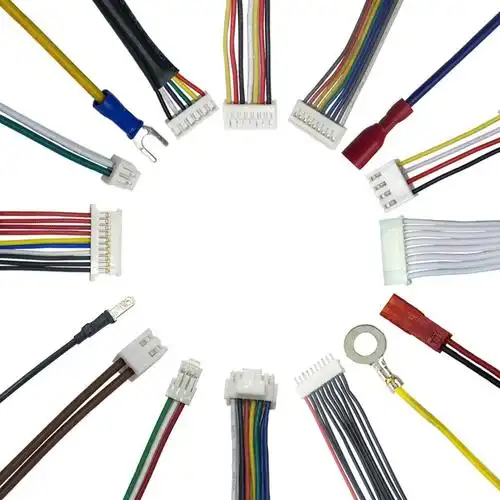
Industrial Cable Assembly Product Summary Material & Safety Utilizes premium raw materials and globally recognized components (e.g., ABB, TE Connectivity) ensuring high reliability and safety to prevent risks like fire and e.
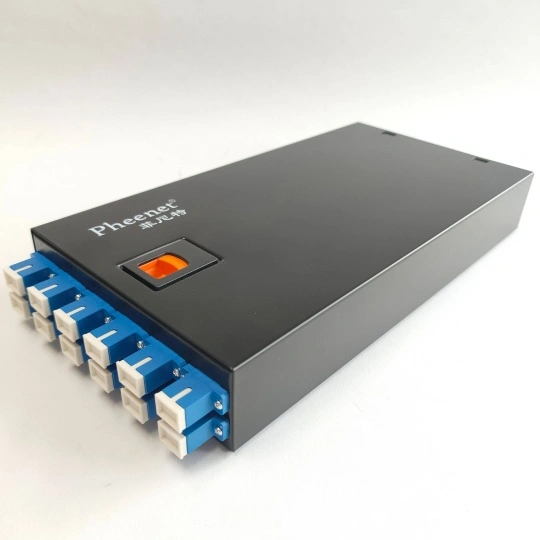
Product OverviewQuick-Install Cable Adapters are the game-changing connectivity solution designed for professionals and DIY enthusiasts alike. Engineered to eliminate installation hassles, these adapters provide instant, tool-free conne.
Feel free to reach out to us for any inquiries or orders.