Industrial Cable Assemblies-Industrial Cable Assemblies factory
In industrial automation, manufacturing, and heavy machinery, industrial cables and wiring harnesses are both essential for electrical signal and power transmission—but they serve distinct roles. Confusing the two can lead to incorrect component selection, increased installation time, or even equipment malfunctions. Below is a detailed breakdown of their key differences, designed to help engineers, procurement teams, and maintenance staff make informed decisions.
An industrial cable is a single or multiple conductive core(s) (typically made of copper or aluminum) wrapped in insulating material (e.g., PVC, XLPE, TPE). It may also include additional layers like shielding (for anti-interference, e.g., braided copper) or an outer sheath (for durability against oil, chemicals, or extreme temperatures). Its structure is relatively simple: it focuses on transmitting power or signals between two points.
Examples: Single-core power cables for connecting motors to inverters, multi-core signal cables for sensor-to-controller communication.
A wiring harness (also called a cable assembly) is a pre-organized system of multiple industrial cables/wires integrated into a unified unit. It includes:
Its structure is complex: it focuses on simplifying the connection of multiple components in a device.
Examples: Harnesses used in industrial robots (connecting motors, encoders, and controllers) or automated production lines (linking sensors, PLCs, and actuators).
The sole function of an industrial cable is to act as a direct medium for power or signal transfer. It is a standalone component that requires on-site cutting, stripping, and termination (e.g., crimping connectors) during installation. It works best when only two points need to be connected (e.g., a single sensor to a junction box).
A wiring harness serves as a pre-configured connection system. Its purpose is to:
It is designed for complex devices with multiple connection points (e.g., a CNC machine with 10+ sensors and 3 motors).
Industrial cables are mostly standardized products. They come in fixed gauges, insulation materials, and lengths (e.g., 100m rolls of 2.5mm² PVC-insulated power cable). Customization is possible but costly and time-consuming.
Wiring harnesses are highly customizable. Manufacturers design them to match the exact dimensions, connection points, and environmental requirements of a specific device. For example, a harness for a food-processing machine will use food-grade, oil-resistant materials, while one for a high-temperature oven will use heat-resistant insulation.
Whether you require high-performance industrial cables or custom wiring harnesses, FRS Brand Factory delivers solutions tailored to industrial demands. Our industrial cables are engineered with durable insulation and shielding to withstand harsh environments (from -40°C to 125°C, oil, and chemicals), ensuring stable power/signal transmission. For wiring harnesses, we offer end-to-end customization: from cable selection and connector matching to pre-testing (for continuity and insulation resistance) and labeling—all to reduce your installation time and improve equipment reliability. Trust FRS to be your one-stop partner for industrial connectivity, where quality and practicality meet your exact requirements.
Our factory offers high-quality products at competitive prices
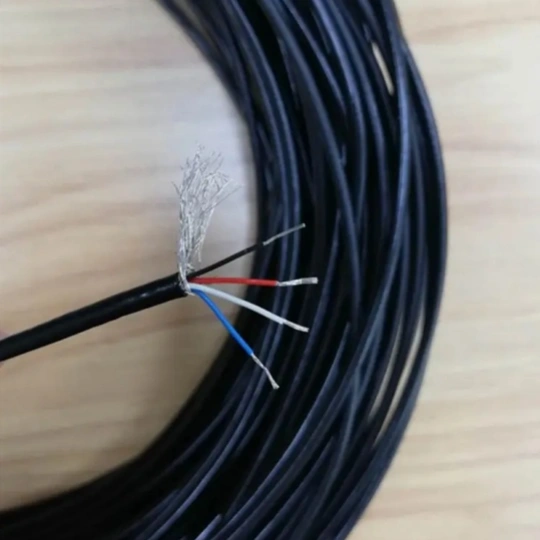
Ensure reliable power transmission and long-lasting performance in the harshest conditions with our High-Temperature Resistant Cable Accessories. Engineered to withstand extreme heat, these premium-grade accessories are designed to prote.
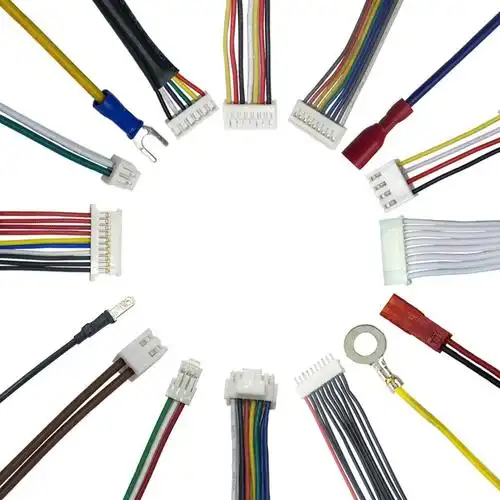
Industrial Cable Assembly Product Summary Material & Safety Utilizes premium raw materials and globally recognized components (e.g., ABB, TE Connectivity) ensuring high reliability and safety to prevent risks like fire and e.
Feel free to reach out to us for any inquiries or orders.