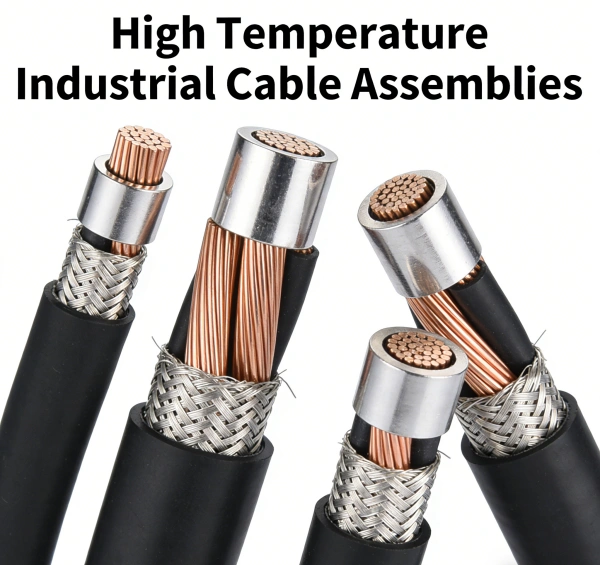
Selecting the correct insulation for high-temperature industrial cable assemblies is critical for safety, reliability, and longevity. A wrong choice can lead to premature failure, downtime, and even hazardous situations. This guide provides a detailed, practical comparison to help engineers, procurement managers, and project specifiers make an informed decision.
Understanding the Operating Environment
Before comparing materials, define your application’s specific demands:
Continuous Operating Temperature:The sustained temperature the cable will face.
Short-Term/Peak Temperature:Temperatures during process upsets or startup/shutdown cycles.
Chemical Exposure:Oils, solvents, acids, alkalis, or steam.
Mechanical Stress:Abrasion, flexing, vibration, or impact.
Electrical Requirements:Voltage rating, dielectric strength, and signal integrity needs.
Top High-Temperature Insulation Materials: A Detailed Comparison
Here’s a breakdown of the most common and effective materials for high-temperature industrial applications.
1. Silicone Rubber
Temperature Range:-60°C to +180°C (continuous), up to +200°C for some grades.
Key Strengths:Excellent flexibility, even at low temperatures. Good moisture and UV resistance. Inherently flame-retardant.
Weaknesses:Poor abrasion and cut-through resistance. Can be easily damaged if not protected by a suitable jacket or conduit.
Best For:Internal wiring in control panels near ovens, lighting systems in high-heat areas, and applications requiring frequent flexing.
Practical Tip:Always use a braided fiberglass or textile sleeve over silicone-insulated wires in high-abrasion environments.
2. ETFE (Ethylene Tetrafluoroethylene)
Temperature Range:-100°C to +150°C (continuous).
Key Strengths:Exceptional mechanical toughness—high tensile strength and abrasion resistance. Good chemical and radiation resistance. Lighter weight than many other fluoropolymers.
Weaknesses:Lower continuous temperature rating compared to PTFE or PFA.
Best For:Aerospace and military harnesses, robotics cables, and industrial automation where both heat and physical abuse are concerns.
3. FEP (Fluorinated Ethylene Propylene)
Temperature Range:-65°C to +200°C (continuous).
Key Strengths:Excellent chemical resistance. Melt-processable, allowing for extrusion over multi-conductor cables. Lower smoke and toxicity when burned compared to some materials.
Weaknesses:Softer than PTFE, making it more susceptible to cold flow (deformation under pressure).
Best For:Plenum cable in data centers, chemical plant wiring, and applications requiring good flexibility and chemical inertness.
4. PTFE (Polytetrafluoroethylene / Teflon®)
Temperature Range:-73°C to +204°C (continuous), with short-term peaks to +260°C.
Key Strengths:The industry benchmark for high-temperature and chemical resistance. Extremely low dielectric constant and loss, ideal for high-frequency signal cables. Excellent anti-stick properties.
Weaknesses:Difficult to process; requires specialized etching for bonding in potting or connectors. Can be brittle in thick sections and has poor cut-through resistance without protection.
Best For:Aerospace, military (MIL-SPEC), down-hole oil & gas tools, and any application where ultimate chemical/heat resistance is non-negotiable.
5. PFA (Perfluoroalkoxy Alkane)
Temperature Range:-65°C to +250°C (continuous), with peaks to +260°C.
Key Strengths:Combines PTFE’s chemical and heat resistance with FEP’s melt-processability. Excellent for extrusion and jacketing. Superior performance in severe chemical environments.
Weaknesses:Higher cost than PTFE and FEP.
Best For:High-performance wire and cable for chemical processing, pharmaceutical, and semiconductor industries where purity and chemical resistance are paramount.
6. Fiberglass & Mica Composites
Temperature Range:Up to +550°C (fiberglass), up to +1000°C or more (with mica).
Key Strengths:Withstand extremely high temperatures. Mica provides excellent electrical insulation even when hot.
Weaknesses:Brittle, not flexible. Primarily used as a wrap or tape, not a primary extruded insulation. Requires careful handling and often an outer protective sleeve.
Best For:Internal wiring of industrial furnaces, kilns, and heaters. Used as a protective wrap over primary insulated conductors in extreme heat zones.
7. PEEK (Polyetheretherketone)
Temperature Range:-60°C to +250°C (continuous).
Key Strengths:Outstanding mechanical strength and fatigue resistance at high temperatures. Excellent chemical and hydrolysis resistance. High radiation resistance.
Weaknesses:Very high material cost, limiting use to highly specialized applications.
Best For:Wire for down-hole drilling, aerospace engine compartments, and medical devices requiring autoclaving.
Quick Selection Guide by Temperature Range
Continuous Temperature
Recommended Primary Insulation
Key Consideration
Up to 105°C
Heat-Resistant PVC, XLPE
Cost-effective for many industrial controls.
105°C to 150°C
Silicone Rubber, ETFE
Balance of flexibility and toughness.
150°C to 200°C
Silicone (high-temp grade), FEP
Consider chemical exposure.
200°C to 260°C
PTFE, PFA
The standard for extreme heat and chemicals.
Above 260°C
Fiberglass/Mica wrapsover PTFE/PFA
Use as a protective layer; not a standalone insulation.
Critical Considerations & Common Pitfalls
Don’t Mix Materials Blindly:Using different insulation types in close proximity can lead to galvanic corrosion or compatibility issues, especially in high-heat, high-humidity environments. Consult with your cable manufacturer.
Voltage Derating is Essential:High temperatures reduce a cable’s voltage rating. Alwaysconsult the manufacturer’s derating curves. A cable rated for 600V at 20°C may only be safe for 300V at 200°C.
Beware of “Cheap” High-Temp Cable:Substandard materials may meet the temperature spec initially but fail rapidly due to poor aging characteristics. Verify supplier certifications and request material datasheets.
Consider the Entire Assembly:The insulation is only one part. Ensure connectors, potting compounds, and marking sleeves are also rated for the same high-temperature environment. A weak link anywhere can cause failure.
Mechanical Protection is Key:For PTFE and silicone, which have poor abrasion resistance, always specify an additional protective layer like a fiberglass or stainless steel braid, especially in high-vibration or abrasive environments.
Actionable Recommendations for Your Next Project
For General Industrial Ovens/Heaters (150-200°C):Start with silicone rubberinsulated wire, but always specify an overall fiberglass braidfor mechanical protection. Verify oil and chemical resistance if needed.
For Chemical Processing Plants (200°C+):PFAis often the best choice, offering the best balance of extreme temperature, broad chemical resistance, and processability. Use PTFEif the application is less mechanically demanding.
For Aerospace, Military, or Down-hole Tools:PTFEis the baseline. For areas with extreme mechanical stress (e.g., engine bays), consider ETFEfor its toughness or PEEKfor ultimate performance, if the budget allows.
For Furnace & Kiln Internal Wiring:Use a multi-conductor cable with PTFE-insulated conductors, an overall fiberglass or mica tape wrap, and a stainless steel braidfor protection.
Professional Summary
Choosing the best high-temperature insulation material is a balance of thermal performance, chemical resistance, mechanical durability, and cost. For temperatures up to 200°C, silicone rubber(with protection) and FEPare strong candidates. For the most demanding applications exceeding 200°C, especially with chemical exposure, PTFEand PFAare the industry standards. Always verify material compatibility, apply appropriate voltage derating, and protect softer insulations from mechanical damage. By carefully matching the material properties to your specific operating environment using the guidelines above, you can ensure the safety, reliability, and longevity of your high-temperature cable assemblies, minimizing costly downtime and failure risks.
In industries where equipment faces frequent exposure to water, chemicals, or rigorous cleaning processes, washdown-ready cable assemblies are critical for ensuring reliability, safety, and compliance. These specialized cables are desi...
Selecting the right industrial cable gauge is critical to avoiding equipment failure, safety hazards (such as overheating or short circuits), and inefficient energy transmission. Unlike residential cables, industrial applications involv...
The maximum bending angle of an industrial cable is not a fixed value; it is determined by multiple factors such as cable structure, material properties, application scenarios, and industry standards. Understanding these factors is cruc...
The automotive manufacturing industry is undergoing a profound transformation driven by electrification, intelligence, and connectivity. From traditional internal combustion engine vehicles to electric vehicles (EVs), hybrid electric ve...
In industrial settings, where cables are often exposed to high temperatures, electrical overloads, or potential ignition sources, fire safety ratings for industrial cables are critical to preventing and mitigating fire risks. These rati...
Introduction to Sensor Cable Assemblies
Industrial sensor cable assemblies are purpose-built wiring systems that connect sensors to control units in harsh environments. These engineered solutions integrate:
Shielded cables (braid...
Cross-Linked Polyethylene Insulated Cable, commonly referred to as XLPE cable, is a pivotal component in modern electrical power transmission and distribution systems. Unlike traditional cables insulated with polyethylene (PE) or polyvi...
When it comes to purchasing industrial cable, getting the best value for money is a top priority for most businesses. The prices of industrial cable can vary significantly among different suppliers, and simply choosing the cheapest opti...
In the complex ecosystem of industrial operations, electrical systems serve as the backbone that powers machinery, transmits critical data, and ensures seamless coordination between components. Among the countless elements that constitu...
Replacing industrial cables is not a one-time expense but a combination of direct and indirect costs, which vary significantly based on factory size, cable type, installation complexity, and replacement timing. Below is a detailed break...
Industrial cable assemblies are critical components in countless facilities, powering essential machinery and control systems. Their performance during a fire is paramount, not only for minimizing fire spread but crucially for maintaini...
High-pressure environments—such as deep-sea oil drilling platforms, high-pressure chemical reactors, and subsea exploration systems—pose unique challenges to industrial cables. Unlike standard industrial settings, these environments exp...
Industrial cables are essential components in various sectors, including manufacturing, energy, transportation, and construction. The manufacturing process of industrial cables is a complex and precise sequence of steps to ensure they m...
In the era of Industry 4.0, factories are undergoing a profound transformation towards intelligence and automation. At the core of this transformation lies reliable and efficient data transmission, and industrial Ethernet cables have em...
In industrial automation, vision systems serve as the “eyes” of intelligent production, responsible for high-precision tasks such as defect detection, dimension measurement, and position positioning. Industrial cable assembl...
When it comes to purchasing an industrial cable, making the right choice is crucial for ensuring safety, efficiency, and longevity in your operations. Industrial cables are designed to withstand harsh environments, handle heavy electric...
In the fast-paced world of industrial automation, where precision, reliability, and efficiency are non-negotiable, every component plays a critical role in keeping operations running smoothly. Among these unsung heroes are industrial au...
What Are Industrial Cable Assemblies?Industrial cable assemblies are custom-engineered bundles of cables, wires, connectors, and protective components designed to transmit power, signals, or data in demanding environments. Unlike stand...
In industrial environments, electrical surges pose a significant threat to industrial cables. These sudden, brief spikes in voltage can originate from various sources—such as lightning strikes, power grid fluctuations, or the startup an...
Ultra‑thin micro coaxial assemblies built with AWG42conductors are now central to the miniaturization of camera modulesin smartphones, drones, medical endoscopes, and industrial vision. This article explains what makes AWG42 the right c...
The soaring costs of metals like copper and aluminum, fundamental to power and data transmission cables, have long burdened infrastructure projects and manufacturers. A groundbreaking solution is emerging from the lab: lab-grown metals...
The automotive industry is undergoing a profound transformation. Driven by trends like electrification, intelligence, and flexible production, the traditional “thousands of cars on one line” model is giving way to smart factories capabl...
As robotics and high-flex automation evolve, the need for reliable, high-flex Mini-change industrial cable assemblies has never been greater. This 2026 guide explores the essential features, applications, and selection criteria for Mini...
1.TelecommunicationsCable assemblies ensure high-speed data transfer and connectivity in:Fiber optic networks: LC/SC/ST connectors and splice closures for telecom towers and data centers13.5G infrastructure: RF coaxial cables and ...
Selecting the right RF (Radio Frequency) cable assembly is critical for ensuring optimal performance in wireless communication systems, aerospace applications, medical devices, and countless other industries. With so many options availa...
In the rapidly advancing global robotics industry—covering industrial automation lines, collaborative robots, precision medical robotics, AGV/AMR logistics equipment, and high-precision servo systems—robotics cable assemblies are far mo...
In industries ranging from oil and gas to pharmaceuticals, chemical-resistant cable assemblies are critical components that ensure safety, reliability, and longevity in harsh environments. Exposure to aggressive chemicals, extreme tempe...
In today’s fast-paced technological landscape, industries demand cables that are not only high-performing but also adaptable to evolving needs. Enter modular design—a game-changing approach revolutionizing cable production. This articl...
1. The Rising Demand for Cost-Effective Medical Solutions
Hospitals worldwide face mounting pressure to reduce expenses without compromising quality. Medical cables—often overlooked—play a pivotal role in streamlining operations. Fro...
The cable manufacturing industry is undergoing a sustainable transformation as solar-powered plants emerge as pioneers in eco-friendly production. By integrating renewable energy into operations, these facilities significantly reduce ca...
In the complex network of modern power systems, cable assemblies serve as the vital arteries that facilitate the reliable transfer of electrical energy from generation sources to end-users. Unlike standard individual cables, cable assem...
In today’s fast-paced industrial environments—from automotive assembly lines and warehouse logistics to pharmaceutical packaging—barcode scanners are indispensable tools for tracking assets, streamlining workflows, and ensuring data acc...
Understanding Industrial Cable Model Naming ConventionsIndustrial cable models follow standardized codes indicating their construction, materials, and capabilities. Key elements include:
Conductor type: CU (copper), AL (aluminum...
High-voltage cable assemblies are critical components in industries like energy transmission, renewable energy, manufacturing, and infrastructure. Ensuring these cables meet stringent technical requirements is essential for safety, effi...
1. Cosmic Radiation: A Silent Threat
Space is filled with high-energy particles from solar flares and galactic cosmic rays. Standard cables degrade under prolonged exposure, leading to:
Signal interference – Disrupted data transm...
In the complex ecosystem of industrial machinery, every component plays a pivotal role in ensuring seamless operation, and industrial cables stand out as the unsung heroes. These cables are not mere conductors of electricity or data; th...
Meta Description: Discover key drivers, investment hotspots, and risk strategies for cable infrastructure in emerging economies. Data-driven analysis of fiber optic expansion and 5G integration opportunities.
The Rush to Eme...
Industrial cable components are the backbone of reliable and efficient connectivity in industrial automation, robotics, and machinery. Engineered to withstand harsh environments while ensuring seamless data transmission and power delivery.
Heavy machinery cable assemblies are robust, high-performance connectivity solutions engineered to meet the demanding requirements of industrial and heavy-duty applications. Designed for durability, reliability, and optimal performance in.
Contact Us
Feel free to reach out to us for any inquiries or orders.