Industrial Cable Assemblies-Industrial Cable Assemblies factory
In the era of intelligent manufacturing, industrial robots have become the backbone of automated production lines, undertaking tasks such as material handling, welding, assembly, and spraying with high efficiency and precision. Behind the stable and reliable operation of these robots lies a key component that is often overlooked but critical: robotics industrial cable assemblies. As the “neural network” and “blood vessel” of industrial robots, these cable assemblies are responsible for transmitting electrical signals, power, and even data between different components of the robot, such as the controller, servo motor, end effector, and sensors. The performance of cable assemblies directly determines the operational efficiency, service life, and safety of industrial robots. For manufacturers, integrators, and maintenance personnel of industrial robots, understanding the core performance requirements of robotics industrial cable assemblies is essential to selecting the right components, optimizing robot performance, and reducing operational costs. This article will delve into the core performance indicators that robotics industrial cable assemblies must meet to adapt to the harsh and complex working environment of industrial robots.
Industrial robots are characterized by high-frequency, repetitive motions, such as the rotation of the robotic arm, the telescoping of the linear module, and the flipping of the end effector. These motions require the robotics industrial cable assemblies to have excellent flexibility and fatigue resistance. If the cable assembly is too rigid, it will not only restrict the movement range of the robot but also easily cause cable breakage, insulation damage, or contact failure after long-term repeated bending and twisting, leading to robot downtime.
To meet this requirement, manufacturers of robotics industrial cable assemblies usually adopt special structural designs and materials. For example, using ultra-flexible copper conductors with multiple strands of fine copper wire twisted together can improve the flexibility and bending resistance of the cable. The insulation and sheath materials are often made of wear-resistant, elastic polymers such as polyurethane (PU) or thermoplastic elastomer (TPE), which can withstand repeated mechanical stress without permanent deformation. In addition, the cable assembly is usually equipped with a flexible shielding layer and a special stranding structure to ensure that the internal conductors and insulation layers are not damaged during long-term motion. The fatigue resistance of cable assemblies is usually tested by simulating the actual motion of industrial robots, such as repeated bending tests (with a specified bending radius and number of bends) and torsion tests. Qualified cable assemblies should be able to maintain stable performance after tens of millions of cycles of motion, which is the basic guarantee for the long-term continuous operation of industrial robots.
Industrial robots require a stable power supply to drive servo motors, hydraulic systems, and pneumatic systems, while also needing accurate signal transmission to realize the control of robot motion, the feedback of sensor data, and the communication with the upper computer. Therefore, robotics industrial cable assemblies must have high current-carrying capacity and stable signal transmission performance.
In terms of current-carrying capacity, the conductors of the power cables in the cable assembly must have sufficient cross-sectional area and excellent conductivity. Copper conductors are the first choice because of their high conductivity and good thermal conductivity. The cross-sectional area of the conductor is determined according to the power consumption of the robot’s components. For example, the cable connecting the servo motor, which requires a large starting current, needs a larger cross-sectional area to avoid overheating due to excessive current density. In addition, the insulation layer of the power cable must have good thermal resistance to withstand the heat generated during current transmission. Common insulation materials such as cross-linked polyethylene (XLPE) have high thermal stability and can work for a long time at high temperatures.
In terms of signal transmission, the signal cables in the cable assembly (such as Ethernet cables, encoder cables, and sensor cables) must have low signal attenuation, low crosstalk, and strong anti-interference ability. Industrial environments are usually filled with electromagnetic interference (EMI) from equipment such as motors, inverters, and welding machines. These interferences can distort the signal transmitted by the cable, leading to errors in robot control and reduced motion precision. To solve this problem, robotics industrial cable assemblies usually adopt shielding technology, such as using aluminum foil shielding, braided shielding, or double shielding (aluminum foil + braided). The shielding layer can effectively isolate external electromagnetic interference and prevent the internal signal from radiating outward to interfere with other equipment. In addition, the twisted pair structure is often used in signal cables to reduce crosstalk between adjacent conductors. For high-speed data transmission (such as Ethernet communication between the robot and the controller), the cable assembly must also meet the relevant standards (such as Cat5e, Cat6) to ensure the stability and speed of data transmission.
Industrial working environments are often harsh, with factors such as high temperature, low temperature, humidity, oil pollution, chemical corrosion, dust, and mechanical wear. Robotics industrial cable assemblies must have strong resistance to these environmental factors to ensure stable performance in various complex working conditions.
High and low temperature resistance is one of the key requirements. In some production scenarios, such as automotive welding workshops (high temperature) and cold storage (low temperature), the cable assembly must work normally within a wide temperature range. Generally, qualified robotics industrial cable assemblies can withstand temperatures from -40°C to 125°C or even higher. This requires the insulation and sheath materials to have excellent thermal stability, not to become brittle and crack at low temperatures, and not to soften and melt at high temperatures. For example, silicone rubber insulation materials have excellent high-temperature resistance, while PU materials have good low-temperature flexibility.
Oil resistance and chemical corrosion resistance are also important for cable assemblies used in automotive manufacturing, machinery processing, and chemical industries. These environments often have oil stains, solvents, and corrosive gases that can damage the cable’s sheath and insulation layer, leading to cable failure. Therefore, the sheath materials of robotics industrial cable assemblies are usually selected from oil-resistant and corrosion-resistant polymers, such as nitrile rubber (NBR) or special PU. These materials can form a protective layer to prevent oil and chemicals from penetrating into the cable interior.
In addition, the cable assembly must have good dustproof and waterproof performance. In dusty environments such as foundries and mining, dust can enter the cable connector, causing contact failure. In wet environments such as food processing plants and washing workshops, water can corrode the conductor and short-circuit the cable. Therefore, the connectors of the cable assembly are usually designed with IP67 or higher protection levels, which can effectively prevent dust and water from entering. The sheath of the cable is also tightly wrapped to avoid gaps where dust and water can accumulate.
During the operation of industrial robots, the cable assembly may come into contact with the robot’s mechanical components, the production line, or other equipment, resulting in friction, collision, and extrusion. Therefore, robotics industrial cable assemblies must have sufficient mechanical strength and wear resistance to withstand these physical impacts.
The wear resistance of the cable sheath is a key indicator. A wear-resistant sheath can prevent the cable from being worn through due to long-term friction, thereby protecting the internal conductors and insulation layers. Materials such as PU and TPE have high wear resistance, and some cable sheaths are also specially treated (such as adding wear-resistant additives) to further improve their service life. In addition, the cable assembly can be equipped with protective sleeves or drag chains to reduce direct friction between the cable and other objects. The drag chain is a common protective device that can accommodate the cable assembly and follow the robot’s motion, avoiding the cable from being tangled, pulled, or worn.
The mechanical strength of the cable assembly also includes tensile strength and compression resistance. During the robot’s motion, the cable assembly may be subjected to tensile forces. If the tensile strength is insufficient, the conductor may be stretched, resulting in increased resistance and signal attenuation. The compression resistance ensures that the cable assembly will not be damaged when subjected to extrusion. To improve mechanical strength, the cable assembly usually adopts a reinforced structure, such as adding aramid fibers (Kevlar) in the cable core. Aramid fibers have high tensile strength and can withstand large tensile forces without breaking.
Safety is a top priority in industrial production, and robotics industrial cable assemblies must meet relevant industry standards and regulatory requirements to ensure the safety of personnel and equipment. These standards mainly involve flame retardancy, insulation resistance, voltage resistance, and environmental protection.
Flame retardancy is an important safety requirement. In the event of a fire, the cable assembly should not easily catch fire, or should be able to self-extinguish after catching fire to prevent the spread of the fire. Cable materials are usually classified according to flame retardancy levels, such as UL94 V-0 (the highest flame retardancy level), which means that the material will self-extinguish within 10 seconds after being ignited. Insulation resistance and voltage resistance ensure that there is no leakage between the cable’s conductors and between the conductor and the ground. A high insulation resistance can prevent current leakage, while a high voltage resistance can withstand transient overvoltages (such as lightning strikes or power grid fluctuations) without breakdown.
In addition, with the increasing emphasis on environmental protection, robotics industrial cable assemblies must also meet environmental protection standards, such as RoHS (Restriction of Hazardous Substances) and REACH (Registration, Evaluation, Authorization and Restriction of Chemicals). These standards restrict the use of hazardous substances such as lead, mercury, and cadmium in cable materials, ensuring that the cable does not cause harm to the environment and human health during production, use, and disposal. Compliance with these standards is not only a legal requirement but also a manifestation of corporate social responsibility, which is conducive to improving the market competitiveness of the product.
Industrial robots come in various types and models, such as articulated robots, SCARA robots, delta robots, and collaborative robots. Different robots have different structural designs, motion ranges, and performance requirements, which require robotics industrial cable assemblies to have good compatibility and customization capabilities.
Compatibility means that the cable assembly can be matched with different brands and models of robots and their components (such as controllers, motors, and sensors). This requires the cable assembly to adopt standard connectors (such as M12, M8, and D-Sub connectors) that are widely used in the industry. Standard connectors ensure that the cable assembly can be easily connected and disconnected, facilitating installation and maintenance.
Customization is even more important for special robot applications. For example, collaborative robots require cable assemblies to be more flexible and compact to adapt to their small size and close interaction with humans; high-precision robots (such as those used in the electronics industry) require cable assemblies to have extremely low signal attenuation to ensure motion precision; heavy-duty robots (such as those used in the automotive industry) require cable assemblies to have higher current-carrying capacity and mechanical strength. Manufacturers of robotics industrial cable assemblies can provide customized solutions according to the specific needs of customers, including customizing the length, conductor cross-sectional area, shielding type, sheath material, and connector type of the cable assembly. Customized cable assemblies can better adapt to the working characteristics of specific robots, maximizing the performance of the robot.
Robotics industrial cable assemblies are an indispensable part of industrial robots, and their core performance directly affects the stability, reliability, and safety of robot operation. The core performance requirements of these cable assemblies include flexibility and fatigue resistance to adapt to high-frequency motion, high current-carrying capacity and stable signal transmission to ensure power supply and control precision, resistance to harsh environmental factors to adapt to complex industrial working conditions, mechanical strength and wear resistance to withstand physical impact and friction, safety and compliance to meet industry standards, and compatibility and customization to adapt to different types of robots. For enterprises engaged in the research, production, and application of industrial robots, it is crucial to select robotics industrial cable assemblies that meet these core performance requirements. By choosing high-quality cable assemblies, enterprises can improve the operational efficiency of robots, extend their service life, reduce maintenance costs, and ultimately enhance the competitiveness of their production lines in the intelligent manufacturing era. With the continuous development of industrial robot technology, the performance requirements of robotics industrial cable assemblies will become higher and higher, and manufacturers will continue to innovate in materials, structures, and processes to provide more advanced and reliable cable assembly solutions for the industrial robot industry.
Our factory offers high-quality products at competitive prices
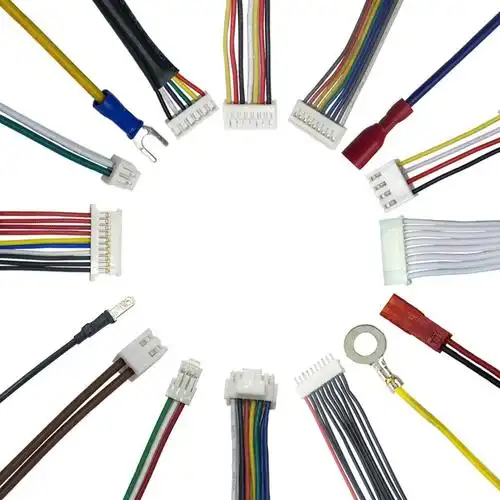
Industrial Cable Assembly Product Summary Material & Safety Utilizes premium raw materials and globally recognized components (e.g., ABB, TE Connectivity) ensuring high reliability and safety to prevent risks like fire and e.
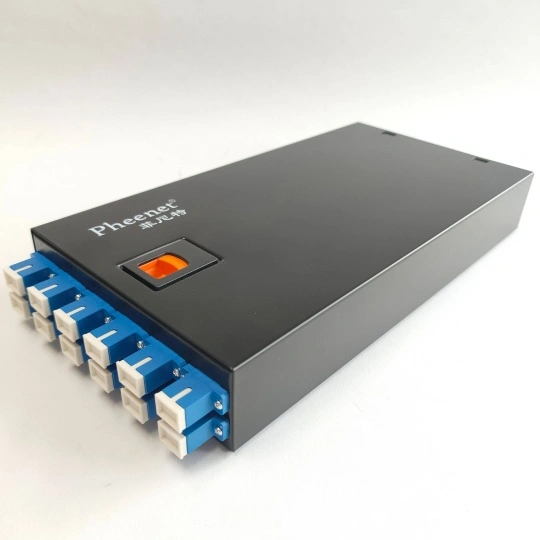
Product OverviewQuick-Install Cable Adapters are the game-changing connectivity solution designed for professionals and DIY enthusiasts alike. Engineered to eliminate installation hassles, these adapters provide instant, tool-free conne.
Feel free to reach out to us for any inquiries or orders.