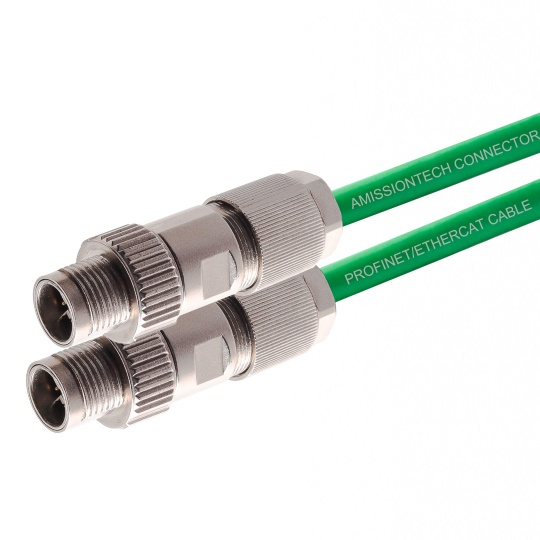
Industrial Cable Assemblies factory

Industrial Cable Assemblies factory

Industrial Cable Assemblies-Industrial Cable Assemblies factory

INFO

Absolutely. Yes, chemical resistant industrial cable assemblies can be extensively customizedto meet specific industrial needs.

Generic off-the-shelf cables often fail prematurely in aggressive environments because they are not engineered for the specific cocktail of chemicals, temperatures, and mechanical stresses present in your facility. Customization allows engineers to select specific polymers, shielding techniques, and connector integrations to ensure the cable survives—not just connects.

Below is a comprehensive guide on how to specify custom chemical resistant cable assemblies, featuring practical material comparisons, application scenarios, and a step-by-step design checklist.


1. Why Standard Cables Fail in Chemical Environments

Standard PVC or rubber cables are designed for general-purpose use. In industrial settings, they face three main threats:

  • Chemical Degradation:Solvents, acids, or oils can swell the jacket, leading to cracking or softening.
  • Permeation:Small chemical molecules can penetrate the outer jacket and attack the insulation or conductors.
  • Mechanical Stress:Frequent cleaning (washdowns) combines chemical exposure with high-pressure water and temperature swings.

Customization solves this by matching the Cable Jacket Materialspecifically to the chemical media present.

2. Customization Options: Materials & Specifications

When requesting a quote, you are not just buying a cable; you are engineering a solution. Here are the key variables you can control:

A. Jacket Material Selection (The First Line of Defense)

The outer jacket determines chemical resistance. You must specify the exact chemical family you are fighting.

MaterialBest ForAvoidTemp Range (Typical)
PUR (Polyurethane)Most Industrial Uses.Excellent resistance to oils, greases, and abrasion. Highly flexible.Strong Acids, Ozone, High Humidity (>40°C)-40°C to +80°C
TPE (Thermoplastic Elastomer)Washdowns.Resists animal fats, vegetable oils, and cleaning agents (chlorine/bleach).Gasoline, Hydrocarbons-50°C to +105°C
FEP / PTFE (Teflon)Extreme Chemistry.Virtually impervious to almost all chemicals, including solvents.None (High performance)-200°C to +200°C
CSPE (Hypalon)UV & Weather.Great for outdoor chemical plants. Resists ozone and weathering.Aromatic Hydrocarbons-40°C to +90°C

Pro Tip:If your facility uses Sulfuric Acid, Teflon (FEP) is mandatory. If you use Mineral Oils, TPU or specialized Nitrile jackets are required.

B. Connector & Overmolding Customization

A cable is only as strong as its weakest link, which is usually the connector interface.

  • Overmolding:Instead of a mechanical backshell, liquid material is molded directly onto the cable and connector. This creates a permanent, watertight seal (IP67/IP68/IP69K) preventing chemical wicking.
  • Material Choice:Overmolds can be customized using TPU or TPE to match the chemical resistance of the cable jacket.
  • Strain Relief:Custom shaping (e.g., 45° or 90° bends) prevents kinking and relieves mechanical stress in tight panels.

C. Shielding & Signal Integrity

In chemically harsh environments (often involving heavy machinery), EMI (Electromagnetic Interference) is a risk. Custom assemblies allow you to specify:

  • Foil Shielding:For high-frequency data signals.
  • Braid Shielding:For low-frequency power and superior mechanical durability.
  • Drain Wires:To ground the shield effectively.

3. Real-World Application Scenarios

Understanding wherethese cables are used helps visualize the customization required.

Scenario A: Food & Beverage Processing (Washdown Zones)

  • The Challenge:Daily high-pressure washdowns using caustic soda and chlorine-based sanitizers.
  • The Solution:TPE Jackets(resistant to chlorine) combined with IP69K Stainless Steel connectors. The cable must also be LSZH(Low Smoke Zero Halogen) to prevent toxic smoke in case of fire.

Scenario B: Semiconductor Manufacturing (Cleanrooms)

  • The Challenge:Exposure to aggressive etching chemicals (Hydrofluoric Acid) and solvents. Static discharge can ruin microchips.
  • The Solution:FEP/PFA Jackets(impervious to acids). The cable assembly includes a carbon-impregnated drain linefor static dissipation and is cleanroom-packaged.

Scenario C: Automotive Paint Shops

  • The Challenge:Robots are sprayed with solvent-based paints and thinners.
  • The Solution:Specialized Puron or PVDF jacketsthat resist paint adhesion (self-cleaning properties) and solvents. Custom lengths to reduce clutter in robotic arms.

4. The Specification Checklist: How to Order

To get an accurate quote and avoid delays, prepare the following technical details before contacting a manufacturer.

1. Environmental Data Sheet

  • List the top 3 chemicals the cable will touch (e.g., “Acetone,” “Hydraulic Oil ISO 46”).
  • State the concentration (%) and temperature of these chemicals.

2. Mechanical Requirements

  • Flexing:Is this a static connection or a continuous flex application (drag chain)?
  • Bend Radius:What is the minimum space available?

3. Electrical Specifications

  • Voltage/Current:e.g., 600V, 10A.
  • Signal Type:Power, Data (Cat5e/6), or Coaxial?

4. Connector Details

  • Brand and part number (e.g., “Molex Mini-Fit Jr.”) or generic description (e.g., “M12, A-coded, 4-pin”).

5. Critical Pitfalls to Avoid (The “Gotchas”)

Even experienced engineers make these mistakes. Keep these in mind:

  • Ignoring Permeation Rates:A jacket might resist a chemical on the surface, but fumes can still permeate through microscopic pores over time. Solution:Ask for a “Permeation Test Report” for your specific chemical.
  • Mismatched Thermal Expansion:If you overmold a connector with a high-durometer plastic onto a soft silicone cable, temperature changes will cause the bond to crack. Solution:Ensure the Coefficient of Thermal Expansion (CTE) of the jacket and overmold are compatible.
  • The “Swelling” Effect:Some chemicals cause jackets to swell. A swollen cable can jam in cable carriers. Solution:Conduct a lab immersion test for 72-168 hours to check for volume change.

Summary

Customizing chemical resistant cable assemblies is not just about “making it longer” or “changing the color.” It is a precise engineering exercise involving material science (Polymers), electrical engineering (Shielding), and mechanical design (Overmolding).

By specifying the exact chemical exposure, temperature range, and mechanical stress, you can source a cable assembly that drastically reduces downtime and maintenance costs. Always request a sample for a “Real Environment Test”before committing to a full production run.

FAQ

NEWS

More Products

Our factory offers high-quality products at competitive prices
Corrosion-Resistant Cable Connectors | Durable & Weatherproof Solutions

Corrosion-Resistant Cable Connectors | Durable & Weatherproof Solutions

Corrosion-Resistant Cable Connectors: Reliable Connectivity for Harsh Environments Ensure uninterrupted performance in the toughest conditions with our ​corrosion-resistant cable connectors. Designed for durability and longevity, these.

Quick-Install Cable Adapters

Quick-Install Cable Adapters

‌Product Overview‌Quick-Install Cable Adapters are the game-changing connectivity solution designed for professionals and DIY enthusiasts alike. Engineered to eliminate installation hassles, these adapters provide instant, tool-free conne.

Contact Us

Feel free to reach out to us for any inquiries or orders.

Call Us

Have a question? Give us a call!

                   +8618818785005

Email Us

Send us an email and we'll get back to you soon.

sales@custom-cable-assemblies.com
       
Home Products Contact