Industrial Cable Assemblies-Industrial Cable Assemblies factory
In numerous industrial settings, from outdoor power transmission to manufacturing facilities with exposure to sunlight, industrial cables are constantly exposed to ultraviolet (UV) radiation. This raises a crucial question: Why is UV resistance an essential feature for these cables?
Ultraviolet radiation, a component of sunlight, poses significant threats to industrial cables. One of the primary harms is the degradation of cable materials. The insulation layer of industrial cables, often made of polymers, is particularly vulnerable. UV rays break down the chemical bonds in these polymers, causing the insulation to become brittle, hard, and prone to cracking. As the insulation deteriorates, its ability to prevent electrical leakage is compromised, increasing the risk of short circuits, electrical faults, and even safety accidents such as fires.
Moreover, the sheathing of industrial cables, which serves to protect the internal conductors from external factors like moisture, dust, and mechanical damage, can also be damaged by UV radiation. A damaged sheath loses its protective function, allowing harmful elements to penetrate the cable. This not only affects the performance of the conductors but also accelerates the overall aging process of the cable, significantly shortening its service life.
The importance of UV resistance for industrial cables in terms of performance and longevity cannot be overstated. Cables with UV-resistant properties are able to maintain their structural integrity and electrical performance even under prolonged UV exposure. They can resist the harmful effects of UV radiation, ensuring stable operation and reducing the need for frequent replacements and maintenance. This, in turn, lowers the overall cost of ownership, as fewer resources are spent on repairs and replacements.
In industries where cable reliability is of utmost importance, such as the petroleum, chemical, and power sectors, UV resistance is indispensable. In these fields, any cable failure can lead to costly production downtime, environmental hazards, and potential risks to personnel safety. UV-resistant industrial cables provide the necessary stability and durability to ensure uninterrupted operations.
Different industrial scenarios have varying requirements for the UV resistance of cables. For example, cables used in outdoor applications, such as those for overhead power lines or outdoor industrial equipment, are exposed to direct and intense sunlight for long periods. These cables require a higher level of UV resistance to withstand the harsh UV conditions. On the other hand, cables used indoors but in areas with significant UV exposure from artificial sources, such as certain manufacturing plants with high-intensity lighting, also need appropriate UV-resistant capabilities, although the required level may be lower compared to outdoor cables.
In conclusion, the need for industrial cables to be UV-resistant stems from the damaging effects of UV radiation on cable materials, the importance of maintaining cable performance and longevity, and the varying demands of different industrial environments. By incorporating UV-resistant features, industrial cables can operate safely and reliably, contributing to the smooth running of industrial processes.
Our factory offers high-quality products at competitive prices
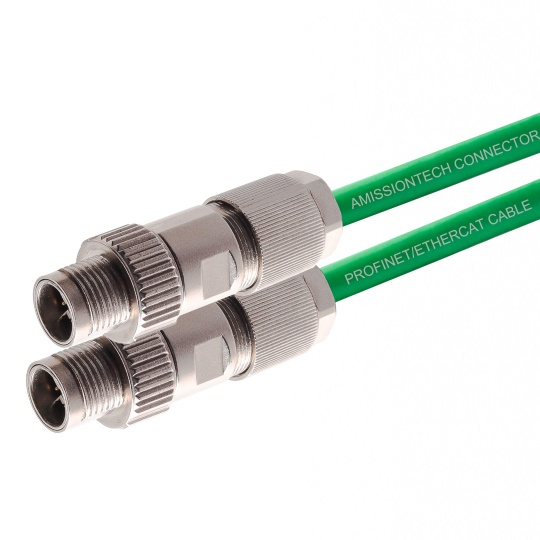
Industrial cable components are the backbone of reliable and efficient connectivity in industrial automation, robotics, and machinery. Engineered to withstand harsh environments while ensuring seamless data transmission and power delivery.
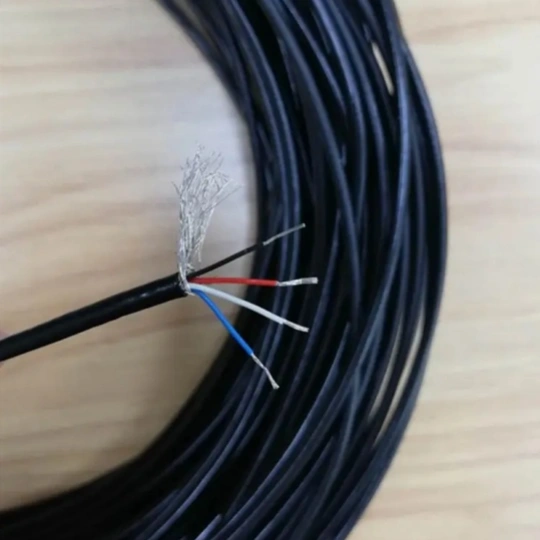
Ensure reliable power transmission and long-lasting performance in the harshest conditions with our High-Temperature Resistant Cable Accessories. Engineered to withstand extreme heat, these premium-grade accessories are designed to prote.
Feel free to reach out to us for any inquiries or orders.