In today’s industrial landscape, oil-resistant cable assemblies are no longer a niche product—they are a mission-critical component in ensuring uptime, safety, and long-term cost efficiency. This article explores how new material innovations are enhancing the durability of oil-resistant industrial cable assemblies, helping engineers and procurement professionals make more informed decisions.
Why Oil Resistance is a Top Priority
Modern production facilities, from automotive plants to oil & gas platforms, are saturated with oils: lubricants, hydraulic fluids, gear oils, and coolants. When these fluids contact standard cables, they can be absorbed by the polymer jacket and insulation, leading to:
Swelling and Softening:Resulting in deformation and cracking.
Plasticizer Migration:Causing the cable to become stiff and crack under repeated flexing.
Insulation Breakdown:Leading to increased dielectric losses and short circuits.
Industry data indicates that in environments with significant oil exposure, over half of cable failures are linked to chemical damage of the insulation and sheath. Therefore, selecting the right oil-resistant industrial cable assembly is a strategic decision that directly impacts equipment uptime, maintenance costs, and operational safety.
How Cables Fail in Oily Environments
Oil-induced degradation primarily affects the cable at a material level in three ways:
Swelling and Dimensional Change:Oil molecules penetrate the polymer matrix, causing it to expand. For instance, traditional PVC cables can exhibit volume expansion rates exceeding 50% after immersion in oil, leading to cracking and poor mechanical protection. Advanced oil-resistant cables, however, can limit this swelling to under 5–7%.
Hardness and Flexibility Loss:The migration of plasticizers makes the material brittle. This is particularly detrimental in dynamic applications (e.g., cable tracks, robotic arms), where it leads to premature fatigue failure.
Chemical and Mechanical Property Degradation:Oil exposure can degrade tensile strength, elongation, and insulation resistance. Standards like UL Oil Res I/II, EN 50363-4-1, and ASTM D471specify minimum retention levels for these properties after oil immersion tests.
Understanding these failure modes is the first step in specifying cables that can withstand harsh oily conditions.
Key Materials for Oil-Resistant Cable Assemblies
The durability of an oil-resistant cable begins with its material formulation. Here’s a breakdown of the most common options:
Material Family
Key Characteristics
Oil Resistance Rating*
Typical Applications
PVC
Cost-effective, widely used.
2 (Fair)for standard grades.
General purpose, but requires enhanced formulations for oily environments.
Polyurethane (PUR)
Excellent abrasion and tear resistance, good flexibility.
4 (Excellent)
High-flex robotic systems, cable tracks, and machinery in oily, high-wear areas.
Thermoplastic Elastomers (TPE)
Good balance of flexibility, oil, and weather resistance.
3-4 (Good-Excellent)
Industrial control and data cables in mixed chemical environments.
Fluoropolymers (PTFE, FEP, ETFE)
Outstanding chemical and high-temperature resistance.
4-5 (Excellent-Outstanding)
Aerospace, semiconductor, and chemical processing industries.
Rubber Blends (NBR, CR, EPDM)
Designed for specific chemical exposures.
Varies (NBR/CR are good for oils).
Harsh environments like subsea umbilicals and downhole cables.
*Based on a 1–5 scale (1=Poor, 5=Outstanding) for general performance in industrial oils.
Advanced Material Formulations
Recent innovations go beyond standard polymers by engineering specialized compounds:
Enhanced PVC:New formulations for low-temperature and oil resistance use specialized phthalate esters and toughening agents to maintain flexibility and oil resistance at temperatures as low as -40°C.
Multi-Layer Composite Sheaths:Combining layers like NBR/CR for oil contact, aramid fiber for tensile strength, and a TPU/TPE outer layer for mechanical protection. This approach can limit volume expansion to under 5% even after prolonged exposure to hot oils.
Halogen-Free, Flame-Retardant Polyolefins:New polyolefin-based materials achieve a balance of A-class flame retardancy, low smoke, halogen-free properties, and oil resistance, making them ideal for marine and offshore bundled cables.
Cable Construction & Assembly Design
A robust cable assembly pairs high-performance materials with intelligent construction:
Conductor Selection:Fine-stranded, high-purity copper (sometimes silver- or nickel-plated) ensures both flexibility and stable conductivity in harsh conditions.
Shielding Strategies:For data and signal cables, braid + foil or individually shielded twisted pairs (S/FTP) are used to minimize electromagnetic interference (EMI) in electrically noisy industrial environments.
Overmolding & Connector Sealing:Overmolding connectors with thermoplastic elastomers (TPE/TPU) creates a watertight and oil-tight seal, providing strain relief and protecting the critical junction from oil ingress and mechanical stress.
Mechanical Protection:Incorporating steel wire braid, armor, or aramid fiber enhances tensile strength and crush resistance, which is vital for dynamic applications like festoon cables and robotic systems.
Key Performance Benchmarks
When evaluating oil-resistant cables, look for data that quantifies performance. Leading products provide concrete metrics, such as:
Oil Swelling:< 5–7% volume change after 168–360 hours in oil at elevated temperatures (e.g., 85–120°C).
Mechanical Retention:> 85–92% tensile strength retention after oil immersion, significantly exceeding standard requirements.
Dynamic Flex Life:Capable of withstanding 5 million flex cycles or more in oil-contaminated environments.
Application Scenarios
Automotive Manufacturing:In body shops and powertrain lines, cables are exposed to cutting oils, coolants, and hydraulic fluids. High-flex, oil-resistant assemblies with PUR or TPE jackets are used in cable tracks and robot dress packs to ensure long service life and high availability.
Oil & Gas / Petrochemical:Cables here must withstand crude oil, diesel, and drilling mud. They require robust constructions, such as lead sheathing or double armor, and must comply with standards like NEK 606, IEEE 1580 Type P, and IEC 60811-404for long-term reliability.
Food & Pharmaceutical Processing:Cables must resist animal and vegetable oils while meeting hygiene and cleanability standards. Materials that are both oil-resistant and meet FDA or EU food-contact regulations are essential to prevent cracking and contamination risks.
How to Specify the Right Cable Assembly
To ensure you get a cable that performs as expected, your specification should be precise:
Define the Chemical Environment:Identify the specific oils (e.g., mineral oil, hydraulic fluid, gear oil) and their operating temperatures.
Define Mechanical and Electrical Requirements:Detail the temperature range, flexing needs (bending radius, cycles), voltage, and data rate.
Request Supporting Data:Ask for oil immersion test data (e.g., per UL Oil Res I/II, EN 50363-4-1, ASTM D471) and mechanical/flex-life test results.
Confirm Third-Party Certifications:Ensure the cable meets relevant standards for flame retardancy (e.g., IEC 60332, UL 94), low smoke, and halogens, especially in public or offshore installations.
Why Partner with an Experienced Cable Assembly Factory?
While material datasheets provide a starting point, the real-world performance of an oil-resistant cable assembly depends on expert engineering and manufacturing. An experienced factory can:
Provide Deep Technical Support:Analyze your specific environment and provide data-driven recommendations on materials and constructions.
Offer Advanced Testing:Conduct oil immersion, flex-life, and environmental tests to validate designs before full-scale production.
Ensure Consistent Quality:Maintain strict process controls from conductor stranding to final assembly and testing, ensuring long-term reliability.
This is where a specialized manufacturer like FRSexcels. With extensive experience in high-reliability interconnect systems for industries including medical, military/aerospace, and industrial automation, FRS offers expert support for your most demanding applications.
Leveraging its strong R&D and testing capabilities, FRS helps customers choose the right oil-resistant materials and designs, backed by certifications like ISO 9001, IATF 16949, and UL. Whether you need a highly flexible cable for an automotive paint shop or a rugged, oil-resistant assembly for offshore equipment, FRS provides reliable, long-life solutions. Contact the FRS engineering team to turn your complex connectivity challenges into a competitive advantage.
Cable twisting in rotating machinery like robots, winders, turntables, or packaging equipment is a major headache. It leads to premature failure, costly downtime, and frustrating maintenance. Fortunately, there are proven strategies to ...
In industrial operations, the selection of cables is of great significance as it directly affects the safety, efficiency and environmental performance of the entire system. Among various cable types, halogen-free industrial cables have ...
Introduction
Industrial robot cable assemblies serve as the lifelines of automation systems, requiring specialized materials to withstand dynamic movements, electromagnetic interference, and harsh industrial environments. This guide ...
Industrial cables are the lifelines of manufacturing plants, power stations, and heavy machinery, transmitting electricity and data to keep operations running smoothly. However, constant exposure to harsh environments—such as extreme te...
Rodent damage to industrial cables is a persistent and costly problem for manufacturing plants, power facilities, and logistics hubs. Mice, rats, and squirrels have incisors that grow continuously—they gnaw on cable insulation and condu...
In industrial settings such as manufacturing plants, oil refineries, automotive production lines, and marine engineering, cable assemblies are often exposed to harsh conditions—constant oil immersion, high temperatures, mechanical abras...
Industrial cable assemblies are critical components in manufacturing, automation, energy, and telecommunications. They ensure reliable power, signal, and data transmission in demanding environments. Below are the most widely used types ...
Industrial cables play a vital role in the automotive industry, enabling the smooth operation of various systems. Here are their common applications along with practical solutions:
Power Transmission
Vehicles rely on industrial ca...
IntroductionWind energy is a cornerstone of global renewable energy systems, with wind turbines operating in diverse environmental conditions. Among critical components, cables used in wind power systems—connecting turbines, transformer...
Introduction
As global industries shift toward sustainability, eco-friendly industrial cable assemblieshave become a strategic priority for procurement managers and design engineers. These components are no longer niche products; the...
The medical industry operates on a foundation of precision, safety, and accountability—where even minor component failures can lead to life-threatening consequences. Industrial cables, though often overlooked, are the “nervous sys...
Industrial cables are vital for the operation of industrial equipment. However, in dusty environments, their performance and lifespan are severely threatened. Without proper maintenance, it may lead to equipment failure, production inte...
In cold climates, industrial cables face a series of unique challenges that can significantly affect their performance, reliability, and lifespan. These issues not only disrupt industrial operations but also pose potential safety hazard...
In industries such as food processing, pharmaceuticals, agriculture, and wastewater management, equipment is frequently exposed to high-pressure washdowns, harsh chemicals, and extreme temperatures. To ensure reliability and safety, sel...
In the era of Industry 4.0, automated systems have become the backbone of manufacturing, energy, logistics, and countless other industries. From robotic arms assembling cars on production lines to sensors monitoring oil pipelines and au...
In the dynamic world of robotics, where machines perform intricate movements, handle complex tasks, and operate in diverse environments, the role of industrial cables is often underestimated. Among the key properties of these cables, fl...
Mining operations operate in some of the harshest environments on Earth—underground tunnels with extreme humidity, open-pit sites battered by dust and temperature swings, and heavy machinery that subjects equipment to constant vibration...
Industrial cable assemblies are critical components in manufacturing, automation, energy, and other heavy-duty sectors. Their lifespan directly impacts operational efficiency, safety, and maintenance costs. But how long do they actually...
Yes, industrial cable assemblies can be, and in most cases must be, customized to meet the demanding and diverse needs of new energy vehicle (NEV) manufacturing. This article provides a practical guide for B2B buyers and engineers on ho...
Installing industrial cable is a critical step in launching a new facility, as it powers machinery, transmits control signals, and ensures operational safety. However, the cost of this process varies widely—typically ranging from \(15,0...
In the rapidly advancing global robotics industry—covering industrial automation lines, collaborative robots, precision medical robotics, AGV/AMR logistics equipment, and high-precision servo systems—robotics cable assemblies are far mo...
In today’s fast-paced manufacturing world, precision is non-negotiable—especially in industries like aerospace, automotive, and electronics, where a single faulty cable can lead to system failures or safety risks. Traditional cable asse...
The soaring costs of metals like copper and aluminum, fundamental to power and data transmission cables, have long burdened infrastructure projects and manufacturers. A groundbreaking solution is emerging from the lab: lab-grown metals...
Industrial cable assemblies are the unsung heroes of modern manufacturing, automation, and infrastructure. They power machinery, transmit critical data, and ensure seamless connectivity in harsh environments. However, selecting the righ...
In industries where reliability, safety, and performance are non-negotiable, cable assembly servicesare a critical link in the supply chain. From industrial automation and medical devices to aerospace and EV charging, the right cable as...
In the complex infrastructure of industrial facilities, the role of industrial cable installation services cannot be overstated. These services form the backbone of reliable power distribution, data transmission, and communication withi...
In demanding industrial environments, reliable interconnections are not optional—they are the backbone of your system’s performance and safety. Industrial Cable Assembliesencompass a wide range of engineered cable and wire harness solut...
As global temperatures rise and extreme weather events become more frequent, industries worldwide are rethinking infrastructure design to withstand environmental challenges. Among these innovations, climate-proof cables are emergi...
The Backbone of Reliability
In an era where downtime costs enterprises an average of $5,600 per minute (Gartner 2024), [Company Name]’s data center has achieved an industry-leading 99.9% uptime through revolutionary cable infra...
In industries ranging from automotive manufacturing to marine engineering, and even in everyday outdoor electrical setups, waterproof cable connectors play a pivotal role in ensuring reliable electrical connections while safeguarding ag...
Cable assemblies are critical components in electrical and mechanical systems, ensuring reliable power and signal transmission. However, improper installation can lead to performance issues, safety hazards, or even system failure. This ...
Introduction
In an era where electromagnetic pulse (EMP) threats loom large—whether from natural solar flares or man-made weapons—the military’s increasing orders for EMP-shielded cables underscore their vital role in safeguarding cr...
IntroductionIndustrial environments with extreme temperatures—such as steel mills, chemical plants, automotive manufacturing, or renewable energy facilities—demand specialized cable components to ensure safety, durability, and performan...
In the world of industrial automation, robotics, and heavy machinery, the cable assembly is far more than just a bundle of wires. It is the central nervous system of your equipment, responsible for transmitting power, control signals, a...
IntroductionIn industries where harsh environments are the norm—such as automotive, industrial automation, marine, and telecommunications—cable assemblies must withstand dust, water, extreme temperatures, and mechanical stress. IP67 and...
In today’s interconnected industrial landscape, electromagnetic interference (EMI) poses a significant threat to the reliability and performance of cable assemblies. From factory automation to power distribution systems, EMI can disrupt...
Introduction: Why Robots Break Cables First
In high-speed industrial robotics, the weakest link is often not the motor or gearbox, but the cable system. Robotic arms operating 24/7 in pick-and-place, welding, and assembly lines are ...
In modern manufacturing, vision systems have become indispensable for tasks like quality inspection, part positioning, and process monitoring. These systems rely on high-speed data transmission between cameras, light sources, controller...
In the complex and demanding landscape of industrial operations, every component plays a critical role in ensuring seamless functionality, safety, and efficiency. Among these essential components, industrial cable connectors stand out a...
Selecting the right jacket material for industrial cable assemblies is critical. It directly impacts performance, longevity, and safety in demanding environments. PVC (Polyvinyl Chloride) and TPE (Thermoplastic Elastomer) are two leadin...
Heavy machinery cable assemblies are robust, high-performance connectivity solutions engineered to meet the demanding requirements of industrial and heavy-duty applications. Designed for durability, reliability, and optimal performance in.
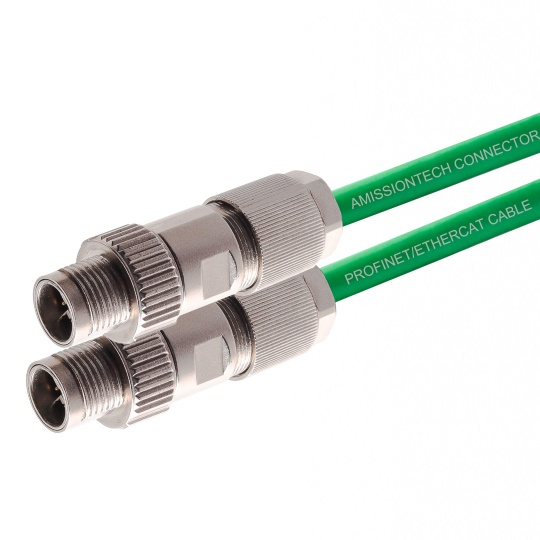
Industrial cable components are the backbone of reliable and efficient connectivity in industrial automation, robotics, and machinery. Engineered to withstand harsh environments while ensuring seamless data transmission and power delivery.
Contact Us
Feel free to reach out to us for any inquiries or orders.