Introduction In industrial environments with high-vibration machinery—such as heavy-duty motors, pumps, turbines, or aerospace equipment—proper cable management is critical. Poorly secured cables can lead to wear, insulation damage, short circuits, or even catastrophic system failures. This article dives into proven cable-fixing techniques for high-vibration applications, emphasizing practicality, material selection, and installation best practices to ensure long-term reliability.
1. Understanding the Challenges of High-Vibration Environments Vibration accelerates cable fatigue, causing:
Fretting: Abrasion between cables or against surfaces.
Stress Concentrations: Bending or twisting at fixation points.
Connector Loosening: Terminal disconnections over time. To combat these issues, a combination of mechanical securing methods and vibration-dampening materials is essential.
2. Key Techniques for Securing Cables in High-Vibration Settings
2.1 Anti-Vibration Cable Clamps
Material Choice: Opt for clamps made of silicone, rubber, or thermoplastic polyurethane (TPU) to absorb shocks. Avoid rigid plastics or metals unless paired with vibration-isolating pads.
Design Features: Look for clamps with:
Conical Springs: Distribute stress evenly.
Toothed Inner Surfaces: Prevent slippage without over-tightening.
Installation Tip: Use staggered clamps along the cable route to minimize resonance.
2.2 Cable Ties with Vibration Resistance
Locking Mechanism: Choose nylon or stainless steel ties with ball-lock or double-lock heads to resist self-release.
Avoid Over-Tightening: Leave a slight gap to accommodate movement and prevent insulation compression.
Spacing: Install ties every 6–8 inches (15–20 cm) for heavy cables; reduce spacing in extreme vibration zones.
2.3 Braided Sleeving + Adhesive Shrink Tubing
Braided Sleeving: Polyester or fiberglass sleeves protect cables from abrasion and allow flexibility.
Heat-Shrink Tubing: Apply adhesive-lined tubing at termination points to seal and strain-relieve connections.
Combined Approach: Pair sleeving with spiral wrap for layered protection.
2.4 Strain Relief Devices
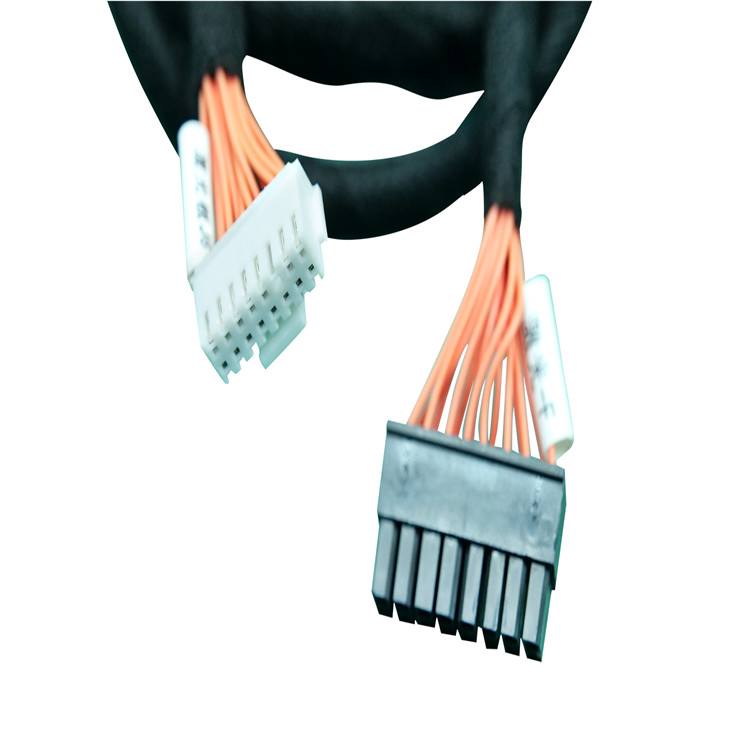
Spring-Based Strain Reliefs: Ideal for connectors, these absorb lateral and axial forces.
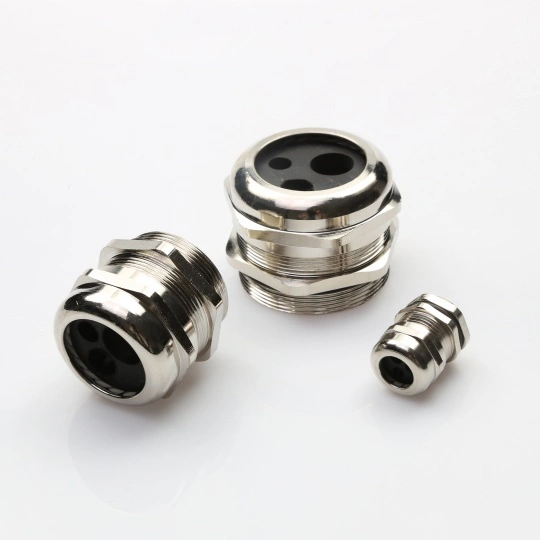
Cable Glands with Rubber Bushings: Use IP68/IP69K-rated glands to secure cables entering enclosures while dampening vibrations.
2.5 Dynamic Cable Routing
Service Loops: Add gentle loops (3–5x cable diameter) near connectors to relieve tension.
Avoid Sharp Bends: Maintain bend radii ≥10x the cable diameter to prevent internal conductor damage.
3. Material Selection for Vibration Resistance
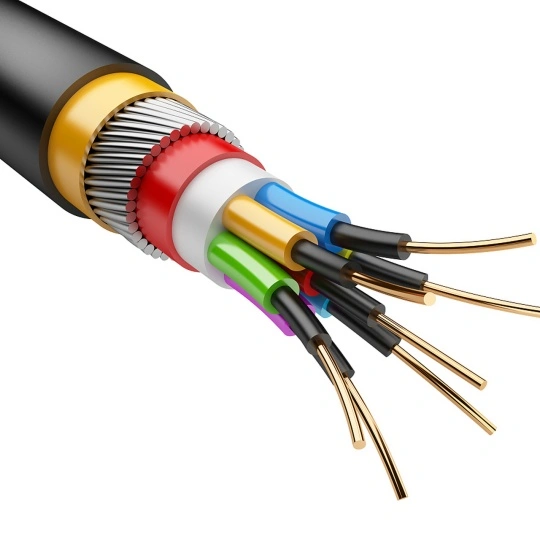
Cable Jackets: Choose materials like PUR (polyurethane) or TPE (thermoplastic elastomer) for flexibility and abrasion resistance.
Damping Pads: Install rubber or Sorbothane pads between clamps and mounting surfaces to reduce transmitted vibrations.
Conductive Coatings: For EMI-prone environments, use cables with braided shields and secure shielding with grounding clamps.
4. Installation Best Practices
Pre-Installation Inspection: Check cables for existing damage; replace compromised sections.
Torque Control: Use a torque screwdriver for clamp fasteners to avoid under/over-tightening.
Post-Installation Testing: Perform vibration sweeps (5–2000 Hz) to identify resonant frequencies and adjust securing points.
5. Maintenance and Monitoring
Regular Inspections: Look for:
Frayed sleeves or exposed conductors.
Loose clamps or ties.
Discoloration (indicates overheating from friction).
Predictive Maintenance: Deploy vibration sensors near cable fixation points to detect abnormal oscillations early.
Meta Description: Discover how high-voltage cables power critical oil and gas projects worldwide. Learn about their applications in offshore drilling, subsea operations, LNG plants, and more.
URL Slug: oil-gas-projects-high...
The lifespan of industrial cables in corrosive environments is not a fixed value but varies significantly depending on multiple factors. In general, standard industrial cables may last only 2-5 years in severe corrosive conditions, whil...
Robotics are transforming industries, from intricate assembly lines to demanding logistics centers. But what keeps these agile machines running smoothly? Often overlooked yet critical, high-flex industrial cable assemblies are the...
In modern infrastructure, cables serve as the “nervous system” that connects equipment, transmits power, and relays data. However, not all cables are created equal—industrial cables and coaxial cables, for instance, are desi...
In today’s industrial landscape—where automation, 5G communication, medical imaging, and aerospace electronics are rapidly advancing—high-frequency industrial cables serve as the “nervous system” of critical operations. Thes...
Industrial cable assemblies are the core connectivity component of all modern industrial automation, mechanical equipment, and industrial control systems, undertaking stable power supply and accurate data transmission for industrial ope...
Industrial cable assemblies are critical components in manufacturing, automation, and energy sectors, where safety and reliability are non-negotiable. Underwriters Laboratories (UL) certifications ensure these products meet rigorous saf...
Key Selection Criteria
Material Compliance
Prioritize cables with aerospace-grade materials (e.g., PTFE insulation) that resist extreme temperatures (-65°C to 200°C), chemicals, and abrasion.
Verify compliance with standards lik...
Industrial environments are brutal on cables. Vibration, tension, bending, pulling, and accidental snags are constant threats. Without proper protection, wires fatigue, conductors break, and connections fail, leading to costly downtime....
Introduction
Military-grade industrial cable assemblies represent the pinnacle of ruggedized connectivity solutions, engineered to withstand extreme environmental conditions while maintaining signal integrity. These specialized compo...
Outdoor environments demand robust connectivity solutions that withstand harsh conditions like dust, moisture, extreme temperatures, and mechanical stress. IP67/IP68-rated cable assemblies are engineered to meet these challenges, offeri...
In industries ranging from automotive to telecommunications, standardized cable assemblies have become a cornerstone for balancing performance, scalability, and cost efficiency. By minimizing custom designs and consolidating specificati...
In the complex and demanding landscape of industrial operations, the choice of cabling systems directly impacts safety, efficiency, and long-term operational costs. Low-voltage industrial cables, typically designed for voltages below 1k...
In industrial settings like oil refineries, coal mines, chemical plants, and pharmaceutical facilities, even a tiny spark from electrical equipment can trigger catastrophic explosions or fires—especially in areas filled with flammable g...
High-humidity warehouses—such as those for food processing, pharmaceutical storage, or coastal logistics—pose unique risks to industrial cables, including insulation degradation, conductor corrosion, and short circuits. Selecting the ri...
In industrial automation, standard cables often fail when temperatures swing to extremes. Whether you are dealing with the scorching heat of a steel mill or the deep freeze of a cold storage warehouse, choosing the wrong cable assembly ...
In the global industrial supply chain, the European Union (EU) market stands out as a high-standard, high-value arena that demands strict compliance with safety, health, and environmental regulations. For manufacturers and suppliers of ...
In the high-stakes world of industrial operations – from bustling manufacturing floors and complex energy grids to sprawling infrastructure projects – managing critical cable assemblies is a constant challenge. Lost, misplaced, or poorl...
Semiconductor manufacturing represents the pinnacle of precision manufacturing. Within the ultra-controlled environments of Class 1 to Class 5 (ISO 3 to ISO 5) cleanrooms, even the smallest contaminant – a particle of dust, a molecule o...
Discover how industrial cable assemblies form the backbone of IIoT architecture. Explore their role in data reliability, real-time communication, and scalable industrial networks.
IntroductionThe Industrial Internet of Things (IIoT...
In industrial automation, Programmable Logic Controllers (PLCs) serve as the “brain” of control systems, orchestrating machinery, processes, and data flow across factories. Yet, even the most advanced PLCs depend entirely on...
Industry 5.0: The Demand for Smarter ConnectivityIndustry 5.0 prioritizes human-centric automation, requiring cable assemblies to:
Enable Real-Time AI Interaction: Support <1ms latency for AI decision-making.Withstand Dyna...
In today’s renewable energy sector, project timelines are tighter, budgets are under pressure, and reliability is non-negotiable. Whether you’re connecting solar arrays, wind turbines, or battery energy storage systems (BESS...
When it comes to electrical cables, understanding the differences between industrial and marine cables is crucial for selecting the right option for specific applications. While both serve the purpose of transmitting electricity, their ...
In industries where reliability, safety, and performance are non-negotiable, cable assembly servicesare a critical link in the supply chain. From industrial automation and medical devices to aerospace and EV charging, the right cable as...
In today’s industrial landscape, oil-resistant cable assemblies are no longer a niche product—they are a mission-critical component in ensuring uptime, safety, and long-term cost efficiency. This article explores how new material innova...
High temperature industrial cable assemblies are no longer a niche product; they are a critical enabler of smarter, more automated, and more reliable manufacturing. As factories push for higher throughput, tighter quality control, and g...
IntroductionAs global industries face mounting pressure to reduce carbon footprints, the cable manufacturing sector is undergoing a transformative shift. The rise of carbon-neutral cable factories marks a critical milestone in sustainab...
In the ever-evolving landscape of modern technology, the demand for smaller, more efficient, and high-performance components has never been greater. This is particularly true in applications where space is at a premium, such as in aeros...
The aerospace industry is a high – precision and high – risk field, where the reliability and safety of every component are crucial. Industrial cables, as the “nervous system” that transmits power and signals in ...
Industrial cable connectors are essential components in various industrial systems, enabling the reliable transmission of power, signals, and data. There are several common types, each designed to meet specific application requirements....
The global shift toward renewable energy isn’t just transforming how we power our homes and industries—it’s also fueling unprecedented demand for heavy-duty cables. As solar farms, wind turbines, and grid modernization projects multiply...
In the complex and interconnected world of industrial systems, the reliable transmission of signals is the lifeblood of operations. From manufacturing plants and power stations to telecommunications networks and transportation systems, ...
Industrial settings like oil refineries, chemical plants, grain silos, and paint spray booths contain areas where flammable gases, vapors, dusts, or fibers can be present. Using standard electrical equipment here can trigger explosions....
Recent advancements in high-voltage cable testing reveal a global regulatory shift towards stricter standards. With major economies implementing upgraded testing protocols, the power infrastructure sector faces both challenges and oppor...
In large-scale infrastructure projects—particularly in transportation, tunnel systems, and railway applications—the integrity of electrical infrastructure is non-negotiable. Snake Trayspecializes in delivering robust industrial cable as...
As 5G-enabled industrial automation pushes factories toward higher speeds, more sensors, and harsher operating conditions, the reliability of every physical connection is under unprecedented pressure. Chemical resistant industrial cable...
When it comes to electrical systems, choosing the right cables is critical for safety, efficiency, and performance. High-voltage (HV) and low-voltage (LV) cables serve distinct purposes, and understanding their differences is essential...
In today’s technology-driven world, maintaining uninterrupted signal integrity is critical for industrial, commercial, and residential applications. The Shielded Cable Core is engineered to deliver superior electromagnetic interference .
Corrosion-Resistant Cable Connectors: Reliable Connectivity for Harsh Environments
Ensure uninterrupted performance in the toughest conditions with our corrosion-resistant cable connectors. Designed for durability and longevity, these.
Contact Us
Feel free to reach out to us for any inquiries or orders.