
Industrial Cable Assemblies-Industrial Cable Assemblies factory
In the complex ecosystem of industrial manufacturing, cables serve as the vital nervous system, transmitting power and data across machinery, equipment, and production lines. However, harsh industrial environments—characterized by extreme temperatures, chemical exposure, mechanical stress, and moisture—pose significant threats to cable integrity. This is where cable overmolding emerges as a critical solution, enhancing cable performance, durability, and reliability. Unlike traditional cable insulation or jacketing, overmolding involves encapsulating cables, connectors, or splices with a thermoplastic or thermoset material in a custom-molded form, creating a seamless, protective barrier tailored to specific industrial needs.
Industrial cable overmolding offers a suite of benefits that address the unique challenges of industrial settings, making it a preferred choice over conventional cable protection methods.
The selection of overmolding material is a critical decision that directly impacts cable performance. Below are the most commonly used materials and their industrial applications:
| Material | Key Properties | Industrial Applications |
|---|---|---|
| Polyvinyl Chloride (PVC) | Cost-effective, good chemical resistance, flame-retardant, wide hardness range (Shore A 60-90) | General industrial equipment, power tools, office automation devices |
| Thermoplastic Elastomers (TPE/TPR) | Flexible, rubber-like feel, excellent weather resistance, recyclable, good adhesion to plastics/metals | Automotive wiring harnesses, medical devices, outdoor industrial sensors |
| Silicone Rubber | Extreme temperature resistance (-60°C to 260°C), excellent flexibility, biocompatible, chemical inertness | Aerospace components, food processing equipment, high-temperature machinery |
| Nylon (Polyamide) | High mechanical strength, abrasion resistance, good impact resistance, oil resistance | Heavy-duty industrial cables, construction equipment, marine applications |
The overmolding process requires precision and adherence to strict quality standards to ensure consistent performance. Here’s a breakdown of the key steps:
Quality control is integral at every stage. Manufacturers may conduct tests such as pull-strength testing (to ensure the overmold adheres securely to the cable), environmental testing (exposure to temperature, humidity, or chemicals), and electrical testing (to verify insulation resistance and signal integrity).
When choosing a supplier for industrial cable overmolding, several factors should be considered to ensure optimal results:
When it comes to industrial cable overmolding that combines durability, customization, and reliability, FRS stands out as a leading manufacturer. With years of experience serving diverse industries—from automotive and electronics to food processing and aerospace—FRS brings deep material expertise and state-of-the-art molding capabilities to every project. Our team works closely with clients to design custom overmold solutions tailored to their unique environmental and performance needs, using only high-grade materials that meet global industry standards. Backed by rigorous quality control processes and certifications, FRS ensures that every overmolded cable delivers long-lasting performance, even in the harshest industrial conditions. For your next industrial cable overmolding project, choose FRS—where precision meets durability.
Our factory offers high-quality products at competitive prices
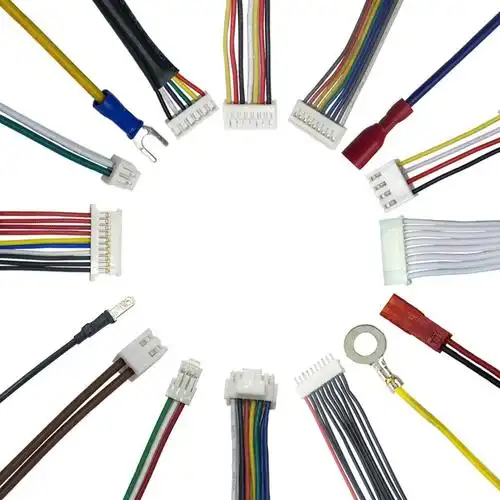
Industrial Cable Assembly Product Summary Material & Safety Utilizes premium raw materials and globally recognized components (e.g., ABB, TE Connectivity) ensuring high reliability and safety to prevent risks like fire and e.
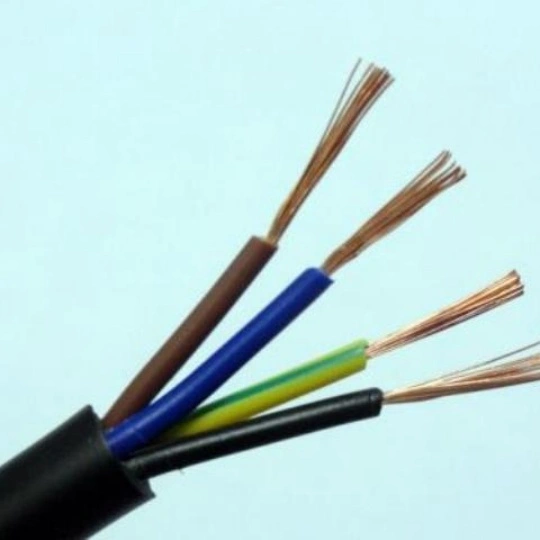
Meta Description: Discover the ultimate Protective Cable Kit designed to safeguard your cables from wear, tangles, and damage. Perfect for home, office, and industrial use. Shop now for long-lasting cable management! Protecti.
Feel free to reach out to us for any inquiries or orders.